Ancient Nutra Wellness Team · 5 October 2026 · 6 min read
5 everyday habits that quietly work against steady blood sugar
By the Ancient Nutra Editorial Team
- Most of what pushes blood sugar around in a normal day is not dessert. It is sugar you drink, rice eaten on its own, sitting straight after the biggest meal, a skipped breakfast, and short sleep.
- Each habit has a small, doable fix. Eat the leaf and the dhal before the rice, walk for ten minutes after your largest meal, eat breakfast, and keep a fixed bedtime.
- Herbs come last, not first. Ancient Nutra's Thebu capsules are the morning leaf many Sri Lankan households already eat, in a measured dose, used alongside your doctor's care and never instead of it.
Most people who try to keep their blood sugar steady start in the wrong place. They cut the dessert, buy a supplement, and leave the five habits that actually shape the day untouched. The sweet tea at eleven, the rice with the curry on the side, the sofa after lunch, the skipped breakfast, the late night. None of these look like a sugar problem. Together, they are most of it. Here are the five, why each works against you, and the gentle correction for each.
The short version:
- Drinking your sugar instead of eating it
- Eating the rice on its own
- Sitting still after the biggest meal of the day
- Skipping breakfast and overloading dinner
- Treating sleep as optional
Mistake 1. Drinking your sugar
Three cups of sweet milk tea, a bottle of fruit juice with lunch, a "healthy" smoothie after work. Most people do not count any of it.
Sugar in a drink has nothing slowing it down. There is no fibre to chew through and no fat or protein to pace it, so it reaches the blood fast and leaves you hungry again soon after. A glass of juice carries the sugar of three or four pieces of fruit with none of the fullness. It is the easiest sugar to overdo, because it never feels like a meal.
The fix is boring and it works: water and plain tea by default, and fruit eaten rather than drunk. If your tea takes two spoons of sugar, go to one for a fortnight, then half. Ayurvedic daily routine has always opened the morning with warm water, not something sweet, and that is a good first swap.
Mistake 2. Eating the rice on its own
A heap of rice first, with a spoon of curry as an afterthought. Bread and jam for breakfast. String hoppers with nothing but sambol. The carbohydrate goes in alone.
Order matters more than most people expect. In a small Weill Cornell trial, people with type 2 diabetes ate the same meal on two different days: once with the bread and juice first, once with the vegetables and chicken first and the carbohydrate last. Eating the vegetables and protein first produced much lower glucose and insulin readings over the two hours after the meal (Diabetes Care, 2015). Same food, same calories, different order.
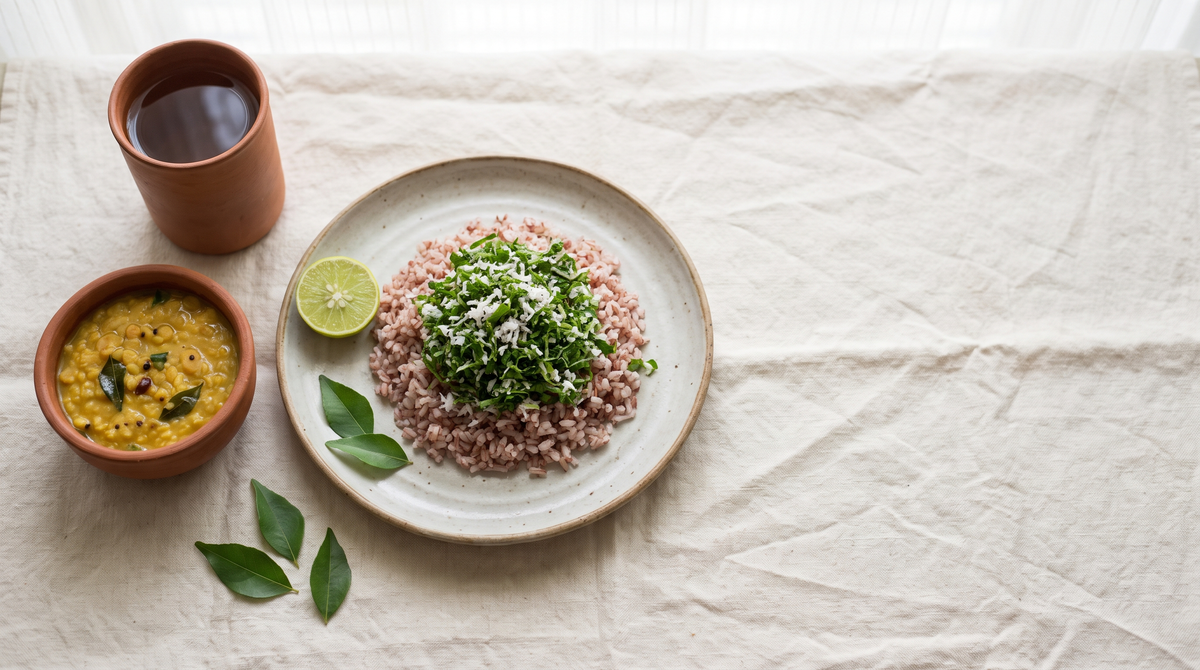
The fix fits a Sri Lankan plate perfectly. Start with the mallung and the dhal, then the fish or the chicken, and let the rice come last and smaller. If you have wondered why the afternoon slump hits hardest after a big rice lunch, the team covered that in why you feel sleepy after lunch. The order of the plate is a big part of the answer.
Mistake 3. Sitting still after the biggest meal
Lunch, then straight back to the desk. Dinner, then the sofa and the phone until bed.
Muscles are the body's largest sink for glucose, and they only pull it in when they move. A 2022 review in Sports Medicine pooled the trials comparing sitting, standing and light walking after meals, and found that light walking lowered post-meal glucose and insulin more than either sitting or simply standing (Sports Medicine, 2022). It did not need to be a workout.
The fix is ten minutes on your feet after your largest meal. Walk to the end of the lane and back, do the washing up, water the garden. The old habit of a slow stroll after dinner was never just manners. It was good timing.
Mistake 4. Skipping breakfast and overloading dinner
Tea and nothing until one o'clock, then a large lunch and a larger dinner at nine. It feels like eating less. It is really eating late.
The morning sets up the rest of the day. In a randomised trial of people with type 2 diabetes, skipping breakfast led to higher blood sugar after lunch and again after dinner, even though those two meals were identical on the breakfast day and the no-breakfast day (Diabetes Care, 2015). The missed meal saved nothing. It made the next two meals land harder.
The fix is the rhythm Ayurvedic routine has long recommended: a real breakfast, the main meal in the middle of the day, and a lighter, earlier dinner. If dinner is your family's big meal, keep it, but move it earlier and shrink the rice rather than the vegetables.
Mistake 5. Treating sleep as optional
Six hours on a weeknight, catch up on Sunday. Most people file this under tiredness, not blood sugar.
Sleep is where insulin sensitivity is quietly set for the next day. The NIH's Diabetes in America review of the laboratory studies reports that insufficient sleep reduces insulin sensitivity by roughly 20 to 30 percent, a large effect from a habit nobody thinks of as dietary. The same chapter links short sleep to higher diabetes risk in long-term population studies. A short night makes every meal the next day behave worse than it should.
The fix is a fixed bedtime, not a perfect one. Pick a time you can keep on a Tuesday, protect the hour before it from screens, and keep the same wake time at the weekend. Seven hours most nights matters more than any single early night.
How to course-correct in a week
You do not need to fix all five at once. One change a day, kept, beats five changes abandoned by Thursday.
- Day 1 and 2. Swap the sweet drinks. Water or plain tea by default, fruit eaten rather than juiced.
- Day 3 and 4. Change the order of the plate. Leaf and dhal first, rice last and a little smaller.
- Day 5. Add the ten-minute walk after your largest meal. Keep it from here on.
- Day 6. Eat a real breakfast and pull dinner earlier by half an hour.
- Day 7. Set the bedtime and the wake time, and keep both through the weekend.
What you have by Sunday is a routine, not a reading. The only honest number is the one your doctor's fasting test gives you, so judge the change by that, over time, not by how a single day feels.
Where a herb fits, and where it does not
Only once the five habits are in place is it worth talking about a capsule, and even then the capsule is the smallest part. Ancient Nutra's Thebu (Canereed) capsules are the dried leaf of Costus speciosus, the same leaf Sri Lankan households eat in the morning, in a measured dose for the days when there is no fresh leaf to hand. Thebu has a long place in Sri Lankan food and traditional practice around blood sugar. It has no human clinical trials, so Ancient Nutra makes no claim that it changes your readings. The leaf and the capsule are also not the same dose, which the team explained in why a fresh Thebu leaf and a Thebu capsule are not the same dose.
If you are already on Ancient Nutra's Sugar Balance System, the same rule applies. The box is a bounded routine that sits on top of these five habits, not a replacement for any of them. The team's five honest checks before you start are worth reading first.
Safety
There is no human clinical evidence on Thebu (Costus speciosus) in pregnancy or breastfeeding -- only animal studies exist, which are not a reliable substitute for human data. As a precaution, avoid use during pregnancy or while breastfeeding until more is known. May add to the effect of blood-sugar medication -- consult your doctor first if on such medication.
The bottom line
The two habits that move the most are the ones hiding in plain sight: the sugar you drink without counting it, and the rice eaten before the leaf rather than after it. Fix those two and the ten-minute walk, and you have done more for a steady day than any capsule can. Ancient Nutra's Thebu capsules are there for the mornings without a fresh leaf. The habits are there for every meal.

Thebu (Canereed) - 60 capsules
The Sri Lankan morning leaf, dried into a measured daily capsule. One a day before a meal, alongside the habits above and your doctor's care.
Shop ThebuSources and further reading
- Shukla AP et al. Food order has a significant impact on postprandial glucose and insulin levels. Diabetes Care, 2015.
- Buffey AJ et al. The acute effects of interrupting prolonged sitting time in adults with standing and light-intensity walking on biomarkers of cardiometabolic health: a systematic review and meta-analysis. Sports Medicine, 2022.
- Jakubowicz D et al. Fasting until noon triggers increased postprandial hyperglycemia and impaired insulin response after lunch and dinner in individuals with type 2 diabetes: a randomized clinical trial. Diabetes Care, 2015.
- Reutrakul S, Punjabi NM, Van Cauter E. Impact of sleep and circadian disturbances on glucose metabolism and type 2 diabetes. Chapter 25 in Diabetes in America, 3rd edition. National Institute of Diabetes and Digestive and Kidney Diseases.
- Thilakarathna et al. Complementary and alternative medicine use among Sri Lankan patients with type 2 diabetes. BMC Complementary Medicine and Therapies, 2025.
Written by the Ancient Nutra Wellness Team. The team researches, sources, and tests every ingredient before it earns a place in an Ancient Nutra blend. Questions? Email info@ancientnutra.com or message Ancient Nutra on Instagram.
Medical disclaimer: This article is for educational purposes only and is not medical advice. Statements have not been evaluated by the FDA. Ancient Nutra products are not intended to diagnose, treat, cure, or prevent any disease. Speak with a qualified healthcare provider before starting any new supplement, especially if you take prescription medication or have a medical condition.