Ancient Nutra Wellness Team · 1 November 2026 · 5 min read
A 5-minute morning ritual with ground flax seeds
- The ritual is one level tablespoon of flax seeds, ground fresh, stirred into breakfast, with a glass of water alongside.
- Per 100 g, flaxseed carries about 27 g of fibre and 23 g of the plant omega-3 ALA (USDA), so a single tablespoon adds a modest amount of both.
- Do not eat raw or unripe flaxseed in quantity, and speak to your doctor first if you are pregnant, breastfeeding or have a health condition.
Some breakfast habits ask for a new blender, a long shopping list or a lot of willpower. This one needs a spoon and a small grinder. You measure a tablespoon of flax, grind it, stir it into whatever you already eat, and drink a glass of water. The hands-on time is around five minutes, and most of that is the kettle.
Below is the full sequence, the reasoning behind each step, and what to do if you do not own a grinder.
The ritual, step by step
- Measure one level tablespoon of whole seeds. Use Ancient Nutra's Flax Seeds. One tablespoon is plenty to start with.
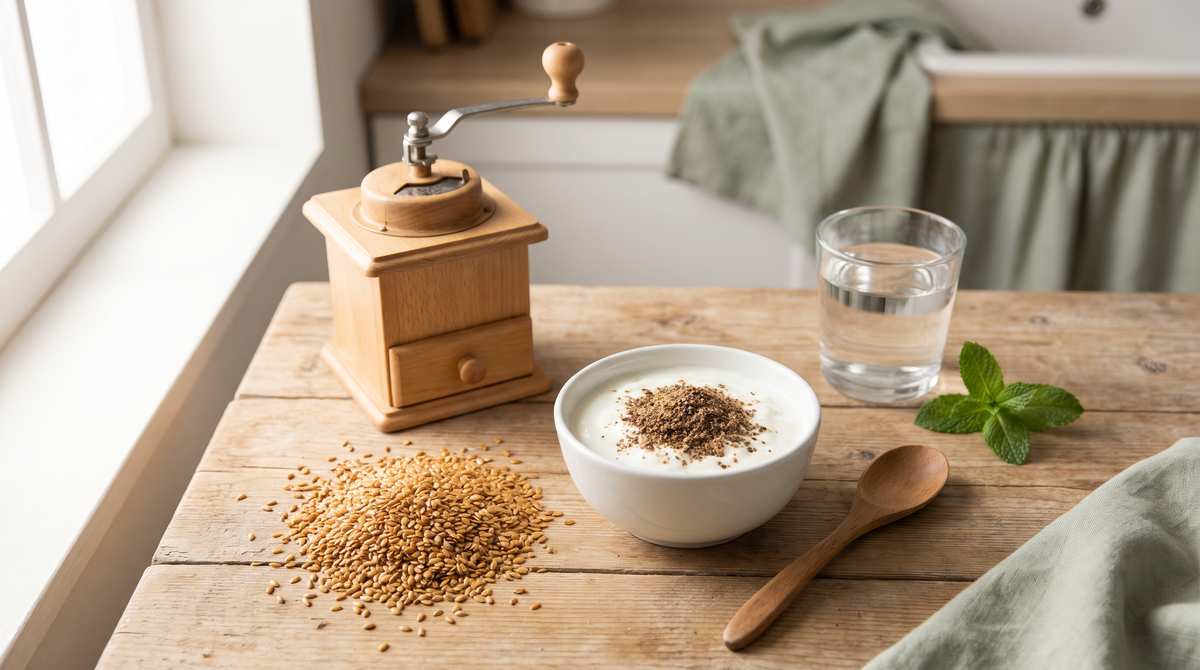
- Grind for 15 to 20 seconds. A clean coffee or spice grinder works well, and so does a mortar and pestle. Stop when the seeds look like coarse, golden-brown flour.
- Stir the flax into breakfast. Plain yogurt, porridge, a bowl of papaya or a smoothie all take it easily. The flavour is mild and nutty.
- Add something fresh. A sliced banana, a few berries or a squeeze of lime keeps the bowl from tasting like health food.
- Pour a glass of water. Drink it alongside the bowl, not after you have rushed out of the door.
- Seal the pack and put it away. Ancient Nutra's pack instructions say to refrigerate after opening, which also keeps the seeds fresher.
Grind only what you will eat that morning. A freshly ground tablespoon tastes better than a jar of flour that has sat on the counter all week.
Why grind the seeds and add water
Flax seeds are small, hard and glossy. Ancient Nutra's product page notes that ground flax is easier to digest and absorb than whole, which is the usual kitchen reason for grinding: it opens the seed coat before the seed reaches your plate.
The numbers are modest but real. According to the USDA FoodData Central entry for flaxseed, 100 g contains about 27.3 g of dietary fibre, 22.8 g of alpha-linolenic acid (ALA, a plant omega-3 fat) and 18.3 g of protein. A tablespoon weighs somewhere between 7 and 10 g depending on whether it is ground or whole, so it brings roughly 2 to 3 g of fibre and about 2 g of ALA. That is a useful contribution to a meal, not a dose of anything.
The glass of water is plain practicality. Fibre sits more comfortably when there is fluid with it, and a morning glass of water is an easy habit to attach to a ritual that already has a fixed spot in your day. If your usual diet is low in fibre, start with the one tablespoon and let your gut get used to it before you think about adding more. For more on how the plant omega-3 in flax behaves, see the Ancient Nutra explainer on flax and ALA.
Whole seeds that are glossy and golden to brown, with a clean, nutty smell and no stale or paint-like odour. Ancient Nutra's Flax Seeds come in a 100 g pack, which is enough for many mornings at one tablespoon a day.
A safety note before you start
The US National Center for Complementary and Integrative Health (NCCIH) advises: "Don't eat raw or unripe flaxseeds; they may contain potentially toxic compounds." This is a question of amount and seed maturity, not a reason to avoid flax altogether. It is the reason this ritual uses a single tablespoon rather than handfuls, and the reason to keep a daily portion sensible.
NCCIH also notes that some studies of flaxseed during pregnancy suggest it is possibly unsafe, although the evidence is not conclusive. Ancient Nutra's product page advises pregnant and breastfeeding women to avoid supplementing with ground flaxseed. If you are pregnant, breastfeeding, taking regular medication or managing a health condition, check with your doctor before making flax a daily habit.
When to do it, and when to skip it
Breakfast is the natural slot, because that is when the bowl, the spoon and the glass of water are already out. The ritual works just as well before a late brunch or with a mid-morning smoothie. Skip it on days you are running out the door or eating somewhere else. A ritual that bends on busy days is easier to keep than one you feel guilty about missing. Six or seven mornings a week is a perfectly good rhythm.
No grinder? Soak it instead
Stir one tablespoon of whole flax into three tablespoons of water or milk and leave it for about ten minutes. The seeds soften and the liquid turns thick and gel-like, which blends easily into porridge or yogurt. It is a gentler texture than dry whole seeds, and it takes no equipment at all.
If you like prepping ahead, the same idea sits behind this flax-and-chia overnight bowl. Ground flax also turns up in baking: the Ancient Nutra flax seed pol roti is a good weekday breakfast if yogurt is not your thing.
The bottom line
That is the whole ritual. It adds a little fibre and plant omega-3 to a breakfast you were going to eat anyway. Try it for a week, keep the portion to one tablespoon, and adjust to how your body feels.

Flax Seeds 100g
Whole flax seeds for grinding into yogurt, porridge, smoothies and baking.
Shop Flax SeedsSources and further reading
- Seeds, flaxseed (FDC ID 169414), USDA FoodData Central.
- Flaxseed and flaxseed oil, National Center for Complementary and Integrative Health (NIH).
Written by the Ancient Nutra Wellness Team. The team researches, sources, and tests every ingredient before it earns a place in an Ancient Nutra blend. Questions? Email info@ancientnutra.com or message Ancient Nutra on Instagram.
Medical disclaimer: This article is for educational purposes only and is not medical advice. Statements have not been evaluated by the FDA. Ancient Nutra products are not intended to diagnose, treat, cure, or prevent any disease. Speak with a qualified healthcare provider before starting any new supplement, especially if you take prescription medication or have a medical condition.