Written by the Ancient Nutra Wellness Team.
- Triphala is a three-fruit Ayurvedic blend traditionally taken at night, but a consistent morning dose is easier for most people to actually keep up.
- A randomized trial found daily Triphala improved bowel frequency and consistency within 4 weeks, taken on an empty stomach.
- The habit matters more than the herb: same time, same glass of water, before the first coffee, every day.
Most people who buy Triphala use it for about a week and then forget it exists. The herb was never the problem. The habit was. Move it to the same five minutes every morning and it stops being one more bottle in the cabinet.
What triphala actually is
Triphala means "three fruits" in Sanskrit: amalaki, bibhitaki, and haritaki, ground together into a fine powder or pressed into capsules. Ayurvedic households have kept a version of this blend on the kitchen shelf for generations, most often dosed at night before bed rather than in the morning.
"The mornings after" here means the mornings after a heavy meal, a long travel stretch, or a run of rice-and-curry lunches that left digestion sluggish. That is usually when people go looking for Triphala, and it is also exactly when a habit is hardest to start. A herb that only works if you remember to take it consistently is not much use bought in a panic after three uncomfortable days.
Ancient Nutra's guide to Triphala for everyday digestion covers what the three fruits do individually. This one is about something narrower: when and how to actually take it so the habit sticks.
Why timing changes what it does for you
The classical dose is at night, and there is a real logic to it: a slower, overnight transit gives the gut time to work before morning. But night dosing is also the easiest habit to skip. You are tired, you forget, the capsule sits in the cabinet.
A randomized, placebo-controlled trial in adults with constipation found that 500mg of Triphala taken daily for 4 weeks led to a significant improvement in bowel frequency and stool consistency (Journal of Ayurveda and Integrative Medicine). Four weeks, not ninety days. That is a reasonable window to actually judge whether it is doing anything for you.
Moving the dose to the morning, on an empty stomach, before the first coffee, trades a small amount of classical tradition for a habit you can keep. Consistency is the variable the research actually measured. It is not the variable most people optimize for.
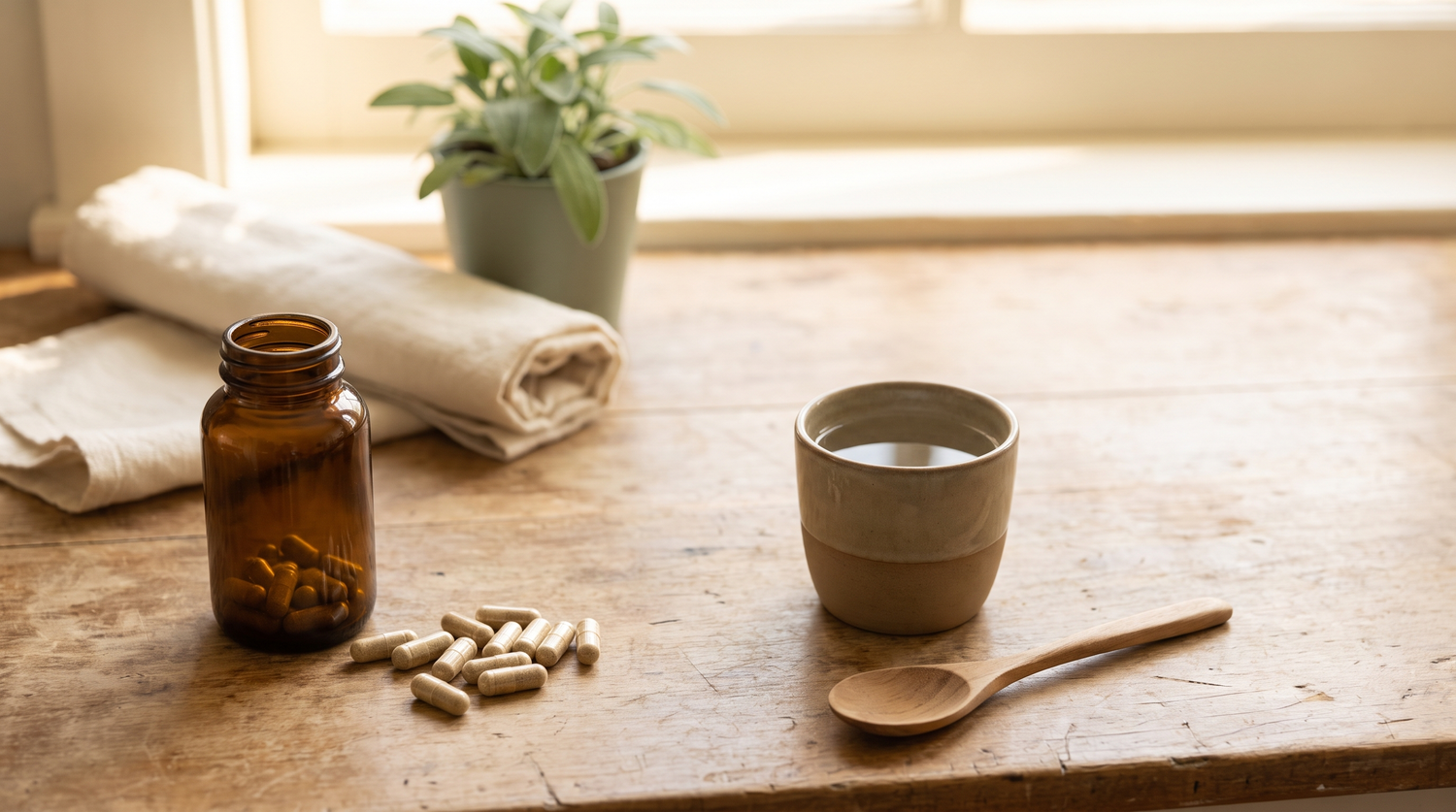
A standardized 3-fruit ratio, 500mg to 1000mg per dose, taken with a full glass of warm water on an empty stomach.
Ancient Nutra's Triphala is dosed at 500mg per capsule, in line with the trial above.
Building the five minute morning practice
Look, you do not need a ritual with candles and a journal. You need three steps you can do half asleep.
- Same glass, same spot. Keep the bottle next to the kettle, not in a drawer. Out of sight means forgotten by day three.
- Water first, capsule with it. A full glass, room temperature or warm. Cold water on an empty stomach undoes some of the point.
- Before the coffee, not after. Coffee moves your gut on its own schedule. Let the Triphala go first so you are not layering two things at once.
That is the whole practice. No app, no tracker, no ninety-day protocol to fall off of.
Where the ritual usually breaks
Three mistakes account for most of the "it did not work for me" stories.
- Taking it on a full stomach. Right after breakfast is easier to remember, but it blunts the effect the trial above measured. Empty stomach is the whole point.
- Quitting after three days. The research window was four weeks, not four days. A herb this gentle needs the same runway a fiber change would.
- Expecting it to fix a bad diet. Triphala on top of low water intake and almost no fiber is asking one small daily habit to outwork the rest of the day.
What to actually expect, and what it will not do
Most people notice a change in regularity within the first two to three weeks, in line with the trial window above. Some notice nothing and that is worth paying attention to, not pushing through indefinitely.
Triphala does not replace fiber, water, or movement. If those three are missing, no herb closes the gap on its own. What a consistent morning dose does is give an already-decent routine a small, steady nudge. For a wider gut-support stack, Ancient Nutra's Beli and Activated Carbon cover different parts of the same picture: Beli for general gut comfort, Activated Carbon for the occasional heavy or bloated day.
If anything changes suddenly or does not settle within a month, that is a conversation for a doctor, not a supplement stack.
For someone dealing with more than sluggish digestion, heavy meals, poor sleep, and the general weight of a festive-eating season, Triphala on its own is a narrow tool. Ancient Nutra's Liver & Detox System pairs Triphala with Heenbovitiya and Yaki Narang for that broader reset. For everyone else, a single bottle of Triphala and the three-step morning practice above is enough to start with.

One 500mg capsule with warm water, before coffee, for daily digestive regularity.
Shop TriphalaSources
- Journal of Ayurveda and Integrative Medicine: RCT on Triphala Churna and constipation
- Ancient Nutra: Triphala, the 3-fruit Ayurvedic blend for everyday digestion
- Ancient Nutra: Pre-monsoon prep, 4 Sri Lankan herbs to fortify before the rains
This article is for informational purposes only and is not intended to diagnose, treat, cure, or prevent any disease. Talk to a doctor before starting any new supplement, especially if you are pregnant, nursing, or managing a health condition.
Written by the Ancient Nutra Wellness Team. The team researches, sources, and tests every ingredient before it earns a place in an Ancient Nutra blend. Questions? Email info@ancientnutra.com or message Ancient Nutra on Instagram.