Ancient Nutra Wellness Team · 21 August 2026 · 7 min read
How Much Ceylon Cinnamon Per Day, and How Long to Take It
By the Ancient Nutra Editorial Team
- Clinical trials on cinnamon cluster around 1 to 3 grams a day, and a 2025 umbrella review of meta-analyses found benefits more pronounced above 1.5 grams daily.
- That same review found benefits skewed toward courses of two months or less, so a cinnamon habit is better run as a bounded course than as an open-ended daily ritual.
- The gram figure alone is not the whole answer. About 2 grams of cassia cinnamon takes a 60 kg adult to the entire daily coumarin limit, while true Ceylon bark from Sri Lanka has tested below detection limits.
- On Ancient Nutra's Ceylon Cinnamon, the 1 to 3 gram research range works out to 2 to 4 capsules a day, taken with the largest carbohydrate meal.
Most cinnamon articles stop at the first question, which is which type to buy. That one is settled: if the plan is a daily dose rather than an occasional dessert, the species on the label matters. The harder question, and the one that arrives in the Ancient Nutra inbox far more often, is the second one. How much counts as a dose, and how long should someone stay on it before stopping? Those two numbers decide whether a cinnamon habit is doing anything useful, and they are also where the safety conversation actually lives.
How much cinnamon do the trials actually use?
The honest answer is a range, not a single number. A 2025 umbrella review in Frontiers in Nutrition, which pooled the meta-analyses of randomised controlled trials on cinnamon in metabolic disease, reported that higher doses, meaning above 1.5 grams a day, produced more pronounced benefits than smaller amounts. The NIH LiverTox monograph on cinnamon, updated on 1 July 2026, puts the typical supplement dose more plainly still: 1 to 2 grams daily.
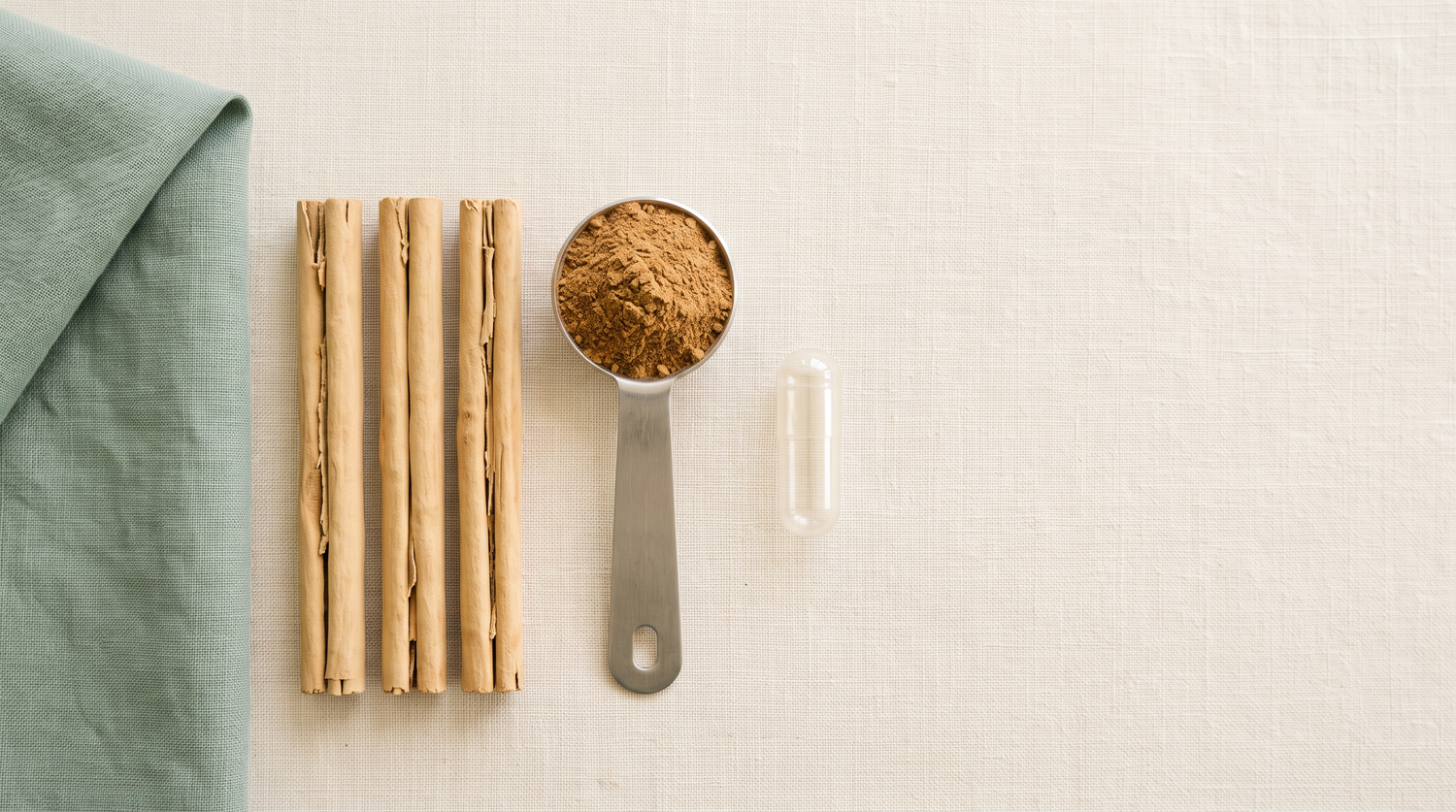
Put those together and the working range for a supplement-dose course is roughly 1 to 3 grams a day, with the lower end of that unlikely to do much. This is worth sitting with, because it is a great deal more cinnamon than most people picture. A light dusting over porridge is a fraction of a gram. The research dose is closer to a heaped measuring spoon, every day, which is exactly why capsules exist for this ingredient and why the amount needs thinking about rather than guessing.
Read the gram figure through the coumarin lens
Here is where the dose question and the species question stop being separate. Cinnamon bark carries coumarin, a naturally occurring compound that the liver has to process. European food safety authorities set a tolerable daily intake of 0.1 mg of coumarin per kilogram of body weight per day, which Germany's Federal Institute for Risk Assessment translates into about 6 mg a day for a 60 kg adult. The same institute states that a 60 kg adult reaches that limit at roughly 2 grams of cassia cinnamon per day.
Read that against the research dose above. Someone taking a clinical-range 1 to 3 grams of cassia would be at or beyond their entire daily coumarin allowance from the supplement alone, before anything else they ate that day. The comparison numbers are stark: a 2012 analysis in The Scientific World Journal tested 60 ground cinnamon samples across 12 retail brands and found mean coumarin levels from 2,650 to 7,017 mg per kg, all of them cassia. The control sample, true Cinnamomum verum imported directly from a Sri Lankan plantation, came back below the limits of detection.
That is the practical reason true cinnamon matters more at supplement doses than at dessert doses, and it is covered in more depth in Ceylon Cinnamon vs Cassia: why the label matters for daily use. The short version is that the species decides how much room the dose has to work in.
What that limit does and does not mean
A tolerable daily intake is a lifetime-average figure, not a poisoning threshold, and it helps to say so plainly. The German assessment is explicit that exceeding the value in the short run does not pose a health risk, and that slightly exceeding it for one to two weeks can be seen as safe. Nobody needs to worry about a fortnight of cassia buns. The figure matters when an intake becomes daily and deliberate, which is precisely what a supplement course is.
How long should a cinnamon course run?
This is the number almost nobody publishes, and it deserves more attention than the dose. The 2025 umbrella review found that shorter intervention durations, meaning two months or less, may enhance the benefits rather than diminish them. Longer is not better here. The evidence base for cinnamon is built on short, bounded trials, so an open-ended daily habit stretching across a year is running well past the ground the research actually covers.
The caution points the same way. LiverTox rates cinnamon likelihood score D, described as a possible rare cause of clinically apparent liver injury, on the basis of at least three published cases. The monograph is careful to note that none of those cases involved a rechallenge and that alternative diagnoses were often plausible or more likely, so this is a small and uncertain signal rather than a common problem. Still, the documented case it describes in detail developed symptoms one to three months after starting.
A course of roughly six to eight weeks, followed by a break, then a reassessment of whether anything actually changed, sits inside both boundaries. It is where the benefit evidence is strongest and it stops short of the window where the reported cases appeared. Ancient Nutra does not publish a standing daily-forever schedule for this ingredient, and the reason is simply that the trials do not support one.
Translate the dose into what is in front of you
Two very different exposures get called "taking cinnamon", and conflating them is where most confusion starts.
The first is culinary. Cinnamon stirred into a curry, a cup of tea, or a bowl of oats is a food exposure, usually a fraction of a gram, and it does not need counting like a supplement. The one thing worth knowing is that if the jar in the cupboard is cassia and it is used heavily every single day, it still contributes to the coumarin total described above. Changing the jar removes that arithmetic altogether: Ancient Nutra's Cinnamon Powder is the same Cinnamomum verum bark as the capsules, ground for the kitchen rather than measured for a course.
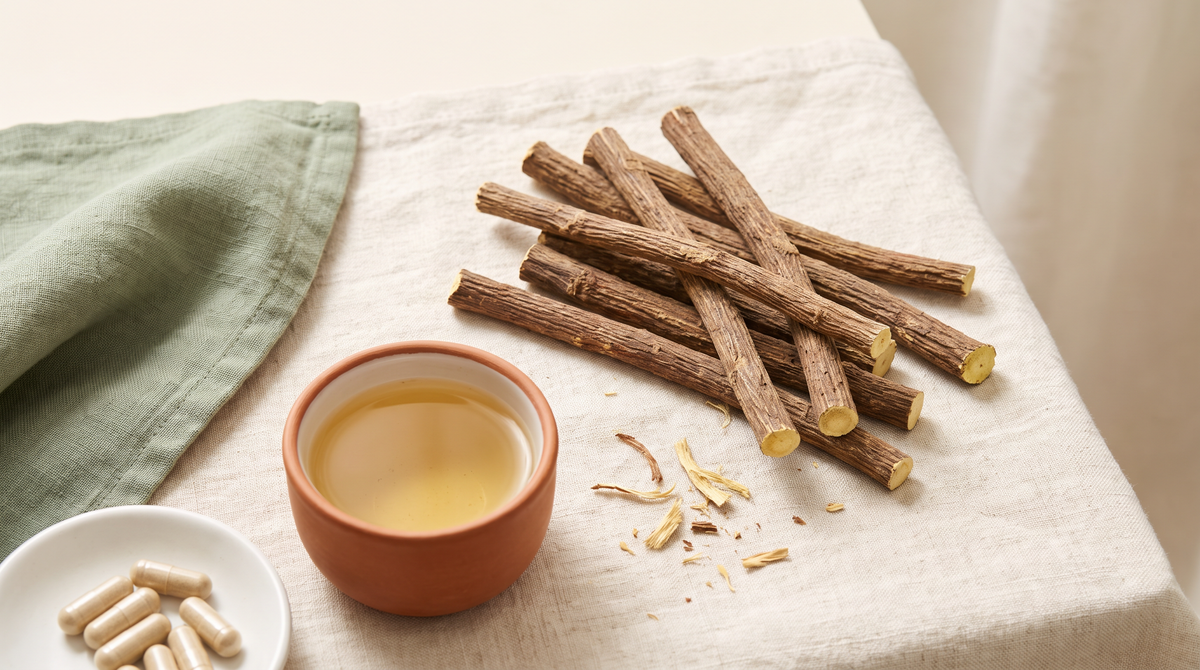
The second is a supplement dose, and that one has a number attached. On Ancient Nutra's Ceylon Cinnamon, the product page puts the clinical 1 to 3 gram range at 2 to 4 capsules a day, taken with the largest carbohydrate meal, and some people split that between breakfast and dinner. Anyone who wants to see where the bark itself comes from before committing to a course can read how Ceylon cinnamon is grown, peeled, and graded.
Look for
A label that names Cinnamomum verum or Cinnamomum zeylanicum rather than just "cinnamon", a stated milligram amount per capsule so the daily gram figure can be worked out, and a country of origin. Vague labels are the ones that turn out to be cassia.
What should make you stop?
Given the LiverTox rating above, the organ to keep an eye on is the liver, and the sensible thing is to know the signs rather than to worry about them. Stop and speak with a doctor if any of the following appear during a course: yellowing of the skin or the whites of the eyes, unusually dark urine, persistent nausea, unexplained tiredness, or pain under the right ribs. These are not expected effects, and for most people they will never appear, but they are the ones that mean pause now and ask rather than push through.
The same applies to anything that simply feels wrong. A supplement that makes someone feel worse has already answered the question of whether to continue.
Who should talk to a doctor before starting?
Cinnamon's best-studied effect is on blood sugar, which is exactly why it is not a neutral addition for everyone. Anyone taking metformin, insulin, or another glucose-lowering medication should check first, because cinnamon can add to what the medication is already doing. The same goes for anyone who is pregnant or nursing, anyone managing an existing liver condition, and anyone on regular prescription medication of any kind. This is a five-minute conversation that makes the following six weeks simpler.
The bottom line
A useful cinnamon course is around 1 to 3 grams a day of true Ceylon bark, run for roughly six to eight weeks, then stopped and reviewed. The species matters because it decides how much coumarin rides along with that dose, and the duration matters because the evidence for benefit is built on short trials and the reported caution sits just past them. Get both numbers right and the ingredient is straightforward. Get only the first one right and it is a guess with a nice smell.
Frequently asked questions
How much Ceylon cinnamon should I take per day?
Clinical trials cluster around 1 to 3 grams a day, and a 2025 umbrella review found benefits more pronounced above 1.5 grams. On Ancient Nutra's Ceylon Cinnamon that range is 2 to 4 capsules daily, taken with the largest carbohydrate meal.
How long should I take cinnamon before stopping?
The 2025 umbrella review found benefits skewed toward durations of two months or less, so a bounded course of roughly six to eight weeks followed by a break and a review fits the evidence better than open-ended daily use.
Is a teaspoon of cinnamon in food the same as a capsule dose?
No. A sprinkle in food is a fraction of a gram and is a culinary exposure, not a supplement dose. It does not need counting the same way, though heavy daily use of cassia in the kitchen still adds to the coumarin total.
Why does Ceylon cinnamon matter more at supplement doses?
Because of coumarin. About 2 grams of cassia takes a 60 kg adult to the whole daily tolerable intake, while true Ceylon bark tested from a Sri Lankan plantation came back below detection limits, leaving room for a clinical-range dose.
Is cinnamon safe for the liver?
NIH LiverTox rates cinnamon likelihood score D, a possible rare cause of clinically apparent liver injury, based on at least three published cases with no rechallenge and often plausible alternative diagnoses. Stop and seek advice if yellowing skin or eyes, dark urine, persistent nausea, or unusual tiredness appear.

Ceylon Cinnamon, 60 capsules
True Cinnamomum verum bark from Sri Lankan farms, so a 1 to 3 gram daily course is 2 to 4 capsules.
Shop Ceylon CinnamonSources and further reading
- Cinnamon, NIH LiverTox, National Institute of Diabetes and Digestive and Kidney Diseases, updated 1 July 2026.
- The effects of cinnamon on patients with metabolic diseases: an umbrella review of meta-analyses of randomized controlled trials, Frontiers in Nutrition, 2025.
- FAQ on coumarin in cinnamon and other foods, German Federal Institute for Risk Assessment (BfR).
- Assessment of Coumarin Levels in Ground Cinnamon Available in the Czech Retail Market, The Scientific World Journal, 2012.
Written by the Ancient Nutra Wellness Team. The team researches, sources, and tests every ingredient before it earns a place in an Ancient Nutra blend. Questions? Email info@ancientnutra.com or message Ancient Nutra on Instagram.
Medical disclaimer: This article is for educational purposes only and is not medical advice. Statements have not been evaluated by the FDA. Ancient Nutra products are not intended to diagnose, treat, cure, or prevent any disease. Speak with a qualified healthcare provider before starting any new supplement, especially if you take prescription medication or have a medical condition.