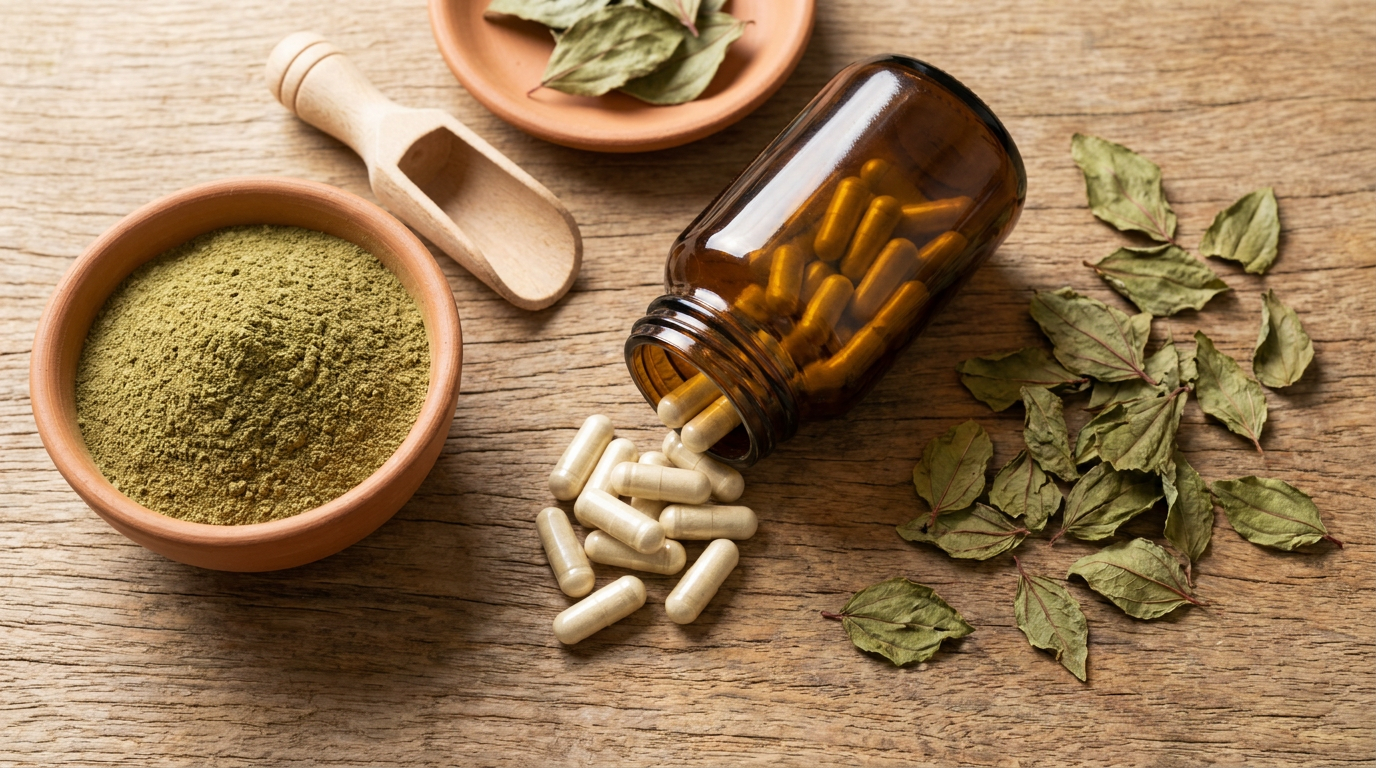
- Heenbovitiya (Osbeckia octandra) is a Sri Lankan leafy herb traditionally used for the liver, rich in antioxidant polyphenols and explored for broadly similar traditional uses to milk thistle.
- Animal studies show less liver scarring and lower blood fats, mapping closely to modern fatty liver patterns, while large human trials at the milk thistle scale do not yet exist. The honest framing is supportive, not curative.
- The modern capsule dose is 500 to 750mg of dried leaf once daily in the morning. Allow about twelve weeks before judging, since liver markers shift slowly.
The wellness aisle has decided that milk thistle is the liver herb. Sri Lanka, where families have actually been treating jaundice with plants for hundreds of years, never got that memo. The herb on those village shelves is small, leafy, and almost unknown outside the island. Its name is Heenbovitiya, and what the lab work is starting to show is that it deserves a seat at the same table.
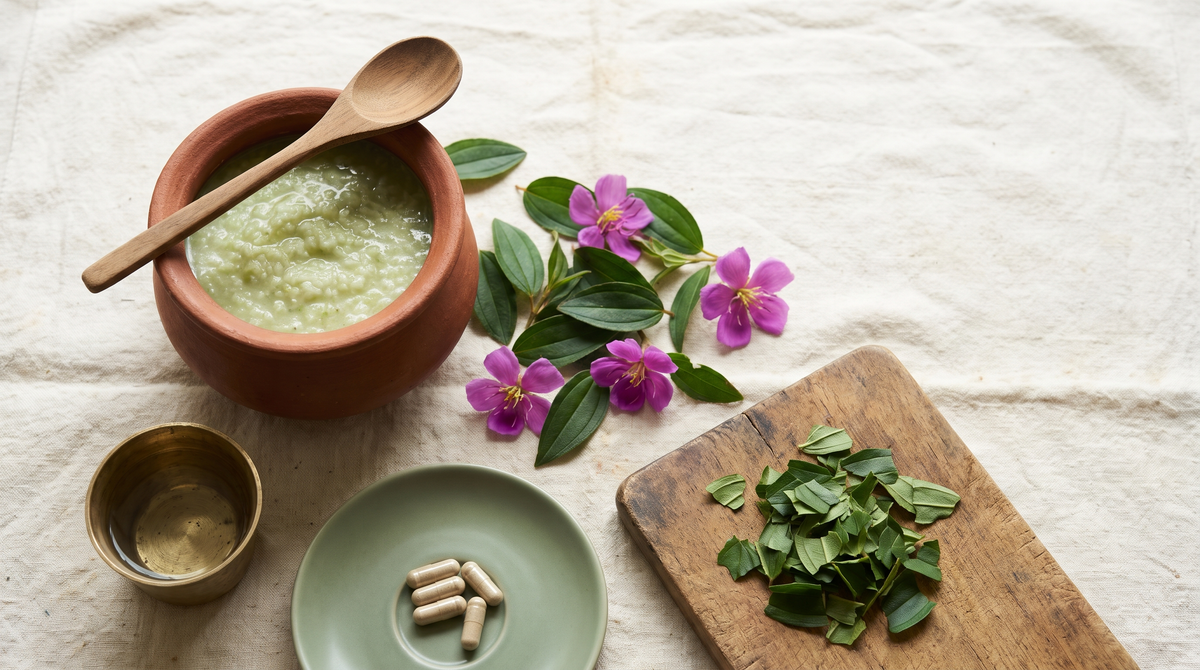
Heenbovitiya (Osbeckia octandra) is a small wild-growing leafy plant native to the hill country of Sri Lanka. The leaves are the part the plant medicine uses. In Sinhala-speaking households, a boiled-leaf decoction is what people reach for when the liver is in trouble: jaundice, hangover-style fatigue, the slow-cooking damage of a rich modern diet.
What Heenbovitiya actually does
The plant has been studied in a quiet way over the last thirty years, mostly out of the University of Peradeniya and a few South Asian labs. The mechanism is straightforward.
Heenbovitiya leaves are packed with antioxidant polyphenols. In animal studies, those compounds have been shown to neutralize the free radicals that damage liver cells in everyday life, and to slow the scarring process (fibrosis) that turns chronic fatty liver into something harder to come back from. This has not been tested in people.
The clearest evidence comes from a 2021 study where researchers gave rats a toxin that simulates chronic liver damage. Animals treated with Heenbovitiya leaf extract showed less scar tissue and fewer of the abnormal new blood vessels that grow alongside cirrhosis (Antioxidants, 2021). A 2025 follow-up used a high-fat diet model and saw the same pattern: less weight gain, lower blood fats, and less inflammation in liver tissue (BMC Complementary Medicine and Therapies, 2025).
These are animal studies. Human clinical trials on Heenbovitiya at the scale milk thistle has been tested do not yet exist. That is the honest framing. What the animal data plus generations of Sri Lankan use suggest is a herb that, in animal studies, protects the liver from the modern stuff that wears it down: alcohol, sugar, and a high-fat diet running unchecked. This specific effect has not been tested in people.
For a sense of why this matters: roughly 30 percent of adults globally now live with non-alcoholic fatty liver disease (NAFLD), and the Sri Lankan number is close behind at about 32.6 percent (2024 global meta-analysis, 78 million participants). Fatty liver used to be a drinker's diagnosis. Now it is a desk worker's.
Who Heenbovitiya is for
This is the part most articles skip. Most herbs help some people and do nothing for others. Heenbovitiya is no different.
The clearest candidates:
- Anyone with diagnosed fatty liver (NAFLD or MASLD). The 2025 high-fat-diet model maps most directly to this group. If a recent blood panel showed raised ALT or AST, in animal studies this is the foundation herb; this has not been tested in people.
- Heavy social drinkers who are not ready to stop yet. Heenbovitiya is what Sri Lankan families have used for liver pressure for a long time. It is not a free pass. It is harm reduction while the rest of the work happens.
- People over 40 with a slow midsection. Belly weight and liver fat travel together. Supporting the liver is one part of unwinding the other.
- Anyone running heavy paracetamol, prescription, or steroid loads. Speak with a doctor first. The lab work shows Heenbovitiya is protective in toxin-loaded models. The human application is supportive, not a license to ignore the cause.
Who does not need it: people in their twenties on a clean diet, regular sleep, no alcohol, and a recent normal liver panel. Save the money. Move when the bloodwork starts to drift.
How to actually take Heenbovitiya
The traditional dose is one cup of boiled-leaf decoction daily on an empty stomach in the morning. The modern dose, in capsule form, is 500 to 750mg of dried leaf per day, taken once in the morning with water.
If the choice is between capsule and powder, the answer depends on the goal. The capsule is for people who want a standardized daily dose without fuss. The powder is for people who want to drink it the old way, as a brewed tea once a day, and who do not mind the bitter green taste. Both work. Neither replaces a doctor if the liver enzymes are seriously off.
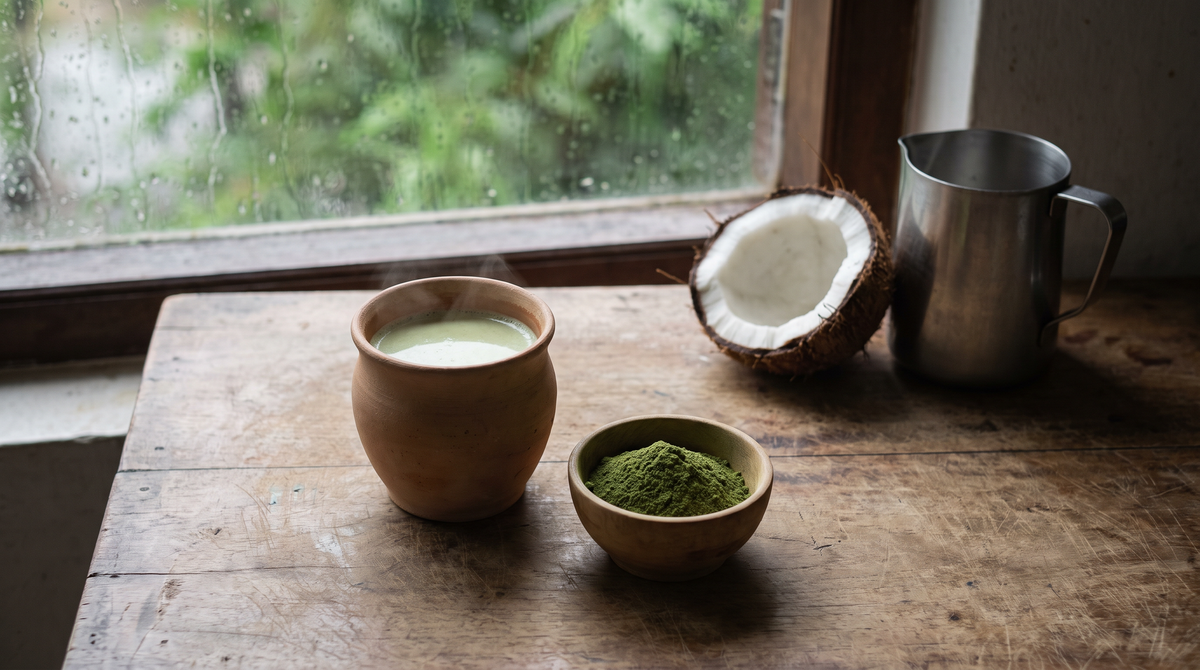
One small note. Heenbovitiya is bitter. The tradition does not soften that. Capsules sidestep the taste. Powder usually needs a teaspoon of honey, a squeeze of lemon, or a small piece of jaggery to be drinkable for most people.
Look for
Wild-harvested Sri Lankan Heenbovitiya leaves, 500 to 750mg of dried leaf per day, taken on an empty stomach in the morning.
Ancient Nutra's Heenbovitiya capsules are made from endemic, wild-grown Osbeckia octandra, hand-harvested in Sri Lanka. For people who prefer to drink it the traditional way, Ancient Nutra's Heenbovitiya Powder uses the same source plant in a single-ingredient brewable form.
Where Heenbovitiya comes from
Heenbovitiya is endemic to Sri Lanka. It grows wild in the misty mid-elevations of the central hills and the country's intermediate zone. The plant is not farmed at any meaningful scale. The leaves are still hand-collected from where they grow.
In the Ayurvedic and indigenous Sinhala medicinal traditions, Heenbovitiya sits in the category of liver-tonifying herbs, used in formulas for jaundice and what the older texts simply called "liver heat." That is a thousand-year-old way of describing what a modern hepatologist would call inflammation in the liver. The vocabulary changes. The plant does the same thing.
Two notes on naming. "Heen Bovitiya" sometimes appears as two words; "Heenbovitiya" is the standardized spelling in Sri Lankan registers. The Latin name, Osbeckia octandra, is what shows up on the lab papers.
How Heenbovitiya stacks with milk thistle
Milk thistle is the global default for liver support. It has more clinical literature behind it than Heenbovitiya, including a 2024 systematic review of 26 randomized trials (2,375 patients) that reported reductions in ALT, AST, and triglycerides for NAFLD and NASH patients on silymarin (Annals of Hepatology, 2024). The active compound, silymarin, works through familiar pathways: antioxidant scavenging and membrane stabilization in liver cells.
The case for stacking the two is mechanism overlap. Both work upstream of the damage. Both calm inflammation. Heenbovitiya brings the wild-harvest Sri Lankan polyphenol fingerprint that milk thistle, a European thistle, simply does not contain. The two herbs cover slightly different antioxidant pathways. For readers serious about a 90-day liver reset, Ancient Nutra's Milk Thistle Extract is a clean European pairing alongside the Sri Lankan herb.
The honest caveat: most people do not need both. Heenbovitiya alone, with sleep, food, and 25 percent less weekend alcohol, will move the bloodwork for many readers. Stack when the foundation is in place and the liver panel still wants more help.
How long Heenbovitiya takes to work
Animal models show measurable changes in liver enzymes within four to six weeks of daily dosing; this has not been tested in people at the same scale. The human application is slower. Plan on twelve weeks before judging.
What changes first is usually subjective: less of that heavy, bogged-down feeling the day after a bigger meal, fewer afternoon energy crashes that feel like a sugar dip but are sometimes the liver. In animal studies, comparable lab markers (ALT, AST, GGT) moved later, usually around what would translate to a 12-week mark on the next blood panel; this specific timeline has not been tested in people. The point is patience. Liver tissue regenerates faster than most organs in the body, but it still needs months, not weeks.
The storytelling moment
When the team at Ancient Nutra started sourcing Heenbovitiya from wild-harvest collectors in the central province, the most consistent feedback in the first batches was not from anyone with a liver diagnosis. It was from social drinkers in their late thirties. The phrase that kept coming back: "the Sunday hangovers are shorter."
The bottom line
Milk thistle is the European liver herb that the world adopted. Heenbovitiya is the Sri Lankan one that the world has not heard of yet. They cover overlapping ground through slightly different chemistry. For readers who want a structured 90-day reset built around the Sri Lankan herb at clinical strength, Ancient Nutra's Natural Liver Support Pack bundles three months of capsules in one go. Or run Heenbovitiya capsules on their own. The plant does the work either way.

Heenbovitiya - 60 capsules
A wild-harvested Sri Lankan leaf traditionally used to support the liver against the wear of a modern diet.
Shop HeenbovitiyaSources
- Thabrew MI, Hughes RD, McFarlane IG. Protective effects of Osbeckia octandra against galactosamine and tert-butyl hydroperoxide induced hepatocyte damage. PubMed 8847886.
- Anti-Fibrotic and Anti-Angiogenic Activities of Osbeckia octandra Leaf Extracts in Thioacetamide-Induced Experimental Liver Cirrhosis. Antioxidants, 2021. PMC8401385.
- In vitro antioxidant effects and in vivo hepatoprotective effects of Osbeckia octandra, Vernonia cinerea and Atalantia ceylanica on a high-fat-diet-induced MASLD mouse model. BMC Complementary Medicine and Therapies, 2025. PMC12102787.
- Administration of silymarin in NAFLD/NASH: a systematic review and meta-analysis. Annals of Hepatology, 2024. PubMed 38579127.
- Global Prevalence of Nonalcoholic Fatty Liver Disease: an updated review and meta-analysis (78 million participants, 38 countries). PubMed 39094335.
Heenbovitiya is a traditional wellness herb, not a treatment for diagnosed liver disease. If you have a liver condition, see a doctor.
Medical disclaimer: This article is for educational purposes only and is not medical advice. Statements have not been evaluated by the FDA. Ancient Nutra products are not intended to diagnose, treat, cure, or prevent any disease. Speak with a qualified healthcare provider before starting any new supplement, especially if you take prescription medication or have a medical condition.