By the Ancient Nutra Wellness Team · September 22, 2026 · 6 min read
- Heenbovitiya (Osbeckia octandra) is a Sri Lankan leaf used for generations as a liver tonic, and animal studies back the traditional use, though human trials do not exist yet.
- A steady daily dose does more for the liver than a one-week cleanse. Consistency is the active ingredient, not intensity.
- Roughly 3 in 10 adults worldwide are living with some degree of fatty liver, most without knowing it, which is the real argument for a daily habit over a dramatic reset.
There is no such thing as a liver cleanse that works in a weekend. The liver does not need rescuing with a three-day juice fast. It needs the same quiet, unglamorous support every single day, and that is a much harder thing to sell than a reset.
What Heenbovitiya actually does
Heenbovitiya, known botanically as Osbeckia octandra, is a small flowering shrub that grows across Sri Lanka's wet zone. Traditional Sinhala medicine has used its leaves for generations as a liver tonic, usually brewed as a bitter tea. Modern lab work is starting to catch up with what village practitioners have claimed for a long time.
A 2025 study looked at Osbeckia octandra extract in a mouse model of diet-induced fatty liver disease and found it reduced oxidative stress and lowered the fat buildup in liver tissue (BMC Complementary Medicine and Therapies, 2025). That is the honest version: animal-model evidence, not a human clinical trial. Nobody has run that trial yet. What the study does support is the traditional use, not a cure claim.
For a Western point of comparison, Ancient Nutra's Milk Thistle Extract works on a similar antioxidant pathway and has a longer human research history. Heenbovitiya is not a replacement for milk thistle. It is a Sri Lankan option with its own evidence base, not a more powerful version of a herb people already know.
Who should consider Heenbovitiya
- Anyone with a family history of fatty liver. Genetics and diet both play a role, and a daily habit is a low-cost way to hedge.
- People who drink socially but not heavily. The liver processes every drink. A liver-support habit is not a license to drink more, but it fits the daily-maintenance idea.
- Anyone recovering from a heavy festive season or a period of poor eating. Not a substitute for fixing the diet, a support alongside it.
- People already managing blood sugar. Heenbovitiya's traditional use in Sri Lanka also touches blood sugar support, which overlaps with liver health in practice.
Who does not need it: anyone with a diagnosed liver condition. That is a conversation for a doctor, not a supplement aisle. Heenbovitiya is a daily-maintenance herb for a healthy liver working a little too hard, not a treatment for existing liver disease.
How to actually take Heenbovitiya
The standard capsule dose is 500mg, once or twice a day, taken with food. Morning, with breakfast, is the easiest habit to keep. Some people prefer splitting the dose morning and evening if they are also making other changes to diet or alcohol intake.
There is no need to cycle on and off. This is a daily-maintenance herb, not a stimulant. The first four weeks are usually uneventful. That is normal. Liver support is not a herb you feel by Thursday, it is one you notice by month three, if at all, in the form of steadier digestion and energy rather than any dramatic shift.
Where Heenbovitiya comes from
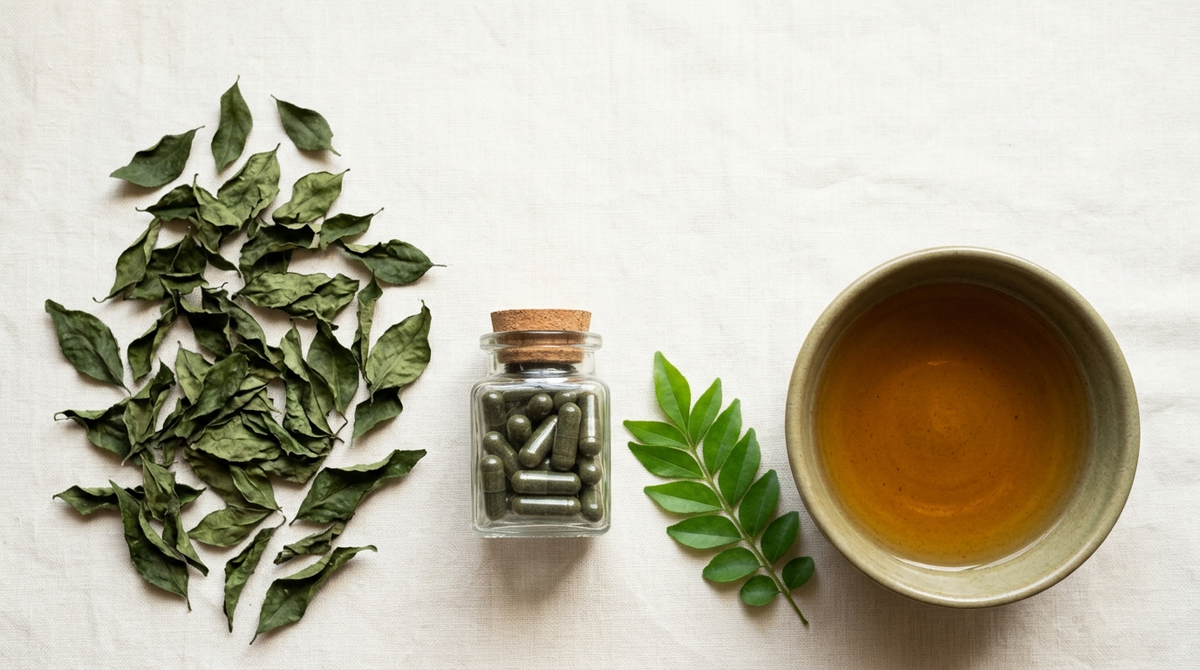
In Sinhala, the plant is called Heenbovitiya. Some English references list it as "Heen Bovitiya," the same plant. Traditional practitioners in Sri Lanka have used the leaves for hepatitis-adjacent complaints and general liver support for generations, usually as a simmered leaf tea taken on an empty stomach. It is one of the more studied Sri Lankan liver herbs in the region, which is part of why Ancient Nutra sources it directly rather than relying on a generic supplier.
How to stack Heenbovitiya
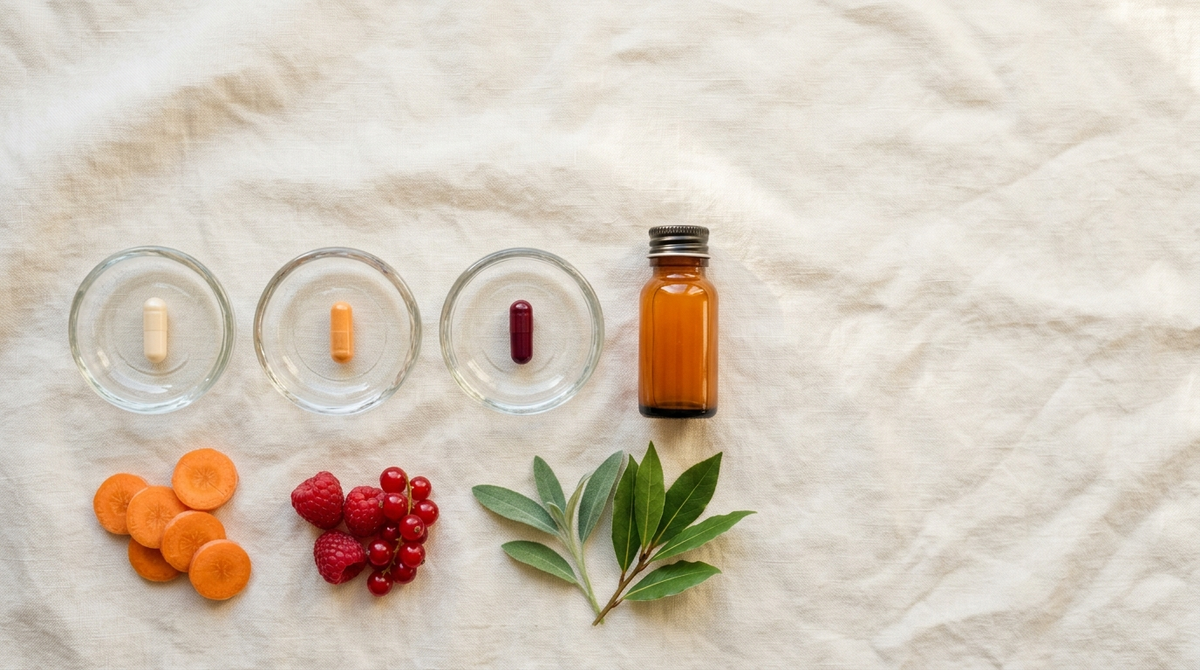
Heenbovitiya is one of three herbs in Ancient Nutra's Liver & Detox System, alongside Yaki Narang and Triphala. The three work on different parts of the same problem: Heenbovitiya on oxidative stress and fat buildup, Yaki Narang Leaves as a Sri Lankan citrus-leaf antioxidant, and Triphala on the digestive side of detox.
This stack is for people who want the fuller liver-and-digestion picture, not everyone needs all three. Someone who just wants a single daily habit can start with Heenbovitiya alone and add the others later if they want more coverage.
How long until you feel something
Most people notice nothing dramatic in the first four weeks, and that is expected. By eight weeks, some people report steadier energy after meals and less of the sluggish, heavy feeling after a rich dinner. The real marker, fatty liver risk and liver enzyme trends, is not something anyone feels day to day. Give it at least 90 days before deciding whether it is doing anything, and pair it with the basics: less added sugar, less alcohol, more sleep. The herb is not the whole plan.
When the team at Ancient Nutra talks to the growers who supply Heenbovitiya in the wet zone, the pattern that comes up most is not urgency. Households there do not reach for it during a health scare. They take it quietly, most mornings, closer to how some families take a daily multivitamin than how anyone approaches a 30-day reset.
The bottom line
Heenbovitiya is not a cleanse, a detox, or a fix for a heavy week. It is a Sri Lankan liver herb with animal-model evidence behind the tradition, best taken the way it has always been taken: daily, in a small dose, without drama. For a ready-made capsule sourced from Sri Lanka's wet zone and tested for purity, that is what Ancient Nutra's Heenbovitiya was built for. Or brew the traditional tea version if that is more your ritual (see Ancient Nutra's Heenbovitiya tonic for that format). The science does not care which bottle, or cup, it comes from.
Sources
- Teng, M.L. et al. "Global Prevalence of Nonalcoholic Fatty Liver Disease." PubMed, 2024.
- "In vitro antioxidant effects and in vivo hepatoprotective effects of Osbeckia octandra..." BMC Complementary Medicine and Therapies, 2025.
- Further reading: Cleveland Clinic, Non-Alcoholic Fatty Liver Disease.
Medical disclaimer: This article is for educational purposes only and is not medical advice. Statements have not been evaluated by the FDA. Ancient Nutra products are not intended to diagnose, treat, cure, or prevent any disease. Speak with a qualified healthcare provider before starting any new supplement, especially if you take prescription medication or have a medical condition.
Written by the Ancient Nutra Wellness Team. The team researches, sources, and tests every ingredient before it earns a place in an Ancient Nutra blend. Questions? Email info@ancientnutra.com or message Ancient Nutra on Instagram.