Ancient Nutra Wellness Team · 22 July 2026 · 6 min read
Flax seeds: the plant omega-3 vegetarians actually absorb
Key takeaways
- Whole flax seeds pass through the gut largely undigested, so the omega-3 inside never reaches your blood. Grinding them is what unlocks it.
- Flax is the richest plant source of ALA, the omega-3 your body cannot make. One tablespoon of ground flax covers a full day's plant omega-3.
- Your body converts only a small share of ALA into EPA and DHA, so flax is a genuine omega-3 source but not a full replacement for fish or algae oil.
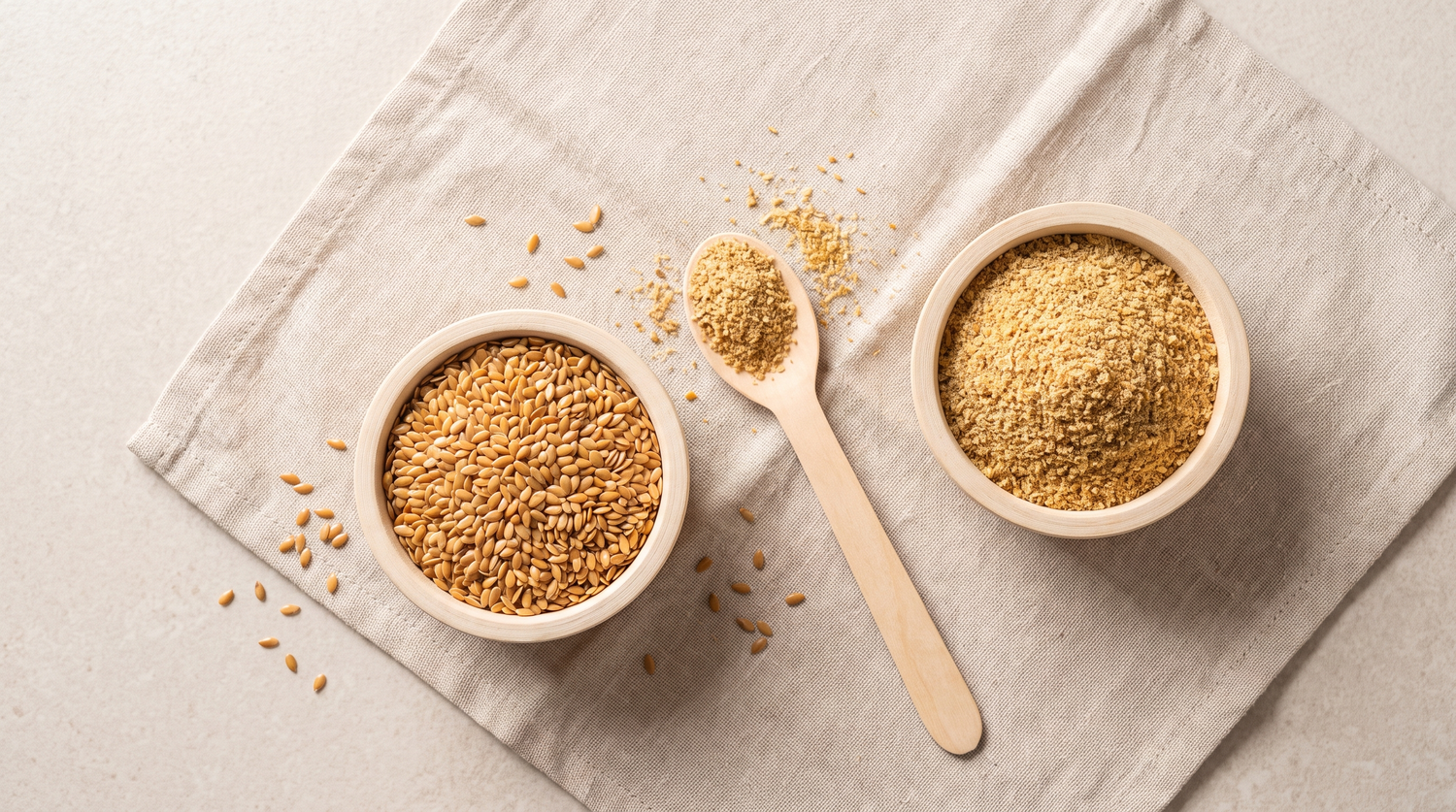
Here is the uncomfortable truth about flax seeds: if you swallow them whole, most of them leave your body exactly as they went in. The tough seed coat that keeps flax fresh on a shelf also keeps your digestive enzymes out. So the omega-3 everyone buys flax for often never gets absorbed at all. The fix is almost insultingly simple. Grind them first.
What flax seeds actually give you
Flax is one of the oldest cultivated crops on earth, grown for its seeds and fibre for thousands of years. The seeds are small, glossy, and golden to reddish brown. What makes them matter now is one thing: they are the richest plant source of alpha-linolenic acid, or ALA, an omega-3 fatty acid your body cannot produce on its own and has to get from food.
The catch is the packaging. That ALA sits locked inside the seed's cell walls, behind a coat built to survive a bird's stomach and a winter in the soil. A study that fed people whole seeds, milled flax, and flax oil found that the milled and oil forms raised omega-3 levels in the blood while whole seeds did not, because they simply passed through (bioavailability study). Grinding ruptures the cell walls and hands the ALA over to your body.
One honest note, because it matters. Your body converts ALA into the longer-chain omega-3s, EPA and DHA, at a low rate: on average around 5 percent to EPA and under 1 percent to DHA (NIH Office of Dietary Supplements). Flax is a real, reliable way to get ALA. It is not a full stand-in for the EPA and DHA in oily fish or algae oil. For most people eating a plant-forward diet, ground flax every day is still one of the simplest omega-3 wins available.
Who should reach for flax every day
Flax earns a spot for a few people in particular:
- Vegetarians and vegans. With no fish on the plate, flax is one of the easiest plant omega-3 sources to add to a normal day.
- Anyone whose digestion needs help. The soluble fibre in flax adds bulk and softness, which is why a spoon in your morning bowl tends to keep things regular.
- People watching cholesterol and heart health. Flax brings fibre, ALA, and plant lignans together, a useful combination for a heart-minded diet.
- Budget-conscious clean eaters. Flax is one of the cheapest nutrient-dense foods on the shelf. A little goes a long way.
Who does not need to rush? If you already eat oily fish two or three times a week, flax is a nice bonus rather than a gap you urgently need to fill. Be honest with yourself about which camp you are in.
How to actually take flax seeds
Keep it simple: one to two tablespoons of ground flax per day. A single tablespoon delivers roughly 1.6 to 2.4 grams of ALA, which already meets the daily adequate intake for omega-3 (about 1.6 grams for men and 1.1 grams for women, per the NIH).
Grind the seeds fresh in a small blender or coffee grinder, or buy them and grind a week's worth at a time. Once ground, flax oxidises faster, so keep the powder in a sealed jar in the fridge. Stir it into oats, yoghurt, smoothies, dough, or a glass of water. Drink water alongside it, because that fibre needs liquid to do its job. Start with one tablespoon for the first week and build from there.
Look for
Clean whole flax seeds you grind fresh, or pre-ground flax kept cold and sealed. Whole seeds store longest, so buying whole and grinding as you go gives you the freshest ALA. Ancient Nutra's Flax Seeds are clean whole golden seeds you can grind at home.
Where flax comes from
Flax, known as alsi across South Asia, has fed people and traditional wellness practices for millennia, valued in Ayurveda as a warming, grounding food and a gentle aid for digestion. The tradition pointed at the seed. Modern nutrition simply told us how to open it: grind it, and the omega-3 the seed has always carried finally becomes yours.
What to stack with flax
Flax plays well with other seeds. Ancient Nutra's Chia Seeds bring their own ALA plus a gel-like fibre that thickens puddings and smoothies, and unlike flax they are digestible whole. If you would rather not measure and grind, a ready blend like Ancient Nutra's 4-in-1 Super Seeds Mix gives you variety in one scoop. This stack is for people building a plant-forward pantry, not something everyone needs. One well-used bag of ground flax is already a solid start.
How long until you feel something
The fibre effects come first. Most people notice steadier digestion within a few days to two weeks of a daily spoonful. The omega-3 side is quieter and slower, working on your blood fat levels over weeks rather than days. As with any food-level change, give it at least ninety days of daily use before you decide whether it belongs in your routine.
The bottom line
Flax is a genuinely good plant omega-3, with one condition attached: grind it, or you are mostly eating decoration. Ground fresh and taken daily, one to two tablespoons is a cheap, simple, foundation-level habit. It will not replace sleep, real meals, or fish if you eat it, but it moves the needle for anyone eating mostly plants.

Ancient Nutra's Flax Seeds
Clean whole golden flax seeds, ready to grind fresh for the plant omega-3 your body can actually absorb.
Shop Flax SeedsSources and further reading
- Bioavailability of ALA from three forms of flaxseed, PubMed.
- Omega-3 Fatty Acids Fact Sheet, NIH Office of Dietary Supplements.
- Flaxseed and heart health, Harvard Health.
Written by the Ancient Nutra Wellness Team. The team researches, sources, and tests every ingredient before it earns a place in an Ancient Nutra blend. Questions? Email info@ancientnutra.com or message Ancient Nutra on Instagram.
Medical disclaimer: This article is for educational purposes only and is not medical advice. Statements have not been evaluated by the FDA. Ancient Nutra products are not intended to diagnose, treat, cure, or prevent any disease. Speak with a qualified healthcare provider before starting any new supplement, especially if you take prescription medication or have a medical condition.