30 August 2026 · 7 min read
Moringa vs Your Multivitamin: What the Leaf Actually Covers
By the Ancient Nutra Editorial Team
- Moringa leaf is a genuine whole food source of beta-carotene, calcium, iron and riboflavin, which is why it gets called a natural multivitamin.
- It is not a complete substitute. Moringa carries no vitamin B12, and 12 mcg of dietary beta-carotene converts to only 1 mcg of usable vitamin A.
- The clearest human trial gave 2,400 mg of leaf powder a day for 12 weeks, so 12 weeks is the window the evidence actually covers, not a lifetime claim.
Somewhere in the last few years, moringa stopped being a vegetable and started being a claim. Green powder, green capsule, and a line on the front that says nature's multivitamin. The tree is real and the nutrition is real. The claim is where it gets loose. A multivitamin is a defined list of nutrients at defined doses, and a leaf is a leaf. The useful question is not whether moringa is impressive. It is which parts of that list a leaf can honestly cover, and which parts it cannot cover at all.
Is moringa actually a multivitamin?
Not in the sense the label implies. Moringa oleifera is a fast growing tree native to the southern foothills of the Himalayas in northwestern India, now cultivated across the tropics, and its leaves have been eaten as a green vegetable for a very long time. Eating a nutrient dense leaf is a good idea. Calling it a multivitamin borrows a word from a product category that promises something different.
A multivitamin is built backwards from a reference list. Someone decides the target for vitamin A, B12, D, iron, zinc and the rest, then blends to hit those targets in a known dose. A leaf is built by the plant, for the plant. What ends up in it depends on the variety, the soil, the season, and how the leaf was dried. That variability is not a flaw in moringa. It is simply what food is. It does mean that no leaf powder can promise a fixed percentage of a daily target the way a formulated tablet can.
So the honest framing is narrower and more useful: moringa is a concentrated green vegetable in a convenient format. Ancient Nutra covers the general nutrient case for the leaf in more depth in its guide to moringa as the most nutrient dense plant. This article is the other half of that story, which is the part about limits.
What the leaf genuinely delivers
Dried moringa leaf is a meaningful whole food source of beta-carotene, which the body uses to make vitamin A, along with calcium, iron, riboflavin and a spread of polyphenols. Those are not trivial nutrients. Calcium and iron in particular are the two that most people who cut back on dairy or meat quietly stop getting enough of, and a green leaf is one of the few foods that carries both.
There is also a small but real body of human research on metabolic markers. In a double blind, randomised, placebo controlled trial published in Nutrients, 65 adults with prediabetes took either 2,400 mg of moringa leaf powder a day or a placebo for 12 weeks. Fasting blood glucose fell 2.3 percent in the moringa group while rising 2.1 percent in the placebo group, and glycated haemoglobin fell 1.5 percent against a 0.7 percent rise. Insulin and insulin resistance showed no meaningful difference between groups.
Those are modest, specific numbers in a specific population, and they are worth reading exactly as written. They say a defined dose of leaf powder nudged two glucose markers over three months in people who already had prediabetes. They do not say moringa replaces anything, and they say nothing about people whose glucose is already normal.
What moringa cannot give you?
This is the part the front of the pack tends to skip, and it is the part that decides whether a leaf can stand in for a tablet.
Vitamin B12. Moringa has none. This is not a moringa failing, it is a plant failing in general. The NIH Office of Dietary Supplements is direct about it: plant foods have no vitamin B12 unless they are fortified. The adult recommended intake is 2.4 mcg a day, and it has to come from animal foods, fortified foods, or a supplement. No amount of green powder closes that gap.
Vitamin A, at the advertised rate. Moringa does carry beta-carotene, but beta-carotene is not vitamin A yet. The conversion is unflattering. By the NIH conversion factors, 1 mcg of retinol activity equivalents equals 1 mcg of retinol but 12 mcg of dietary beta-carotene. Against an adult recommendation of 900 mcg RAE a day for men and 700 for women, a plant source has to carry roughly twelve times the raw number to land in the same place. Leaves rich in beta-carotene still contribute usefully. They just do not contribute at the headline rate.
Vitamin D. Leaves are not a vitamin D source in any practical sense. That one comes from sunlight, oily fish, or a supplement.
None of this makes moringa less worth eating. It makes it a green vegetable rather than a formulation, which is a perfectly good thing to be.
The iron footnote worth knowing
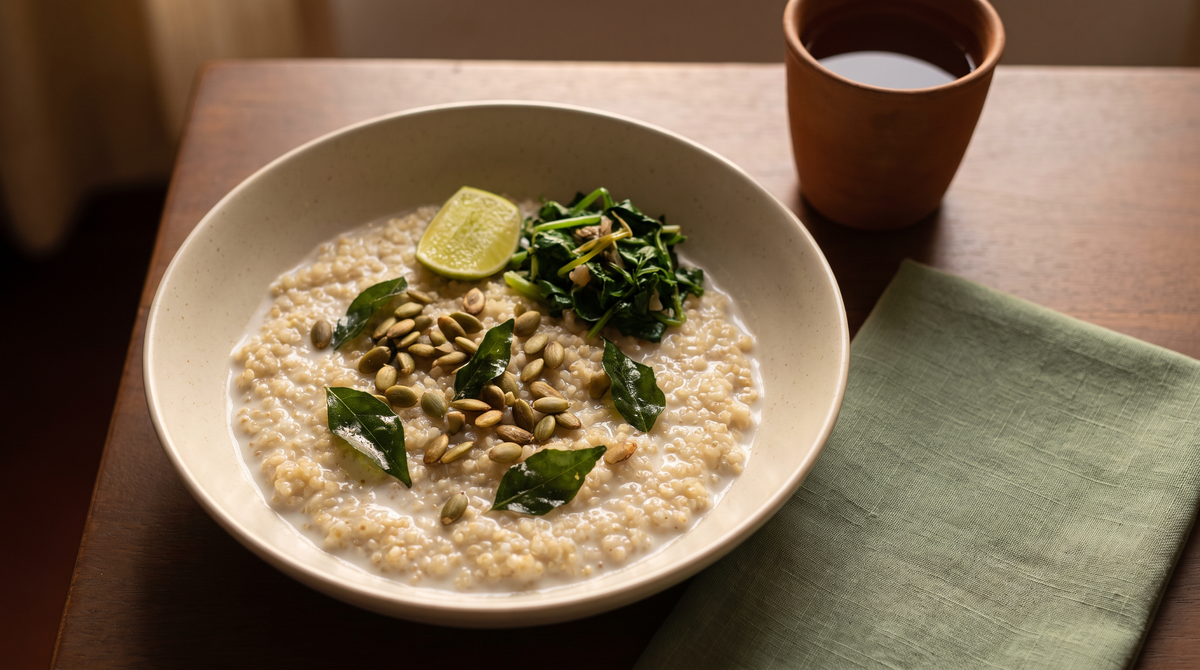
The iron in any leaf is non-heme iron, the plant form, which the body takes up less readily than the iron in meat. Pairing a moringa serving with a source of vitamin C, which in a Sri Lankan kitchen is as simple as a squeeze of lime, is the standard way to help that along. It is a small habit that costs nothing and makes the iron on the label closer to the iron you actually absorb.
How much moringa does a day actually need?
The most defensible number available is the trial dose: 2,400 mg of dried leaf powder a day, taken as six capsules across the day. That is the amount that produced the glucose changes described above, so it is the amount with human evidence attached rather than a marketing round number.
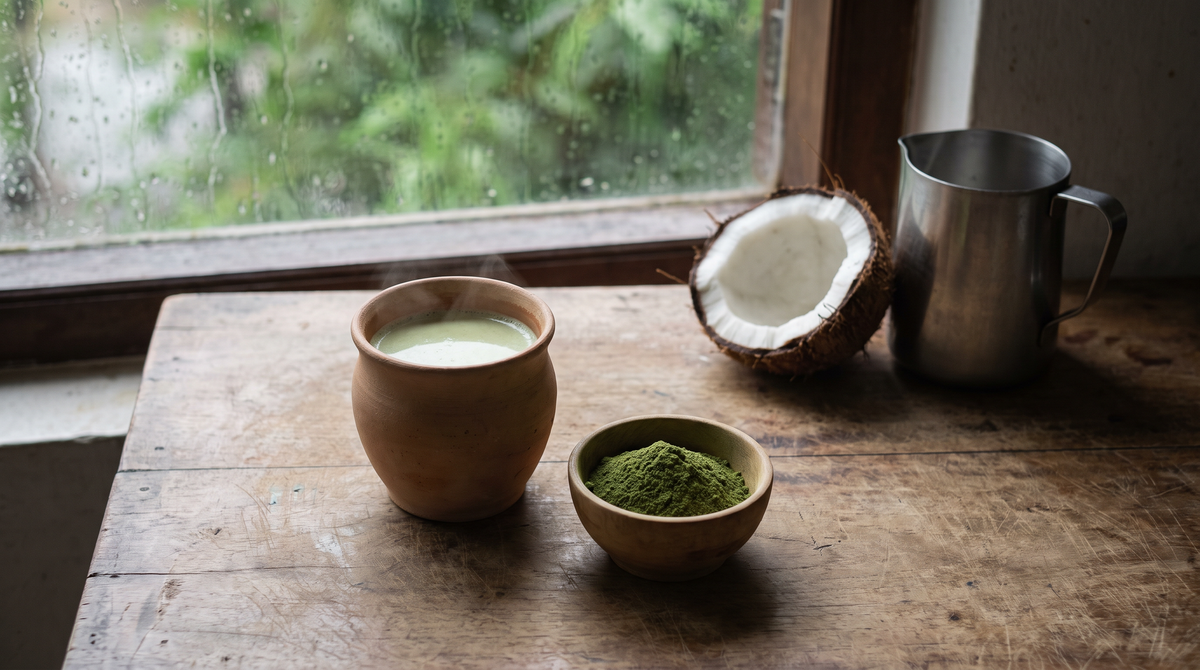
In practice most people take less than that, and less is still food. A level teaspoon of leaf powder stirred into a drink, or a capsule or two with breakfast, is a reasonable everyday serving. Ancient Nutra's Moringa is 500 mg of leaf powder per capsule, so the arithmetic between a food-sized habit and the trial dose is easy to do yourself. Take it with food. Morning suits most routines, mostly because a routine you attach to breakfast is a routine you keep.
Look for
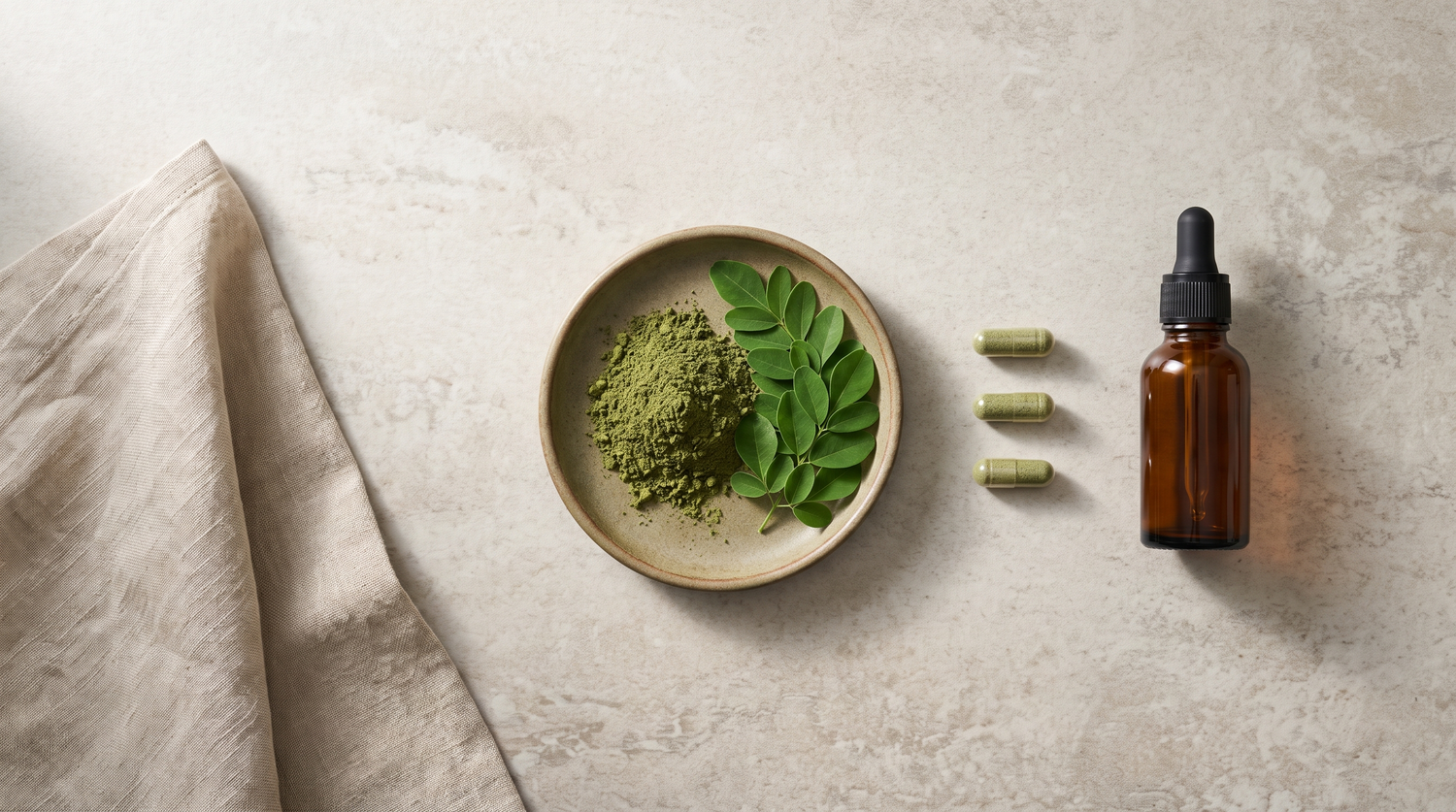
Plain dried leaf powder with the milligram weight per capsule or per serving printed on the pack, not a proprietary blend that hides the amount. Colour is a fair rough guide: well dried moringa leaf stays a deep green, while heat damaged or old stock drifts towards khaki. Ancient Nutra's Moringa states 500 mg of leaf powder per capsule on the label, and Ancient Nutra's Moringa Powder is the same leaf in loose form for anyone who would rather stir it than swallow it.
Where moringa comes from
The tree is native to the sub-Himalayan belt of northwestern India and is now grown across the tropics, including throughout Sri Lanka, where the pods and leaves are ordinary kitchen ingredients rather than a wellness product. The English name drumstick comes from the Tamil murungai, after the long ribbed seed pods. In a Sri Lankan household the leaves go into a mallung or a thin curry, which is worth remembering when a capsule starts to feel exotic. It is a vegetable that happens to travel well in powdered form.
How long before moringa does anything?
Twelve weeks is the honest answer, because that is how long the human trial ran. Anything shorter is guesswork, and anything longer is currently past the edge of the published evidence for this leaf.
What changes first tends to be the ordinary stuff people notice without a blood test, which is digestion settling and the mid-morning dip flattening out. Measurable markers, if they move at all, move on the slower schedule the trial described. Ancient Nutra's own routine guidance for the Daily Wellness System, which pairs Moringa with Turmeric and Spirulina, is daily use with a one week break every 8 to 12 weeks. That rhythm lines up neatly with the trial window, and the break has a practical use beyond anything else: a week off is the cheapest way to find out whether a supplement was doing something. If nothing changes when you stop, that is information worth having.
For readers who want the practical version of slotting this into an existing morning, Ancient Nutra covers that in how to fit moringa into the routine you already have.
The bottom line
Moringa is a good green vegetable in a convenient format, with real minerals, real carotenoids, and one decent human trial behind a specific dose. It is not a multivitamin, and the two nutrients most people take a multivitamin for, B12 and vitamin D, are exactly the two a leaf cannot supply. Treat it as food that earns its place beside a varied diet rather than as a replacement for a formulation, and it is easy to recommend. Treat it as a swap for the tablet, and the gaps are silent ones.
Common questions
Can moringa replace a multivitamin?
No. Moringa covers some of the same ground, particularly beta-carotene, calcium and iron, but it carries no vitamin B12 and is not a practical vitamin D source, which are two of the main reasons people take a multivitamin in the first place.
Does moringa contain vitamin B12?
No. According to the NIH Office of Dietary Supplements, plant foods contain no vitamin B12 unless they have been fortified. The adult recommended intake is 2.4 mcg a day from animal foods, fortified foods or a supplement.
How much moringa powder should you take a day?
The human trial with the clearest result used 2,400 mg of dried leaf powder a day for 12 weeks. Everyday food-sized servings are usually smaller, around a level teaspoon of powder or one to two 500 mg capsules with a meal.
How long does moringa take to work?
Judge it over about 12 weeks, since that is the length of the published human trial. Glucose markers in that study shifted over three months, and anything measured earlier than that is not really being measured.
Is moringa safe to take every day?
Moringa leaf is eaten as an everyday vegetable across South Asia and is rated by NIH LiverTox as at most a possible rare cause of liver injury, with a single attributed published case. Ancient Nutra's own routine guidance is daily use with a one week break every 8 to 12 weeks. Anyone pregnant, on blood thinning or thyroid medication, or managing a medical condition should speak to a doctor first.

Moringa, 60 capsules
500 mg of dried moringa leaf powder per capsule, with the weight stated on the label.
Shop MoringaSources and further reading
- Gómez-Martínez S, et al. "Moringa oleifera Leaf Supplementation as a Glycemic Control Strategy in Subjects with Prediabetes." Nutrients 2021;14(1):57, PubMed Central.
- Vitamin B12 Fact Sheet for Health Professionals, NIH Office of Dietary Supplements.
- Vitamin A and Carotenoids Fact Sheet for Health Professionals, NIH Office of Dietary Supplements.
- Moringa, LiverTox, National Institute of Diabetes and Digestive and Kidney Diseases.
Written by the Ancient Nutra Wellness Team. The team researches, sources, and tests every ingredient before it earns a place in an Ancient Nutra blend. Questions? Email info@ancientnutra.com or message Ancient Nutra on Instagram.
Medical disclaimer: This article is for educational purposes only and is not medical advice. Statements have not been evaluated by the FDA. Ancient Nutra products are not intended to diagnose, treat, cure, or prevent any disease. Speak with a qualified healthcare provider before starting any new supplement, especially if you take prescription medication or have a medical condition.