By the Ancient Nutra Editorial Team
- "Ceremonial" and "culinary" are trade words, not legally defined grades, so the word on the tin is a starting point and not a guarantee.
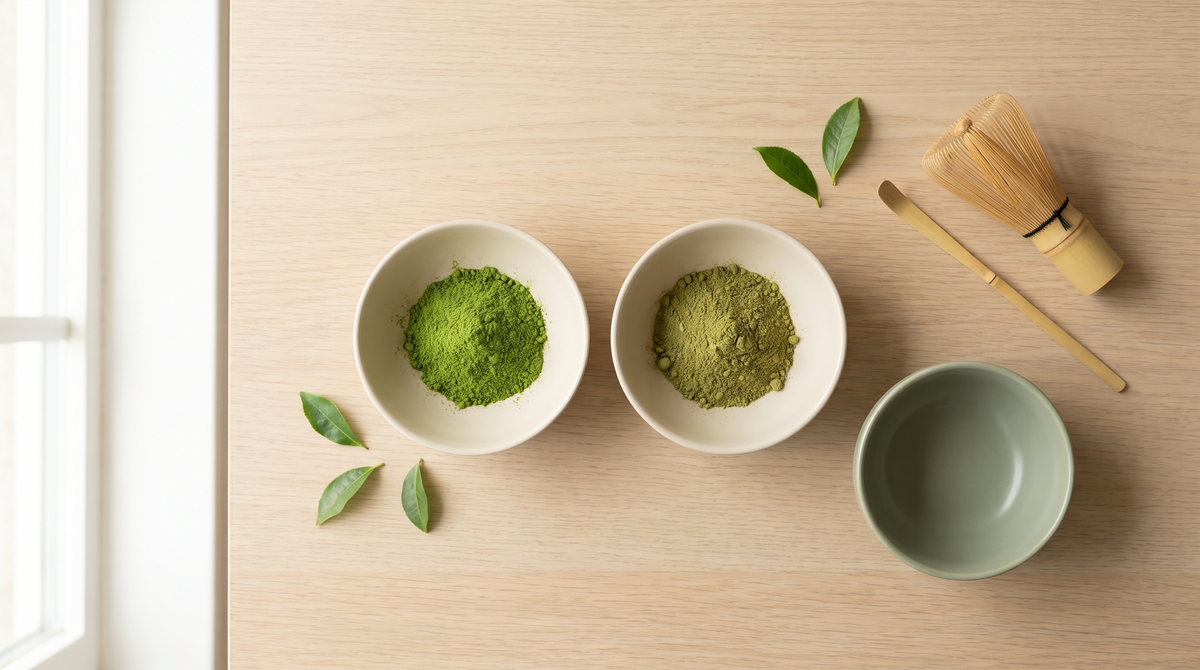
- Colour, aroma, texture and taste tell you more than the label: bright green, fine and smooth usually means a drink for whisking, duller and sharper usually means a powder for baking.
- Matcha is a caffeine source. The FDA cites 400 mg a day as an amount not generally associated with negative effects for most adults, and pregnant or breastfeeding readers should ask a healthcare provider about their limit.
Walk down a tea aisle or scroll an online shop and matcha comes in two tidy boxes: ceremonial for whisking, culinary for everything else. It sounds like an official grading system, but it is not. That gap is where a lot of wasted money and disappointing cups come from.
Here is what those two words usually mean, what you can check yourself, and how to match a matcha to the way you plan to use it.
Know what the grade on the tin really means
Matcha is a fine powder made from tea leaves that are grown in shade for a period before harvest, steamed, dried and ground. Shading is the reason the leaves stay a deep green and taste of umami and gentle sweetness instead of sharp bitterness.
"Ceremonial" is generally used for matcha meant to be whisked with hot water and drunk on its own. "Culinary" is generally used for matcha meant to be mixed into lattes, baking and smoothies. There is no single legal definition behind either word, so one brand's culinary can taste better than another brand's ceremonial. Treat the word as the producer's description of intended use.
Judge matcha by colour, texture and taste
A teaspoon of powder tells you more than the front of the pack.
- Colour. A vivid, fresh green usually points to young shaded leaves and careful handling. A yellowish or brownish green often means older leaf, more oxidation or a tin that has been open for a long time.
- Texture. Good matcha feels silky and clings to your finger like fine flour. A gritty or coarse powder will not suspend well in water.
- Aroma. Look for a fresh, grassy and slightly sweet smell. A hay-like or dusty smell is a warning.
- Taste. A well-made whisked cup is rounded, savoury and lightly sweet. Strong bitterness and a harsh finish usually mean the powder suits milk and sugar better than a plain bowl.
Check the origin and the ingredient list too. The only ingredient should be green tea leaf. Anything sweetened, flavoured or blended should say so plainly.
Match the matcha to what you are making
For a plain whisked bowl
With only hot water, the powder carries the whole flavour, so this is where a smoother, sweeter matcha earns its price. Use water that has cooled slightly after boiling, since very hot water can bring out bitterness, and whisk until a fine foam forms.
For lattes, baking and smoothies
Milk, sugar, vanilla and fruit mask subtle flavour, so an expensive powder is partly wasted here. A sturdier, more affordable matcha usually does the job. The team's matcha moringa green latte is an example of a recipe where the milk does much of the work.
For a weekend ritual
If you enjoy the slow part of matcha, the whisk, the bowl and the colour, spend on the smooth one and keep it for those moments. The team's iced ceremonial matcha weekend recipe shows one way to use it.
Green tea leaf as the only ingredient, a stated origin, and a powder that is bright and fine. Ancient Nutra's Ceremonial Matcha is made in Japan from early-spring leaves that are shaded, steamed and stone-ground, and the product page recommends it for whisking with hot, not boiling, water.
Keep the caffeine and the timing in mind
Matcha is whole tea leaf, so it brings caffeine with it, and the amount varies between products and with how much powder you use. The FDA cites 400 mg of caffeine a day as an amount not generally associated with negative effects for most adults. That total counts coffee, tea, cola and energy drinks together, so a matcha on top of several coffees can add up.
Some people are more sensitive and notice jitters or poor sleep from smaller amounts, so a morning or early afternoon cup is a gentler choice than one late in the evening. The FDA advises anyone who is pregnant, trying to become pregnant or breastfeeding to talk to a healthcare provider about whether to limit caffeine.
Tea compounds can reduce how well the body absorbs iron from plant foods, so if you are working on your iron intake, have matcha between meals instead of with an iron-rich one.
Know who should check first
Brewed matcha is a different thing from a concentrated green tea extract capsule, which is a much higher dose of tea compounds and carries its own cautions. This article is about the drink only. If you take prescription medication, have a heart rhythm condition, anxiety or trouble sleeping, or have been told to limit caffeine, speak to your healthcare provider before making matcha a daily habit.
The bottom line
Treat "ceremonial" and "culinary" as a hint about intended use, not as a regulated grade. Choose by colour, smoothness and taste, buy the smoother powder for plain whisked bowls, and keep the sturdier one for milk and baking. Keep an eye on your total caffeine for the day.

Matcha Tea Powder, Ceremonial 50g
Japanese ceremonial matcha, stone-ground, made for whisking with hot water.
Shop Ceremonial MatchaSources and further reading
- Spilling the Beans: How Much Caffeine Is Too Much?, U.S. Food and Drug Administration.
Written by the Ancient Nutra Wellness Team. The team researches, sources, and tests every ingredient before it earns a place in an Ancient Nutra blend. Questions? Email info@ancientnutra.com or message Ancient Nutra on Instagram.
Medical disclaimer: This article is for educational purposes only and is not medical advice. Statements have not been evaluated by the FDA. Ancient Nutra products are not intended to diagnose, treat, cure, or prevent any disease. Speak with a qualified healthcare provider before starting any new supplement, especially if you take prescription medication or have a medical condition.