Ancient Nutra Wellness Team · 22 June 2026 · Updated 6 August 2026 · 6 min read
Moringa, the most nutrient-dense plant on earth (and how to actually use it)
Key takeaways
- Moringa leaf is one of the densest plant sources of iron, calcium, beta-carotene and protein we know of, roughly a quarter protein by dry weight.
- The viral "more iron than spinach, more calcium than milk" numbers are directionally real but stack dried powder against fresh food, so take the exact multiples lightly.
- In small trials, about 2.4g of leaf powder a day nudged fasting glucose and HbA1c down modestly. Real, but early and small.
- Leaf is the everyday food. Root, bark, and their extracts are best avoided in pregnancy. Please read the safety note below.
Here is the honest version of the moringa story. It is not a magic tree, and it does not do 25 things at once. What it is, is one of the most nutrient-dense leaves you can eat, a plant that has been food and medicine in Sri Lankan gardens for generations. The powder in the pouch is new. The tree is not. This is what moringa actually delivers, who it helps, and how to use it without falling for the marketing.
What moringa really is
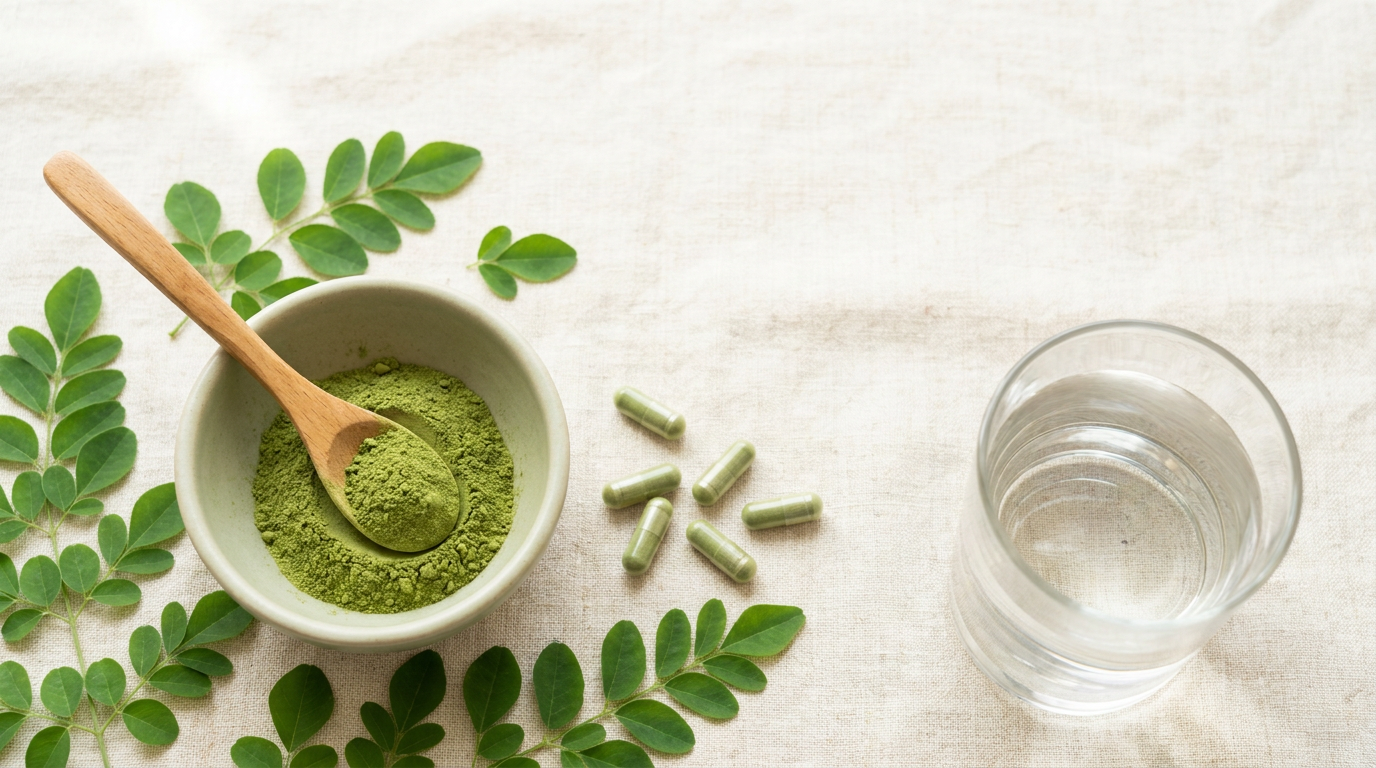
Moringa comes from the leaves of the drumstick tree, a fast-growing plant native to South Asia. In Sri Lanka the tree is murunga, and its long green pods and small round leaves have been everyday food for centuries. The leaves are dried and milled into a fine green powder, or pressed into capsules. That is the form most people meet today.
What makes the leaf unusual is its density. Lab assays of dried moringa leaf show it is genuinely rich in iron, calcium, beta-carotene (the plant form of vitamin A), vitamin C, and plant protein, at roughly 25% protein by dry weight (peer-reviewed nutrient assay). That protein number is rare for a leafy green. The density is the real story. The famous "seven times the vitamin C of oranges" ratios trace back to an old promotional chart that compares dried powder to fresh food, so they are stacked in moringa's favor.
What moringa actually does
The interesting part is not a vitamin megadose. It is the sulfur compounds. Moringa leaf is full of polyphenols and isothiocyanates, and those isothiocyanates gently switch on the body's own antioxidant defense system. That is the plain-language "why" behind most of what people notice.
The strongest human signal is on blood sugar. Small trials in prediabetic adults, taking about 2.4g of leaf powder a day for twelve weeks, saw modest but real drops in fasting glucose and HbA1c, along with lower inflammation markers (narrative review of human studies). Modest and small are the operative words. These are short studies, the powders are not standardized, and in full type 2 diabetes the results were mixed. Treat moringa as a helpful daily green, not a substitute for medication.
Safety note
Rare cases of liver injury have been reported with moringa supplements. The US National Institutes of Health LiverTox database lists moringa as a possible rare cause of clinically apparent liver injury (NIH LiverTox). Stop taking it and seek medical advice if you notice yellowing of the eyes or skin, dark urine, or unusual tiredness.
Also, as below: avoid root, bark and their extracts in pregnancy, and speak to your doctor first if you take blood-sugar or blood-thinning medication.
Who should consider moringa, and who can skip it
Moringa earns its place as a dense, real food. It fits some people better than others.
- People whose diets are light on greens and who want an easy nutritional floor.
- Adults keeping an eye on blood sugar who want a food-first daily habit alongside the basics.
- Anyone who wants iron, calcium, and plant protein from a whole-food source rather than isolated pills.
Skip it, or check with a doctor first, if any of these apply. If you are pregnant or trying to conceive, sit this one out, especially anything made from root or bark rather than leaf, since those parts carry uterine-stimulant properties. If you take blood-sugar or blood-thinning medication, loop in your doctor, because moringa can nudge both and may stimulate clotting (NIH LactMed). And if your plate is already varied and green, moringa is a nice-to-have, not a rescue.
The dose that does something
The human studies that showed anything used a couple of grams of leaf powder a day, not heroic scoops. More is not more. A practical daily range is about 2 to 5g of leaf powder, or the equivalent in capsules, taken with food. Start at the low end for a week so your gut adjusts, then settle into a steady daily habit.
One quiet detail matters: heat can deactivate the sulfur compounds that make moringa interesting. So stir the powder into food that is warm, not boiling, and add it near the end of cooking rather than the start.
Look for
Pure dried moringa leaf, single ingredient, with no fillers. Ancient Nutra's Moringa capsules use whole dried leaf so you get the food, not an isolate.
How to actually use it
Capsules are the no-fuss route: swallow, done, no green taste. The powder is more flexible if you like to cook and want to build moringa into meals. It has a mild, slightly grassy flavor that hides easily.
Stir a teaspoon of Ancient Nutra's Moringa Powder into a morning smoothie, a glass of king coconut water, warm dhal, or a bowl of curd. Add it after the heat is off. The goal is a small daily amount you will actually keep up, not a giant one-off scoop you dread.
Where moringa comes from
Long before it was a powder in a pouch, murunga was a tree in the garden. Its pods and leaves are a fixture of Sri Lankan and South Indian kitchens, and the plant has a long place in Ayurveda, where various parts were used well before the superfood label existed. The modern lab work is simply catching up to what village kitchens already knew: the leaf is worth eating.
What to stack it with
Moringa plays well with other daily greens rather than replacing them. If you would rather cover several greens in one capsule instead of managing separate powders, a blended greens option like Ancient Nutra's Green-O-Mighty pairs moringa with complementary plants. This stack is for people who want a simple daily nutritional base, not for anyone already eating a wide, plant-heavy diet.
How long until you feel something
Be patient. Moringa is a food, and foods work quietly. The blood-sugar trials ran twelve weeks before they measured changes, so twelve weeks is the honest window to judge it by: that is the period the evidence actually covers, and we would not suggest inventing a longer one. Some people notice steadier energy and easier digestion within a few weeks. The deeper markers move slowly, if at all. Rather than treating it as an open-ended daily habit, review how you are doing at that point, and with your doctor if you take medication.
The bottom line
Moringa is not a miracle. It is one of the most nutrient-dense leaves you can add to a normal day, with a modest, food-first effect on blood sugar and a real place in Sri Lankan kitchens. Take a couple of grams of leaf a day, with food, read the safety note above, and judge it over the twelve weeks the research actually covers. Ancient Nutra's Moringa is whole dried leaf, in a capsule or a powder, and the tree does not care which one you reach for.

Moringa (60 capsules)
Whole dried moringa leaf: iron, calcium, beta-carotene and plant protein in one daily green.
Shop MoringaSources and further reading
- Basic Nutritional and Antioxidant Properties of Moringa oleifera, NIH / PMC.
- Moringa oleifera as an Adjunct Therapeutic Candidate: A Narrative Review of Human Studies, NIH / PMC.
- Moringa monograph (safety, lactation, clotting), NIH LactMed.
- Moringa oleifera, NIH LiverTox.
Written by the Ancient Nutra Wellness Team. The team researches, sources, and tests every ingredient before it earns a place in an Ancient Nutra blend. Questions? Email info@ancientnutra.com or message Ancient Nutra on Instagram.
Medical disclaimer: This article is for educational purposes only and is not medical advice. Statements have not been evaluated by the FDA. Ancient Nutra products are not intended to diagnose, treat, cure, or prevent any disease. Speak with a qualified healthcare provider before starting any new supplement, especially if you take prescription medication or have a medical condition.