Ancient Nutra Wellness Team · 2 July 2026 · 6 min read
Hathawariya, the Sri Lankan root women reach for through change
Key takeaways
- Hathawariya is the Sri Lankan name for Shatavari, a root used for centuries as a women's tonic through the reproductive years and into menopause.
- It works as an adaptogen, helping the body hold steady under stress rather than acting like a fast, drug-style fix.
- In a 2025 randomized, placebo-controlled trial, Shatavari root extract improved menopause comfort and stress scores, with a stronger effect when paired with Ashwagandha.
- A sensible daily amount is roughly 500 to 1,000 mg of root, taken with food and given at least 8 to 12 weeks to show up.
Most women do not need a cabinet full of hormone support. They need sleep, protein, and one steady herb they can take for three months without thinking about it. In Sri Lanka, that herb has a name older than the word adaptogen. It is called Hathawariya, and it has quietly supported women through their hardest transitions for generations. The rest of the world knows it as Shatavari.
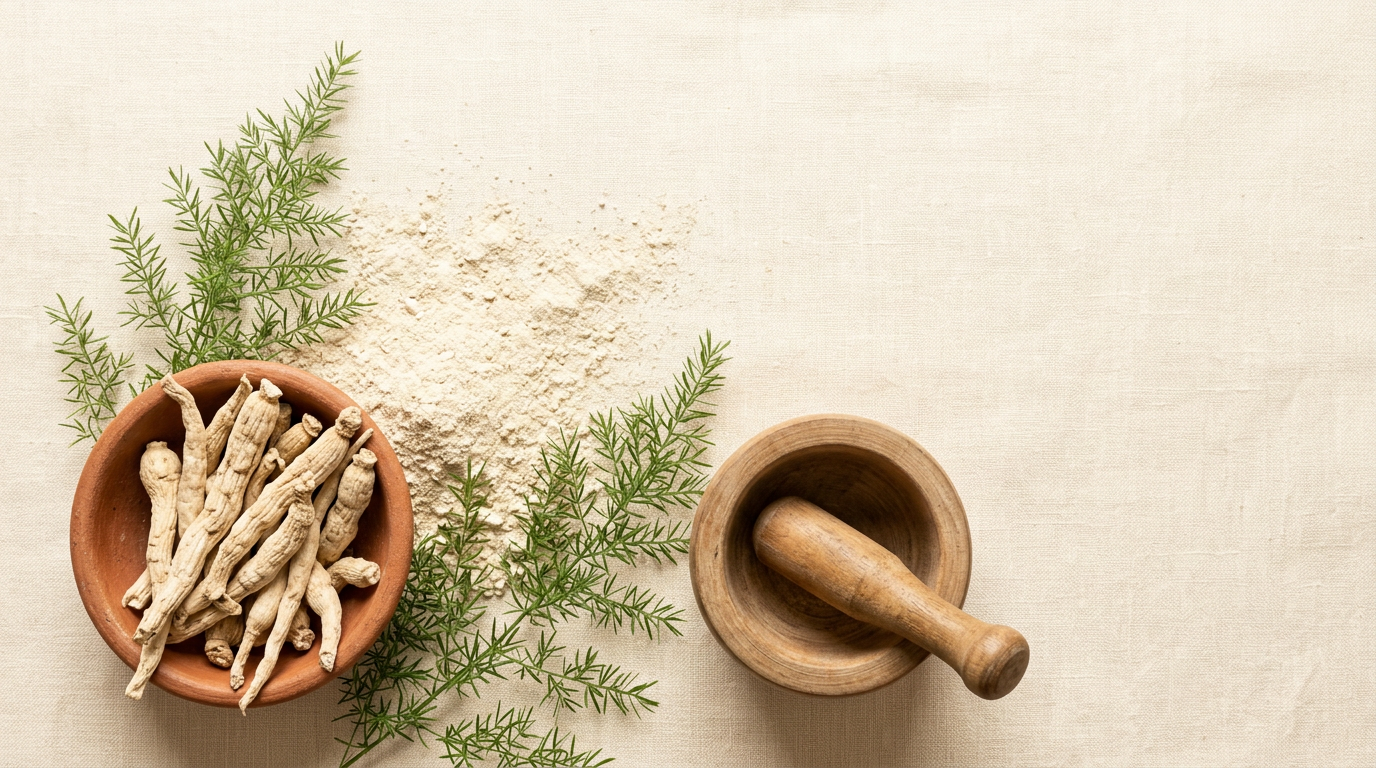
Hathawariya is the root of a climbing, feathery shrub that grows across Sri Lanka and South Asia. In Ayurveda it is classed as a rasayana, a tonic taken to restore rather than to stimulate. Women have leaned on it through their cycling years, after childbirth, and into menopause. Its name is often translated as "she who has a hundred roots," a nod to both the plant and the women it was made for.
What Hathawariya actually does
Hathawariya is an adaptogen, which is a plain way of saying it helps the body hold steady under stress instead of swinging. For women, that steadiness tends to show up in two places first: mood and cycle comfort.
The root is rich in steroidal saponins called shatavarins, the compounds most of its activity is credited to (Journal of Traditional and Complementary Medicine). These behave a little like the body's own signalling molecules, which is part of why Hathawariya has long been used around hormonal change rather than for one narrow symptom.
The modern research is early, but it points the right way. In a 2025 randomized, double-blind, placebo-controlled trial, women taking Shatavari root extract reported better menopause comfort scores and lower perceived stress than women on a placebo (Frontiers in Reproductive Health, 2025). The effect was stronger when Shatavari was paired with Ashwagandha, the classic Ayurvedic stress duo. If cortisol and broken sleep are your bigger issue, Ancient Nutra's Ashwagandha is the natural partner here.
What Hathawariya does not do is behave like a drug. It will not override a thyroid problem or replace medical care for heavy bleeding or severe menopause symptoms. It works quietly, in the background, over weeks.
Who Hathawariya is for
This is a tonic, not a treatment, so it suits some seasons of life more than others.
- Women in perimenopause and menopause who want a gentler first step for comfort and mood before anything stronger.
- New and nursing mothers, in the tradition Hathawariya is best known for, where it has long been used as a postpartum recovery root.
- Women under steady stress whose cycles and sleep feel off because life, not biology, is the problem.
- Anyone who runs hot, since Hathawariya is a cooling herb in the Ayurvedic sense and pairs well with a cooling routine.
Who does not need it: a woman in her twenties with regular cycles, good sleep, and no complaints. Fix nothing that is not broken. Hathawariya earns its place when the body is under real demand, not as insurance against an ordinary week.
How to actually take Hathawariya
Keep it simple and keep it daily. A sensible range is roughly 500 to 1,000 mg of Shatavari root a day, which is one to two capsules for most whole-root products. Take it with food, since it sits easier on a full stomach, and split it morning and evening if you are at the higher end.
There is no need to cycle on and off. Hathawariya is a slow tonic, so consistency matters more than dose. The first thing most women notice is steadier mood and sleep, usually before anything to do with the cycle shifts. Give it a real run before you judge it.
Look for
Whole Shatavari root in a clean capsule, 500 to 1,000 mg a day, with no fillers or added stimulants. Ancient Nutra's Hathawariya (Shatavari) capsules use whole root, so you get the full saponin profile rather than an isolate.
Where Hathawariya comes from
Hathawariya grows wild across Sri Lanka, its thin stems climbing through hedges with soft, needle-like leaves that give the plant its feathery look. In Sri Lankan and wider Ayurvedic practice it has always been a women's herb first, given after birth and through the change of life. The tradition arrived at this root long before any lab could explain it, which is usually a good sign that a plant is worth a second look. Modern chemistry has simply started to catalogue what village knowledge already trusted.
What to stack Hathawariya with
Hathawariya does its best work inside a small, sensible stack. For stress and sleep, Ashwagandha is the obvious partner, and it is the pairing the 2025 trial found most effective. The two cover different ground: Shatavari for the reproductive and cooling side, Ashwagandha for cortisol and recovery.
If you tend to run hot or deal with skin flare-ups alongside hormonal shifts, a cooling companion helps. Ancient Nutra's Iramusu, also called Sarsaparilla, is the traditional Sri Lankan cooling root and sits naturally beside Hathawariya in a warm-climate routine. This stack is for women navigating real hormonal change, not something everyone needs.
How long Hathawariya takes to work
Expect weeks, not days. Mood and sleep tend to settle first, often inside the first three to four weeks. Anything to do with the cycle or menopause comfort takes longer, usually eight to twelve weeks, because a tonic works by nudging the body back toward its own balance rather than forcing a change. The honest rule is to give it a full ninety days before you decide whether it belongs in your routine.
The bottom line
Hathawariya is not a miracle and it does not pretend to be. It is a steady, cooling women's tonic that has earned its long reputation the slow way, and the early modern research is starting to agree. Take it daily, give it a season, and build the rest of the routine around sleep, food, and stress. For that quiet, everyday version of women's wellness, Ancient Nutra's Hathawariya (Shatavari) is a simple place to start. The tradition and the science do not care which bottle it comes in.

Hathawariya (Shatavari), 60 capsules
Whole-root Shatavari, the Sri Lankan women's adaptogen for mood, cycle comfort, and calm through change.
Shop Hathawariya (Shatavari)Sources and further reading
- Menopause and stress trial, Frontiers in Reproductive Health (2025).
- Plant profile, phytochemistry and pharmacology of Asparagus racemosus, Journal of Traditional and Complementary Medicine (PMC).
- Shatavari supplementation and skeletal muscle in postmenopausal women, PMC (2024).
Written by the Ancient Nutra Wellness Team. The team researches, sources, and tests every ingredient before it earns a place in an Ancient Nutra blend. Questions? Email info@ancientnutra.com or message Ancient Nutra on Instagram.
Medical disclaimer: This article is for educational purposes only and is not medical advice. Statements have not been evaluated by the FDA. Ancient Nutra products are not intended to diagnose, treat, cure, or prevent any disease. Speak with a qualified healthcare provider before starting any new supplement, especially if you are pregnant, nursing, take prescription medication, or have a medical condition.