Ancient Nutra Wellness Team · 14 August 2026 · 6 min read
A Gentler Morning Plate: Breakfast That Suits Your Gut
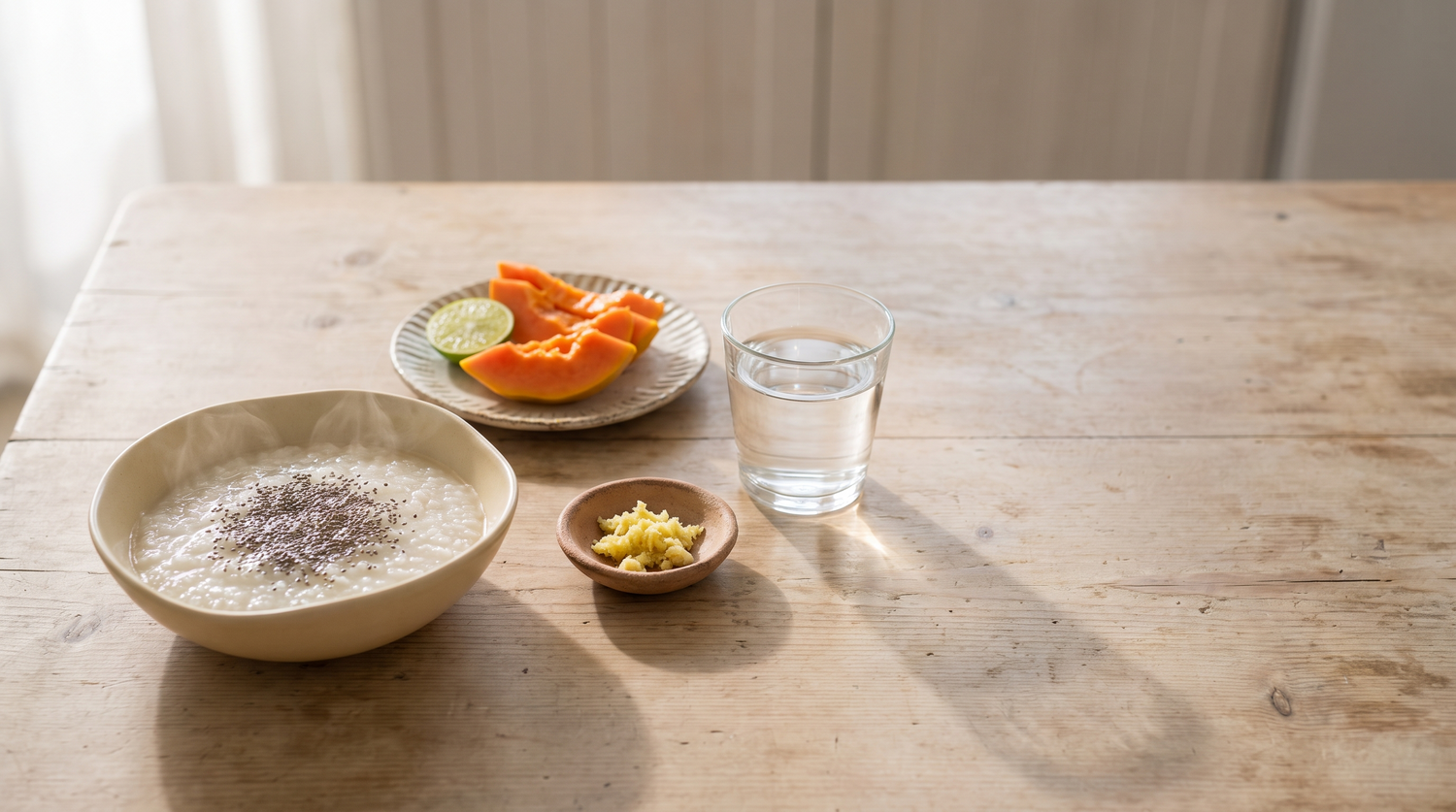
- A gentler morning plate is four things: something warm and soft, fibre that has already absorbed its water, one ripe fruit, and something warming to finish.
- Roughly 94 percent of adults fall short of the adequate daily fibre intake, averaging about 17 grams a day against 25 grams for women and 38 grams for men.
- Chia seeds must be soaked before eating, never swallowed dry and chased with water, because the gel forms in minutes and one documented case ended in complete oesophageal obstruction.
- The whole plate takes about ten minutes and asks nothing of a stomach that has been asleep for eight hours.
Most mornings do not go wrong because of what is on the plate. They go wrong because breakfast arrives cold, rushed, and heavy on things that ask a great deal of a stomach that has been asleep for eight hours. A gentler morning plate is the low-fuss correction. Warm food first. Fibre that has already taken on its water. One ripe fruit. Something warming to finish. It takes about ten minutes on a weekday, it uses what is already in most Sri Lankan kitchens, and it sits alongside a daily gut practice instead of competing with it.
Start warm, and keep the first bite soft
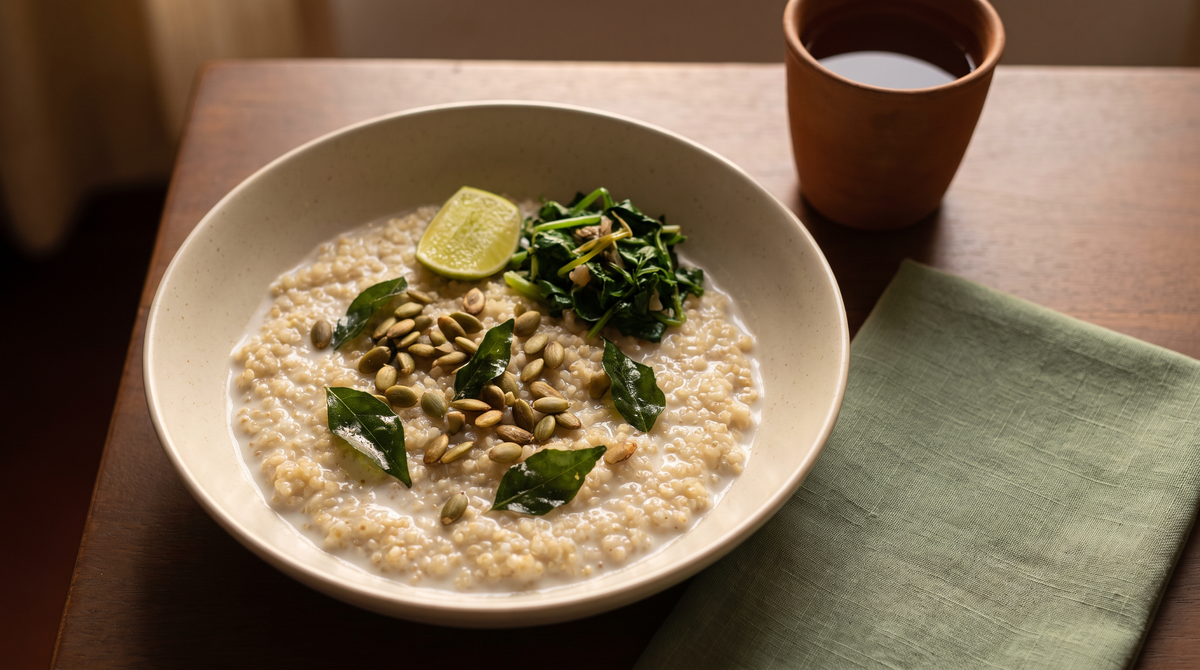
The first thing to change is temperature, not ingredients. Cold cereal and cold milk land in a body that has not moved yet. A soft, warm bowl asks less: rice porridge, thin oats, or plain congee simmered until the grains break down. Sri Lankan kitchens have opened the day this way for generations with kanda, a thin rice-and-herb porridge taken before anything else. That is the whole idea borrowed forward, minus the ceremony.
Texture matters as much as heat. Anything that needs real chewing at 6:30 in the morning tends to get skipped, and a skipped breakfast is what sends people back to biscuits at ten. Soft, warm, and slightly bland is not a compromise here. It is the point.
Choose fibre that has already taken on its water
Fibre is the gap almost everyone has. Approximately 94 percent of American children and adults fail to meet adequate intake levels for dietary fibre, with adults averaging around 17 grams a day between 2017 and 2020 against an adequate intake of 25 grams for women and 38 grams for men, per a clinical review published on the NIH's NCBI Bookshelf. Sri Lankan plates are not automatically better here once rice is white and vegetables are an afterthought.
Chia is the easiest way to close part of that gap on a morning plate. The seed comes from Salvia hispanica, a mint-family plant native to central Mexico and Guatemala and now grown commercially across South America and Australia. It carries both soluble and insoluble fibre, and because it forms a gel, it changes the texture of a bowl rather than adding grit to it.
The rule that matters: soak it. One tablespoon of Ancient Nutra's Chia Seeds in three to four tablespoons of water or milk, left for ten minutes, gives a soft gel that stirs straight into porridge. Dry seeds swallowed on their own and chased with water are a genuinely bad idea. A case reported in the American Journal of Gastroenterology described complete lower oesophageal obstruction after exactly that, because dry chia begins forming a hydrogel the moment it meets liquid and can absorb many times its own weight. Anyone with a narrowed or sensitive food pipe should be especially careful, and chia allergy, while uncommon, does exist.
Look for
Whole, unbroken, dry-stored seeds with a clean smell and no clumping. Chia is high in oil, so a rancid or musty note means the pack has been open or warm too long. Ancient Nutra's Chia Seeds come in a 100g pack that is realistic to finish while fresh, which matters more than buying in bulk.
Keep one ripe fruit, at room temperature
One fruit is enough. Ripe papaya (Carica papaya) is the obvious pick on this island: it is soft, it needs no preparation beyond a knife, and it is cheap most of the year. Take it out of the fridge while the porridge simmers so it is not cold when it reaches the plate. A squeeze of lime lifts it and keeps the plate from tasting flat.
Ripeness is the only thing worth being fussy about. Underripe papaya is firm, faintly bitter, and much harder work first thing in the morning. If papaya is not around, banana or soft-stewed apple does the same job.
Finish with ginger instead of a second coffee
The end of the plate is where most people reach for another cup of coffee on an empty stomach. Ginger is the gentler swap. Grate a coin of fresh rhizome (Zingiber officinale, grown across India, China, Nigeria and Sri Lanka) into hot water, let it stand three minutes, and drink it warm. In traditional practice across South Asia it has long been taken after food for a settled stomach, and it is pleasant enough that the habit sticks.
For anyone who wants the same thing without grating at dawn, Ancient Nutra's Ginger capsules cover the same ground with a glass of water. Ancient Nutra's Beli, from the Sri Lankan bael fruit, is the other traditional option people already keep in the house for a temperamental gut.
Build the plate in ten minutes
- Soak the chia first. One tablespoon of seeds in three to four tablespoons of water or milk. Stir once, leave it. This is the step that cannot be skipped or shortened.
- Start the porridge. A quarter cup of rice to two cups of water, simmered and stirred occasionally for about fifteen minutes, or five minutes if using leftover cooked rice. A pinch of salt only.
- Cut the fruit. Slice the papaya while the pot works. Squeeze lime over it and leave it out of the fridge.
- Steep the ginger. Grate a thumb-tip of ginger into a mug of hot water and cover it while the porridge finishes.
- Assemble and sit down. Stir the chia gel through the warm porridge, put the fruit beside it, ginger water on the side. Ten minutes, one pot, one knife.
Fit a daily gut practice around the plate, not into it
A morning plate is food, not a protocol, and it works best when a daily herbal practice sits beside it rather than on top of it. For anyone already taking a traditional digestive formula, the plate is what gives it somewhere soft to land. The companion reading on what each of Triphala's three fruits actually does covers that side of the routine in detail, and the 30-second aloe vera morning move is the shorter version for mornings when even ten minutes is not available.
One habit at a time is the honest advice. Change the temperature of breakfast first. Add the soaked chia second. Everything after that is optional.
The bottom line
A gentler morning plate is warm food, soaked fibre, one ripe fruit, and something warming to finish. It closes part of a fibre gap that catches most adults, it takes ten minutes, and it asks very little of a body that has not woken up yet. The seeds are the only part that needs buying and the only part that needs planning the night before.

Chia Seeds 100g
Whole chia seeds for soaking into porridge, curd, or overnight bowls. Soak before eating.
Shop Chia SeedsSources and further reading
- The Role of Dietary Fiber in Health Promotion and Disease Prevention, StatPearls, NCBI Bookshelf, National Institutes of Health.
- Safety of chia seeds (Salvia hispanica L.) as a novel food for extended uses, EFSA Panel on Nutrition, Novel Foods and Food Allergens, EFSA Journal via PubMed Central.
- Watch It Grow: Esophageal Impaction With Chia Seeds, American Journal of Gastroenterology.
Written by the Ancient Nutra Wellness Team. The team researches, sources, and tests every ingredient before it earns a place in an Ancient Nutra blend. Questions? Email info@ancientnutra.com or message Ancient Nutra on Instagram.
Medical disclaimer: This article is for educational purposes only and is not medical advice. Statements have not been evaluated by the FDA. Ancient Nutra products are not intended to diagnose, treat, cure, or prevent any disease. Speak with a qualified healthcare provider before starting any new supplement, especially if you take prescription medication or have a medical condition.