By the Ancient Nutra Wellness Team · Published June 15, 2026 · 6 min read
- Gurmar (Gymnema sylvestre), called Masbedda in Sinhala, is nicknamed the "sugar destroyer" because its gymnemic acids briefly mute the sweet taste on your tongue.
- A 2021 review of 10 studies found Gymnema supported lower fasting and after-meal blood sugar compared to baseline. It is a support, not a substitute for food, movement, and sleep.
- Most people take 200 to 400 mg of leaf extract with or before meals, and give it 8 to 12 weeks before judging.
Chew a fresh Gurmar leaf, then bite into something sweet. The sugar tastes like almost nothing. Not less sweet, just flat, like chewing on sand. That odd little party trick is the same reason this Ayurvedic herb earned its nickname, the sugar destroyer, and the reason people reach for it when a sweet tooth is running the show.
Gurmar is the leaf of Gymnema sylvestre, a woody climbing vine that grows across the forests of India and Sri Lanka. In Sinhala it is called Masbedda. Practitioners have used the leaf for sugar balance and digestion for a very long time. The modern interest is the same as the old one: people use it to steady blood sugar that is already in a healthy range and to take the edge off sweet cravings.
What Gurmar actually does
The leaf is packed with a group of compounds called gymnemic acids. When they touch your tongue, they briefly sit on the same receptors that pick up sweetness. For the next half hour or so, sugar barely registers. That is why a square of chocolate can taste like waxy nothing right after the leaf, and why the herb can dull the pull of the next sweet thing (Tiwari et al., 2014).
Past the tongue, Gurmar has been studied for steadier blood sugar overall. A 2021 review that pooled 10 studies and 419 people found that Gymnema supported lower fasting blood sugar and lower after-meal blood sugar compared to where people started (Devangan et al., Phytotherapy Research). For people who like a warming herb in the same lane, Ceylon Cinnamon is the other daily option Ancient Nutra customers tend to reach for.
None of this works in a vacuum. Gurmar helps most when the rest of the picture, the meals, the walking, the sleep, is already pointed in the right direction. It supports a foundation. It does not build one for you.
Who should consider Gurmar
This is a herb for a specific kind of person, not for everyone. It tends to earn its place for:
- The evening snacker. If you eat well all day and then lose the night to biscuits and chocolate, the sweet-taste effect lands right when the craving does.
- The blood-sugar watcher. Anyone keeping an eye on readings that sit at the high end of normal, alongside a real diet and daily movement.
- The sugar-cutter. People who are dialing back added sugar and want a small nudge instead of relying on willpower alone.
And the honest other side: if your sugar is well managed and sweet cravings are not your problem, you probably do not need it. Gurmar is also not a rescue for a blood sugar crash, and it is not a replacement for prescribed diabetes care. If you take medication for blood sugar, talk to your doctor before adding it.
How to actually take Gurmar
The common range is 200 to 400 mg of leaf extract, once or twice a day, taken with or just before meals. In one 12-week trial, 400 mg twice a day was the amount studied. If the craving control is what you are after, timing it right before a meal, or right before the moment you usually reach for something sweet, makes the most sense.
In the first few weeks the change you notice is usually the craving, not the glucometer. The sweet-tooth quiet shows up fast. The slower markers take their time, which is normal.
A standardized Gymnema sylvestre leaf, 200 to 400 mg per day, taken with or before meals.
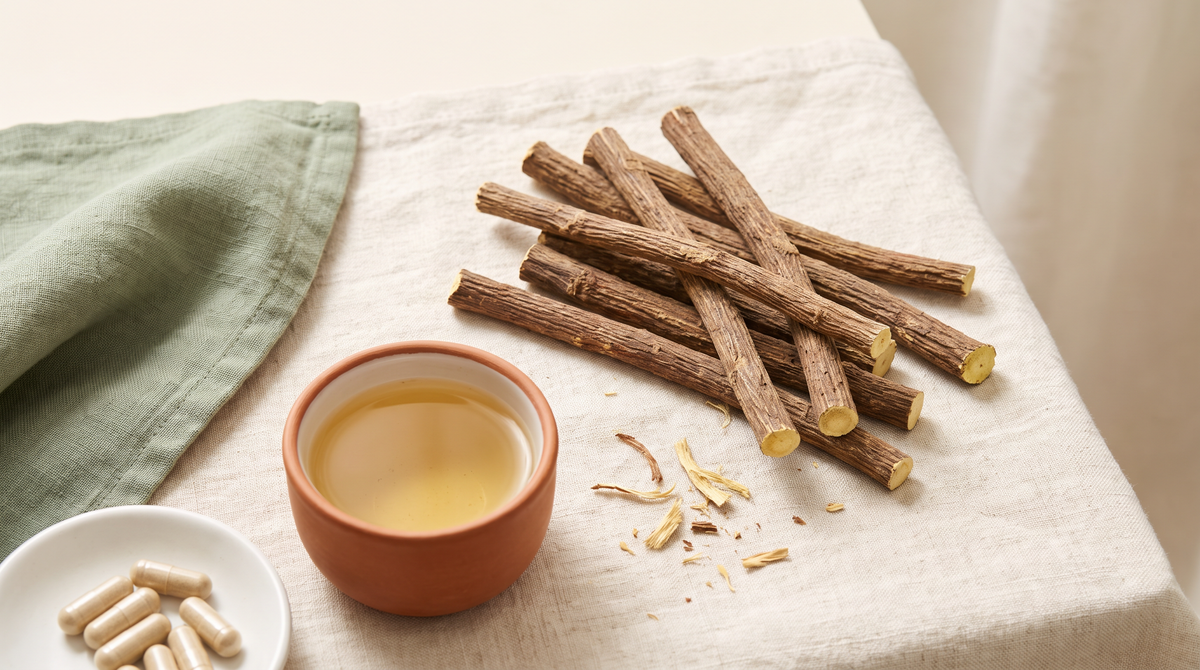
Ancient Nutra's Gurmar (Masbedda) is a single-herb leaf capsule, so the dose is easy to keep simple.
Where Gurmar comes from
Gurmar has grown in the hills and dry forests of Sri Lanka for as long as anyone has kept track, where it carries the Sinhala name Masbedda. Village and Ayurvedic practice leaned on the leaf for sugar balance and digestion long before anyone could measure an HbA1c. Tradition opened the door here. The lab work is slowly walking through it.
What to stack with Gurmar
For people focused on daily blood sugar, Gurmar sits comfortably next to two other herbs. Karavila (Bitter Melon) is the classic bitter pairing, and Ceylon Cinnamon adds a warming, kitchen-friendly option you can also cook with.
That said, this is a stack for a goal, not a starter kit everyone needs. Pick by what you are solving. Sweet cravings point to Gurmar. Daily cooking and warmth point to cinnamon. A broader bitter approach points to Karavila. One well-chosen herb beats three you forget to take.
How long Gurmar takes to work
The tongue effect is immediate. The steadier habit, the part where you stop drifting to the biscuit tin, usually settles over a few weeks once it becomes routine.
The blood sugar side is slower. Give it 8 to 12 weeks before you decide anything. The trials run about that long for a reason. As with most herbs, the fair test is at least 90 days, taken alongside the food and movement that do the heavy lifting.
When the team first packed Masbedda, half the office tried the leaf-then-sugar test on a Friday afternoon. The verdict was unanimous and a little funny: a square of chocolate tasted like waxy nothing for the next half hour. Nobody touched the biscuit tin that day.
The bottom line
For a simple daily dose, Ancient Nutra's Gurmar (Masbedda) is a single-herb leaf in a 60 capsule bottle, made for people who want help with the sweet-tooth part without overhauling everything else. Or take the fresh leaf if you can find it. The science does not care which form it comes in, only that you take it long enough to judge it fairly.

Gurmar (Masbedda) 60 Capsules
The Ayurvedic "sugar destroyer" leaf, one simple daily capsule to support steady blood sugar and a quieter sweet tooth.
Shop GurmarSources
- Tiwari P, et al. Phytochemical and pharmacological properties of Gymnema sylvestre. PubMed, 2014.
- Devangan S, et al. The effect of Gymnema sylvestre supplementation on glycemic control in type 2 diabetes patients: a systematic review and meta-analysis. Phytotherapy Research, 2021.
Further reading: Gymnema sylvestre food supplement RCT, Nutrients 2024 · Gymnema professional monograph, Drugs.com
Medical disclaimer: This article is for educational purposes only and is not medical advice. Statements have not been evaluated by the FDA. Ancient Nutra products are not intended to diagnose, treat, cure, or prevent any disease. Speak with a qualified healthcare provider before starting any new supplement, especially if you take prescription medication or have a medical condition.
Written by the Ancient Nutra Wellness Team. The team researches, sources, and tests every ingredient before it earns a place in an Ancient Nutra blend. Questions? Email info@ancientnutra.com or message Ancient Nutra on Instagram.