By the Ancient Nutra Editorial Team
- September is the tail of the southwest monsoon, not the second rains. Sri Lanka's second inter-monsoon runs October to November, so the wet stretch ahead is longer than most people plan for.
- Vitamin C started at the first sore throat has no consistent effect on how long a cold lasts. The benefit in the trial record comes from taking it steadily beforehand, and even then it is modest.
- The zinc evidence rests on lozenges dosed far above daily needs, at low certainty, and the more certain finding is an increase in side effects.
- A daily habit worth keeping is one you can hold in an ordinary week, not a shelf of things bought in a panic on a wet Tuesday.
There is a particular kind of shopping that happens when the rain does not stop. Someone comes in damp, sneezes twice, and by evening there are three new bottles on the kitchen counter: the biggest vitamin C available, a zinc lozenge that tastes of metal, and something with an ambitious name. A week later two of them are half finished and nobody can say whether any of it helped.
This is panic dosing, and it is not the same thing as immune support. The difference matters because the evidence for the two is very different. Ancient Nutra does not sell a rescue remedy, and the reason is not modesty about the catalogue. It is that the trial record does not support one. Here is where the reaching usually goes wrong.
Mistake one: treating September as the second rains
A lot of wet-season planning in Sri Lanka is built on a calendar that is off by about six weeks. September is the last month of the southwest monsoon, which runs roughly May to September. The second inter-monsoon, the one people often mean when they say the second rains, arrives later, around October and November (Faruk and colleagues, 2022).
The practical consequence is a planning error. Someone treats mid-September as the peak, braces for two weeks, and then finds the genuinely unsettled stretch still ahead of them in late October with their resolve already spent. Anything that depends on being kept up for months should be started with the real calendar in mind, not the one that ends when the current downpour does.
Mistake two: starting vitamin C once the throat already hurts
This is the most common one, and the evidence against it is unusually clear. The Cochrane review by Hemila and Chalker pooled 29 trial comparisons covering 11,306 people and found that taking vitamin C regularly did not reduce the chance of catching a cold in the general population. The pooled risk ratio was 0.97, with a confidence interval of 0.94 to 1.00 (Hemila and Chalker, 2013).
Regular supplementation did shorten colds a little once they happened, by about 8 percent in adults and 14 percent in children. On a week-long cold that is roughly half a day. But the part that matters for panic dosing is separate: across seven comparisons covering 3,249 cold episodes, vitamin C taken at the onset of symptoms showed no consistent effect on how long the cold lasted or how bad it felt. The review's own conclusion is that routine supplementation is not justified for the general population.
One honest exception sits in the same review. In five trials of marathon runners, skiers and soldiers on subarctic exercises, people under short bursts of severe physical stress, the risk of a cold roughly halved. Most people getting wet on a commute are not in that group.
Mistake three: reaching for the strongest zinc on the shelf
Zinc looks like the better bet, and the 2024 Cochrane review is worth reading carefully before treating it as one. Across 34 studies and 8,526 participants, zinc showed little or no effect on preventing colds (risk ratio 0.93, low certainty evidence). For treating a cold already underway, it may shorten it, by about 2.4 days, but that finding is rated low certainty and the studies disagreed with each other enormously (Nault and colleagues, 2024).
Two details deserve more attention than they usually get. First, the gluconate lozenges in those trials were given at 45 to 276 mg of zinc per day, many times an ordinary daily intake, for up to three weeks. That is the dose the modest benefit is attached to, not a sensible everyday amount. Second, the most confident finding in the whole review is not a benefit. It is that zinc used to treat a cold probably increases non-serious side effects, risk ratio 1.34, rated moderate certainty, which is a higher grade of evidence than any of the benefits.
Reading that honestly: the clearest thing the evidence says about panic-dosing zinc is that it will probably make you feel a bit worse.
Mistake four: starting three new things in the same week
Panic buying tends to arrive in threes, and it makes the next month uninterpretable. If something helps, there is no way to tell which thing it was. If something disagrees with you, there is no way to tell which one to stop. Starting one thing, and giving it a fair and bounded run before adding anything else, is slower and tells you far more.
Stacking has a second cost. Several supplements quietly contain the same actives, and fat-soluble nutrients in particular are stored rather than flushed, so the same ingredient arriving from three directions is not neutral. Reading the full ingredient list of what is already in the cupboard is unglamorous and usually more useful than the new purchase.
Mistake five: expecting a daily habit to behave like a rescue remedy
This is the mistake underneath the other four. A daily nutritional habit and an acute remedy are different categories of thing, and judging the first by the standards of the second guarantees disappointment. Nothing in a kitchen cupboard reliably stops a cold that has already started. What a steady habit can plausibly do is smaller and duller: keep a reasonable nutritional floor under a stretch of weeks when meals get irregular, the commute gets wet, and everyone is indoors together more than usual.
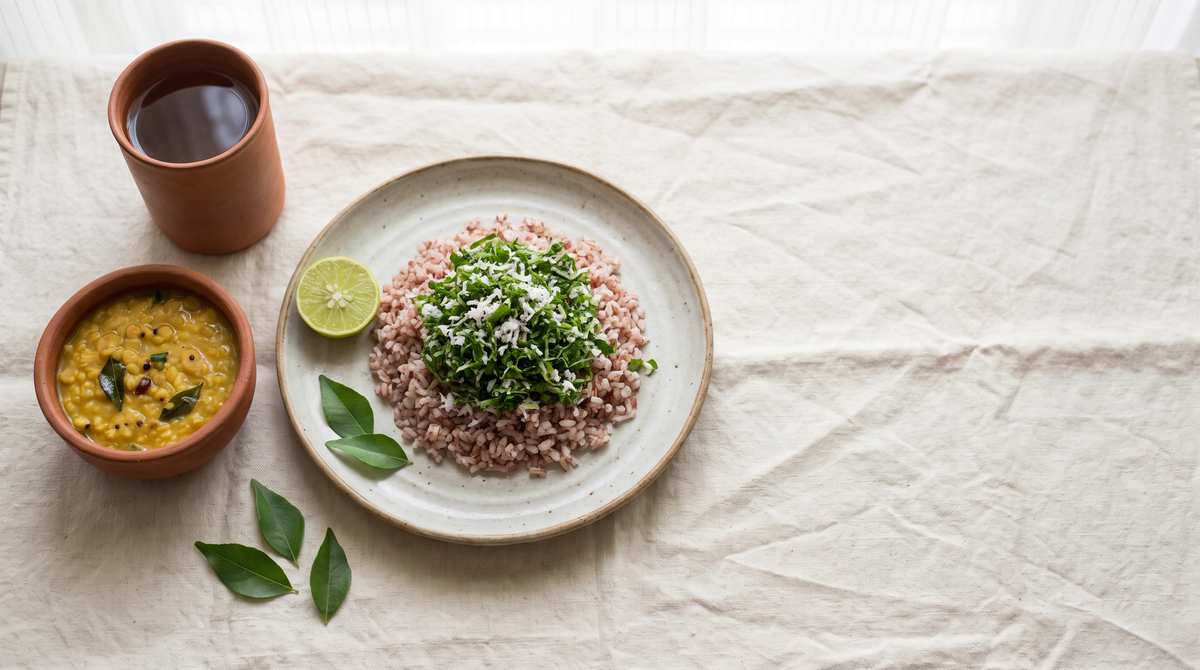
Murunga leaves have been going into Sri Lankan rice and curry long before anyone weighed them, which is a fair description of the category: food-shaped, unremarkable, kept up rather than deployed.
- A single named plant and plant part, for example Moringa oleifera leaf, rather than a proprietary blend that hides the proportions.
- A serving you can actually keep up on an ordinary morning, not one that needs a ritual to remember.
- A stated course length and a break, rather than an open invitation to take it forever.
- A manufacturing standard on the label, such as FSSC 22000 or BRCGS.
What steady support actually looks like
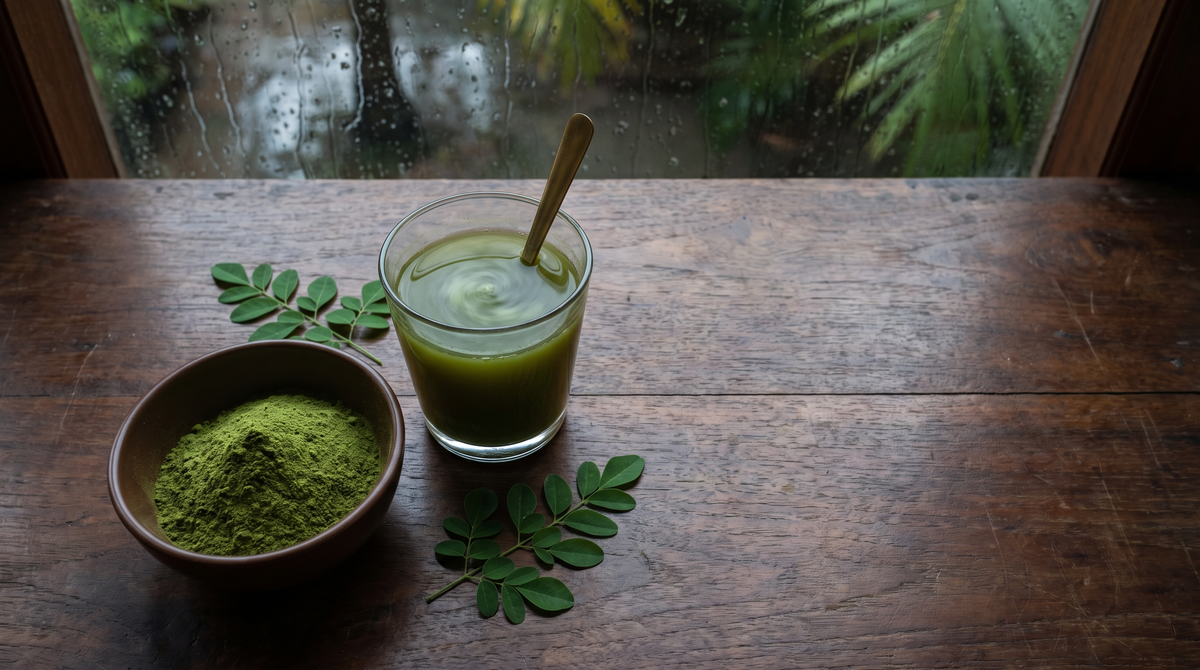
It looks boring, and it is cheap. One thing, at the label serving, taken with a meal, through the weeks when eating well is hardest. Ancient Nutra's Moringa Powder is a plain example of the category: Moringa oleifera leaf, from naturally grown Sri Lankan trees, stirred into a drink or food rather than swallowed in a hurry with a glass of water.
It is worth being straight about the limits. Moringa is best taken as an eight to twelve week course with a break afterwards, not indefinitely. The NIH LiverTox database lists it as a possible rare cause of liver injury, and the one published case rose in liver enzymes about a month after starting capsules. The early signs there were fatigue, nausea, loss of appetite and dark urine, and importantly that case was anicteric, meaning there was no yellowing of the skin or eyes, so jaundice is not the signal to wait for. Anyone pregnant, on blood-thinning medication or on thyroid medication should speak to a doctor first. No supplement replaces food, and none of this treats or prevents any disease.
If this season is the one you want to plan for properly, the companion pieces on monsoon-season immunity and four Sri Lankan herbs for the rains and on preparing before the rains arrive cover the habit side in more detail. The point of all three is the same. Start early, keep it small, and do not wait for the sore throat to go shopping.
 |
Moringa Powder 100g
A single-leaf daily green powder, stirred into a drink or food, for the weeks when meals get irregular. Shop Moringa Powder |
Sources
- Hemila H, Chalker E. Vitamin C for preventing and treating the common cold. Cochrane Database of Systematic Reviews, 2013. PMID 23440782
- Nault D, Machingo TA, et al. Zinc for prevention and treatment of the common cold. Cochrane Database of Systematic Reviews, 2024. PMID 38719213
- Faruk MO, Jannat SN, Rahman MS. Impact of environmental factors on the spread of dengue fever in Sri Lanka. International Journal of Environmental Science and Technology, 2022. PMC8758894
- National Institutes of Health, LiverTox: Clinical and Research Information on Drug-Induced Liver Injury. Moringa. NBK605172
This article is for general information and is not medical advice. Ancient Nutra products are food supplements and are not intended to diagnose, treat, cure or prevent any disease. Speak to a qualified healthcare professional before starting a supplement, particularly if you are pregnant, nursing, taking medication or managing a health condition.