By the Ancient Nutra Wellness Team · June 16, 2026 · 6 min read
- A sleep supplement like ashwagandha supports rest, but it cannot out-work late caffeine, a moving bedtime, or a glass of wine before bed.
- Timing and patience matter: take calming herbs in the evening with food, and give them weeks, not nights.
- The fastest wins are behavioral, a caffeine curfew, dim lights an hour before bed, and one steady wake time.
You bought the ashwagandha. Maybe the magnesium and the melatonin too. You take them most nights, and you are still watching the ceiling at 2am or dragging yourself up at seven. Here is the uncomfortable part: for most people the supplement is not the problem, and it is not the whole fix either. The capsule is doing maybe thirty percent of the work. The other seventy percent is a handful of habits that quietly cancel it out. Fix those, and the same bottle you already own starts to actually earn its place.
- Taking your calming herbs at the wrong time of day
- Drinking caffeine after early afternoon
- Quitting after four nights
- Using a nightcap to get to sleep
- Bright light and a bedtime that keeps moving
Mistake 1. Taking your calming herbs at the wrong time of day
Most people swallow their ashwagandha in the morning, right next to the coffee.
That works for daytime stress, but it misses the window that matters for sleep. Calming adaptogens help most when they are smoothing the evening, when cortisol is supposed to be falling and the body is winding down. A dose taken twelve hours earlier has largely worn off by the time your head hits the pillow.
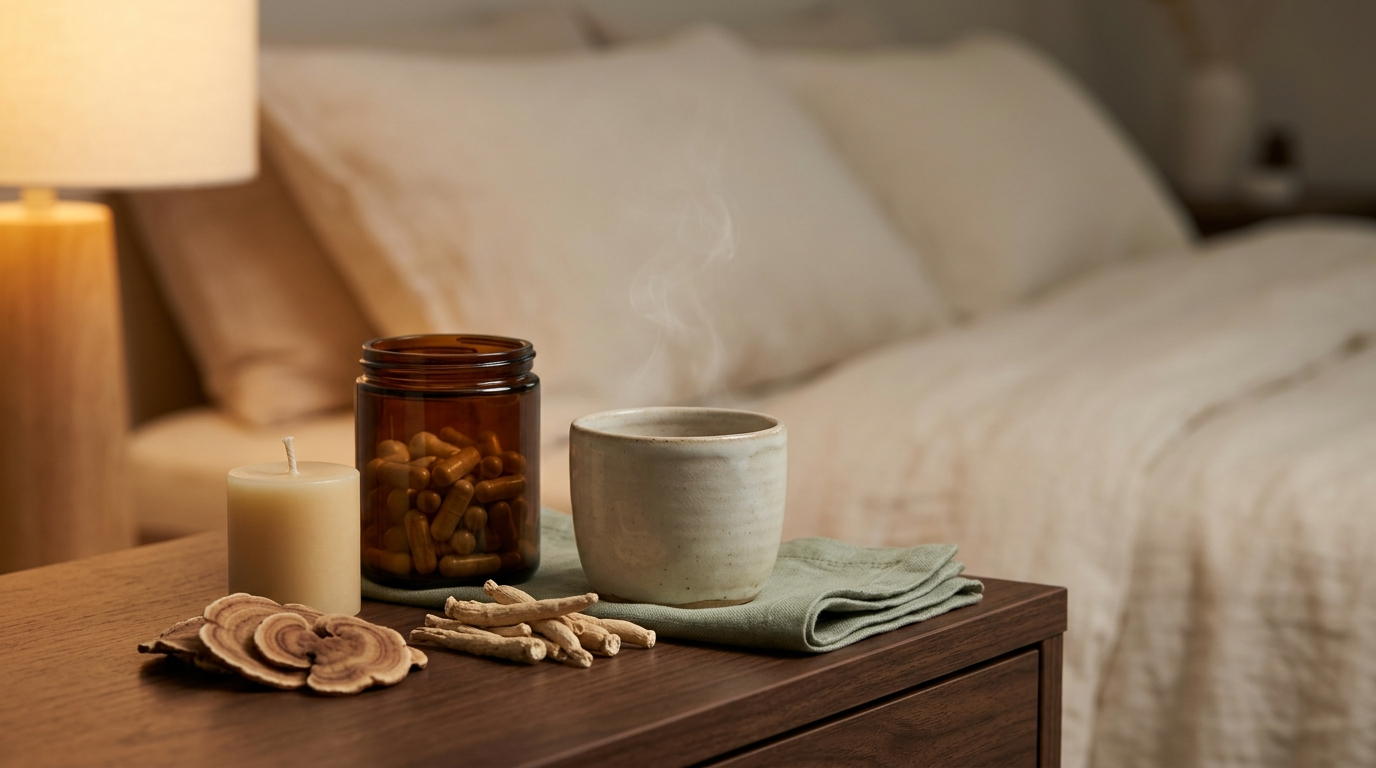
The fix is simple. Move the calming dose to the evening, with dinner. In one randomized, placebo-controlled trial, adults taking a standardized ashwagandha root extract fell asleep faster and slept more efficiently over ten weeks (Cureus, 2019). Ancient Nutra's Ashwagandha Extract in the evening fits this slot far better than a morning capsule. Reishi Extract is currently out of stock while we source new raw material; Maca Root Extract is a related in-stock option.
Mistake 2. Drinking caffeine after early afternoon
An afternoon coffee feels harmless, especially if you tell yourself you can sleep fine on it.
The problem is chemistry, not willpower. Caffeine has a half-life of roughly five to six hours, so half of your 3pm cup is still in your blood at 9pm. In a controlled study, caffeine taken even six hours before bed cut measured total sleep by more than an hour (Journal of Clinical Sleep Medicine, 2013). No capsule out-muscles a stimulant that is still circulating.
Make early afternoon your cutoff. If you want a warm drink later, switch to something caffeine-free. The point is not to quit coffee, it is to give it a curfew.
Mistake 3. Quitting after four nights
People try a new sleep herb, feel nothing dramatic by night four, and decide it does not work.
Adaptogens are not sedatives. They nudge the stress system back toward baseline over weeks, not on the first night. In the trial above, the real sleep gains built across ten weeks of daily use, not after a single dose. Judging an adaptogen on one night is like judging a gym by one workout.
Pick one calming herb and take it nightly for six to eight weeks before deciding, and cap any ashwagandha run at eight to twelve weeks, then a break; longer only under a doctor's oversight. Consistency beats variety here. A steady routine with the gentle Ancient Nutra's Ashwagandha capsule, or a stronger standardized extract, will tell you more than rotating through five new bottles.
Mistake 4. Using a nightcap to get to sleep
A glass of wine to unwind is one of the most common sleep saboteurs there is.
Alcohol does help you fall asleep faster, which is exactly why it fools so many people. But it fragments the back half of the night, suppressing deep and REM sleep and setting up those 3am wake-ups where you cannot settle again. You were unconscious, but you were not rested.
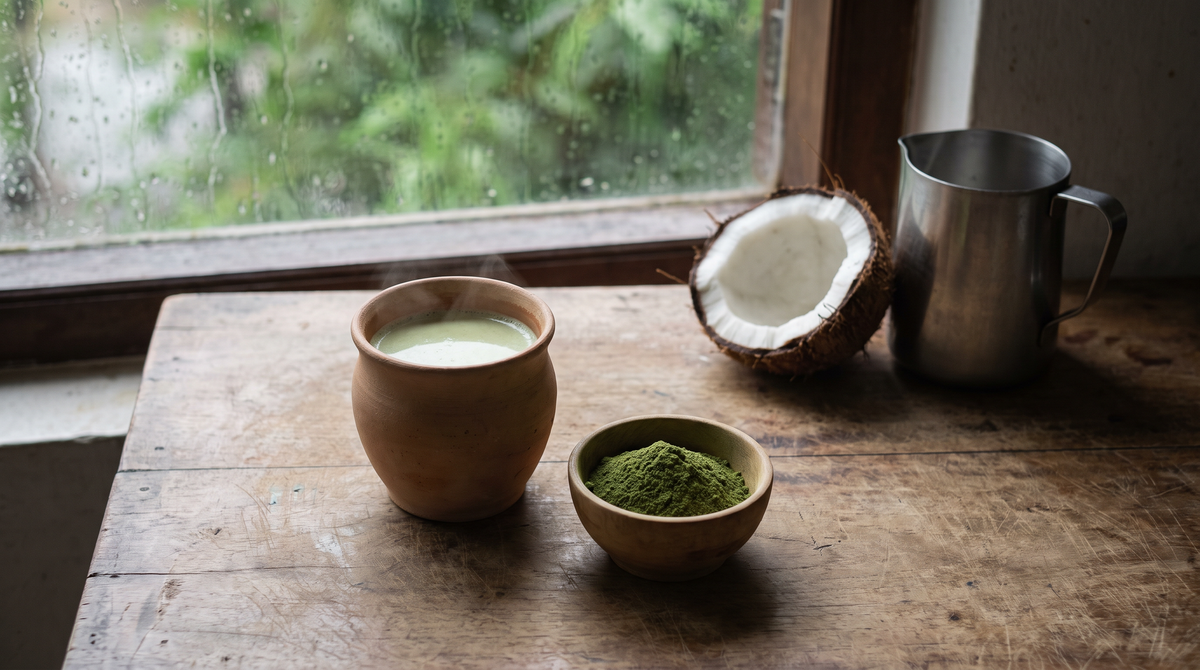
Swap the nightcap for a warm, caffeine-free wind-down drink. Ancient Nutra's Moon Milk Powder with ashwagandha was built for exactly this, a calm evening cup that signals bedtime without the rebound.
Mistake 5. Bright light and a bedtime that keeps moving
The last hour before bed is usually spent under bright light, often with a phone six inches from your face.
Light at night tells your brain it is still daytime, which delays the melatonin that should be rising. A bedtime that swings by two or three hours between weekdays and weekends does the same thing from the other direction, leaving your body clock permanently jet-lagged. No supplement can land cleanly on a rhythm that keeps moving.
Dim the lights an hour before bed and put the screens down. Then pick one wake time and hold it, even on Saturday. A steady schedule is the floor every sleep supplement stands on.
How to course-correct in a week
You do not need to fix all five at once. Here is a seven-day version that front-loads the easy wins:
- Day 1 to 2: Set a caffeine curfew at 2pm, and pick one wake time you can keep all week.
- Day 3 to 4: Move your calming herb to dinner. Dim the lights and put screens away an hour before bed.
- Day 5 to 7: Replace any nightcap with a warm caffeine-free drink, and hold that same wake time through the weekend.
By night seven, most people fall asleep a little faster and wake less in the small hours. Nothing dramatic, just a rhythm the supplement can finally work with.
When the team gathered early feedback on Ancient Nutra's Ashwagandha, the most common note was not "I sleep longer." It was "I stopped waking at 3am." Almost everyone who said it had also, quietly, dropped the evening wine and the late coffee. The herb helped. The habits made room for it.
The bottom line
If you change only two things, change these: stop the caffeine by early afternoon, and take your calming herb in the evening, every night, for long enough to judge it. Those two fixes settle most "my supplement does nothing" complaints on their own.
Supplements do not replace sleep hygiene, they support it. Once the foundation is steady, a nightly calming herb earns its keep. That is what Ancient Nutra's Ashwagandha Extract is for, a standardized evening dose that works with your routine, not instead of it. Stack it your way. The science does not care which bottle it comes from.

A standardized evening dose to ease stress and support steady, restful sleep, once the basics are in place.
Shop AshwagandhaSources
- Langade et al., Cureus (2019), ashwagandha root extract improved sleep onset latency and sleep efficiency in a randomized, double-blind, placebo-controlled study.
- Drake et al., Journal of Clinical Sleep Medicine (2013), caffeine taken 0, 3, or even 6 hours before bed measurably reduced total sleep time.
- Further reading: Sleep Foundation, how alcohol fragments the night and suppresses REM sleep.
- Further reading: Sleep Foundation, caffeine timing and its effect on sleep.
Check with a doctor first if you have a thyroid condition, take sedatives or immunosuppressants, or are pregnant or breastfeeding.
Ashwagandha has been linked to rare cases of liver injury, likelihood score B, with onset typically 2 to 12 weeks after starting (NIH LiverTox). Stop and see a doctor if you notice yellowing of the eyes or skin, itching, dark urine, persistent nausea, or unusual tiredness.
Medical disclaimer: This article is for educational purposes only and is not medical advice. Statements have not been evaluated by the FDA. Ancient Nutra products are not intended to diagnose, treat, cure, or prevent any disease. Speak with a qualified healthcare provider before starting any new supplement, especially if you take prescription medication or have a medical condition.
Written by the Ancient Nutra Wellness Team. The team researches, sources, and tests every ingredient before it earns a place in an Ancient Nutra blend. Questions? Email info@ancientnutra.com or message Ancient Nutra on Instagram.