Most Mother's Day gifts get a kind smile and end up at the back of a drawer by week two. The flowers wilt. The candle burns once. The chocolates last a weekend. Hathawariya is different. It is a women's wellness root from the Sri Lankan apothecary, and the women who start it usually keep going long after the card has been put away. Here is what it does, why it has earned a place on the Mother's Day shelf, and how to gift it so she actually opens the bottle.
- Hathawariya (Shatavari, Asparagus racemosus) is a traditional Sri Lankan women's root that acts as a mild adaptogen and may help support steady mood, calm energy, and the menopause years.
- It makes a Mother's Day gift that actually gets used because it slots into a routine she already has, taken as 1 to 2 capsules with food once a day.
- It is best given for an 8 to 12 week run with a simple note and a check-in, since most women notice a clear difference around week 12.
Why most Mother's Day gifts go unused
The Mother's Day market is built around hand-off objects: bouquets, mugs, scented things, the occasional spa voucher she will not redeem. They are sweet, and they are what the moment asks for. They also have one thing in common: they sit on a table and look pretty, then they go away.
The gifts that get used are different. They are small, they fit into something she already does (her morning tea, her bedside ritual, her supplement shelf), and they do not ask her to learn a new habit. They quietly add value to the routine she already has. Hathawariya, taken once a day with food, clears that bar.
What Hathawariya is, in plain language
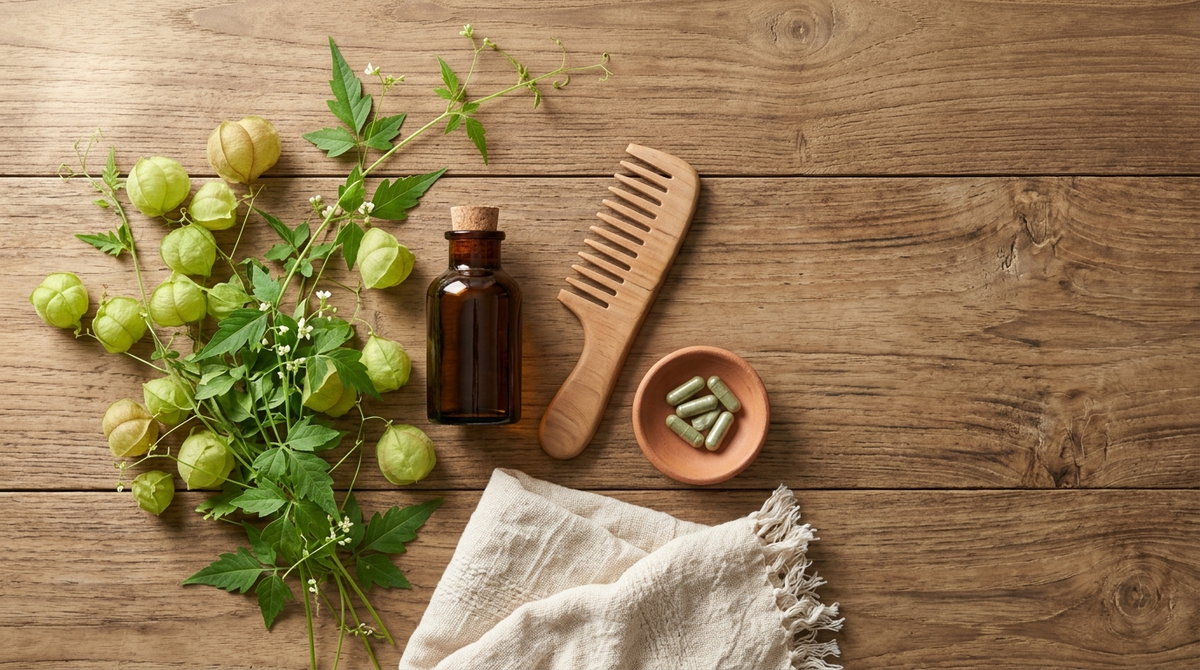
Hathawariya is the Sinhala name for Shatavari (Asparagus racemosus), one of the oldest and most-used roots in the South Asian women's herbal tradition. The Sanskrit name translates loosely to "she who has a hundred roots," which is a touch poetic for the modern shelf. The cleaner version: it is a wild asparagus root used for thousands of years to support women through every life phase, from adolescence to menopause.
What modern study has added is mostly mechanism. Shatavari acts like a mild adaptogen, which means it helps the body's stress response stay steady rather than spiking and crashing. It also supports the gentle hormonal rhythms women lean on for energy, sleep, and mood (NCBI review on Asparagus racemosus, 2018).
The simple way to think about it: Ashwagandha is the adaptogen the men's shelf made famous. Hathawariya is the one the women's shelf was built on first.
What it actually supports for the women in your life
This is where seasonal gift articles often get vague. Here is the specific shortlist, the way the team at Ancient Nutra explains it to the moms in their own families.
Steady mood through hormonal weeks
Most women know the pattern: the weeks where everything feels louder, sleep gets thinner, and patience runs short. Hathawariya does not blunt that. It softens the edges. Taken daily for 8 to 12 weeks, women often report fewer spiky low-energy days and more of the steady ones in between.
Calm energy without the caffeine spike
Hathawariya is not a stimulant. It supports the kind of energy that comes from sleeping well and digesting food properly, which is the only kind that lasts past 11 a.m. anyway. For a mom running on too little sleep, that is more useful than another cup of coffee.
Skin, hair, and the small things she misses
Traditional Ayurvedic use links Shatavari to skin tone, hair quality, and what the old texts called "tissue nourishment." The modern translation: better internal hydration, steadier hormones, fewer dull-skin weeks. It pairs well with Ancient Nutra's Welpenela, the Sri Lankan puff vine the heritage shelf reaches for when skin and joints need quiet support.
Gentle support through the menopause years
For mothers and grandmothers in the menopause window, Hathawariya is the herb the Ayurvedic playbook has reached for the longest. It will not replace a proper conversation with her doctor, but it gives her a daily ritual that supports the transition rather than ignoring it.
Look for
Hathawariya capsules made from whole-root powder, sourced from Sri Lankan small-scale farms. Daily dose: 1 to 2 capsules with food. Best taken consistently for 8 to 12 weeks before judging the effect.
Ancient Nutra's Hathawariya/Shatavari Capsules use whole-root Sri Lankan Hathawariya, not a fractionated extract.
A small cultural anchor
In Sri Lankan villages, Hathawariya was the herb a mother handed her daughter at the start of menstruation, again at the start of marriage, and again at the start of the change of life. It was not framed as medicine. It was part of how older women looked after younger ones, in the kitchen, with no shop in sight. The gift on Mother's Day, in that frame, is a small reversal: the daughter handing it back.
One observation from the team
When Ancient Nutra started shipping Hathawariya in volume, the most-repeated note in the customer feedback was not about hormones or sleep. It was about evenings. Several women, in their own words, said the late-day mood-dip they had quietly accepted as part of being 45 had softened. They had stopped scheduling family conversations for after 9 p.m. because they were no longer flat by then. Small thing. Real thing.
How to actually gift it
The mistake most wellness gifts make is asking the recipient to assemble the routine themselves. Skip that. Set it up so she opens the bottle on the first day without thinking.
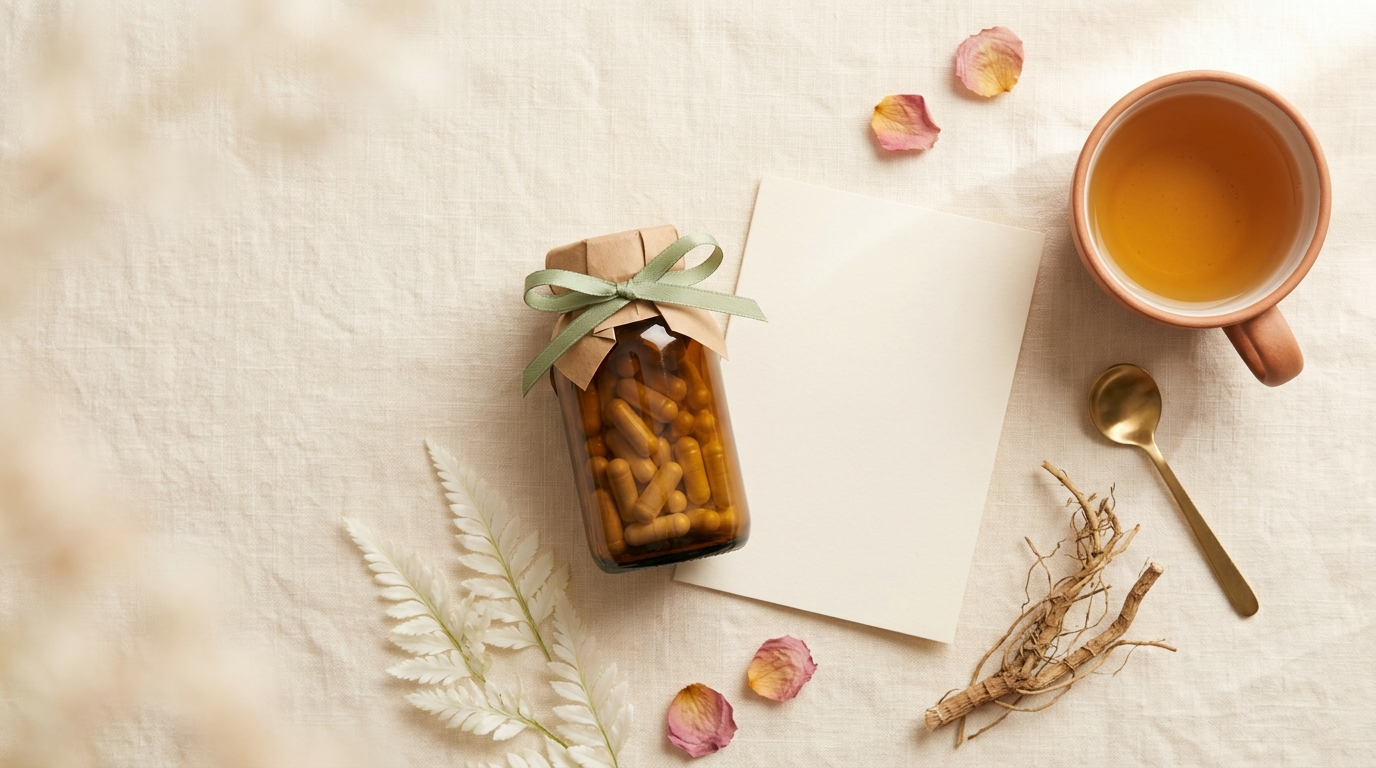
A simple Mother's Day setup: one bottle of Hathawariya, a small note that says "1 capsule with breakfast, every day for 12 weeks, and we will check in," and a calendar reminder on her phone for week 4 and week 12. That note is what makes her actually take it.
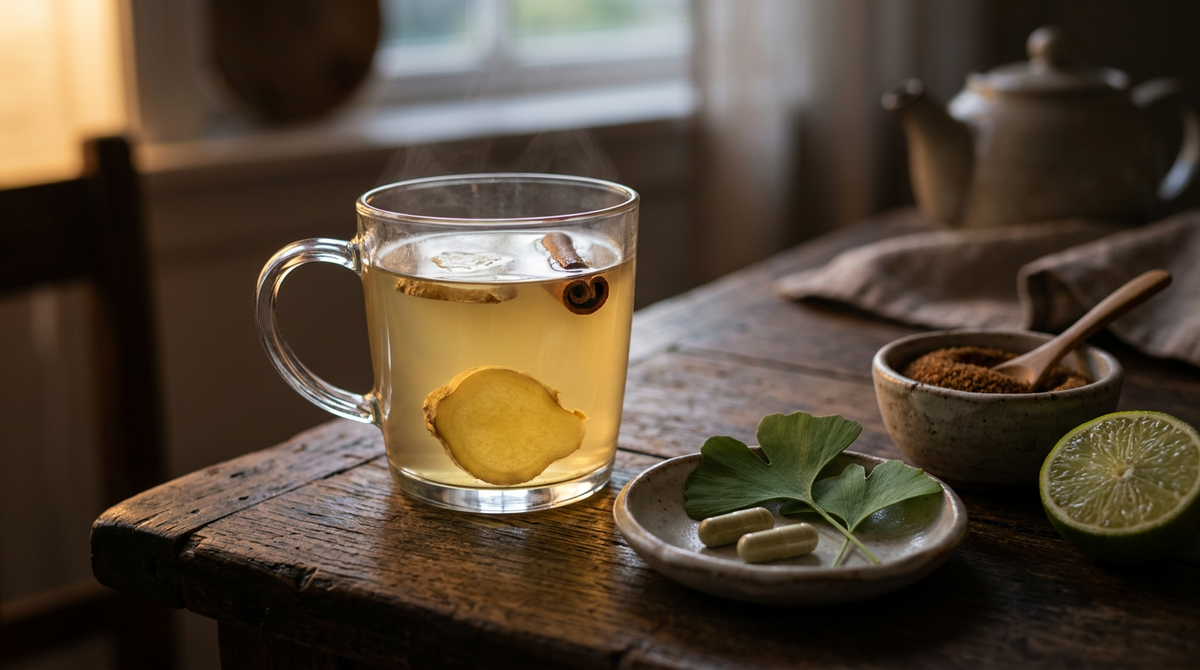
If she already has a morning ritual, slot Hathawariya into it: with her first cup of tea, with breakfast, alongside whatever she is already taking. If she does not, build the smallest possible one: a glass of warm water, the capsule, two minutes of sitting still. That is the routine.
What pairs well with it
For the mom carrying real stress, Ancient Nutra's Ashwagandha Extract is the second herb on the women's shelf the team reaches for. The two work in different lanes: Hathawariya on the hormonal and nourishing side, Ashwagandha on the cortisol and recovery side. Together they cover the two patterns most modern moms run into.
For the mom who runs warm, lives in a hot climate, or sits in the perimenopause window where heat sensitivity ramps up, Ancient Nutra's Iramusu (Sarsaparilla) is the cooling Sri Lankan root the heritage shelf has used for a thousand years. A single Iramusu cup in the late afternoon is a small comfort that compounds across a week.
When to start, when to check in
Adaptogens take time. Most women feel something at week 4 and a clear difference at week 12. So the honest framing on the gift card is that one: "Try it for 12 weeks, with food, every day, and we will check in." Then actually check in. The check-in is almost as much of the gift as the bottle.
The bottom line
The point of Ancient Nutra's Hathawariya/Shatavari is that it sits inside the day she already has, asks for two seconds of attention, and quietly does its work for the next three months. That is the rare thing on the Mother's Day shelf: a gift that is still doing its job in August.
Pair it with a note. Pair it with a check-in. Pair it, if you want a small ritual she will look forward to, with a quiet evening tea. The combination is the gift. The bottle is just the start.

Hathawariya/Shatavari - 60 capsules
Whole-root Sri Lankan Hathawariya, traditionally used to support steady mood, calm energy, and women's wellness through every life phase.
Shop HathawariyaSources
- NCBI / Pharmacognosy Reviews. Pharmacological Profile of Asparagus racemosus: A Review (2018).
- NIH National Center for Complementary and Integrative Health. Ayurvedic Medicine: In Depth.
- Cleveland Clinic. Adaptogens: What They Are and How They Work.
Last reviewed: 10 May 2026. Written by the Ancient Nutra Wellness Team. The team researches, sources, and tests every ingredient before it earns a place in an Ancient Nutra blend. Questions? Email info@ancientnutra.com or message Ancient Nutra on Instagram.
Medical disclaimer: This article is for educational purposes only and is not medical advice. Statements have not been evaluated by the FDA. Ancient Nutra products are not intended to diagnose, treat, cure, or prevent any disease. Speak with a qualified healthcare provider before starting any new supplement, especially if you take prescription medication or have a medical condition.