Written by the Ancient Nutra Wellness Team · Published June 5, 2026 · 6 min read
- Prickly pear (Opuntia) is one of the most antioxidant-dense fruits studied, with roughly twice the antioxidant activity of apples, pears, and bananas.
- Its soluble fiber and pigments are linked to gentler post-meal blood sugar in human and review studies, which is why it sits in the blood-sugar herb family.
- It is a support, not a substitute. Food, movement, and sleep do the heavy lifting; the extract helps at the edges.
Most fruits earn their reputation on sweetness. Prickly pear earned its on toughness. It is the fruit of a desert cactus that survives where almost nothing else fruits, and the same chemistry that lets it hold water and fight sun damage in a drought is what makes it interesting on a supplement shelf. The antioxidants are not a marketing flourish. They are how the plant stays alive.
If you have seen prickly pear show up next to bitter melon and cinnamon in the blood-sugar aisle and wondered what a cactus is doing there, this is the short, honest version.
What prickly pear actually is
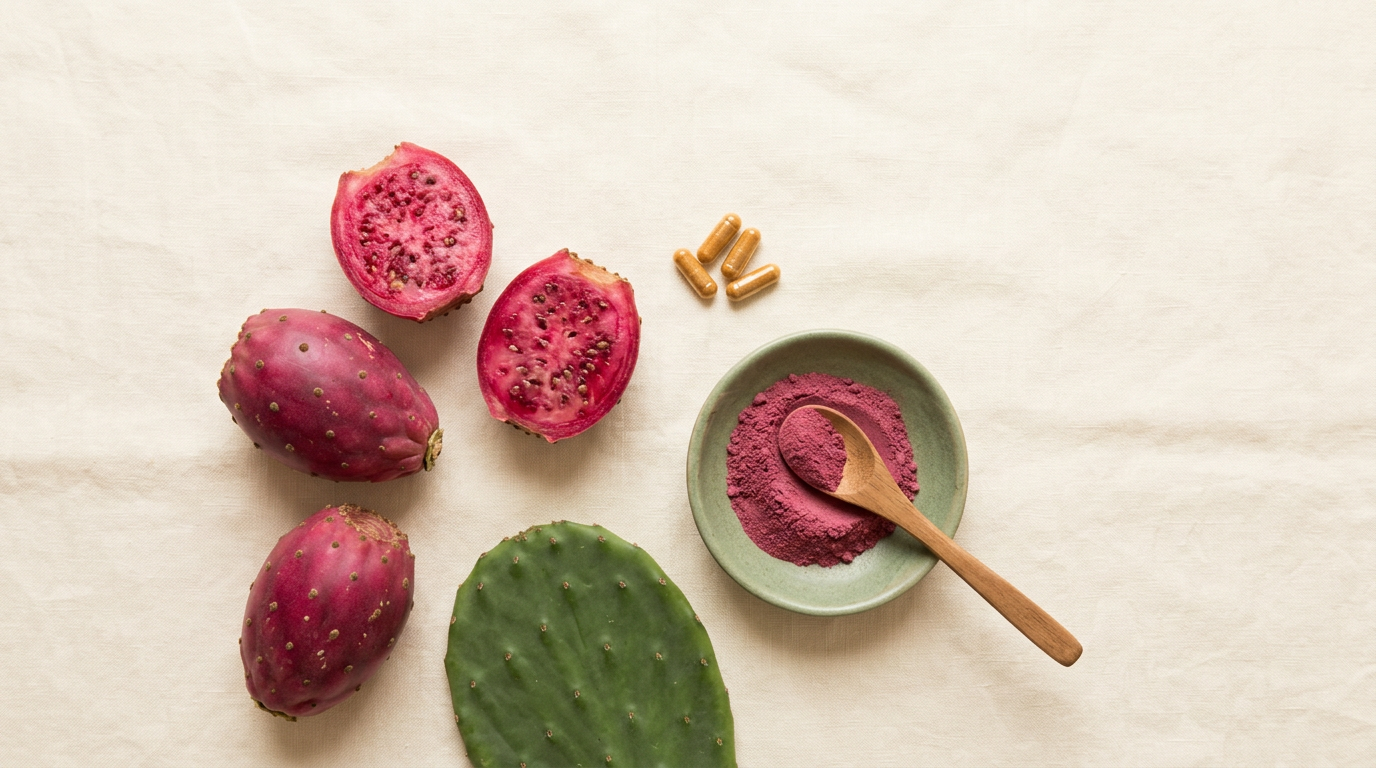
Prickly pear is the fruit and pad of the Opuntia cactus, eaten across Mexico, the Mediterranean, and the Middle East for centuries as both food and folk remedy. The fruit is jewel-colored, the flat pads (called nopales) are cooked like a vegetable, and both are unusually rich in fiber, vitamin C, and pigments called betalains. In traditional use it was the everyday plant you reached for, not a rare one.
What prickly pear does in the body
Two things stand out, and they are connected.
The first is antioxidant load. Prickly pear is one of the more antioxidant-dense fruits measured, carrying betalains, vitamin C, polyphenols, and carotenoids together. In one human study, supplementing with cactus pear fruit lowered markers of oxidative stress in healthy adults more effectively than vitamin C alone, which tells you the betalains are doing real work, not just the vitamin C (Tesoriere et al., American Journal of Clinical Nutrition, 2004). Oxidative stress is the slow background damage that builds up from stress, poor sleep, and high blood sugar, so dialing it down is quietly useful.
The second is blood sugar. Prickly pear is high in soluble fiber and mucilage, the gel-like substance that thickens in the gut and slows how fast sugar from a meal reaches the bloodstream. A systematic review of human trials found that consuming Opuntia and its products was associated with lower post-meal glucose in several studies, with the fiber content the most likely reason (systematic review of Opuntia and blood glucose, PMC, 2019). It is not insulin in a capsule. It is a fruit that helps your own system handle a meal a little more smoothly.
Who should consider prickly pear
- People keeping an eye on blood sugar who want a gentle, food-derived support alongside the basics. Sri Lanka carries one of the higher diabetes and pre-diabetes burdens in South Asia, so this is a crowded interest here.
- Anyone whose diet runs low on fresh fruit and color and wants an antioxidant top-up from a real plant rather than a synthetic blend.
- People who run hot, train hard, or sleep poorly, where background oxidative stress tends to run higher.
And who does not need it: if you already eat a wide, colorful, high-fiber diet and your blood sugar is steady, prickly pear is a small addition, not a missing piece. Honesty first.
How to actually take prickly pear
As a standardized extract, a common range is 250 to 500mg per day, taken with your largest carbohydrate-containing meal, since that is when the fiber-and-glucose effect is most relevant. Whole prickly pear food works too, but the extract gives you a consistent dose without sourcing fresh cactus in Colombo. Give it four to eight weeks of daily use before you judge anything, and keep water intake up, because soluble fiber works best when you are hydrated.
A standardized Opuntia (prickly pear) extract, 250 to 500mg per day, taken with food.
Ancient Nutra's Prickly Pear Extract is a concentrated capsule, so you skip the fresh-cactus sourcing and get a steady daily dose.
Where prickly pear comes from
Opuntia traveled a long way before it reached a Sri Lankan supplement shelf. Native to the Americas, it spread across arid regions of Mexico, North Africa, and the Mediterranean, where families ate the fruit fresh and cooked the pads as a vegetable for generations. The wellness world is newer to it than the kitchen is. That order matters: this is a food first, studied second.
What works alongside prickly pear
For the blood-sugar angle, prickly pear sits naturally beside other gentle, food-derived helpers. Ancient Nutra's Karavila (Bitter Melon) comes at glucose from a different direction, and a daily pinch of Ancient Nutra's Ceylon Cinnamon adds warmth and its own blood-sugar research. This stack is for people actively managing post-meal spikes, not a default everyone needs. The foundation, fewer refined carbs, a walk after dinner, real sleep, still does most of the work.
How long prickly pear takes to work
The post-meal effect is immediate in a mechanical sense, since the fiber is acting on the meal in front of you. The things you actually notice, steadier energy between meals and fewer afternoon crashes, take a few weeks of consistency to register. The antioxidant benefit is the slowest and quietest of all, the kind you do not feel day to day but that adds up. Plan on at least 90 days before deciding whether it earns a permanent spot.
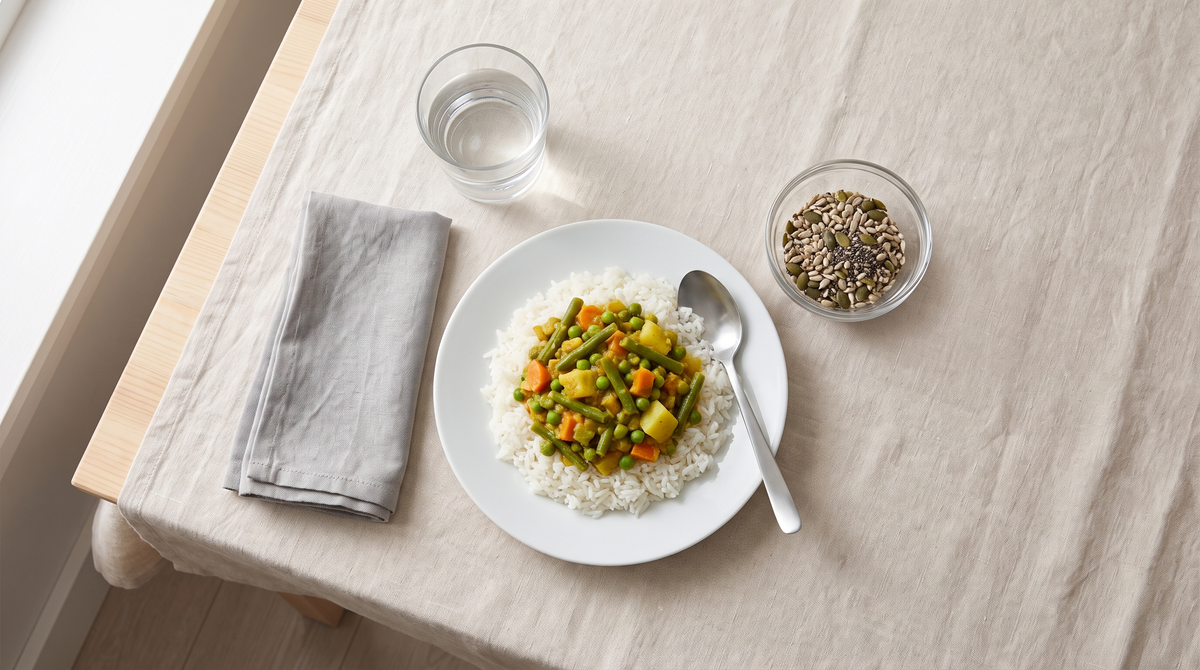
The team's most consistent note from people who add prickly pear is unglamorous: the afternoon dip after lunch softens. Not gone, just less of a cliff. That is usually the fiber doing its job on the midday rice and curry.
The bottom line
Prickly pear is a desert fruit that earns its place through fiber and antioxidants, not hype. It will not replace a balanced plate or a post-dinner walk, but for someone watching their blood sugar and wanting more color in their antioxidant intake, it is a sensible, food-derived addition. Ancient Nutra's Prickly Pear Extract makes the daily dose simple. Stack it with the basics, or run it on its own. The science does not care which bottle it comes in.

Antioxidant-rich Opuntia in a steady daily capsule, made for gentle blood-sugar and oxidative-stress support.
ShopSources
- Tesoriere L, et al. Supplementation with cactus pear (Opuntia ficus-indica) fruit decreases oxidative stress in healthy humans. Am J Clin Nutr. 2004.
- Effects of the Consumption of Prickly Pear Cacti (Opuntia spp.) and its Products on Blood Glucose Levels and Insulin: A Systematic Review. PMC, 2019.
- Prickly Pear Cacti (Opuntia spp.) Cladodes as a Functional Ingredient for Hyperglycemia Management: A Brief Narrative Review. PMC, 2022.
Medical disclaimer: This article is for educational purposes only and is not medical advice. Statements have not been evaluated by the FDA. Ancient Nutra products are not intended to diagnose, treat, cure, or prevent any disease. Speak with a qualified healthcare provider before starting any new supplement, especially if you take prescription medication or have a medical condition.
Written by the Ancient Nutra Wellness Team. The team researches, sources, and tests every ingredient before it earns a place in an Ancient Nutra blend. Questions? Email info@ancientnutra.com or message Ancient Nutra on Instagram.