Ancient Nutra Wellness Team · 7 October 2026 · 5 min read
A morning karawila tonic: a small, bitter start to the day
By the Ancient Nutra Editorial Team
- This is a small, fresh karawila (bitter gourd) tonic with lime, ginger and pepper. It takes ten minutes, and the salt soak takes most of the harshness out.
- Keep it small: about a quarter glass, not a tall one. Karawila is a food here, not a treatment, and the research on bitter melon and blood sugar is weak.
- It is not for pregnancy, and if you take blood sugar medicine, ask your doctor first.
Many Sri Lankan kitchens have a quiet habit with karawila. It goes into a sambol, a fry or a curry, and on some mornings it goes into a glass. The taste is sharp, green and honestly not for everyone. Done well, though, it is a clean, lime-bright wake-up with no sugar in it, and a good way to start the day with something that is not sweet. Here is a small recipe, how to make it taste better than you fear, and where it should stop.
What you need
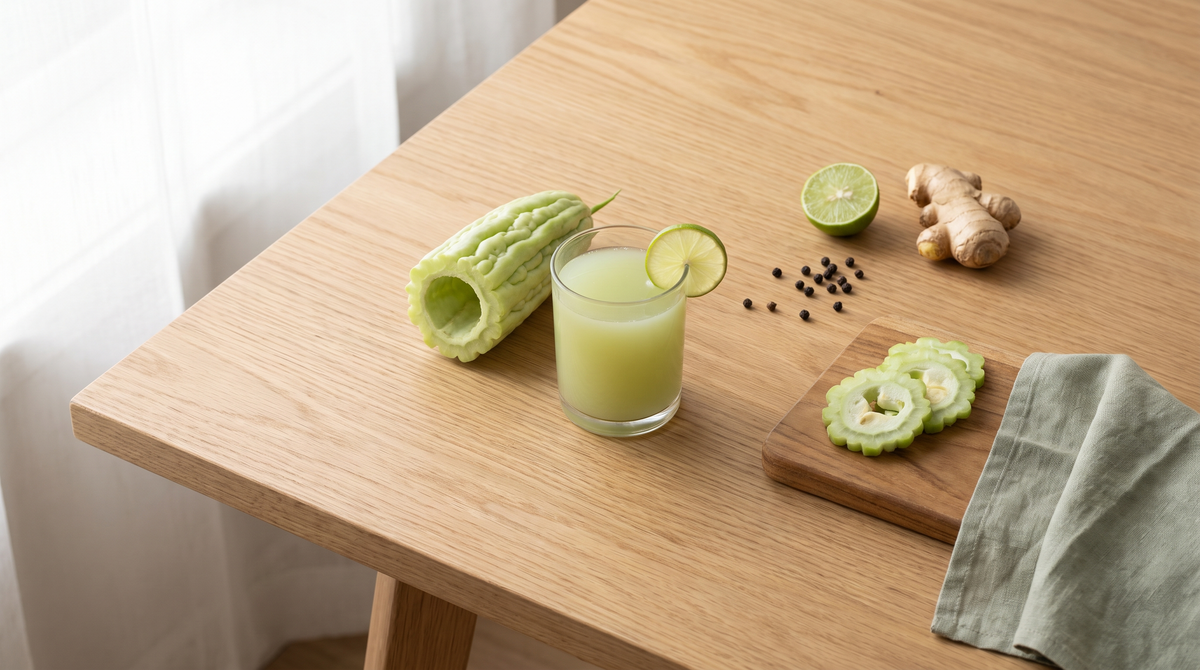
- 60 g fresh karawila (roughly a quarter of a medium one)
- 1/2 teaspoon salt, for the soak
- 100 ml cool water
- Juice of half a lime
- 1 cm fresh ginger, peeled
- 1 small pinch of black pepper
Six ingredients, all from the kitchen. Choose a young, firm karawila with a pale green skin. The darker and more yellow the gourd, the more bitter it tastes.
How to make it
- Wash the karawila and cut it in half lengthways. Scoop out the seeds and the white pith with a spoon.
- Slice the flesh thin, about 2 mm. Toss the slices with the salt and leave them for 10 minutes.
- Rinse the slices under running water, squeeze them gently and drain well. This step is what softens the bitterness.
- Put the slices, the water, the ginger and the pepper in a blender. Blend for 30 to 40 seconds until smooth.
- Strain through a fine sieve into a glass, pressing out the liquid.
- Stir in the lime juice and drink it straight away, slowly, on a settled stomach or with a few bites of breakfast.
Yields one small glass, about 100 ml. Make it fresh each time. It does not keep well, and the flavour turns flat within the hour.
Why this recipe works
The salt soak draws out part of the bitter juice, so the tonic tastes green and sharp instead of harsh. The lime lifts the flavour, and the ginger and pepper add warmth so the glass finishes cleanly. That is the whole mechanism, and it is a flavour one.
The bitterness is the point of the old habit. A bitter taste to open the morning, in place of tea and sugar, nudges the day towards plainer food. Ayurvedic cooking has always valued bitter as one of the six tastes, and karawila is the everyday Sri Lankan way of getting it.
Variations
- Milder. Use 40 g karawila and 150 ml water, or add a few cucumber slices to the blender.
- Warmer. Skip the cold water and stir the strained juice into 100 ml of warm water instead.
- No blender. Grate the soaked karawila on a fine grater and squeeze it through a clean cloth.
When to drink it, and what it is not
A few mornings a week is plenty, and a small glass is the whole serving. This is a tasting habit, not a dose. Karawila is a well-loved food, but the evidence that bitter melon helps with blood sugar is thin. A Cochrane review of four trials found insufficient evidence on the effects of bitter melon for type 2 diabetes, so nobody should treat this glass as blood sugar care.
What actually moves the day is the plate and the routine around it. If you want the longer version, the team covered the habits that matter most in 5 everyday habits that quietly work against steady blood sugar, and the difference between two bitter herbs in Karavila and Gurmar: two bitter herbs, two very different jobs.
Safety, before you try it
Not recommended during pregnancy or in women of childbearing age not using effective contraception -- bitter melon is a potential abortifacient (NIH LiverTox). May add to the effect of blood-sugar medication (metformin/insulin) -- consult your doctor first if on such medication.
This applies to a fresh karawila tonic as much as to a capsule. If you have been advised to avoid it, keep karawila to the occasional cooked dish, or skip it.
The bottom line
A small glass of salted, rinsed karawila with lime, ginger and pepper is a pleasant bitter start to the morning, and nothing more than that. If you would rather build a structured routine around the sweet-taste and sugar side of your day, Ancient Nutra's Sugar Balance System is a three-herb, 90-day routine. Its three herbs are Gurmar, Ceylon Cinnamon and Venivel, and it does not contain bitter melon. Use it alongside your doctor's care, never in place of it.

Sugar Balance System
Gurmar, Ceylon Cinnamon and Venivel in a 90-day routine.
Shop Sugar Balance SystemSources and further reading
- Momordica charantia for type 2 diabetes mellitus, Cochrane Database of Systematic Reviews 2012, PubMed.
- Bitter melon, LiverTox, National Institutes of Health.
Written by the Ancient Nutra Wellness Team. The team researches, sources, and tests every ingredient before it earns a place in an Ancient Nutra blend. Questions? Email info@ancientnutra.com or message Ancient Nutra on Instagram.
Medical disclaimer: This article is for educational purposes only and is not medical advice. Statements have not been evaluated by the FDA. Ancient Nutra products are not intended to diagnose, treat, cure, or prevent any disease. Speak with a qualified healthcare provider before starting any new supplement, especially if you take prescription medication or have a medical condition.