Ancient Nutra Wellness Team · 9 July 2026 · 6 min read
Iramusu, the Sri Lankan root that cools the body from within
Key takeaways
- Iramusu (also called Sarsaparilla) is a thin, woody Sri Lankan root traditionally taken to cool the body, calm the skin, and ease the heat of the dry season.
- In lab studies its phenolic compounds act as antioxidants, which is the modern read on the root's old reputation as a "blood purifier."
- For a daily, no-fuss cooling routine a standardized capsule is the simplest format. The traditional root decoction (a bitter tea) still works if you love the ritual.
When the heat sets in, most Sri Lankan homes reach for the same short list of roots. Iramusu is usually near the top. For generations it has been boiled into a pale, faintly sweet tea, poured over ice, and handed to anyone complaining of heat, thirst, or a breakout. It is not a trendy adaptogen or a new discovery. It is the root your grandmother kept in a jar. What has changed is that lab work now backs up part of what she already knew. Here is what Iramusu actually does, who it suits, and the simplest way to take it.
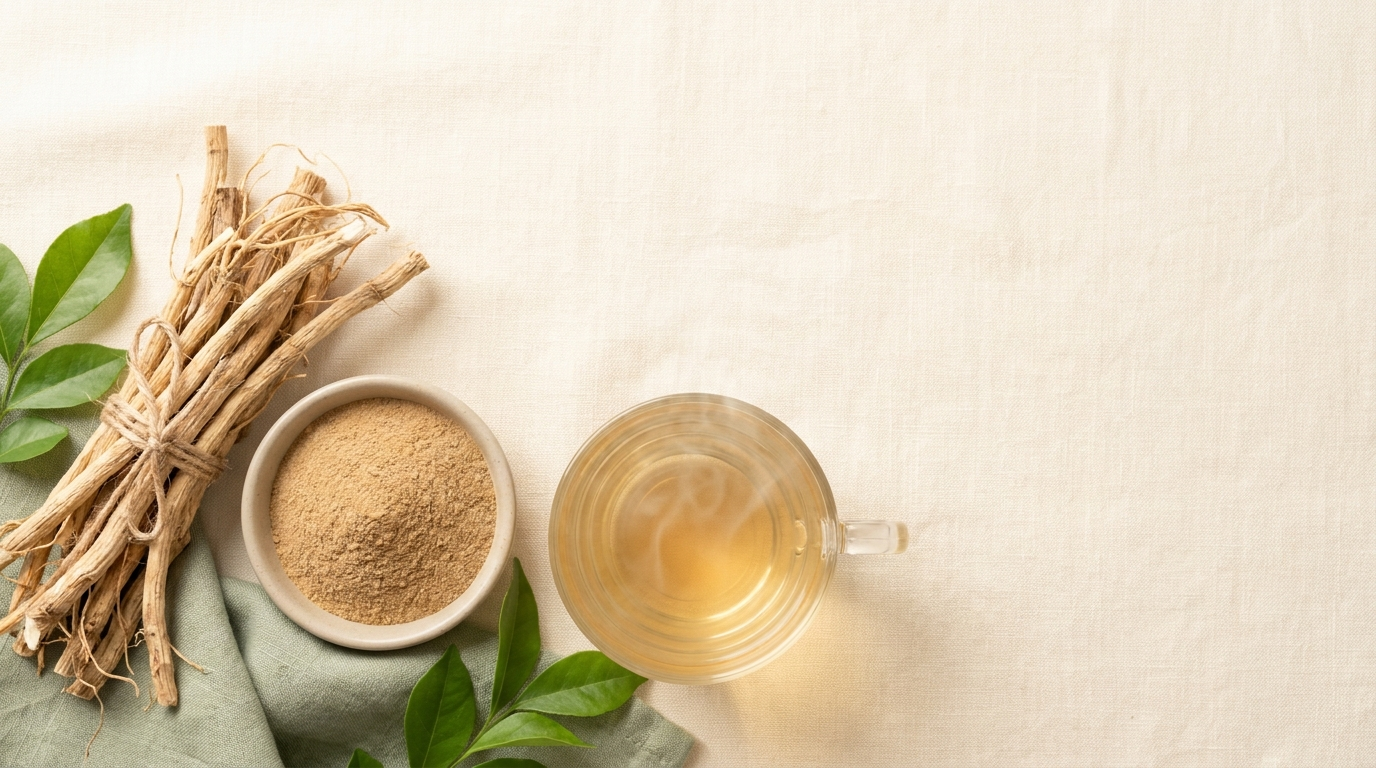
Iramusu, known outside Sri Lanka as Indian Sarsaparilla (Hemidesmus indicus), is a slender climbing plant whose long, pale roots carry a distinctive sweet, almost vanilla-like aroma. It grows across Sri Lanka and southern India. In traditional practice the root is used as a cooling tonic and a "blood purifier," and it flavors the classic Iramusu cordials sold at roadside stalls right through the hot months.
What Iramusu actually does
The tradition calls Iramusu a cooling, blood-purifying herb. The modern translation is less poetic but more useful. A 2020 review of the research on Indian Sarsaparilla catalogued the root's main actions as antioxidant, anti-inflammatory, and mildly diuretic, alongside its long record in traditional skin and fever remedies (Journal of Ethnopharmacology, 2020).
The antioxidant piece is where the "blood purifier" idea starts to make sense in plain terms. The root is rich in phenolic compounds, and in lab studies those compounds scavenge free radicals and protect cells from oxidative damage (phenolics antioxidant study). Oxidative stress is part of what leaves skin looking tired and inflamed, so a steady antioxidant intake is the honest version of what "purifying" was always pointing at.
The cooling reputation ties to its traditional use as a gentle diuretic. Herbs that nudge the body to release a little more water are exactly the ones hot climates have always leaned on. None of this is a dramatic drug effect. It is a quiet, daily kind of support, which is precisely how the root has been used for a very long time.
For skin specifically, Iramusu has often been paired with other purifying herbs, and Neem is the classic partner. If your interest in Iramusu is mostly about clearer skin, Ancient Nutra's Neem is worth reading about alongside it.
Who Iramusu is for
Iramusu is a warm-weather, foundational herb, not a targeted fix. It tends to suit a few kinds of people:
- People who run hot. If you feel the heat more than everyone around you, especially in the dry season, a cooling root is a sensible daily addition.
- Anyone dealing with heat-related skin flare-ups. Iramusu's traditional home is skin that looks irritated or congested when the weather turns.
- Tea drinkers who want a caffeine-free ritual. The root makes an easy, mild infusion that fits an afternoon slump without keeping you up at night.
- People building a simple herbal routine. Iramusu plays well with other roots and does not fight anything you are already taking.
And, honestly, who does not need it: if you already feel cool and comfortable, your skin is calm, and you drink plenty of water, Iramusu is not going to hand you a new superpower. It is a gentle helper, not a headline. Supplements never replace water, shade, sleep, and a decent diet. They just make the margins a little easier when the foundation is already in place.
How to actually take Iramusu
There is no single official dose, because Iramusu has lived mostly in kitchens rather than clinics. As a standardized capsule, a common daily range sits around 500mg to 1,000mg, taken with water and a meal. As a traditional root decoction, a small handful of dried root is simmered in water for ten to fifteen minutes and drunk warm or poured over ice.
Timing is forgiving. Iramusu is not a stimulant, so morning or afternoon both work. Many people take it through the hotter months and ease off in cooler weather, which matches how it has always been used. Give it a few weeks of steady daily use before you decide anything.
Look for
Clean, single-origin Iramusu root with nothing else added, in a consistent daily dose. Ancient Nutra's Sarsaparilla (Iramusu) Capsules use Sri Lankan root in a fixed daily dose, so you get the same amount every day without boiling anything.
Powder, tea, or capsule: which format fits
Iramusu has traditionally been a powder-and-tea herb. The root is dried, sometimes ground, then simmered into a decoction or steeped like a tisane. That method is genuine and it works. It is also bitter, a little fiddly, and hard to dose the same way twice. Some days your tea comes out strong, some days it is barely there.
That is the quiet case for the capsule. A capsule fixes the dose, removes the bitterness, and travels in a bag without a kettle. What you give up is the ritual, and for a lot of people that ritual is half the point. So the honest split is this: if you love a slow afternoon cup and do not mind the earthy taste, brew the root. If you want cooling support every single day with zero fuss, the capsule is the easier habit to keep.
If it is the cup you are after, a caffeine-free herbal tea like Ancient Nutra's Hibiscus Tea pairs naturally with an Iramusu routine and brings its own tart, cooling character to the glass.
Where Iramusu comes from
Iramusu, or Hemidesmus indicus, has a long place in both Sri Lankan home remedies and classical Ayurveda, where cooling herbs are prescribed for what old texts simply called excess heat. The 2020 research review notes its documented use across South Asia for skin complaints, fever, and as a cooling drink base. In Sri Lanka you still meet it most often as a flavor: the sweet, unmistakable scent in a glass of iced Iramusu on a blazing afternoon. Tradition opened the door here. The lab work is only now walking through it.
How long until you feel something
Iramusu is a slow, foundational herb, not a next-day switch. If you are taking it for daytime comfort in the heat, some people notice they feel a touch less overheated within a couple of weeks. Skin is a longer story, measured over one to three months, because skin turns over slowly and responds to the whole routine, not to one root. The sensible rule is the same one that applies to every herb here: give it ninety days of steady use before you judge it, and keep the basics of water, shade, and sleep in place the whole time.
The bottom line
Iramusu will not transform anything on its own. What it offers is quiet, traditional, warm-weather support: a cooling root with a real antioxidant story sitting behind its old "blood purifier" name. Take it as a daily capsule if you want it simple, or brew the root if you want the ritual. The plant does not care which way it reaches you.

Sarsaparilla (Iramusu) Capsules
Sri Lanka's cooling root in a simple daily capsule, no boiling required.
Shop IramusuSources and further reading
- Indian Sarsaparilla (Hemidesmus indicus): recent progress on ethnobotany, phytochemistry and pharmacology, Journal of Ethnopharmacology (2020).
- Assessment of antioxidant potentials of free and bound phenolics of Hemidesmus indicus, PMC (2011).
- The bioactive and therapeutic potential of Hemidesmus indicus root, Phytotherapy Research (2013).
Written by the Ancient Nutra Wellness Team. The team researches, sources, and tests every ingredient before it earns a place in an Ancient Nutra blend. Questions? Email info@ancientnutra.com or message Ancient Nutra on Instagram.
Medical disclaimer: This article is for educational purposes only and is not medical advice. Statements have not been evaluated by the FDA. Ancient Nutra products are not intended to diagnose, treat, cure, or prevent any disease. Speak with a qualified healthcare provider before starting any new supplement, especially if you take prescription medication or have a medical condition.