Ancient Nutra Wellness Team · 4 August 2026 · 8 min read
Immunity supplements: what the evidence actually supports before the rains
- No supplement has been shown to "boost" immunity in a healthy adult. The findings that do hold up are narrow: a shorter cold, not a cold avoided.
- The strongest 2025 analysis of vitamin D and respiratory infections, covering 61,589 people, no longer shows a statistically significant protective effect.
- Zinc may shorten a cold by roughly two days, but the evidence for its side effects is actually stronger than the evidence for its benefit.
- Vitamin C only shortens colds for people already taking it daily. Starting it when you feel a cold coming on has no consistent effect.
- Sleep, clean drinking water, and a routine you keep through the wet months do more than any capsule on the shelf.
Every year, as the second rains close in over the island, the shelves fill up with promises. Immune boosters, defence formulas, mega-dose sachets. It is a comforting story, and most of it does not survive contact with the evidence. That is worth saying plainly, because the honest version is still useful: a few things genuinely help, they help in specific and modest ways, and knowing which is which saves both money and disappointment. Here is what the best available research actually shows heading into the Maha season, including the parts that do not flatter the supplement aisle.
Do immunity supplements actually work?
As a category claim, no. There is no credible evidence that any pill raises baseline immune function in a healthy, reasonably nourished adult, and the phrase "immune boosting" has no accepted clinical meaning. A stronger immune response is not automatically a better one, which is why the serious literature talks about specific outcomes instead: whether you catch fewer colds, whether the cold you catch is shorter, whether symptoms are milder.
When researchers measure those specific outcomes, the results are far more modest than the marketing. A handful of nutrients show small, real effects in particular circumstances. Most popular botanicals show close to nothing once the trials are pooled. And correcting an actual nutritional deficiency, which is a genuine health goal, turns out to be a different question from preventing infection. Keeping those two ideas apart is the single most useful habit a reader can take into this aisle.
The season itself is not imaginary, though. Sri Lanka records two annual dengue peaks, and outbreaks arrive a few weeks after the onset of each of the two monsoons, with the northeast monsoon between December and February driving cases in the Northern, North Central, Uva and Eastern provinces (Emerging Infectious Diseases, US CDC, 2020). That is a mosquito and water story rather than a supplement story, and no capsule addresses it. It is simply the reason the wet months deserve more attention to the basics, not less.
Does vitamin D still prevent respiratory infections?
This is the claim most worth updating, because almost every wellness article still quotes the old answer. For years the reference point was a 2021 meta-analysis suggesting vitamin D modestly reduced acute respiratory infections. In 2025 the same research group published a far larger update covering 40 trials and 61,589 participants, and the protective effect no longer reached statistical significance: an odds ratio of 0.94 with a confidence interval of 0.88 to 1.00 (Jolliffe et al., Lancet Diabetes and Endocrinology, 2025).
The detail that matters most is what the authors could not find. The usual rescue arguments, that it only works in people who are deficient, or only with daily rather than bolus dosing, or only at certain doses, were tested as pre-specified subgroups and none of them explained the result. Vitamin D supplementation remained safe, with no excess of serious adverse events. It simply did not demonstrate that it prevents respiratory infections.
None of that makes vitamin D pointless. Weeks of heavy cloud during the monsoon genuinely reduce the sunlight that drives vitamin D synthesis, and low vitamin D status is worth correcting for bone and muscle health on its own terms. That is a nutrition goal with good support behind it. It is just not an infection-prevention strategy, and the two should not be sold as the same thing.
Is zinc worth taking once a cold starts?
Zinc is the closest thing to a genuine win in this list, with an honest asterisk attached. A 2024 Cochrane review found that zinc taken during a cold may reduce its duration by about 2.37 days, though the confidence interval was wide, running from 0.53 to 4.21 days, and the authors graded the certainty of that evidence as low (Nault et al., Cochrane Database of Systematic Reviews, 2024). For prevention, zinc showed essentially nothing, with a risk ratio of 0.93 that crossed the line of no effect.
Here is the part almost nobody quotes. In the same review, the evidence for zinc causing side effects was rated moderate certainty and was statistically clear, with a 34 percent higher rate of non-serious adverse events such as nausea and an unpleasant taste. In other words, the harm signal is better established than the benefit. That does not make zinc a bad choice for a short course during an actual cold. It does mean it belongs in the medicine drawer for a few days, not in a daily year-round routine.
Does vitamin C stop you catching a cold?
For the general population, it does not. The Cochrane review on vitamin C pooled 29 comparisons across 11,306 participants and found a risk ratio of 0.97 for catching a cold at all, which is no meaningful protection (Hemilä and Chalker, Cochrane Database of Systematic Reviews, 2013). There is one striking exception: in people under extreme short-term physical stress, such as marathon runners and soldiers on winter exercises, the risk of colds was roughly halved.
Where vitamin C does something for ordinary people is duration, and the timing is the catch that most marketing gets exactly backwards. Regular daily vitamin C, taken before you got sick, shortened colds by about 8 percent in adults and 14 percent in children. Starting vitamin C after symptoms appear showed no consistent effect on how long or how badly the cold ran. The sachet you reach for on day one of a scratchy throat is, on the evidence, the least useful way to take it.
What about echinacea and herbal immune blends?
Echinacea is the most heavily tested herbal cold remedy in the world, and it is a useful reality check. A Cochrane review of 24 double-blind trials covering 4,631 participants found that none of the prevention comparisons reporting cold episodes reached statistical significance, and only one of seven treatment trials showed echinacea beating placebo on duration (Karsch-Völk et al., Cochrane Database of Systematic Reviews, 2014). The reviewers allowed that a weak benefit from some preparations cannot be ruled out, while noting the effects would be of questionable clinical relevance.
The fairest reading is not that the plant is inert but that "echinacea" is not one product. Different species, different plant parts, and different extraction methods were pooled together, which is the same problem that clouds most herbal trial evidence. It is also the honest frame for traditional botanicals generally, including the Sri Lankan ones many households keep for the wet season: centuries of traditional use and promising laboratory work are real, and they are not the same as demonstrated results in humans. Traditional use tells you what generations found worth keeping. It does not tell you the size of the effect, and a good brand should not pretend otherwise. Ancient Nutra's own position is that the interesting botanicals earn a place as part of a seasonal habit, not as a claimed cure, and that is how they belong on a label too.
Look for
Products that name a specific ingredient and a specific dose, and that describe a habit rather than a cure. Be sceptical of any label promising to "boost" immunity, of proprietary blends that hide how much of anything you are getting, and of mega-doses well beyond the amounts actually used in trials.
Build the base that actually holds up
Strip out the claims that did not survive and a short, unglamorous list remains. Sleep is the closest thing to an evidence-backed immune intervention there is, and it is free. Drinking water you trust matters more than any capsule during a season when supply lines run cloudy. Regular meals with enough protein and vegetables keep the nutritional floor from dropping in the months when fried food is most tempting. Hand-washing and mosquito control do the heavy lifting the supplement aisle claims credit for.
On top of that base, a small number of targeted choices are reasonable. Correct a vitamin D deficiency if you have one, as a nutritional goal. Keep zinc for the first days of an actual cold rather than taking it daily. If you want the modest duration benefit from vitamin C, it has to be a steady daily habit established before the season, not a rescue sachet. And if a warm daily ritual is what keeps the rest of your routine on the rails, choose one you will genuinely repeat. For the herb-by-herb view of what Sri Lankan households traditionally reach for at this time of year, the Ancient Nutra pre-monsoon herb guide covers the traditional picks in detail. It is also worth reading the common mistakes people make with morning supplements before adding anything new.
The bottom line
The evidence does not support the idea that you can supplement your way to a stronger immune system before the Maha rains. It does support a handful of narrow, honest wins: zinc for a few days at the start of a cold, daily vitamin C if you commit to it early, and correcting a genuine vitamin D shortfall for its own sake. Everything else in this category is either unproven or too small to notice. Spend the attention on sleep, water, food, and one ritual you will actually keep through four months of rain. That is a duller answer than the shelf offers, and it is the one the research keeps pointing to.
Do immunity supplements actually work?
Not as a category. No supplement has been shown to raise baseline immune function in a healthy adult. A few nutrients produce narrow effects, such as slightly shortening a cold, but not preventing illness.
Does vitamin D prevent respiratory infections?
The largest 2025 analysis, covering 61,589 participants, found no statistically significant protective effect. Correcting a vitamin D deficiency is still worthwhile for bone and muscle health, but it is a separate goal from preventing infection.
Is zinc or vitamin C better for a cold?
They work differently. Zinc may shorten a cold by around two days when started during the illness, though it raises the rate of minor side effects. Vitamin C only shortens colds for people already taking it daily beforehand, and does little when started after symptoms begin.
What helps most during the monsoon?
Sleep, safe drinking water, regular balanced meals, hand-washing and mosquito control. These outperform any supplement in the category, particularly during a season when waterborne and mosquito-borne illness rises.

Shield Shot (5 pack)
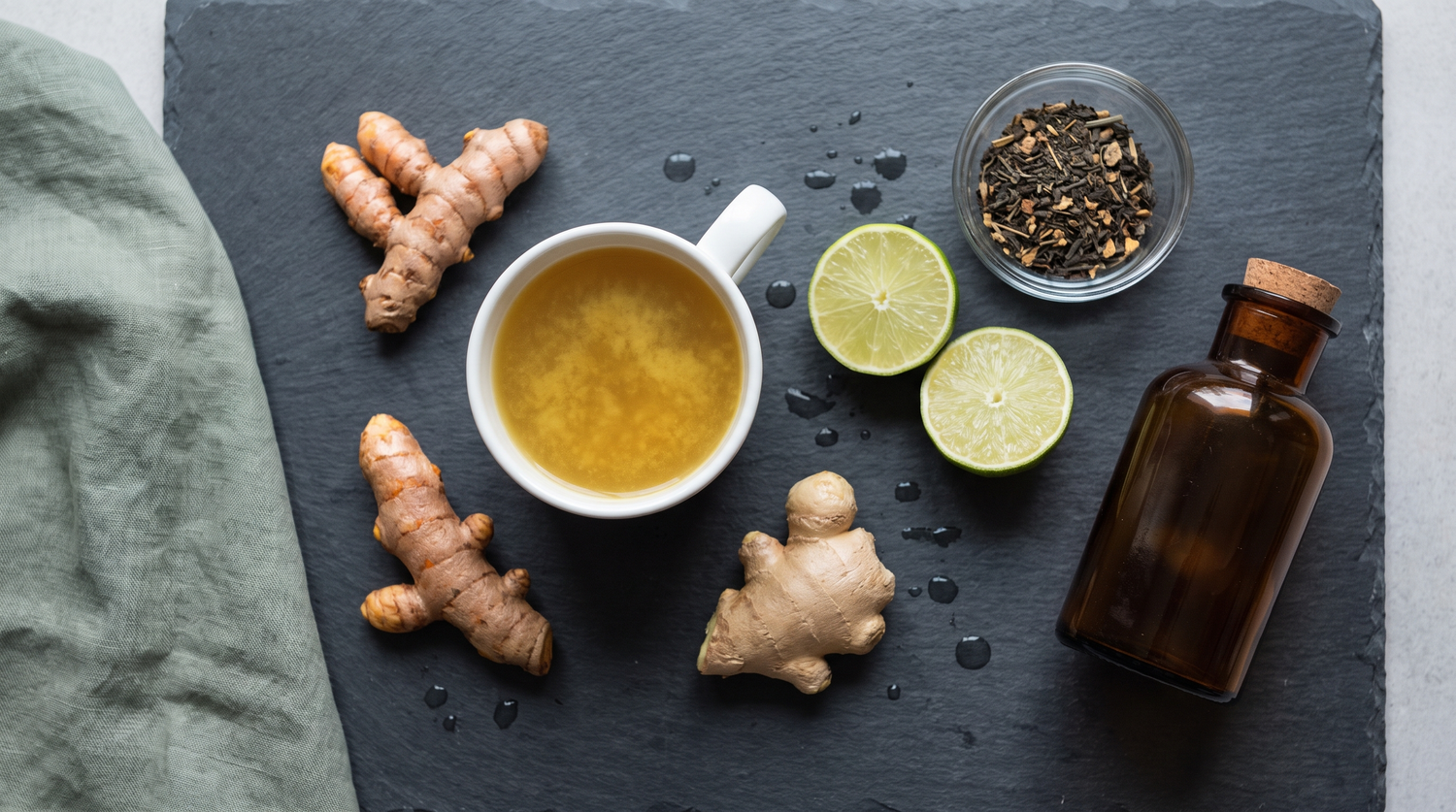
A ready-to-drink turmeric and ginger shot, built to be the one wet-season habit that is easy to keep.
Shop Shield ShotSources and further reading
- Jolliffe et al., Vitamin D supplementation to prevent acute respiratory infections, Lancet Diabetes and Endocrinology (2025). 40 trials, 61,589 participants, odds ratio 0.94 (95% CI 0.88 to 1.00).
- Nault et al., Zinc for prevention and treatment of the common cold, Cochrane Database of Systematic Reviews (2024). Duration reduced by 2.37 days, low certainty; adverse events risk ratio 1.34, moderate certainty.
- Hemilä and Chalker, Vitamin C for preventing and treating the common cold, Cochrane Database of Systematic Reviews (2013). No reduction in incidence; 8 percent shorter colds in adults with regular use.
- Karsch-Völk et al., Echinacea for preventing and treating the common cold, Cochrane Database of Systematic Reviews (2014). 24 trials, 4,631 participants, no significant prevention benefit.
- Tissera et al., Severe Dengue Epidemic, Sri Lanka, 2017, Emerging Infectious Diseases, US CDC (2020). On the two annual dengue peaks following each monsoon.
Written by the Ancient Nutra Wellness Team. The team researches, sources, and tests every ingredient before it earns a place in an Ancient Nutra blend. Questions? Email info@ancientnutra.com or message Ancient Nutra on Instagram. Last reviewed 4 August 2026.
Medical disclaimer: This article is for educational purposes only and is not medical advice. Statements have not been evaluated by the FDA. Ancient Nutra products are not intended to diagnose, treat, cure, or prevent any disease. Speak with a qualified healthcare provider before starting any new supplement, especially if you take prescription medication or have a medical condition.