Ancient Nutra Wellness Team · 24 August 2026 · 6 min read
5 Ways to Choose a Wellness Gift That Gets Finished
By the Ancient Nutra Editorial Team
- Match the gift to the routine the person already keeps, not to the routine you wish they kept.
- Choose something with a clear stopping point. A gift with a defined course is easier to accept than an open-ended commitment.
- Two questions settle most decisions: is the recipient on prescription medication, and are they pregnant or nursing.
Giving someone a supplement is a strange kind of present. You are handing over a jar that asks for a daily habit, and habits are personal. The gift lands when it slots into a morning the person already has. It sits in a cupboard when it asks them to build a new one.
Nobody needs a bigger cupboard. About 60% of US adults reported taking a dietary supplement in the past 30 days, which means most people you are buying for already have a shelf of half-finished jars. The five checks below are about picking the one that gets opened.
1. Match the format to the routine they already keep
Format decides whether a jar gets used. Someone who already takes a morning tablet will absorb capsules without thinking. Someone who cooks every evening but has never taken a supplement will do better with a powder that goes into food. A powder given to a capsule person tends to sit unopened, and the reverse is just as true.
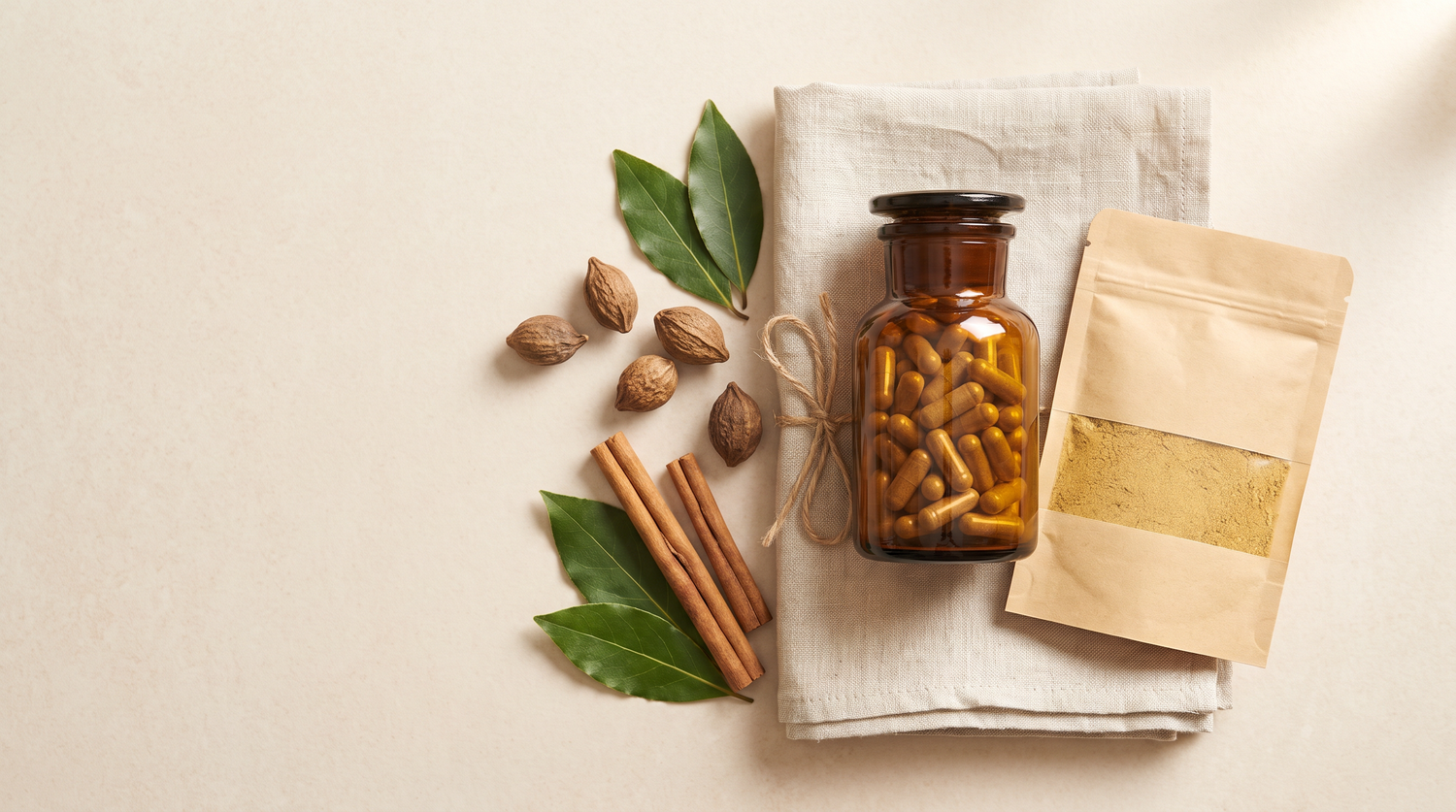
Capsules are the safer default for a gift, because they need no measuring, no blender, and no new equipment. Ancient Nutra's Triphala is a reasonable example of the type: a three-fruit Ayurvedic blend of Terminalia chebula, Terminalia bellerica, and Emblica officinalis (also written Phyllanthus emblica), taken in the evening. If the person is completely new to herbs, the guide on choosing a first herbal ritual is a gentler starting point than a jar handed over with no context.
2. Pick something with a clear stopping point
An open-ended supplement is a heavy gift. It implies the person should keep taking something indefinitely, and it quietly asks them to keep buying it. A defined course is lighter and more honest: a few weeks, then a pause, then a decision about whether it did anything.
Herbs differ in how long the evidence actually supports taking them, so the honest window is per ingredient, not a house rule. The best quality human research on Triphala runs to about four weeks, which makes a four to six week course a defensible way to give it. That is a useful thing to say out loud when handing it over, because it turns the gift into a short experiment rather than an obligation.
3. Give a kitchen ingredient to someone who does not take supplements
Plenty of people have no interest in capsules and will not develop one because you gave them a jar. For them, the gift that gets finished is one that goes into food. A good culinary spice is used up in normal cooking without anyone deciding to start a regimen.
Ceylon cinnamon works well here. Ancient Nutra's Cinnamon Powder goes into porridge, curries, and tea, and the culinary amounts used in cooking are a different kind of exposure from a concentrated capsule taken daily. There are three practical uses in the piece on Ceylon cinnamon beyond the mug if you want to write a suggestion on the card.
4. Read the label before you wrap it
A gift is harder to return than a purchase for yourself, so the label deserves a minute. The things worth checking are plain: what the plant actually is, how much of it is in a serving, and whether the form is a whole herb or a concentrated extract. Extracts are stronger than the powder of the same plant, and they are not interchangeable.
Look for
A named plant with its botanical name, a stated amount per serving, and a clear distinction between whole-herb powder and extract. Reading a herbal extract label covers what the ratios on the back actually mean.
5. Ask the two questions that decide the gift
Two facts about the recipient matter more than anything on the label. The first is whether they take prescription medication. The National Center for Complementary and Integrative Health puts it plainly: some dietary supplements may cause harm for people with a particular medical condition or risk factor, or for those taking certain prescription or over-the-counter medicines.
The second is whether they are pregnant or nursing. Many dietary supplements have not been tested in pregnant women, nursing mothers, or children, which makes a supplement a poor choice of surprise for anyone in that position. If either answer is yes, or you are not sure, the better gift is something without a dose. The list of questions to ask before taking a herb is worth passing along with the jar in any case, and anyone starting something new alongside medication should speak to their doctor or pharmacist first.
How to actually use this list
Do not run all five checks like a form. Start with the person. If you already know they take something every morning, check one and two and stop there. If you know they cook and do not take supplements, check three and you are done. The label check matters most when you are buying an unfamiliar brand, and the two questions in check five override everything else if the answer to either is yes.
One jar chosen well beats a set chosen quickly. If you want the gift to feel like more, pairing a small kitchen ingredient with a single capsule jar reads better than a large bundle the person did not ask for.
The bottom line
The wellness gift that gets finished is the one that fits a routine that already exists, has a clear end date, and does not conflict with anything the person is already taking. For someone who already takes a morning capsule, a short evening course of Triphala is an easy fit. For someone who cooks instead, a jar of Ceylon cinnamon powder gets used up without any decision at all. Ask the two questions first, and when in doubt, give the thing that goes into food.

Triphala, 60 capsules
A three-fruit Ayurvedic blend, traditionally taken as a short evening course.
Shop TriphalaSources and further reading
- Stierman B, Couch CA, Gahche JJ, Mishra S. Dietary Supplement Use: United States, August 2021 to August 2023. NCHS Data Brief No. 561, National Center for Health Statistics, 2026.
- Using Dietary Supplements Wisely, National Center for Complementary and Integrative Health, NIH.
- Peterson CT, Denniston K, Chopra D. Therapeutic Uses of Triphala in Ayurvedic Medicine, Journal of Alternative and Complementary Medicine, 2017.
Written by the Ancient Nutra Wellness Team. The team researches, sources, and tests every ingredient before it earns a place in an Ancient Nutra blend. Questions? Email info@ancientnutra.com or message Ancient Nutra on Instagram.
Medical disclaimer: This article is for educational purposes only and is not medical advice. Statements have not been evaluated by the FDA. Ancient Nutra products are not intended to diagnose, treat, cure, or prevent any disease. Speak with a qualified healthcare provider before starting any new supplement, especially if you take prescription medication or have a medical condition.