Ancient Nutra Wellness Team · 23 May 2026 · 6 min read
Artichoke Extract: the Mediterranean herb for liver and digestion
Key takeaways
- Artichoke leaf extract works mainly by getting the liver to make and release more bile, and that one action is behind both its digestion and its cholesterol benefits.
- In a placebo-controlled trial of 247 people with ongoing bloating and fullness, artichoke leaf extract beat placebo on symptom relief.
- A typical dose is a standardized leaf extract, around 300 to 640 mg with meals. The digestive effect usually shows up well before the cholesterol one.
Most people meet the artichoke on a dinner plate and never think about it again. In the Mediterranean it has done quieter work for far longer than that: a bitter green eaten before a heavy meal to get the stomach moving. The modern version comes in a capsule. Artichoke leaf extract is one of the better-studied plants for two things people rarely connect, your liver and your digestion, and most of what it does traces back to a single trick. It gets bile flowing.
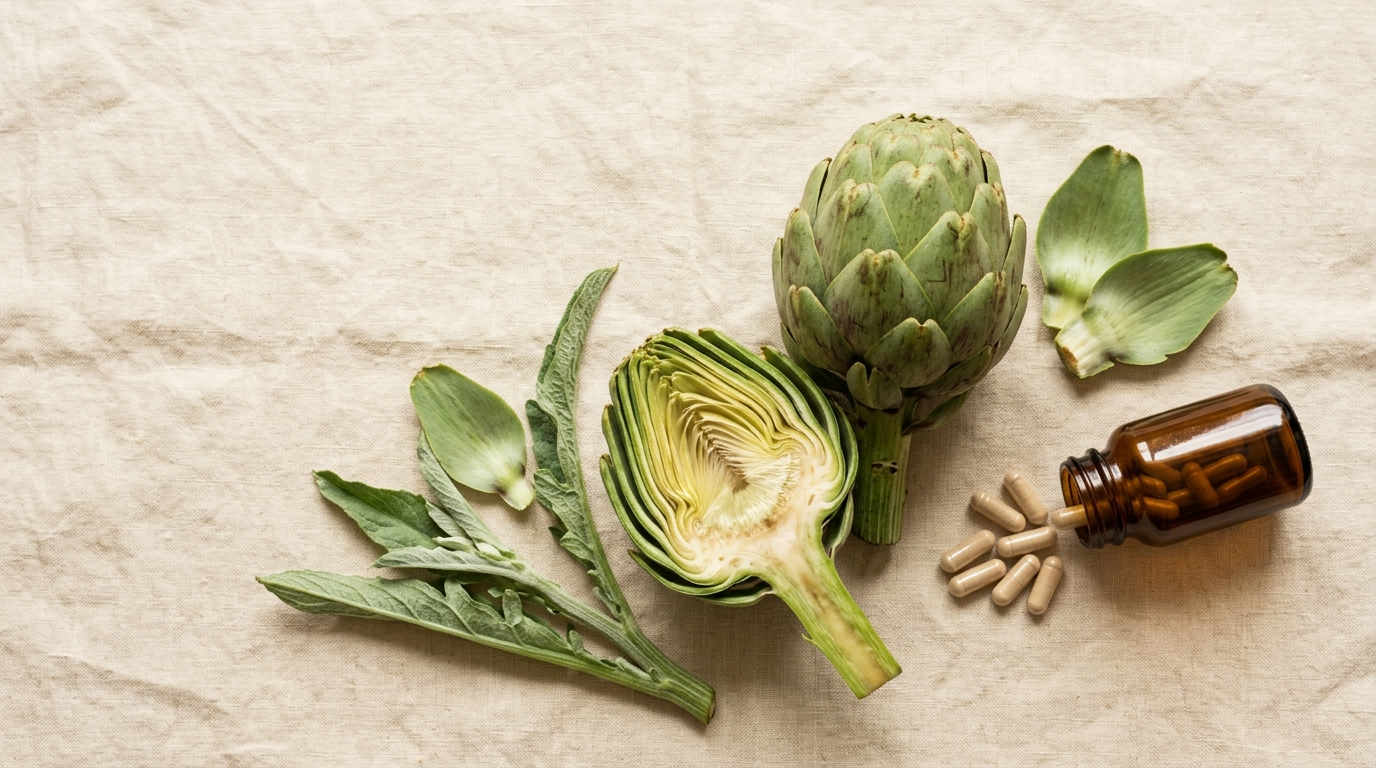
Artichoke (Cynara scolymus) is a tall thistle grown across the Mediterranean for its edible flower bud. The supplement is not made from the part you eat, though. It is concentrated from the leaves, which hold the bitter compounds, mainly cynarin and chlorogenic acid, that give the plant its effect. People have used artichoke leaf as a digestive bitter and gentle liver tonic since Roman times. Today it arrives as a standardized capsule.
What artichoke extract actually does
Start with bile, because almost everything else follows from it. Bile is the body's detergent for fat. The liver makes it, the gallbladder stores it, and a meal triggers its release into the gut. Artichoke leaf nudges the liver to produce and release more of it. More bile means fat gets broken down more smoothly, food moves through faster, and the heavy, overfull feeling after a rich meal tends to ease.
That is why the strongest evidence for artichoke sits in digestion. In a six-week placebo-controlled trial of 247 people with functional dyspepsia, the medical name for ongoing bloating, fullness, and upper-gut discomfort with no clear cause, artichoke leaf extract beat placebo on both symptoms and quality of life (Aliment Pharmacol Ther, 2003).
The same bile trick explains the cholesterol angle. To build bile, the liver pulls cholesterol out of the blood as raw material. Make more bile, use up more cholesterol. A meta-analysis of nine trials covering 702 adults found artichoke extract lowered LDL cholesterol by roughly 15 mg/dL, with the biggest drop in people whose levels started high (Crit Rev Food Sci Nutr, 2018). The leaf's bitter compounds also act as antioxidants in the liver, which is why it shows up alongside other liver-support herbs rather than on its own.
Who artichoke extract is for
This is a targeted herb, not a daily multivitamin. It earns its place for a few specific people:
- People who feel heavy or overfull after rich, fatty meals. If big dinners sit like a brick, the bile effect is exactly what you are missing.
- People watching their cholesterol who want a food-derived nudge to run alongside diet changes, not in place of them.
- People who eat rich and drink socially and want gentle, daily support for the organ doing the cleanup.
- People with sluggish digestion and the occasional backed-up day, since more bile keeps things moving.
And the honest part: if your digestion is already comfortable and your bloodwork is clean, you probably do not need it. Two cautions matter. Because artichoke stimulates bile, anyone with gallstones or a blocked bile duct should avoid it and talk to a doctor first. And because it belongs to the daisy family, people allergic to ragweed, marigolds, or chrysanthemums may react to it.
How to actually take artichoke extract
Doses in the research run from about 300 to 640 mg of standardized leaf extract, taken one to three times a day. Take it with or just before food. It is a bitter at heart, and bitters work best when they meet the meal they are meant to help digest.
For the digestive benefit, a single capsule with your largest meal is a reasonable start. For the cholesterol effect, the trials that moved the needle used the higher end of that range for six to twelve weeks, so consistency matters more than dose size. In the first month, expect the post-meal heaviness to ease before anything shows up on a lab report.
Look for
A standardized leaf extract (not powdered whole artichoke), so the cynarin content is consistent from capsule to capsule. Ancient Nutra's Artichoke Extract is a standardized leaf capsule built for daily use with meals.
Where artichoke comes from
The Greeks and Romans ate artichoke as a digestive aid long before anyone could name the compound responsible. It stayed a kitchen-and-apothecary plant across southern Europe for centuries, the kind of bitter green you reached for after a feast. The modern chapter started in the 1930s, when chemists isolated cynarin from the leaves and put a name to the effect. That is the order worth keeping straight: the tradition pointed at the plant, and the science later explained why it worked.
What to stack artichoke extract with
Artichoke pairs naturally with herbs that protect the liver rather than just move bile through it. The obvious partner is milk thistle. Where artichoke gets bile flowing, Ancient Nutra's Milk Thistle Extract works on a different front, helping shield liver cells from everyday oxidative wear. One moves things along, the other guards the workshop.
If you would rather not build the stack yourself, Ancient Nutra's Liver and Detox System bundles complementary liver herbs into one routine. This kind of stack is for people doing real liver support, after a rich season or a stretch of social drinking, not something everyone needs running year-round.
How long until you feel something
The digestive side is the quick one. In the dyspepsia trials, the gap between artichoke and placebo opened up within the first couple of weeks, so post-meal bloating and fullness are usually what shift first. The cholesterol and liver markers are slower and quieter. Those took six to twelve weeks to register in the research, and you only see them by rechecking bloodwork, not by feel. Give the metabolic side a full eight to twelve weeks before you decide whether it is doing anything for you.
The bottom line
Artichoke leaf extract is not a detox miracle, and it will not undo a poor diet. What it does is real and specific: it helps the liver make bile, which smooths fat digestion, calms post-meal heaviness, and gives cholesterol a useful nudge for people who run high. Ancient Nutra's Artichoke Extract is a standardized leaf capsule made for daily use with meals. Stack it for liver work, or take it alone for digestion. The science does not care which bottle it comes in.

Artichoke Extract
Standardized leaf extract for daily liver and digestion support, taken with meals.
Shop Artichoke ExtractSources and further reading
- Holtmann G, et al. Efficacy of artichoke leaf extract in functional dyspepsia, a six-week placebo-controlled trial, Alimentary Pharmacology & Therapeutics, 2003.
- Lipid-lowering activity of artichoke extracts, a systematic review and meta-analysis, Critical Reviews in Food Science and Nutrition, 2018.
- Artichoke, uses, dosing, and precautions, WebMD.
Written by the Ancient Nutra Wellness Team. The team researches, sources, and tests every ingredient before it earns a place in an Ancient Nutra blend. Questions? Email info@ancientnutra.com or message Ancient Nutra on Instagram.
Medical disclaimer: This article is for educational purposes only and is not medical advice. Statements have not been evaluated by the FDA. Ancient Nutra products are not intended to diagnose, treat, cure, or prevent any disease. Speak with a qualified healthcare provider before starting any new supplement, especially if you take prescription medication or have a medical condition. People with gallstones or a bile duct obstruction should avoid bile-stimulating herbs unless cleared by a doctor.