Ancient Nutra Wellness Team · 8 July 2026 · 6 min read
Green Tea Extract: the EGCG case for steady metabolism
Key takeaways
- Green tea's main catechin, EGCG, gently raises the calories your body burns at rest, and the research shows it works through the catechins, not caffeine alone.
- The honest effect is small, roughly 100 extra calories a day in studies, so treat green tea as support for a steady metabolism, not as a fat burner.
- Aim for around 300 to 400mg of EGCG a day, from a standardised green tea extract or a few cups of real green tea, and take it with food.
Green tea will not melt fat off you. Anyone selling it that way is overselling a real, but small, effect. Here is the honest version: the catechins in green tea, led by one called EGCG, nudge your body to burn a little more energy through the day. In one careful study, green tea extract lifted 24-hour calorie burn by about 4 percent, while plain caffeine did nothing on its own (AJCN, 1999). Small, steady, and worth understanding before you buy a bottle.
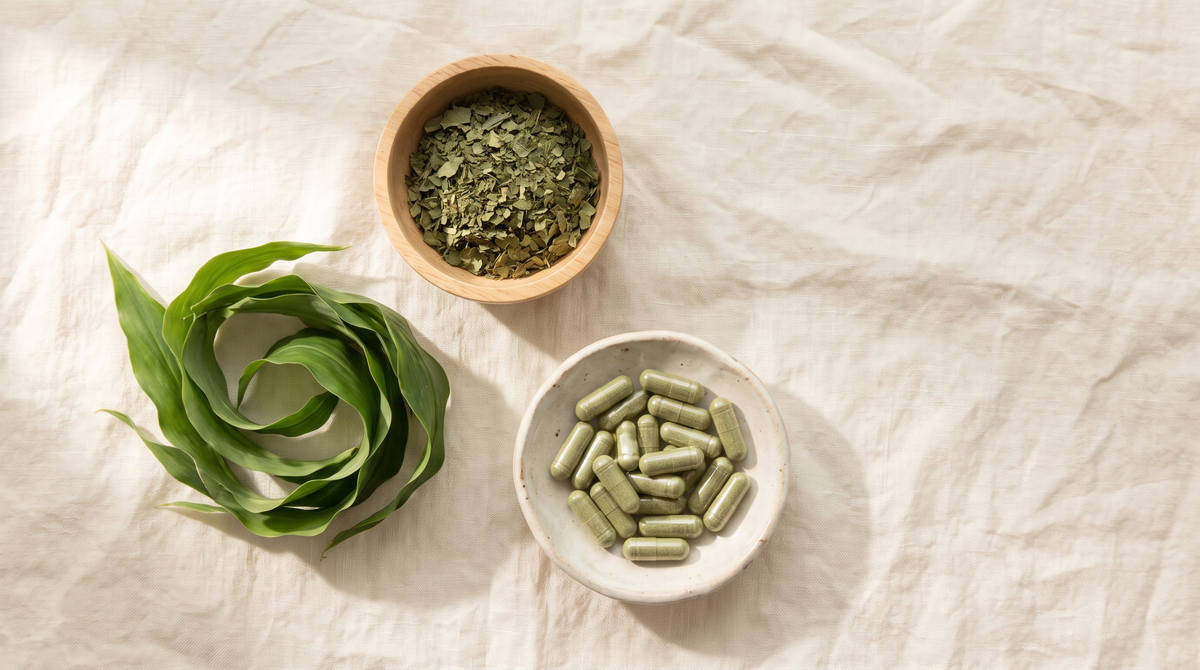
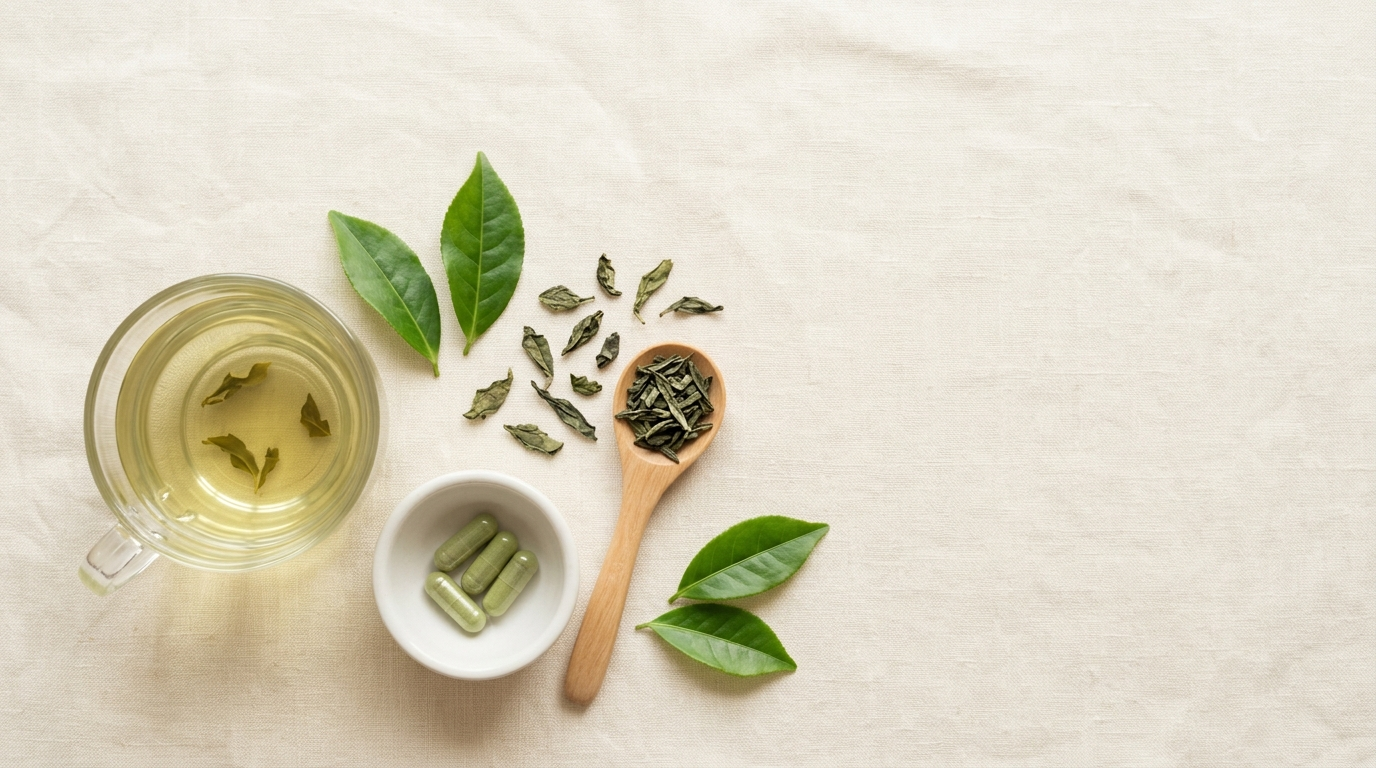
Green tea is the unfermented leaf of the same plant that gives us black tea. What makes it interesting for metabolism is a group of plant compounds called catechins, and the star of that group is EGCG (epigallocatechin gallate). Every cup carries a dose of them. A concentrated capsule, a standardised green tea extract, carries far more. Sri Lankan tea gardens have grown this leaf for generations, long before anyone measured a catechin.
What EGCG actually does
Your body is always burning fuel, even at rest. EGCG gently turns up that background burn. It does this by slowing an enzyme that breaks down norepinephrine, the signal that tells your cells to release and use energy. With that signal hanging around a little longer, your body spends slightly more energy and leans a bit more on fat for fuel.
The effect is real but modest, and it shows up best when catechins and a small amount of caffeine work together. In a large review of the research, the catechin and caffeine combination raised daily energy burn by roughly 100 calories, and fat burning only improved when the catechins were present, not caffeine by itself (Obesity Reviews, 2011). That is the whole mechanism in plain terms: a quiet lift, not a switch you flip.
Who green tea catechins help most
Green tea is not for everyone, and that is the honest place to start. It helps most when:
- You want gentle, all-day support rather than a stimulant jolt. The effect is quiet by design.
- You already move and eat reasonably well, and want a small edge on a steady metabolism.
- You are cutting back on strong pre-workouts or fat burners and want something calmer in their place.
- You drink coffee anyway, and would rather some of that caffeine came with antioxidants attached.
Who can skip it: if you are sensitive to caffeine, or you take green tea extract on an empty stomach and feel queasy, this may not be worth it. And if your sleep, protein, and daily movement are not sorted yet, fix those first. No catechin outperforms a good night's sleep.
How to actually take green tea catechins
The dose that does something in research sits around 300 to 400mg of EGCG a day. You can reach that with a standardised green tea extract, or with a few cups of real green tea across the day, though cups vary a lot. Take it with food. EGCG on an empty stomach can leave sensitive people a little nauseous, and food makes it gentler. A small amount of caffeine alongside it helps, which is one reason the effect is stronger from green tea than from a decaffeinated extract.
One caution worth stating plainly: keep supplemental EGCG under about 800mg a day. Very high doses from concentrated extracts have been linked to liver strain. Real brewed tea is not the concern here. Concentrated capsules taken well above the label are.
Look for
A standardised green tea extract delivering 300 to 400mg of EGCG per serving, taken with food. If you would rather drink your catechins than swallow them, stone-ground whole-leaf matcha puts the whole leaf in the cup. Ancient Nutra's Matcha Tea Powder is whole-leaf green tea, so the catechins go into your cup instead of being steeped and thrown away.
Where green tea comes from
Green tea has been part of daily life across Asia for well over a thousand years, valued as a calm, clear-headed drink long before anyone isolated a catechin. Sri Lanka, better known for its black Ceylon tea, grows the same leaf in its highland gardens. The tradition arrived first. The lab work followed, and it mostly confirmed what daily drinkers already felt: green tea gives you a steady lift without the spike and crash of stronger stimulants.
What to stack green tea with
Green tea catechins pair best with the other small levers that keep metabolism steady, not with more stimulants. Two work well alongside it. Cinnamon helps blunt the blood sugar rise after meals, which keeps energy from swinging, and Ancient Nutra's Ceylon Cinnamon is the low-coumarin kind worth using daily. For anyone watching blood sugar more closely, bitter melon is a traditional Sri Lankan option, and Ancient Nutra's Karavila (Bitter Melon) has been used for generations for exactly that. This stack is for steady daily energy and blood sugar, not for rapid weight loss. If that is the goal, food and training still do the heavy lifting.
How long until you feel something
Do not judge green tea by week one. The changes are subtle and they add up. In the first few weeks, most people notice steadier energy and fewer mid-afternoon crashes rather than anything dramatic on the scale. The metabolic effect is measured in tens of calories a day, so it compounds slowly and only alongside the basics. Give it at least eight to twelve weeks, with your sleep and meals in order, before you decide whether it earns a place in your routine.
The bottom line
Green tea is a helper, not a fat burner. The most honest summary of the research, a Cochrane review, found the weight effect small and not large enough to matter much on its own (Cochrane, 2012). What it does offer is real: a gentle, all-day nudge to a steady metabolism, plus a load of antioxidants, from a drink humans have trusted for centuries. Reach for it as support, keep the dose sensible, and let sleep, protein, and movement do the real work. For the whole-leaf version you can drink every day, Ancient Nutra's Matcha Tea Powder puts the catechins in the cup rather than down the drain. The science does not care which bottle they come in.

Ancient Nutra Matcha Tea Powder
Stone-ground whole-leaf green tea, so you drink the catechins instead of steeping and discarding them.
Shop Matcha Tea PowderSources and further reading
- Dulloo AG et al., "Efficacy of a green tea extract rich in catechin polyphenols and caffeine in increasing 24-h energy expenditure," American Journal of Clinical Nutrition, 1999.
- Hursel R et al., "The effects of catechin rich teas and caffeine on energy expenditure and fat oxidation," Obesity Reviews, 2011.
- Jurgens TM et al., "Green tea for weight loss and weight maintenance in overweight or obese adults," Cochrane Database of Systematic Reviews, 2012.
- Further reading: National Center for Complementary and Integrative Health, Green Tea.
Written by the Ancient Nutra Wellness Team. The team researches, sources, and tests every ingredient before it earns a place in an Ancient Nutra blend. Questions? Email info@ancientnutra.com or message Ancient Nutra on Instagram.
Medical disclaimer: This article is for educational purposes only and is not medical advice. Statements have not been evaluated by the FDA. Ancient Nutra products are not intended to diagnose, treat, cure, or prevent any disease. Speak with a qualified healthcare provider before starting any new supplement, especially if you take prescription medication or have a medical condition.