Ancient Nutra Wellness Team · 23 July 2026 · 6 min read
Chia seeds: the soak-and-go protein you do not have to cook
Key takeaways
- Chia is a complete plant protein, meaning it carries all nine essential amino acids, though the protein per spoon is modest at roughly 4 to 5 grams an ounce.
- Its real strength is fiber and omega-3: about 10 grams of fiber and close to 5 grams of plant omega-3 (ALA) in a single ounce.
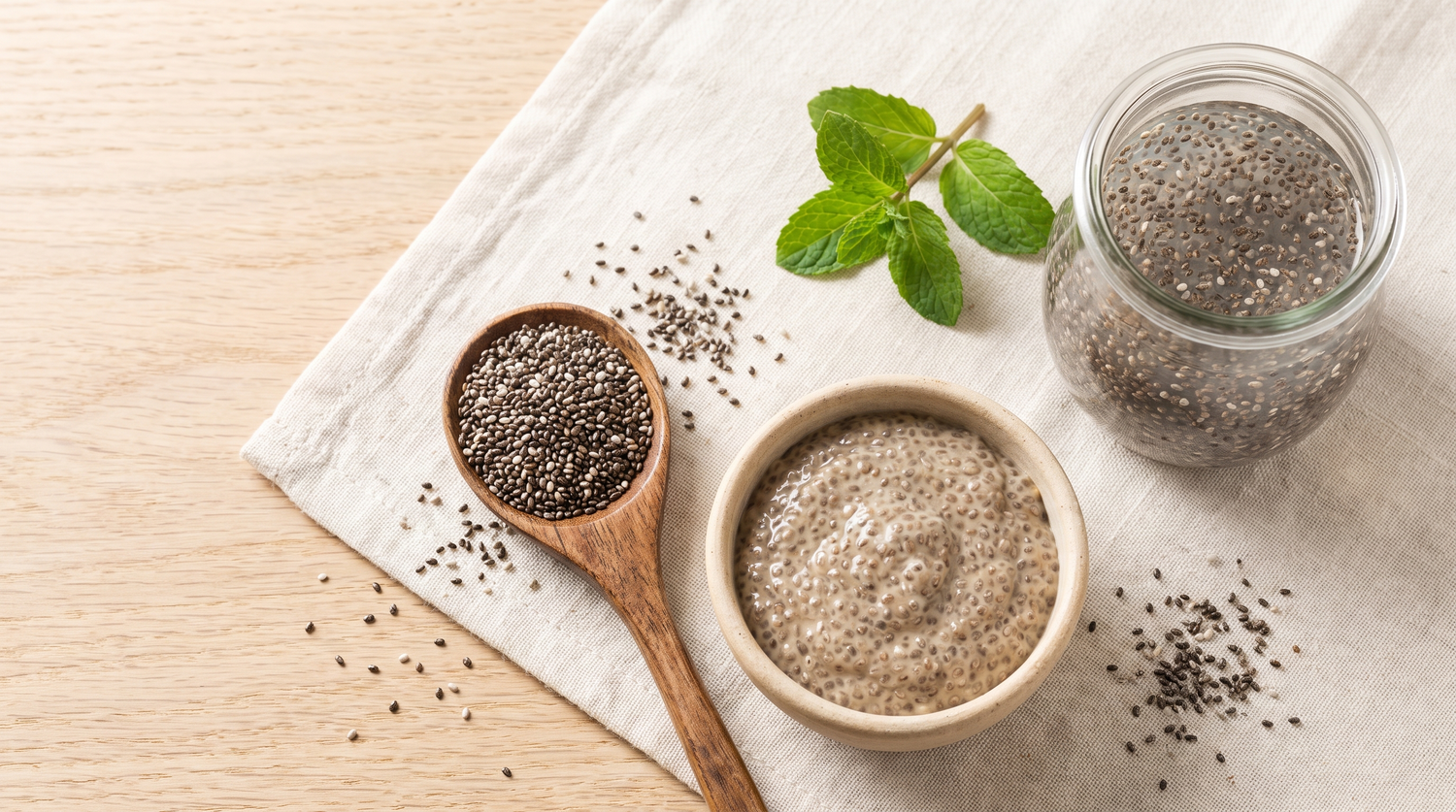
- Soak a spoonful in water or milk for 15 minutes and it turns into a gel you can eat straight, no cooking, no blender.
Here is the honest version. Chia will not out-protein a scoop of whey or a boiled egg, and any label that calls it a protein bomb is selling you the seed, not the science. What chia actually does well is quieter: it is one of the few plant foods that gives you complete protein, a real dose of fiber, and omega-3 in the same spoonful, and it asks nothing of you except a glass of water and 15 minutes. Soak it, stir it, eat it. That is the whole method.
What chia seeds actually are
Chia seeds are the tiny black and white seeds of a flowering plant in the mint family, grown for centuries across Mexico and Central America as a staple food. They are one of the most nutrient-dense seeds you can keep in a jar, which is why they earned the "superfood" tag long before the marketing caught up. In Sri Lanka they have become a pantry regular for anyone building a plant-forward breakfast without much cooking.
Why "complete protein" matters more than the gram count
Per 100 grams, chia carries about 16.5 grams of protein (USDA FoodData Central). In real terms that is roughly 4 to 5 grams in a standard ounce, or two tablespoons. That is a topping, not a meal. So the number itself is not the headline.
The headline is quality. Chia is a complete protein, which means it contains all nine of the essential amino acids your body cannot make on its own (Harvard T.H. Chan School of Public Health). Most plant foods miss one or two. For vegetarians and anyone eating mostly plants, that is the part worth paying attention to: chia rounds out the amino acid profile of a meal built on grains, legumes, or greens.
The fiber and omega-3 are the real story
If chia has a superpower, it is fiber. A single ounce delivers close to 10 grams of it, against a US average intake of only about 16 grams a day for the whole day, which is why national surveys flag fiber as a nutrient most people fall short on (What We Eat in America, NHANES). One spoonful of chia closes a meaningful chunk of that gap.
Then there is the omega-3. Chia is one of the richest plant sources of ALA (alpha-linolenic acid), packing close to 5 grams per ounce. That makes it a genuinely useful omega-3 top-up for people who do not eat fish. It sits comfortably next to Ancient Nutra's Flax Seeds, the other plant omega-3 staple, and the two do slightly different jobs, which is why plenty of people keep both.
How the gel works, and why soaking matters
Drop chia in liquid and within about 15 minutes it swells into a soft gel. That gel is the mucilage, the soluble part of chia's fiber, and it can hold up to roughly 15 times the seed's weight in water (Ullah et al., J Food Sci Technol). That is the "soak-and-go" part. The gel slows how fast the meal leaves your stomach, which is what makes a small spoonful feel surprisingly filling.
Soaking is not just for texture. Eating chia dry, especially by the spoonful with too little water, lets it absorb liquid on the way down, which is uncomfortable. Soak it first and you get the gel working for you, not against you.
Who chia is actually for
- Plant-based eaters who want complete protein and omega-3 without animal sources.
- Anyone short on fiber, which, going by the survey numbers, is most people.
- Busy mornings that need a no-cook breakfast made the night before.
- People managing appetite, because the gel adds fullness to a light meal.
Who does not need it: if you already eat oily fish a few times a week and plenty of vegetables and legumes, chia is a nice extra, not a fix for anything. It is a topping that earns its place, not a supplement you are missing.
How to actually use it every day
Start with one to two tablespoons a day. The simplest routine: stir two tablespoons into about half a cup of milk or water, leave it in the fridge overnight or for at least 15 minutes, then eat it with fruit. That is basic chia pudding, and it is the version most people stick with because it takes under three minutes of hands-on time.
Other easy moves: stir a spoonful into yogurt, blend it into a smoothie, or scatter it over a morning bowl. Because chia has almost no flavor, it hides in anything. Drink water alongside it, since fiber works best when there is enough liquid to move it through.
Look for
Whole, dry chia seeds (black or white, the nutrition is nearly identical), clean and free of grit, in a resealable pack you can keep sealed and dry. Ancient Nutra's Chia Seeds come as plain whole seeds, so you control the soak and the serving.
What to stack it with
Chia pairs naturally with other seeds. Flax adds a different fiber profile and its own omega-3, and pumpkin and sunflower seeds bring more minerals and a bit of crunch. If you would rather not measure four jars every morning, Ancient Nutra's 4-in-1 Super Seeds Mix puts the common four in one pack. This stack is for building a plant-forward breakfast, not a requirement: one spoon of chia on its own already does honest work.
How long until you notice something
Digestion tends to be the first thing people notice, often within the first week or two, simply because most of us were under-eating fiber to begin with. Ease in slowly, one tablespoon before two, so your gut adjusts without bloating. The steadier benefits, the omega-3 and the daily fiber habit, are the kind you build over months, not days. Give it a fair run before deciding it is doing nothing.
The bottom line
Chia is not the highest-protein food in your kitchen, and it was never meant to be. It is a complete protein, a strong fiber source, and one of the cleanest plant omega-3s, all in a seed you soak instead of cook. That combination, and the fact that it takes three minutes, is why it earns a spot in the jar.

Ancient Nutra Chia Seeds 100g
Whole plant seeds for complete protein, fiber, and omega-3, ready to soak.
Shop Chia SeedsSources and further reading
- Chia seeds, dried, nutrient data, USDA FoodData Central.
- Chia Seeds, The Nutrition Source, Harvard T.H. Chan School of Public Health.
- Ullah et al., Nutritional and therapeutic perspectives of Chia, J Food Sci Technol (PMC).
- Fiber intake of the U.S. population, NCBI Bookshelf, NHANES.
Written by the Ancient Nutra Wellness Team. The team researches, sources, and tests every ingredient before it earns a place in an Ancient Nutra blend. Questions? Email info@ancientnutra.com or message Ancient Nutra on Instagram.
Medical disclaimer: This article is for educational purposes only and is not medical advice. Statements have not been evaluated by the FDA. Ancient Nutra products are not intended to diagnose, treat, cure, or prevent any disease. Speak with a qualified healthcare provider before starting any new supplement, especially if you take prescription medication or have a medical condition.