By the Ancient Nutra Wellness Team · 6 minute read · Updated June 19, 2026
- Inflammation is not one thing. Acute inflammation is the body's repair crew (the redness around a cut), and it is good. Chronic low-grade inflammation is the version that quietly wears the body down.
- You usually cannot feel chronic inflammation. It runs in the background and is linked to most of the big modern diseases, which is why sleep, food, and movement matter more than any single pill.
- Turmeric is the most studied food for calming inflammatory markers, but it works best on top of the basics, not instead of them.
"Inflammation" has become a villain word. It gets blamed for everything from belly fat to brain fog, and the internet sells a hundred things to fight it. Here is the part that rarely makes the headline: inflammation is not the enemy. It is one of the most useful things your body does. The trouble is that there are two very different versions, and they get talked about as if they were the same. One keeps you alive. The other, left running for years, slowly costs you.
Inflammation is simply your immune system showing up to a problem. When you cut a finger or catch a cold, the body sends blood, fluid, and immune cells to the spot to clean up and rebuild. That is what the heat, redness, and swelling actually are: the repair crew at work. When this response switches on for a real reason and then switches off, it is doing its job perfectly. The problems start when it never fully switches off.
How inflammation actually works
Picture a splinter in your thumb. Within minutes the small blood vessels around it widen and get leakier, which is why the skin turns red, warm, and puffy. Immune cells pour out of the blood and into the tissue to clear any bacteria and tidy the damage. The classic signs that doctors have described for centuries are redness, heat, swelling, and pain (Cleveland Clinic). That is acute inflammation. It is fast, local, and temporary, and once the job is done it shuts down on its own.
The body runs all this with chemical messengers called cytokines. Think of them as text messages between immune cells: problem here, send help. In acute inflammation the messages stop as soon as the threat is gone, and the tissue goes back to normal.
Chronic inflammation is the same machinery stuck in the on position. The messages keep going out when there is no splinter and no infection to fight. Instead of one quick local flare, you get a low, steady hum of immune activity all over the body. There is usually nothing to see and nothing to feel. Often the only way to catch it is a blood marker like C-reactive protein, which a doctor can measure.
So the short version is this. Acute inflammation is a feature. Chronic inflammation is the same feature that forgot how to stop.
Why this matters in modern life
Here is why the difference is worth your attention. A major review in Nature Medicine concluded that long-running, low-grade inflammation is woven into most of the conditions that cause the greatest disability and death worldwide, including heart disease, type 2 diabetes, kidney and liver disease, and several others (Nature Medicine, 2019). The same review listed the everyday drivers: too little movement, poor diet, ongoing stress, broken sleep, smoking, and excess body fat, especially around the middle.
None of those are exotic. They are just modern life. A desk job, takeaway dinners, a few hours of late-night scrolling, five hours of sleep, repeat. Each one is a small nudge that keeps the immune system mildly switched on.
You will not feel this the way you feel a sprained ankle. You feel it as the slow stuff: stiffer mornings, flatter energy, a body that takes longer to bounce back than it used to. That is the real cost of the version nobody can see, and it is why calming it is a long game, not a quick fix.
What helps, starting before the capsule
The good news is that the same research points straight at the fix. If daily habits drive chronic inflammation, then daily habits are most of the answer. Start here, in this order.
- Protect sleep first. Short nights reliably raise inflammatory markers, and no supplement undoes a 5-hour night.
- Build meals around plants and protein. Vegetables, fruit, fish, lentils, and olive oil are the anti-inflammatory pattern. Ultra-processed food and sugary drinks pull the other way.
- Move every day. Even a daily walk lowers background inflammation over time.
- Defuse stress and drop smoking. Both keep the immune system on high alert.
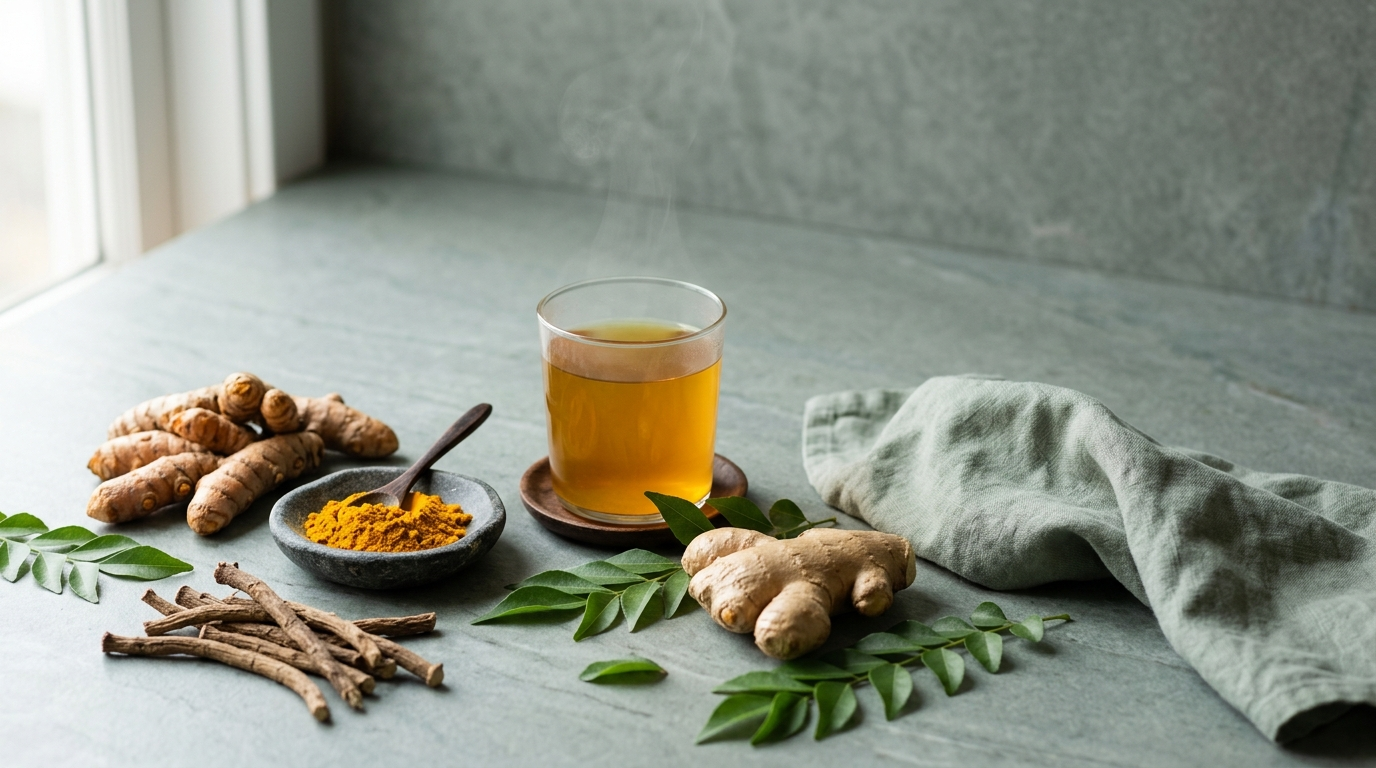
Once the foundation is in place, a few foods earn their spot. Turmeric is the most studied. An umbrella review that pooled many trials found that curcumin, the active compound in turmeric, lowered C-reactive protein in most of the analyses and IL-6 in several of them (umbrella meta-analysis, 2023). Ginger sits in the same kitchen-as-medicine category and is gentle enough for daily use, which is why Ancient Nutra's Ginger is an easy one to keep in rotation. And in Sri Lankan homes, Iramusu (also called Sarsaparilla) has been brewed for generations to cool the body and clean the blood, the traditional way of describing a system that has been running hot. Ancient Nutra's Iramusu carries that same root.
A standardized turmeric extract paired with black pepper (piperine) for absorption, around 500 to 1,000mg of curcuminoids per day with food. An extract beats a curry-sized pinch because the dose is consistent.
Ancient Nutra's Turmeric Extract is a concentrated root extract built for a daily routine.
When to actually worry
Calming everyday inflammation with sleep, food, and movement is one thing. Active, painful, or persistent inflammation is another, and it needs a real diagnosis. See a doctor if you have a joint that stays hot, swollen, and painful for more than a few days, inflammation that comes with fever or unexplained weight loss, or pain that wakes you at night. Those can point to conditions that herbs and habits will not settle on their own.
The same goes for any marker your doctor is already tracking. Let the person with the blood test guide the plan. Supplements support a healthy baseline. They are not a treatment for an inflammatory disease, and pretending otherwise helps no one.
Long before anyone measured a cytokine, Sri Lankan grandmothers reached for turmeric in warm milk after a hard day in the field or a bad fall. The instinct was right even if the vocabulary was not. Modern lab work simply put a name, curcuminoids, to what the kitchen already knew.
The bottom line
Inflammation is not your enemy. The short, sharp kind is how you heal. The long, quiet kind is the one to manage, and it answers mostly to how you live, not to what you buy.
- Protect sleep, eat mostly plants and protein, and move daily. That is the bulk of the work.
- Add anti-inflammatory foods like turmeric and ginger on top, not instead.
- See a doctor for inflammation that is hot, painful, or will not settle.
For a daily, concentrated dose of the most studied one, Ancient Nutra's Turmeric Extract is a simple place to start: the same golden root the island has trusted for centuries, in a form you will actually take.

A concentrated daily dose of the most studied anti-inflammatory root.
ShopSources
- What Is Inflammation? Types, Causes & Treatment. Cleveland Clinic. Retrieved June 2026.
- Furman D, et al. Chronic inflammation in the etiology of disease across the life span. Nature Medicine, 2019. Retrieved June 2026.
- Profiling inflammatory biomarkers following curcumin supplementation: an umbrella meta-analysis of randomized clinical trials, 2023. Retrieved June 2026.
- Foods that fight inflammation. Harvard Health Publishing. Further reading.
Written by the Ancient Nutra Wellness Team. The team researches, sources, and tests every ingredient before it earns a place in an Ancient Nutra blend. Questions? Email info@ancientnutra.com or message Ancient Nutra on Instagram.
Medical disclaimer: This article is for educational purposes only and is not medical advice. Statements have not been evaluated by the FDA. Ancient Nutra products are not intended to diagnose, treat, cure, or prevent any disease. Speak with a qualified healthcare provider before starting any new supplement, especially if you take prescription medication or have a medical condition.