By the Ancient Nutra Wellness Team · 26 September 2026 · 6 min read
- Everyday liver care is decided mostly by the lunch you eat five days a week, not by a dramatic cleanse.
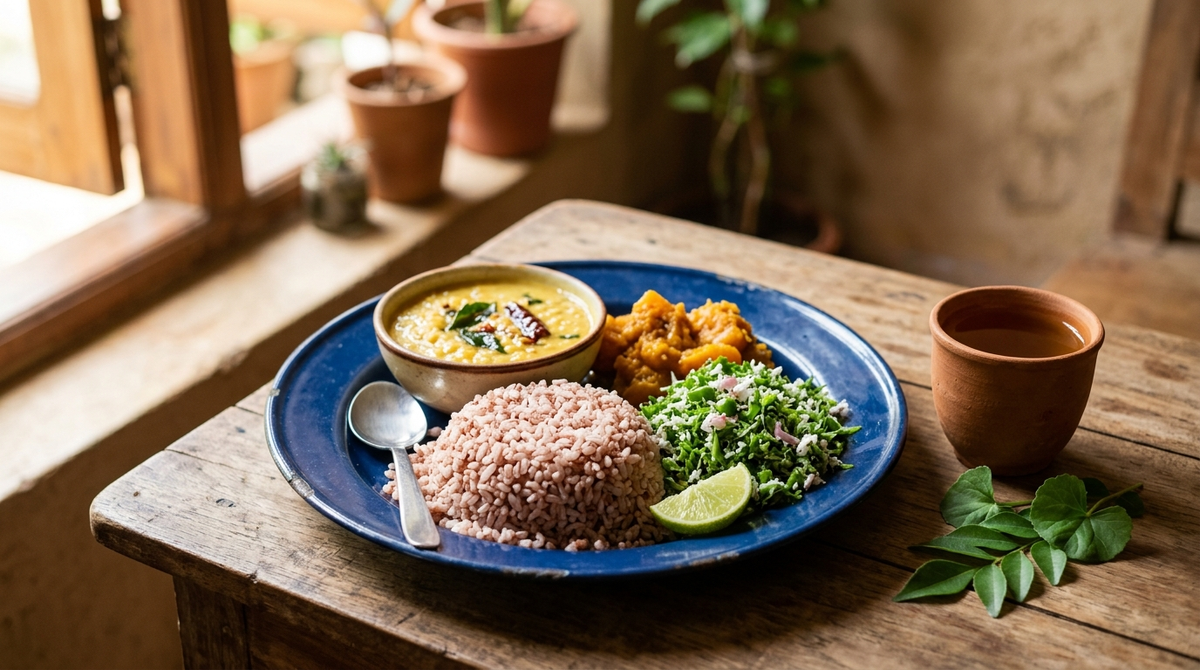
- A plain Sri Lankan plate works: a modest scoop of red rice, dhal, one vegetable curry, and a big heap of fresh gotukola mallum.
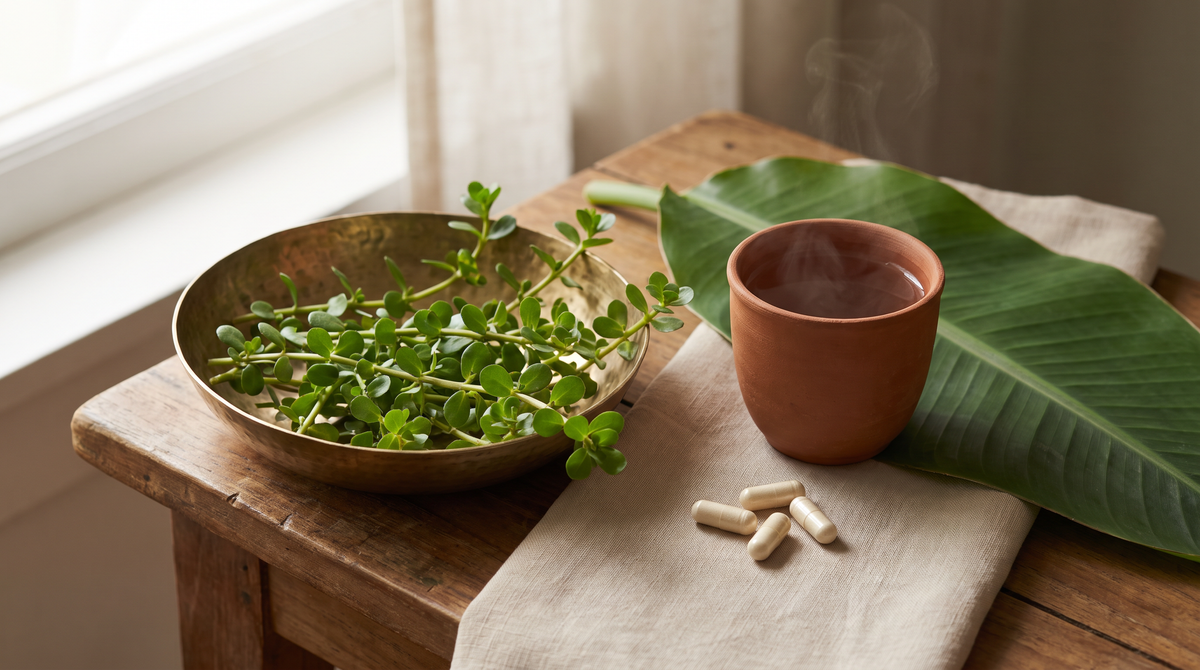
- A cup of Yaki Narang leaf tea after the meal is a traditional finish. It is a habit, not a treatment, and it has no human trials behind it yet.
Ask anyone who grew up in Sri Lanka what lunch looked like and you will hear the same plate: rice, dhal, a vegetable curry, and a small green mound of mallum on the side. Nobody photographed it. Nobody called it a wellness plan. It was just lunch, eaten again the next day and the day after that.
That is the whole point of this recipe. The habits that do the most for your liver tend to look unremarkable, because they are the ones you can actually repeat. Below is the method for a fresh gotukola mallum, how to build the plate around it, and the after-lunch cup of Ancient Nutra's Yaki Narang Leaves Powder that closes it out.
What you need
- 1 packed cup fresh gotukola leaves (about 60g), washed and dried
- 2 small red onions (shallots), finely chopped
- 1 green chilli, deseeded and finely chopped
- 3 tablespoons freshly grated coconut
- 1 teaspoon lime juice
- A quarter teaspoon salt
- Three quarters of a cup cooked red rice per person
- Half a cup dhal curry and half a cup of any vegetable curry (pumpkin, beans, or brinjal)
- 1 teaspoon Ancient Nutra's Yaki Narang Leaves Powder and 250ml water per cup
How to make it
- Dry the leaves well. Pat the washed gotukola dry with a clean cloth. Wet leaves turn the mallum soggy and the coconut clumps.
- Shred it fine. Stack a handful of leaves, roll them tight, and slice across the roll as thinly as you can. Aim for threads, not squares. A sharp knife matters more than speed here.
- Mix the base. In a bowl, rub the shallots, green chilli, and salt together with your fingertips for 30 seconds until the onion softens slightly and smells sharp.
- Fold in the coconut and leaves. Add the grated coconut and the shredded gotukola, then toss lightly with your fingers until everything is evenly green and flecked with white. Do not press or knead it.
- Finish just before eating. Squeeze in the lime juice at the table, not earlier. Lime wilts the leaves within about 15 minutes, and the mallum is best while it still has some crunch.
- Build the plate. Start with the mallum and the vegetable curry, so greens take up roughly half the plate. Add the dhal, then the rice last, as a modest scoop rather than a mountain.
- Make the after-lunch cup. Bring 250ml water to the boil, stir in 1 teaspoon of Yaki Narang powder, and steep for 5 to 10 minutes, as the label directs. Strain and sip warm once the meal is done.
Yields one generous side of mallum for two plates, and one cup of tea per person. Hands-on time is about 15 minutes, most of it slicing.
Why this plate works
Fatty liver is common in Sri Lanka, and it is quiet. In a community study of 2,985 adults aged 35 to 64 in urban Sri Lanka, 32.6% had non-alcoholic fatty liver disease, and it tracked closely with obesity, high blood sugar, and high triglycerides (Dassanayake et al., 2009). Those are features of how a person eats and lives day to day, which is why the everyday plate matters more than any occasional reset.
The NIH's guidance on eating for fatty liver points the same way: favour vegetables, fruit, and whole grains, cut back on added sugar and sugary drinks, and lose weight gradually if you carry extra. This plate does that without asking anyone to learn a new cuisine. Red rice in a smaller portion, dhal for protein and fibre, and a large serving of fresh leaves shifts the balance of an ordinary lunch in the right direction.
The Yaki Narang cup is the traditional part. Yaki Narang (Atalantia ceylanica) is a wild Sri Lankan shrub, and a decoction of its leaves has long been used in Sri Lankan traditional medicine for liver complaints. Laboratory work at the University of Colombo found the leaf water extract rich in antioxidant compounds and protective of liver tissue in a test dish (Fernando and Soysa, 2014). That is lab and animal evidence only. No human trial has tested it, so treat the tea as a pleasant, traditional way to finish a meal rather than something that does the liver's work for it.
Swap the greens, keep the method
- Mukunuwenna or kankun: use the same weight of either leaf, shredded just as fine. Both are standard Sri Lankan mallum greens.
- No coconut: replace it with 2 tablespoons of finely chopped tomato and a pinch of crushed black pepper for a lighter, sharper side.
- Brown rice or kurakkan roti: either works in place of red rice. Keep the portion modest.
- Make ahead: shred the leaves and chop the onions in the morning, store them separately in the fridge, and combine at lunch.
When to eat it
Make this your default weekday lunch rather than a once-a-week experiment. The value is in the repetition. Have the Yaki Narang cup after the meal, once a day, as the label describes, and treat a week off now and then as normal.
Eating gotukola as a fresh leaf in a side dish is food, and very different from taking a concentrated gotukola supplement, which carries rare documented cases of liver irritation. If you have been diagnosed with a liver condition, are pregnant or breastfeeding, or take regular medication, speak to your doctor before adding any herbal tea, and follow the plan they give you. This plate supports good habits. It does not treat fatty liver.
Yaki Narang sold under its botanical name, Atalantia ceylanica, as a plain leaf powder with nothing added. Ancient Nutra's Yaki Narang Leaves Powder is 100% leaf, made in Sri Lanka under BRCGS and FSSC 22000, and steeps like any loose herbal tea.
Take it further
If you want the tea on its own terms, with steeping notes and serving ideas, see Yaki Narang leaves tea: a Sri Lankan liver tonic. For a capsule routine built around the same rice-and-curry day, the three-herb liver routine that fits around rice and curry explains how Ancient Nutra's Liver & Detox System pairs Heenbovitiya, Triphala, and Yaki Naran capsules with meals.
The bottom line
The best proof that a food habit works is that you are still doing it next month. A plain plate of red rice, dhal, one curry, and a large heap of fresh mallum is easy to repeat, and it moves lunch toward what liver guidance actually recommends. If you only do one thing, make the greens half the plate. If you like a warm finish, a cup of Yaki Narang leaf tea after the meal is the traditional way to close it.
Can I make gotukola mallum ahead of time?
Shred the leaves and chop the onions ahead, but mix and add lime only just before eating. Once dressed, the leaves wilt within about 15 minutes.
How do I make Yaki Narang tea?
Boil 250ml water, add 1 teaspoon of the powder, steep for 5 to 10 minutes, then strain. Drink it warm after lunch.
Is this plate a treatment for fatty liver?
No. It is an everyday eating pattern in line with general guidance for liver health. If you have a diagnosed liver condition, follow your doctor's plan.

Wild-grown Atalantia ceylanica leaf powder for a simple after-meal herbal tea. Made in Sri Lanka.
Shop Yaki Narang Leaves PowderSources and further reading
- Dassanayake AS, et al. Prevalence and risk factors for non-alcoholic fatty liver disease among adults in an urban Sri Lankan population. Journal of Gastroenterology and Hepatology, 2009.
- Fernando CD, Soysa P. Total phenolic, flavonoid contents, in-vitro antioxidant activities and hepatoprotective effect of aqueous leaf extract of Atalantia ceylanica. BMC Complementary and Alternative Medicine, 2014.
- Eating, Diet, and Nutrition for NAFLD and NASH. National Institute of Diabetes and Digestive and Kidney Diseases (NIH).
Written by the Ancient Nutra Wellness Team. The team researches, sources, and tests every ingredient before it earns a place in an Ancient Nutra blend. Questions? Email info@ancientnutra.com or message Ancient Nutra on Instagram.
Medical disclaimer: This article is for educational purposes only and is not medical advice. Statements have not been evaluated by the FDA. Ancient Nutra products are not intended to diagnose, treat, cure, or prevent any disease. Speak with a qualified healthcare provider before starting any new supplement, especially if you take prescription medication or have a medical condition.