Ancient Nutra Wellness Team · 12 June 2026 · 6 min read
Maca root extract: the Andean adaptogen next to Ashwagandha
Key takeaways
- Maca is a caffeine-free root from the Peruvian Andes, used daily for energy, mood, and libido in both men and women.
- The clearest evidence is for sexual desire and menopausal mood, though researchers agree more rigorous trials are still needed.
- A standardised extract, one capsule with breakfast, gives most people a noticeable lift within one to two weeks.
Most adaptogens ask you to pick a side. Ashwagandha calms you down. Coffee winds you up. Maca is the odd one out: it lifts energy and mood without a crash, and it does it without a single milligram of caffeine. Grown at 4,000 metres in the Peruvian Andes, it has been eaten as a daily food for centuries. The modern interest is simpler than the marketing suggests. People take maca because they feel steadier on it, and often a little more like themselves.
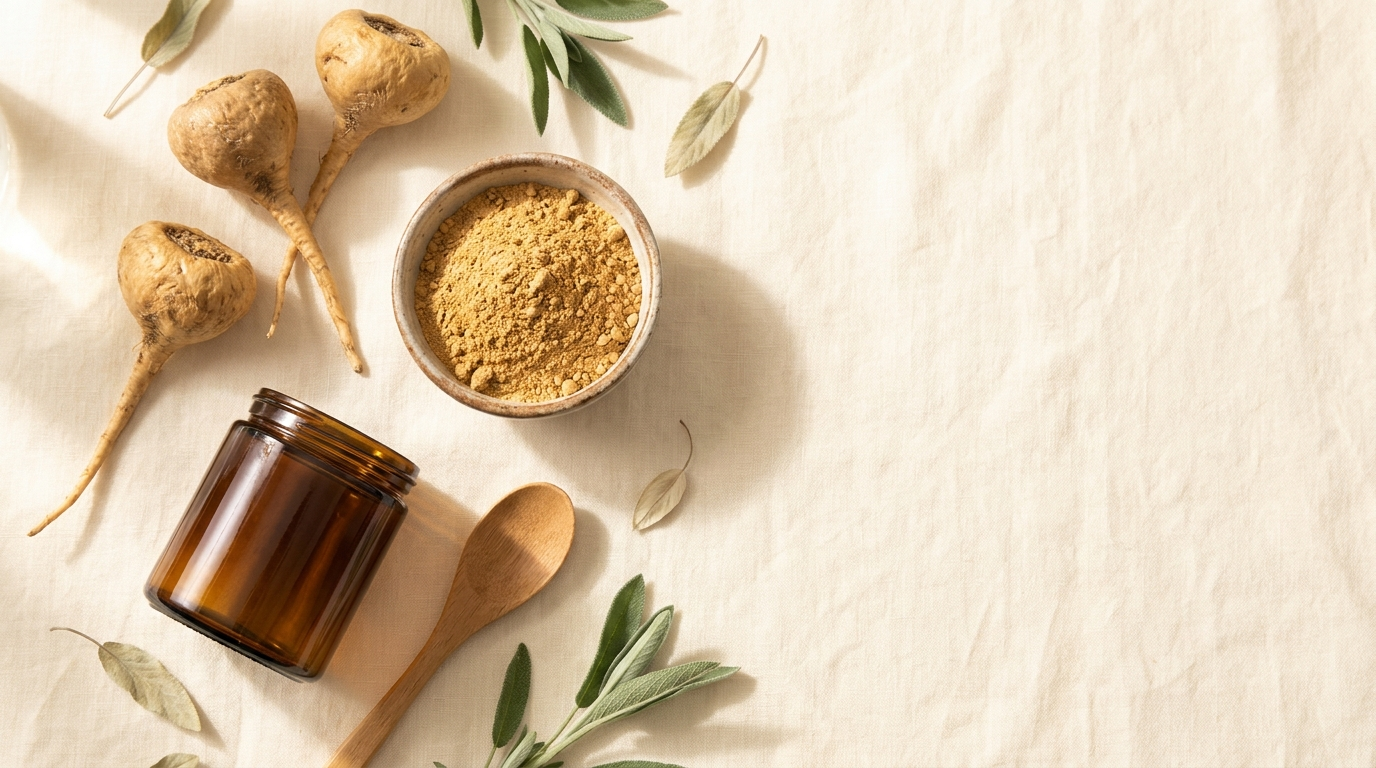
Maca (Lepidium meyenii) is a root vegetable from the mustard family, the same family as broccoli and radish. It grows only on the high Andean plateau of Peru, where the soil is thin and the air is cold. Andean communities have dried and eaten it for generations as both food and tonic. In capsule form it is usually sold as a standardised extract, which concentrates the active compounds into a daily dose.
What maca actually does
Maca does not contain a hormone. That surprises people who assume anything linked to libido must work like testosterone or estrogen. It does not. When researchers looked at maca in postmenopausal women, the mood and sexual benefits showed up independently of any estrogen or androgen activity (NIH). Something else is going on.
The current best guess is the stress axis. Maca appears to nudge the hypothalamic-pituitary-adrenal system, the same network that governs how you handle stress, sleep, and energy across a day. When that system runs smoother, energy and mood tend to follow, and libido often comes along for the ride. It is less a switch and more a steadying hand.
This is also why maca pairs so naturally with an adaptogen like Ashwagandha. Where Ancient Nutra's Ashwagandha Extract lowers the cortisol side of stress, maca leans toward the energy and drive side. One takes the edge off. The other puts a little back. And because none of it runs on caffeine, there is no jitter and no afternoon crash. Maca is a slow build, not a quick hit.
Who maca is actually for
Maca is one of the few adaptogens that works about as well for women as it does for men. That alone makes it unusual. It tends to earn its place for:
- Adults who want daily energy and steadier mood without another coffee. Maca gives a lift without the caffeine load.
- Women navigating hormonal shifts. Perimenopause, the postpartum stretch, or a dip in libido are where maca has the most human evidence behind it (systematic review, NIH).
- Men who want drive and stamina support that is gentle rather than aggressive. It is a foundation herb, not a pre-workout.
- Athletes and active people looking for clean, food-based energy and recovery.
Here is the honest part. If your sleep is broken, your training is inconsistent, and your meals are mostly whatever is fast, maca will not rescue any of that. No root will. Fix the foundation first, then let maca do the smaller, real job it is good at. And if you already sleep well, train, and eat like you mean it, maca is a refinement, not a requirement.
How to actually take maca
Keep it simple. One capsule of a standardised extract with breakfast is the standard starting point. If you want a little more, some people add a second capsule with lunch. The one timing rule that matters: do not take it late in the day. Maca is mildly energising for most people, and an evening dose can sit between you and sleep.
Take it with food, take it daily, and give it a couple of weeks before you decide anything. Most people notice energy and mood first, usually inside the first one to two weeks, with the libido and stamina side settling in a little later. One caution worth naming: maca contains goitrogens, natural compounds that can affect the thyroid. If you have a thyroid condition or take thyroid medication, clear it with your doctor first.
Look for
A standardised maca root extract rather than raw powder, one capsule with breakfast. Ancient Nutra's Maca Root Extract is a standardised extract of Peruvian Lepidium meyenii, caffeine-free and made in Sri Lanka under BRCGS and FSSC 22000.
Where maca comes from
Maca grows in one of the harshest farmable places on earth: the Peruvian altiplano, above 4,000 metres, where frost, wind, and thin air would kill most crops. Andean communities have grown and eaten it there for well over a thousand years, drying the roots and cooking them into porridges and drinks, and feeding it to both people and livestock for stamina and fertility. Spanish colonial records from the 1500s note that maca was valued enough to be handed over as tribute. What the tradition worked out by trial and taste, modern labs are still catching up to. The plant that survives at altitude seems to help the people who eat it hold their energy too.
What to stack maca with
Maca plays well with others, and the right partner depends on what you are actually chasing.
For stress and sleep, pair it with Ashwagandha, taken as a bounded eight to twelve week course rather than indefinitely. NIH LiverTox rates ashwagandha (Withania somnifera) likelihood score B, a likely cause of clinically apparent liver injury, with onset typically 2 to 12 weeks after starting; stop and see a doctor for yellowing of the eyes or skin, itching, dark urine, or unusual tiredness, and check with a doctor first if you take thyroid medication, sedatives, or immunosuppressants, or are pregnant (NIH LiverTox, NBK548536). Maca handles energy and drive, Ashwagandha handles cortisol and the wind-down, and together they cover both ends of the same day.
For men focused on stamina and libido, maca stacks cleanly with Tribulus. Ancient Nutra's Tribulus Extract leans into the testosterone and stamina side, while maca supports drive and steady energy underneath it. That combination is aimed squarely at men over 40, and it is not something everyone needs. Whatever you stack, keep it honest. Two or three well-chosen herbs taken consistently beat a cabinet full of bottles taken now and then.
How long maca takes to work
Maca is faster than most herbs but still not instant. Energy and mood usually shift first, often within the first one to two weeks. The libido and stamina benefits tend to arrive a little later, over four to eight weeks of daily use. The deeper hormonal balancing, the kind postmenopausal women report, builds over a couple of months.
The rule is the same as with any adaptogen: give it at least ninety days of consistent daily use before you judge it. Skipping days resets the clock. The people who are disappointed by maca are almost always the ones who took it for a week and stopped.
The bottom line
Maca will not transform you, and anyone promising that is selling something. What it does is smaller and real: steadier energy without caffeine, a lift in mood, and support for libido in both men and women, built on top of a foundation you still have to lay yourself. For a caffeine-free daily adaptogen that works for both sexes, that is what Ancient Nutra's Maca Root Extract was built for. Sleep, food, and movement first. Then let the root do its quiet part.

Maca Root Extract
A caffeine-free Peruvian adaptogen for daily energy, mood, and libido in both men and women.
Shop Maca Root ExtractSources and further reading
- Shin BC, et al. Maca (L. meyenii) for improving sexual function: a systematic review, NIH / PMC.
- Brooks NA, et al. Beneficial effects of Lepidium meyenii (Maca) on psychological symptoms and sexual dysfunction in postmenopausal women, NIH / PubMed.
- Chemical and pharmacological variability of Lepidium meyenii: a comprehensive review, NIH / PMC.
Written by the Ancient Nutra Wellness Team. The team researches, sources, and tests every ingredient before it earns a place in an Ancient Nutra blend. Questions? Email info@ancientnutra.com or message Ancient Nutra on Instagram.
Medical disclaimer: This article is for educational purposes only and is not medical advice. Statements have not been evaluated by the FDA. Ancient Nutra products are not intended to diagnose, treat, cure, or prevent any disease. Speak with a qualified healthcare provider before starting any new supplement, especially if you take prescription medication or have a medical condition.