
Ancient Nutra Wellness Team · 5 July 2026 · 6 min read
Activated carbon: the detox tool you should not use every day
Key takeaways
- Activated carbon (also called activated charcoal) works by adsorption: it traps things on its huge porous surface, roughly the area of seven football fields in a single 50g dose.
- That surface is non-selective. It binds nutrients, medicines, and even your birth control as readily as it binds gas and toxins, which is exactly why daily use is a bad idea.
- Keep it for the occasional bad night: gas, a heavy meal, a suspect meal out. For a gentle daily gut ritual, softer options fit better.
Activated carbon has a bit of a reputation problem. It shows up in black lemonades, "detox" face masks, and morning wellness routines, sold as something you sip daily to stay clean on the inside. That is not what it is good at. Activated carbon is one of the most useful things you can keep in a cupboard, but it earns its keep once in a while, not every morning. Used daily, the very thing that makes it work starts working against you.
What activated carbon actually is
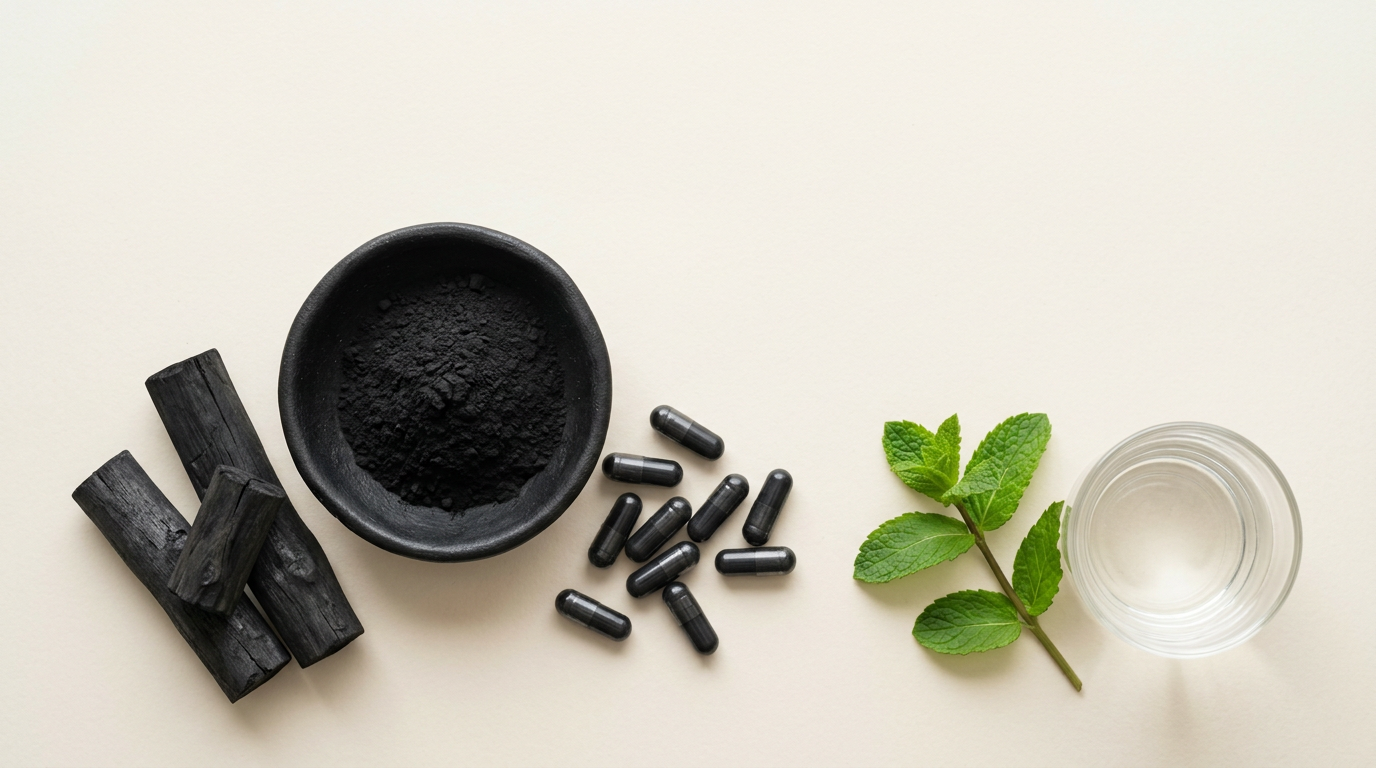
Activated carbon is ordinary carbon, usually from coconut shells or wood, that has been heated and treated so its surface becomes riddled with tiny pores. That porous structure is the whole trick. People have used charcoal to settle stomachs and manage poisonings for centuries, and modern medicine still keeps it on the shelf for exactly that reason.
What activated carbon actually does
It does one thing extremely well: adsorption. Not absorption, where something soaks in like a sponge, but adsorption, where molecules stick to a surface on contact. As things dissolve and pass through your gut, activated carbon grabs them and holds on, so they leave with the charcoal instead of getting absorbed into your body (StatPearls, NIH).
The reason it can hold so much comes down to surface area. All those pores add up. Toxicologists estimate a typical 50g clinical dose carries the adsorptive surface area of about seven football fields. That is why emergency departments still reach for it: given soon after certain poisonings, it can bind the substance before the body takes it in.
The catch is that this surface does not read labels. It binds whatever fits, and that is the part the wellness marketing quietly skips.
When activated carbon earns its place
Occasional, targeted use is where activated carbon shines. Think of it as a fire extinguisher, not a daily vitamin. It makes sense for:
- A one-off bout of gas or a heavy, greasy meal that has left you bloated and uncomfortable.
- A suspect meal out, when you suspect something did not agree with you and want to settle things down.
- The morning after a big night, when your gut needs a short reset rather than a routine.
And here is the honest part: most people do not need it at all in a normal week. If your digestion is steady, a black capsule every day is solving a problem you do not have. Save it for the days something is actually off.
Why daily use quietly backfires
Because activated carbon binds indiscriminately, it does not know the difference between what your body needs and what it does not. Taken every day, it can bind the vitamins, minerals, and good gut bacteria you actually want to keep, alongside the gas you are trying to clear (Cleveland Clinic).
The bigger issue is medication. Activated carbon can reduce how much of a drug your body absorbs, which means it can quietly blunt the effect of things you rely on, including some prescription medicines and hormonal birth control (StatPearls, NIH). If you take any daily medication, this is not a small footnote. It is the main reason charcoal is a "sometimes" tool.
What the gas evidence really says
Activated carbon is often sold for gas and bloating, so it is worth being straight about the evidence. It is mixed. A small controlled study found charcoal reduced gas symptoms after a deliberate gas challenge, while other work found it did little against gas produced by normal gut bacteria. European food-safety reviewers landed in a similar place: they accepted that charcoal can help reduce excessive intestinal gas, but did not find enough support for the separate claim that it relieves bloating.
So the fair summary is this. For the occasional gassy evening, activated carbon has some real support. As a daily anti-bloat habit, the case is thin. If bloating is a regular visitor, the answer is usually food, pace, and routine, not a charcoal capsule.
How to actually take activated carbon
When you do use it, use it well. A common approach is one or two capsules at the first sign of gas or after a meal that is sitting badly, with a full glass of water. It is a short-term tool, not a course you run for weeks.
The timing rule matters more than the dose. Because charcoal binds medicines, supplements, and nutrients, it is commonly advised to keep it at least two hours away from anything you actually want your body to absorb: your medication, your daily vitamins, your food. Take your meds and meals on their own schedule, and slot the charcoal into the gap.
Look for
Plain activated carbon in a capsule, sourced from coconut shell, with nothing else added. Ancient Nutra's Activated Carbon is a clean single-ingredient capsule, made for the occasional reset rather than the daily shelf.
Where the word "detox" gets it wrong
The "detox" label oversells it. Activated carbon only works inside your gut, on things still passing through. It cannot reach into your blood or your organs and pull toxins out. That job belongs to your liver and kidneys, which handle it every hour of every day without a supplement.
If a gentle daily digestion ritual is what you are after, that is a different tool for a different job. Something like Ancient Nutra's Triphala is built for daily, gentle use, and for a calmer gut over time many people reach for a steadier herb like Ancient Nutra's Beli. Activated carbon sits in the cupboard for the odd day off.
The bottom line
Activated carbon is a genuinely useful thing to own, as long as you know what it is for. It is the occasional reset for a bad gut day, not a daily cleanse, and never something to take alongside your medicines. Keep it in the cupboard, use it now and then, and let your liver and kidneys handle the everyday work. The science does not care which bottle it comes in; it just asks that you use it the right way.

Activated Carbon
A clean, single-ingredient coconut-shell charcoal capsule for the occasional gas and heavy-meal reset.
Shop Activated CarbonSources and further reading
- Taylor, Galuska, Patel, et al. Activated Charcoal, StatPearls, NIH National Library of Medicine (updated 2026).
- Goldman, M. Is It Safe To Take Charcoal Pills for Gas and Bloating?, Cleveland Clinic (2024).
- Olson, K.R. Activated Charcoal for Acute Poisoning, Journal of Medical Toxicology (2010).
- EFSA Panel on Dietetic Products, Nutrition and Allergies. Scientific Opinion on activated charcoal and intestinal gas, EFSA Journal (2011).
Written by the Ancient Nutra Wellness Team. The team researches, sources, and tests every ingredient before it earns a place in an Ancient Nutra blend. Questions? Email info@ancientnutra.com or message Ancient Nutra on Instagram.
Medical disclaimer: This article is for educational purposes only and is not medical advice. Statements have not been evaluated by the FDA. Ancient Nutra products are not intended to diagnose, treat, cure, or prevent any disease. Speak with a qualified healthcare provider before starting any new supplement, especially if you take prescription medication or have a medical condition.