Ancient Nutra Wellness Team · 15 November 2026 · 5 min read
Neem leaf capsules vs neem oil: why the difference matters
By the Ancient Nutra Editorial Team
- Neem leaf capsules and neem seed oil come from the same tree, but they are different products and should never be treated as interchangeable.
- Neem seed oil (also called margosa oil) has been linked to severe poisoning in young children, which is why it is not a supplement to swallow.
- If you choose a neem capsule, read the label for the plant part, take it for a defined course rather than open-ended, and check with a healthcare provider first.
Type "neem" into a search bar and you get capsules, powders, teas, hair oils, garden sprays and a lot of confident advice. Most of it treats neem as one thing. It is not. The leaf, the bark and the seed oil of the same tree behave very differently, and mixing them up is how people end up swallowing something they should never swallow. This guide explains the difference in plain terms, so you can read a label and know what you are actually looking at.
Know which part of the tree you are buying
Neem is the common name for Azadirachta indica, a tree grown across Sri Lanka and India. In Sri Lanka it is often called margosa, which is the older English name for the same plant. Different parts of the tree are used in different ways.
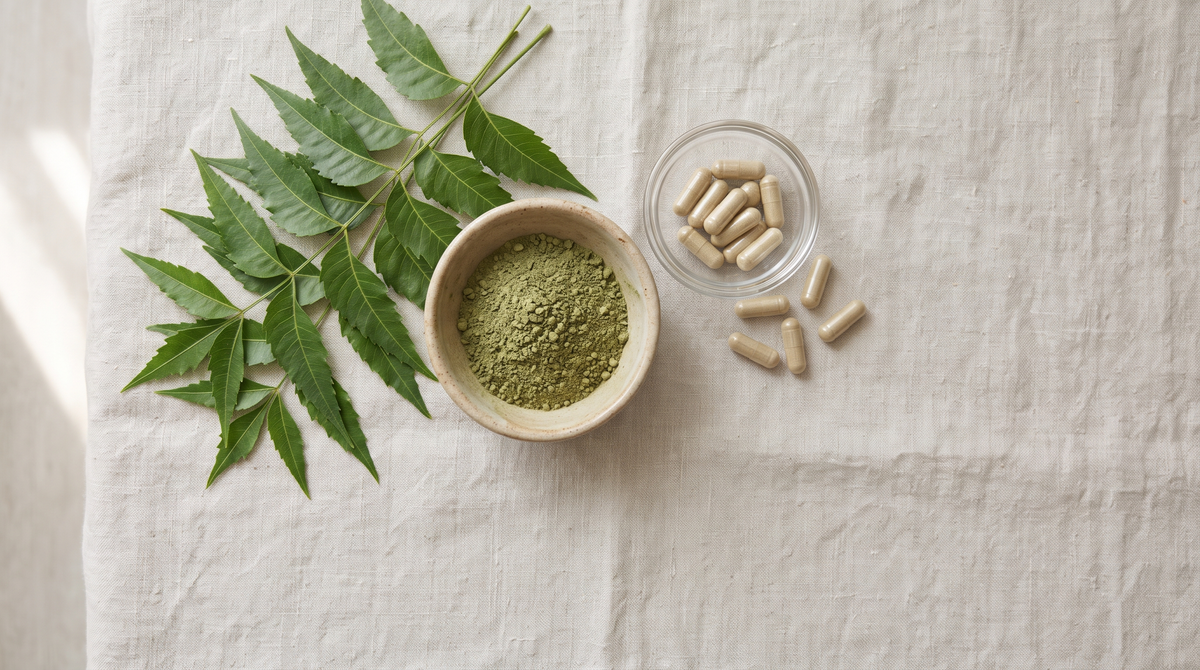
- Leaf (and bark) powder: dried and milled, then put into capsules or made into tea. This is what most neem capsules contain.
- Seed oil: pressed from the seeds. Also sold as neem oil or margosa oil. Traditionally used on skin and hair, and in the garden.
Ancient Nutra's Neem capsules list neem leaf and bark powder on the label. They are a powder capsule, not an oil. That one line on a label is the first thing worth checking on any neem product.
Understand why neem seed oil is a different story
The US National Institutes of Health keeps a liver safety database called LiverTox. Its entry on margosa oil describes a seed extract that has been used as a home remedy in India and Southeast Asia for a long time, and it also describes case reports of severe illness after swallowing it, especially in young children. The picture doctors describe looks like Reye syndrome: vomiting, drowsiness, seizures and a dangerous shift in the body's acid balance.
This is the reason the oil and the leaf must be kept apart in your head. A warning about the oil is not a warning about leaf powder, and a good word about the leaf says nothing that makes the oil safe. Any article, video or shop listing that slides between "neem" the oil and "neem" the capsule is not being careful with you.
Keep expectations honest about the research
Neem is old in Ayurvedic practice, and that is worth a sentence of respect, but tradition is not the same as proof. Human research on neem is thin. One randomized, placebo-controlled trial in the literature used a standardized water extract of neem leaves and twigs in adults with type 2 diabetes who were already taking metformin. That is a specific extract, in a specific group of people, under medical supervision. It cannot tell a healthy adult what an everyday capsule will do, and it says nothing about the oil.
So the fair summary is this: neem leaf has a long traditional use, the modern human evidence is limited, and nobody should expect a capsule to treat a condition.
Look for
On any neem capsule: the plant part named on the label (leaf, bark or both), the amount per capsule, the Latin name Azadirachta indica, and an ingredient list that says powder, not oil. If the label only says "neem extract" and nothing else, ask the seller what the extract is.
Follow these safety rules before you start
Neem leaf capsules are not for everyone. These points matter more than any benefit claim:
- Children: not for children. Keep all neem products, and especially any oil, out of reach.
- Pregnancy and conception: not for pregnancy, and not for anyone who is trying to conceive.
- Medication or a health condition: speak to a doctor or pharmacist first, particularly if you take prescription medicines or have a liver or blood sugar condition.
- Use it as a course, not a forever habit: choose a defined stretch of time and review it with your healthcare provider rather than taking it indefinitely.
- Know the stop signs: stop and get medical advice if you notice yellowing of the skin or eyes, dark urine, persistent nausea or unusual tiredness.
Follow the serving on the pack and do not take more because a website said so. Taking it with a meal is the label's instruction.
Read the other neem content with the same care
If you want the wider story on how neem is used in Ayurvedic skin and wellness routines, the earlier guide to neem as the bitter herb for skin and blood covers the tradition. For the bigger point behind this article, that a plant origin is not a safety guarantee, read Ancient Nutra's note on the word natural.
The bottom line
Neem leaf powder and neem seed oil share a tree and almost nothing else that matters to you as a buyer. Check the plant part, check the form, follow the safety rules above and talk to a healthcare provider before you begin. If neem leaf and bark powder in a capsule is what you are after, Ancient Nutra's Neem is made that way.

Neem, 60 capsules
Organic Sri Lankan neem leaf and bark powder in vegetarian capsules, 550 mg per capsule.
Shop NeemSources and further reading
- Margosa Oil, LiverTox, National Institute of Diabetes and Digestive and Kidney Diseases, NIH. Retrieved 15 November 2026.
- Neem leaf and twig aqueous extract in type 2 diabetes, randomized placebo-controlled trial, PubMed 33244247. Retrieved 15 November 2026.
Written by the Ancient Nutra Wellness Team. The team researches, sources, and tests every ingredient before it earns a place in an Ancient Nutra blend. Questions? Email info@ancientnutra.com or message Ancient Nutra on Instagram.
Medical disclaimer: This article is for educational purposes only and is not medical advice. Statements have not been evaluated by the FDA. Ancient Nutra products are not intended to diagnose, treat, cure, or prevent any disease. Speak with a qualified healthcare provider before starting any new supplement, especially if you take prescription medication or have a medical condition.