By the Ancient Nutra Wellness Team · June 16, 2026 · 6 min read
- Neem is the bitter Ayurvedic herb traditionally used to clear the skin and, in the old phrase, to purify the blood.
- In lab studies, neem leaf compounds slow the bacteria involved in acne, and neem is a useful daily antioxidant herb.
- A common dose is around 500 mg of neem leaf with food, often run in short cycles rather than forever.
- Neem supports clear skin. It does not replace washing your face, sleeping, or eating well, and it is not a diabetes treatment.
Neem is the most bitter thing in the Ayurvedic cabinet, and that is exactly why people have trusted it for so long. In Sri Lankan gardens it grows as kohomba, the tree whose leaves end up in everything from skin pastes to morning tonics. The old idea was simple: neem cleans the blood and clears the skin. Modern lab work has started to explain why that reputation stuck.
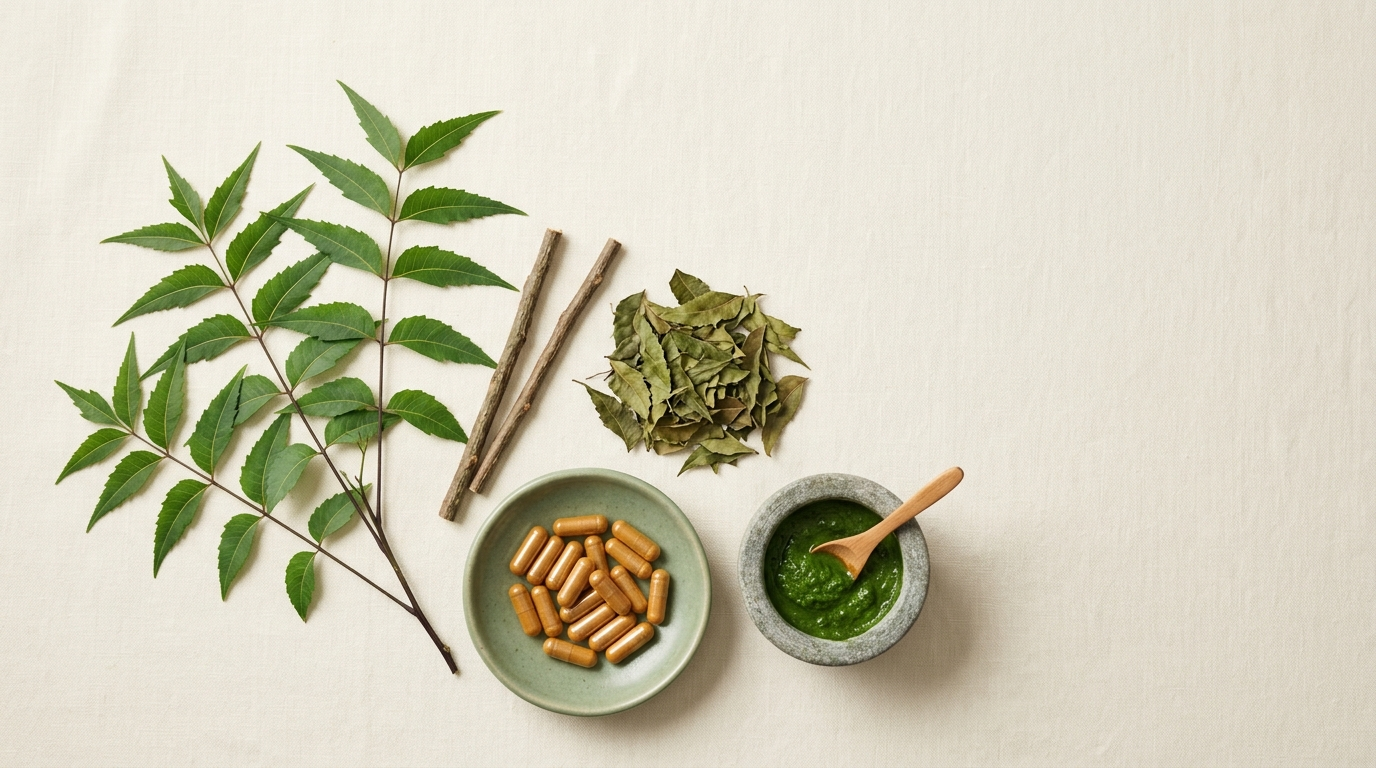
Neem (Azadirachta indica, also called margosa) is a fast-growing evergreen native to South Asia. Almost every part of it gets used: the leaves, the bark, the seeds, and the oil. In food and supplements, it is the leaf that matters most, dried and powdered or pressed into a capsule. For generations it has been the go-to bitter herb for skin complaints and for what traditional healers called impure blood.
What neem actually does
Neem's reputation sits in its bitterness. The leaf is dense with compounds like nimbidin, nimbin, and azadirachtin, and these are what give it an antibacterial, antifungal, and antioxidant edge.
The clearest evidence is on the skin. In lab studies, neem leaf extracts slow the growth of the bacteria tied to acne, and a 2022 review of neem in skin and topical products gathered this evidence across dozens of studies, alongside its antioxidant and anti-inflammatory activity (Cosmetics, 2022). In plain terms, neem makes the skin a less friendly place for the microbes that drive breakouts, and it helps calm the redness that comes with them.
The traditional "blood purifier" label is harder to test, but two threads of modern research line up with it. The first is neem's antioxidant activity, which helps the body mop up the free radicals that build up with stress and poor diet. The second is blood sugar. In one 12-week randomized, placebo-controlled trial, adults with type 2 diabetes took a standardized neem leaf extract so researchers could study its effect on glucose control (Diabetes, Metabolic Syndrome and Obesity, 2020). That is one study, not a green light. If you take blood-sugar medication, talk to your doctor before adding neem, because the two can push glucose down together.
Who should think about neem
Neem is a targeted herb, not a daily multivitamin. It earns its place for a few specific people:
- People with oily, breakout-prone skin who have the basics handled and want a traditional herb in the routine.
- People who want a simple antioxidant herb to run for a few weeks at a time, especially after a stretch of poor eating or travel.
- People drawn to seasonal "reset" rituals, the old idea of clearing the system at the turn of a season.
And here is the honest part. If your skin is calm, your sleep is solid, and your plate is in order, you probably do not need neem. It is not for pregnant or breastfeeding women, and it is not a substitute for prescribed medication. Neem is a support herb. The foundation comes first, every time.
How to actually take neem
Most neem capsules hold around 500 mg of leaf. A common approach is one capsule once or twice a day, taken with food. Neem is genuinely bitter, so for most people a capsule beats loose powder by a wide margin.
Unlike a daily adaptogen, neem is often used in short cycles: a few weeks on, then a break, rather than year-round. Take it with a meal to keep it gentle on an empty stomach, and give it room. In the first four weeks, the skin is usually the first thing people notice.
Organically grown neem (Azadirachta indica) leaf, around 500 mg per capsule, taken with food and run in short cycles.
Ancient Nutra's Neem (Margosa) capsules use organically grown leaf, tested for purity.
Where neem comes from
In Sri Lanka the tree is kohomba, and you do not have to look hard to find one; it shades gardens, temple grounds, and roadsides across the island. In Ayurveda, neem has long been classed as a bitter that cools the body and supports the skin and blood, which is why it shows up in so many old skin and "blood-cleansing" formulas. The tradition opened the door. The modern lab work on its antibacterial and antioxidant compounds is what walks you through it.
What to stack with neem
Neem pairs naturally with turmeric. Where neem brings the antibacterial, skin-clearing side, turmeric brings the anti-inflammatory side, which is why the two have been combined in Ayurvedic skin formulas for centuries. Ancient Nutra's Turmeric Extract is the simple way to add that second herb, and the ready-made Golden Health Blend puts neem, turmeric, and black pepper in one capsule if you would rather not stack by hand.
For the older "skin and blood" angle, neem sits well next to Iramusu. Ancient Nutra's Iramusu (Sarsaparilla) is the cooling herb Sri Lankan families have reached for to settle the skin from the inside. This pairing is for people working on skin, not a stack everyone needs.
How long neem takes to work
Skin tends to move first. Most people who are going to notice a difference see it in the four-to-six week window, usually as fewer or calmer breakouts. The antioxidant, internal side is slower and quieter, and it is the kind of thing you feel as steadiness rather than a single moment.
Give any herb at least a season before you judge it. With neem, that often means a couple of short cycles rather than one long stretch, with breaks in between.
In plenty of Sri Lankan homes, the new year still opens with something bitter, a neem-flower mix or a neem paste eaten on purpose. The point was never the taste. It was a seasonal reset, a way to clear the skin and the system before the year got going.
The bottom line
Neem is a bitter, traditional herb with real evidence on the skin and a long history as a blood and skin tonic. It works best as a short-cycle support, sitting on top of the basics rather than replacing them. For an organically grown leaf in a clean capsule, that is what Ancient Nutra's Neem (Margosa) was made for. Or take the loose powder, or stack it with turmeric yourself. The science does not care which bottle it comes in.

Organically grown neem leaf, the bitter herb for clear skin and a traditional blood and skin tonic.
Shop NeemSources
- Fernandes et al., Cosmetics (2022), Azadirachta indica (Neem) as a potential natural active for dermocosmetic and topical products: a narrative review.
- Diabetes, Metabolic Syndrome and Obesity (2020), randomized, double-blind, placebo-controlled study of a neem leaf and twig extract on glycemic control in type 2 diabetes.
- Further reading: Alzohairy, Evidence-Based Complementary and Alternative Medicine (2016), therapeutic role of Azadirachta indica and its active constituents.
- Further reading: Islas et al., review (2020), the protective effect of Azadirachta indica (neem) against metabolic syndrome.
Medical disclaimer: This article is for educational purposes only and is not medical advice. Statements have not been evaluated by the FDA. Ancient Nutra products are not intended to diagnose, treat, cure, or prevent any disease. Speak with a qualified healthcare provider before starting any new supplement, especially if you take prescription medication or have a medical condition.
Written by the Ancient Nutra Wellness Team. The team researches, sources, and tests every ingredient before it earns a place in an Ancient Nutra blend. Questions? Email info@ancientnutra.com or message Ancient Nutra on Instagram.