Ancient Nutra Wellness Team · 29 September 2026 · 6 min read
5 daily habits for heavy legs, and where horse chestnut fits
By the Ancient Nutra Editorial Team
- Tired, heavy, swollen legs by evening are often a sign that leg veins are struggling to move blood back up against gravity.
- Horse chestnut seed extract has real human trial evidence: a Cochrane review found it eased leg pain and reduced leg volume compared with placebo in chronic venous insufficiency.
- It works best as one part of a daily routine that also includes walking, raising your legs, breaking up long sitting or standing, and compression if your doctor suggests it.
If your legs feel fine at breakfast but heavy and tight by the time you get home, you are not imagining it. Hours of standing behind a counter or sitting at a desk leave blood and fluid pooling in the lower legs, and a hot, humid day makes it worse. Chronic venous insufficiency, the medical name for leg veins that struggle to do this job, affects about 1 in 20 adults (Cleveland Clinic).
This list covers five things you can do every day. Each one made the cut because it has a clear reason to work and costs little or nothing. One is a supplement. The other four are habits, and they matter just as much. For the full profile of the herb itself, read the horse chestnut deep-dive.
1. Horse chestnut seed extract, the one supplement with real trial data
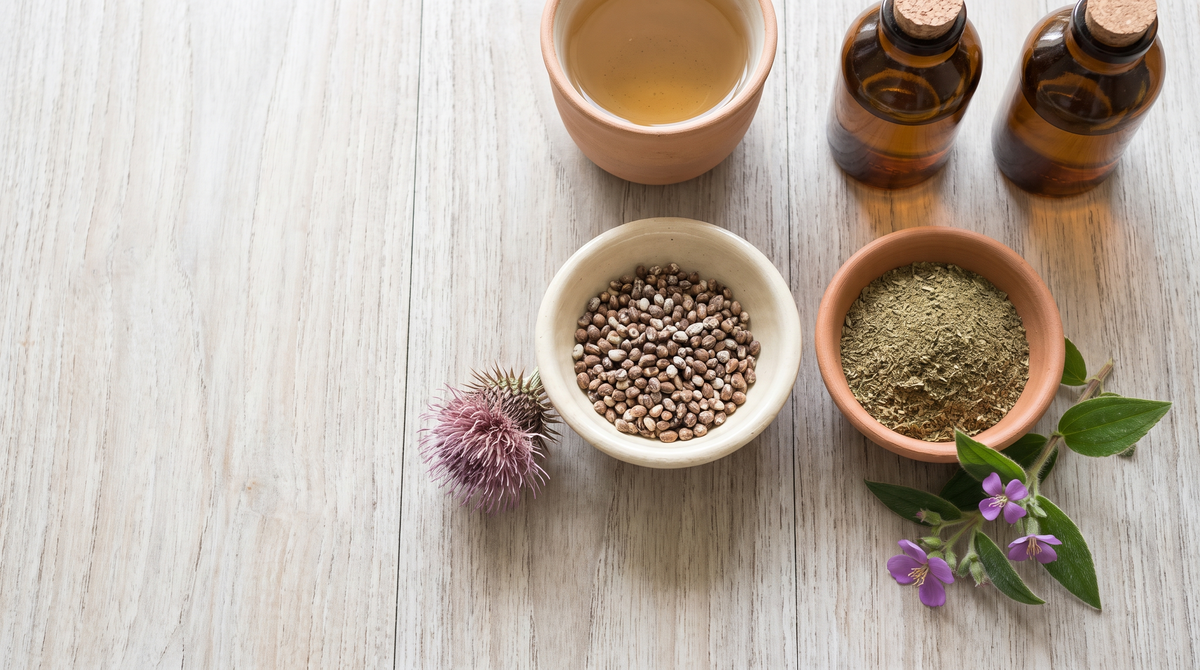
Horse chestnut seed extract is one of the few herbal products for leg comfort that has been properly tested in people. A Cochrane review of randomised trials found that it reduced leg pain in six of seven placebo-controlled trials, and that across six trials in 502 people it reduced leg volume by about 32 ml more than placebo (Pittler and Ernst, Cochrane 2012). One trial suggested it may work about as well as compression stockings.
The active compound is aescin, which helps vein walls leak less fluid into the surrounding tissue. It suits people whose legs feel heavy and puffy by evening. Take it with a meal, as the label directs. Standardised extracts have been used safely in research for up to 12 weeks, so treat it as a bounded trial, not an open-ended habit (NCCIH). Ancient Nutra's Horse Chestnut Extract is a seed extract in vegetarian capsules.
2. Walk often, because your calves are a second pump
Every time your calf muscle tightens, it squeezes the veins inside it and pushes blood up toward your heart. Cleveland Clinic calls the calf a "second heart" for exactly this reason. Walking is the simplest way to keep that pump working.
You do not need a long workout. Short, frequent walks do more for heavy legs than one long session followed by eight hours in a chair. A lap of the office, the stairs instead of the lift, or ten minutes after dinner all count. If you stand still at work, rising up onto your toes and back down twenty times does a similar job on the spot.
3. Put your feet above your heart, three times a day
Gravity is the reason fluid collects in your ankles, so use it the other way. Cleveland Clinic notes that lifting your legs above the level of your heart reduces pressure in the leg veins, and that providers may suggest doing it for 30 minutes or longer at least three times a day.
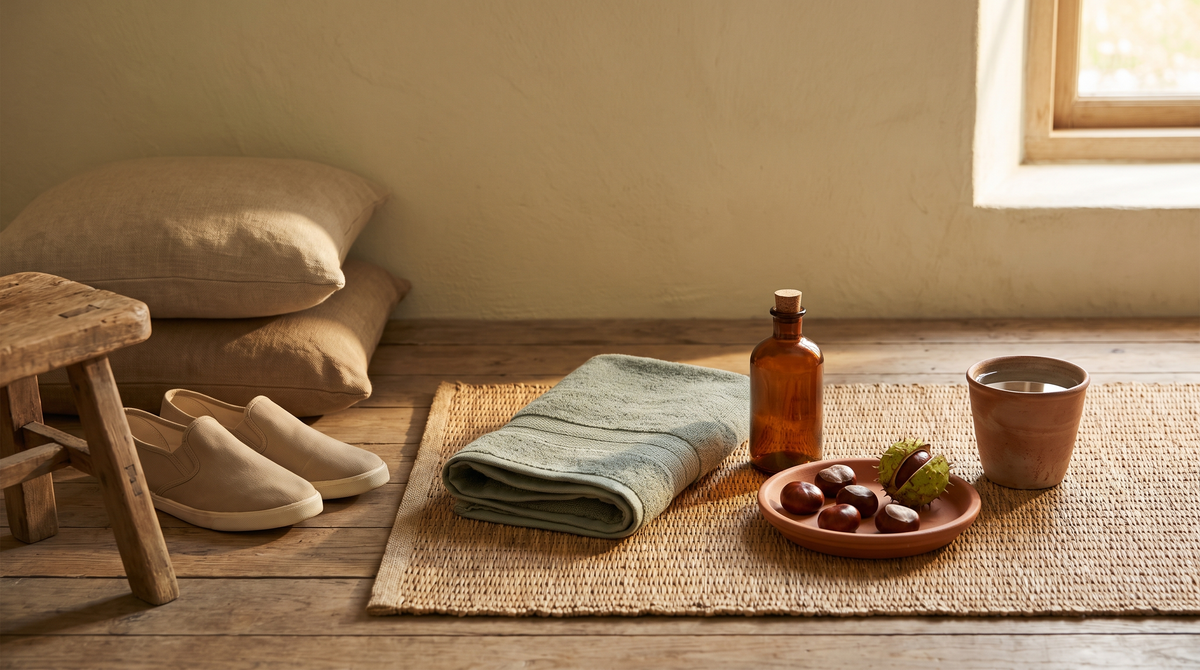
That sounds like a lot, but it fits into ordinary time. Lie on the floor or the bed with your legs up on two firm cushions while you read, scroll or listen to something. Above the heart is the point: a footstool in front of the sofa is comfortable, but it does not do the same job.
4. Break up long stretches of sitting or standing
Long, unbroken hours in one position are hard on leg veins, whether you are sitting at a desk or standing at a till. Cleveland Clinic's advice is plain: do not sit or stand for too long at a time, and move around as often as you can.
Set a reminder to change position every 30 to 60 minutes. On long bus rides, flights or drives, flex and point your feet and circle your ankles every half hour. Avoid sitting with your legs crossed for long periods. Keeping a healthy weight also takes pressure off the vein valves over time.
5. Try compression, fitted with your doctor's help
Compression stockings apply gentle, graded pressure that is firmest at the ankle, helping blood move upward and easing swelling. They are the standard first step doctors use for chronic venous insufficiency, and they are the benchmark horse chestnut was compared against in trials.
The catch is comfort. Many people find them hot and tight, especially in tropical weather, and stop wearing them. That is worth raising with your doctor, who can suggest the right pressure and size, and tell you whether compression is safe for you. People with poor circulation in the arteries of the legs, for example, should not use them without advice.
A standardised horse chestnut SEED extract, never raw seeds, bark or leaves, with clear directions to take it with food.
Ancient Nutra's Horse Chestnut Extract is a seed extract taken as 1 to 2 capsules daily with a meal, made in Sri Lanka under BRCGS, GMP and FSSC 22000 standards.
How to actually use this list
Do not try to start all five tomorrow. Pick the two habits that fit your day most easily, usually walking breaks and raising your legs in the evening, and keep them for two weeks. They cost nothing and help whether or not you add anything else.
If your legs still feel heavy after that, horse chestnut is a reasonable next step. Give it a fair, bounded trial, keep the habits going, and write down how your legs feel each evening so you can judge it honestly. Think of this list as a buffet, not a shopping list.
Some leg symptoms are not a job for habits or supplements. The US Centers for Disease Control and Prevention lists swelling, pain or tenderness, warmth, and redness or discoloration in one leg as possible signs of a blood clot, and advises seeing a doctor as soon as possible (CDC). Sudden breathlessness or chest pain needs emergency care. Leg ulcers, skin changes near the ankle, or swelling in both legs that keeps getting worse also need a doctor's check.
Safety
Only use a standardised horse chestnut seed extract. The raw seeds, bark, flowers and leaves are unsafe to swallow because they contain a toxic compound that processing removes. Extracts have been used in research for up to 12 weeks and may cause dizziness, digestive upset, headache or itching in some people. Rare cases of liver injury have been reported, so stop and see a doctor if you notice yellowing of the skin or eyes, dark urine, pale stools or pain in the upper right of your belly. Check with your doctor first if you take blood-thinning or other prescription medicines, have a liver condition, or are pregnant or breastfeeding.
The bottom line
Heavy legs usually improve with small, boring habits: short walks, legs up above your heart, fewer long stretches in one position, and compression if your doctor agrees. Horse chestnut seed extract is the one supplement with genuine trial evidence for leg pain and swelling, and it earns its place as a short, bounded addition to those habits, not a replacement for them.
If evening heaviness is the thing you want to work on, Ancient Nutra's Horse Chestnut Extract is built around that single job. For a wider look at circulation herbs, see 5 herbs for healthy circulation.

Horse Chestnut Extract
A standardised seed extract for tired, heavy legs, taken with a meal alongside daily movement.
Shop Horse Chestnut ExtractSources and further reading
- Pittler MH, Ernst E. Horse chestnut seed extract for chronic venous insufficiency, Cochrane Database of Systematic Reviews, 2012. Retrieved 29 September 2026.
- Horse Chestnut, National Center for Complementary and Integrative Health. Retrieved 29 September 2026.
- Chronic Venous Insufficiency, Cleveland Clinic. Retrieved 29 September 2026.
- About Venous Thromboembolism (Blood Clots), US Centers for Disease Control and Prevention. Retrieved 29 September 2026.
- Horse Chestnut, LiverTox, National Institute of Diabetes and Digestive and Kidney Diseases. Retrieved 29 September 2026.
Written by the Ancient Nutra Wellness Team. The team researches, sources, and tests every ingredient before it earns a place in an Ancient Nutra blend. Questions? Email info@ancientnutra.com or message Ancient Nutra on Instagram.
Medical disclaimer: This article is for educational purposes only and is not medical advice. Statements have not been evaluated by the FDA. Ancient Nutra products are not intended to diagnose, treat, cure, or prevent any disease. Speak with a qualified healthcare provider before starting any new supplement, especially if you take prescription medication or have a medical condition.