By the Ancient Nutra Wellness Team · 30 May 2026 · 6 min read
- Horse chestnut seed extract works through aescin, a compound that helps tighten leaky vein walls so fluid stops pooling in your lower legs.
- A review of 17 clinical trials found it eased leg pain, swelling, and itching, and one study matched compression stockings for reducing swelling.
- It is for people with tired, heavy, aching legs by evening, not a cure for varicose veins or a replacement for moving more.
- The studied dose is around 50mg of aescin twice a day with food, and most people need 8 to 12 weeks before judging it.
If your legs feel fine in the morning but heavy, tight, and a little swollen by 6 PM, that is not just tiredness. That is usually your veins struggling to push blood back up against gravity after a long day of standing or sitting. Horse chestnut has been the go-to plant for exactly this for a couple of hundred years, and the modern trial data is surprisingly solid for a herbal remedy.
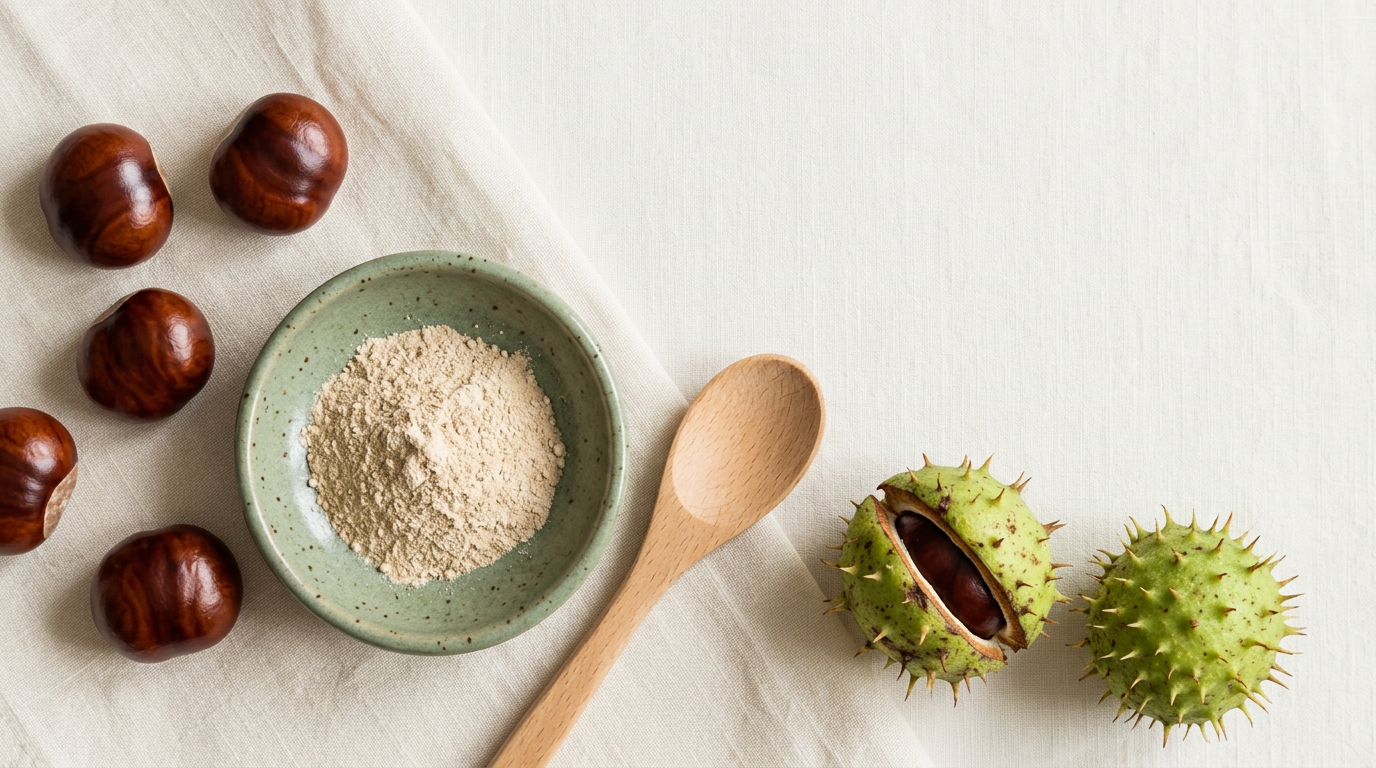
Horse chestnut is a large flowering tree native to the Balkans and now grown across Europe. The supplement does not come from the leaves or the flowers. It comes from the seed, the glossy brown "conker" inside the spiky shell, which is processed into a standardized extract. People have used that seed for healthy circulation and leg comfort since the 1800s.
What horse chestnut actually does
The active compound is called aescin. Its main job is to make the walls of your veins less leaky.
Here is the plain version. The veins in your legs have a hard job: they move blood uphill, back toward your heart, working against gravity all day. When the tiny valves and walls inside those veins weaken, fluid seeps out into the surrounding tissue. That is what you feel as heaviness, swelling, and that tight aching by evening. Aescin helps tighten those vessel walls and reduce the leak, so less fluid pools in your ankles and calves.
The evidence here is better than most herbs can claim. A review of 17 randomized controlled trials found that horse chestnut seed extract improved leg pain, swelling, and itching compared with a dummy pill, with benefits showing up over 2 to 16 weeks (Cochrane review, 2012). One trial even found it worked about as well as compression stockings for reducing swelling. For a plant extract, that is a strong track record.
Who horse chestnut is for
This is a targeted herb, not a daily multivitamin. It earns its place for specific people:
- People on their feet all day. Nurses, teachers, retail and factory staff, anyone who stands for long shifts and notices swollen, aching legs by the end of it.
- People who sit for long stretches. Desk workers and long-haul travelers whose legs feel tight and heavy after hours without moving.
- People with early signs of vein trouble. Visible spider veins, mild swelling, or that heavy-leg feeling that gets worse in hot weather.
- People who run warm and swell easily. In a climate like Sri Lanka's, the heat makes leg swelling worse, and horse chestnut is one of the cleaner tools for it.
And here is the honest part. If your legs feel fine, you do not need this. Horse chestnut does not build muscle, boost energy, or do anything for general wellness. It does one job well. If you have severe varicose veins, a clotting disorder, or sudden one-sided leg swelling, that needs a doctor, not a supplement.
How to actually take it
The dose used in the trials is consistent. Most studies used horse chestnut seed extract standardized to deliver around 50mg of aescin per dose, taken twice a day with food (Cochrane review, 2012). Taking it with a meal matters, because aescin can be hard on an empty stomach.
Give it time. In the first 2 to 4 weeks, the most common change people report is that their legs feel lighter by evening and the tightness eases. Reduced visible swelling tends to come later. One caution worth repeating: if you take blood-thinning medication, check with your doctor before starting, since aescin can affect how those drugs work.
A standardized horse chestnut seed extract that delivers a consistent amount of aescin, taken once or twice daily with a meal.
Ancient Nutra's Horse Chestnut Extract uses a standardized seed extract and is made in Sri Lanka under BRCGS, GMP, and FSSC 22000 standards.
Where horse chestnut comes from
Horse chestnut is a European plant, and its medicinal use traces back to folk medicine in the Balkans and across central Europe, where the seed was prepared for swollen, aching legs long before anyone could name the compound doing the work. It is one of the rare cases where the traditional use and the modern lab agree almost perfectly: the old remedy targeted exactly the vein problem that aescin is now known to address.
What to stack it with
Horse chestnut handles the veins. If your goal is broader circulation, it pairs well with one or two other herbs, depending on what you are after.
For circulation that reaches the brain and extremities, Ancient Nutra's Ginkgo Biloba Extract is the classic partner, since ginkgo is studied for blood flow to the small vessels in the hands, feet, and head. For heart and metabolic support, Ancient Nutra's Ceylon Cinnamon is a gentle daily addition. This kind of stack is for someone genuinely focused on circulation, though. If your only issue is heavy legs, horse chestnut on its own is enough.
How long until you feel something
Plan for 8 to 12 weeks before you decide whether it works for you. The early wins, lighter legs and less evening tightness, often show up inside the first month. The slower changes, like visibly reduced swelling, build over the full course. Like most plant extracts, horse chestnut rewards consistency more than dose. Taking it every day for three months will tell you far more than taking it heavily for one.
When the team at Ancient Nutra first looked at horse chestnut, the most common feedback was not dramatic. It was quiet and practical: people who stood all day said their legs simply stopped complaining by evening. That is the whole point. This is not an exciting supplement. It just does a useful job for the people who need it.

A standardized seed extract for healthy circulation and tired, heavy legs.
ShopIf heavy, aching legs are the thing nagging you by evening, that is what Ancient Nutra's Horse Chestnut Extract was built for. Take it daily, give it three months, and pair it with simple habits like moving every hour and putting your feet up at night. The science does not care which bottle the aescin comes from. It only cares that you take it consistently.
Sources
- Pittler MH, Ernst E. Horse chestnut seed extract for chronic venous insufficiency. Cochrane Database of Systematic Reviews, 2012.
- Chronic Venous Insufficiency With Emphasis on the Geriatric Population. PMC, 2023.
- Horse chestnut extract overview. DermNet NZ.
Medical disclaimer: This article is for educational purposes only and is not medical advice. Statements have not been evaluated by the FDA. Ancient Nutra products are not intended to diagnose, treat, cure, or prevent any disease. Speak with a qualified healthcare provider before starting any new supplement, especially if you take prescription medication or have a medical condition.
Written by the Ancient Nutra Wellness Team. The team researches, sources, and tests every ingredient before it earns a place in an Ancient Nutra blend. Questions? Email info@ancientnutra.com or message Ancient Nutra on Instagram.