By the Ancient Nutra Wellness Team · June 17, 2026 · 6 min read
- Ceylon cinnamon is the true cinnamon from Sri Lanka: milder, sweeter, and far lower in coumarin than the common cassia cinnamon.
- In a review of ten trials, cinnamon lowered fasting blood sugar by about 24 mg/dL on average, though results varied and it is a nudge, not a treatment.
- A sensible amount is around 1 to 2 grams a day, taken with a meal that has carbohydrates.
- Cinnamon supports steadier blood sugar. It does not replace food, movement, sleep, or medication, and anyone on blood-sugar drugs should check with a doctor first.
Here is the part most people miss: the cinnamon in your cupboard is probably not the kind the studies are about. Most supermarket cinnamon is cassia, the cheaper, hotter bark. Ceylon cinnamon, the true cinnamon from Sri Lanka, is milder, sweeter, and far lower in the one compound you do not want a lot of. It also happens to be the one with a quietly interesting record on blood sugar.
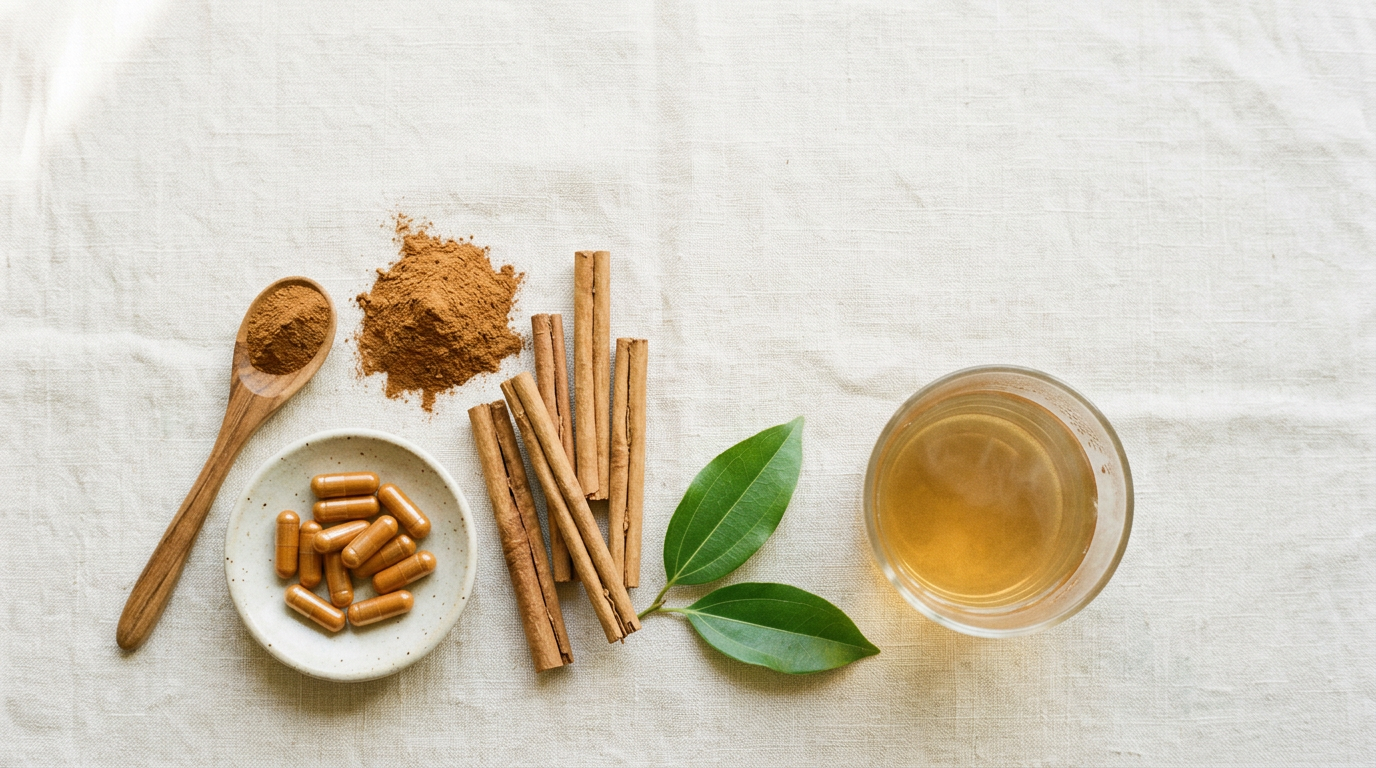
Ceylon cinnamon (Cinnamomum zeylanicum, also called true cinnamon) is the dried inner bark of a small evergreen tree native to Sri Lanka. The bark is rolled into thin, papery quills that crumble easily, which is one way to tell it from the hard, hollow sticks of cassia. For centuries it has flavored Sri Lankan kitchens and Ayurvedic remedies, valued as a warming spice for digestion and circulation.
What Ceylon cinnamon actually does
Cinnamon's most studied effect is on blood sugar. Its compounds appear to slow how fast carbohydrates break down in the gut and to help cells respond a little better to insulin. The result is a gentler rise in blood sugar after a meal, and slightly lower fasting levels over time.
The clearest summary comes from a review of ten clinical trials (543 people in total) that pooled the results of cinnamon supplements. On average, fasting blood sugar fell by about 24 mg/dL, alongside small improvements in cholesterol (Annals of Family Medicine, 2013). The honest caveat: the studies varied a lot, and there was no clear effect on HbA1c, the longer-term blood sugar marker. So cinnamon is a nudge, not a lever.
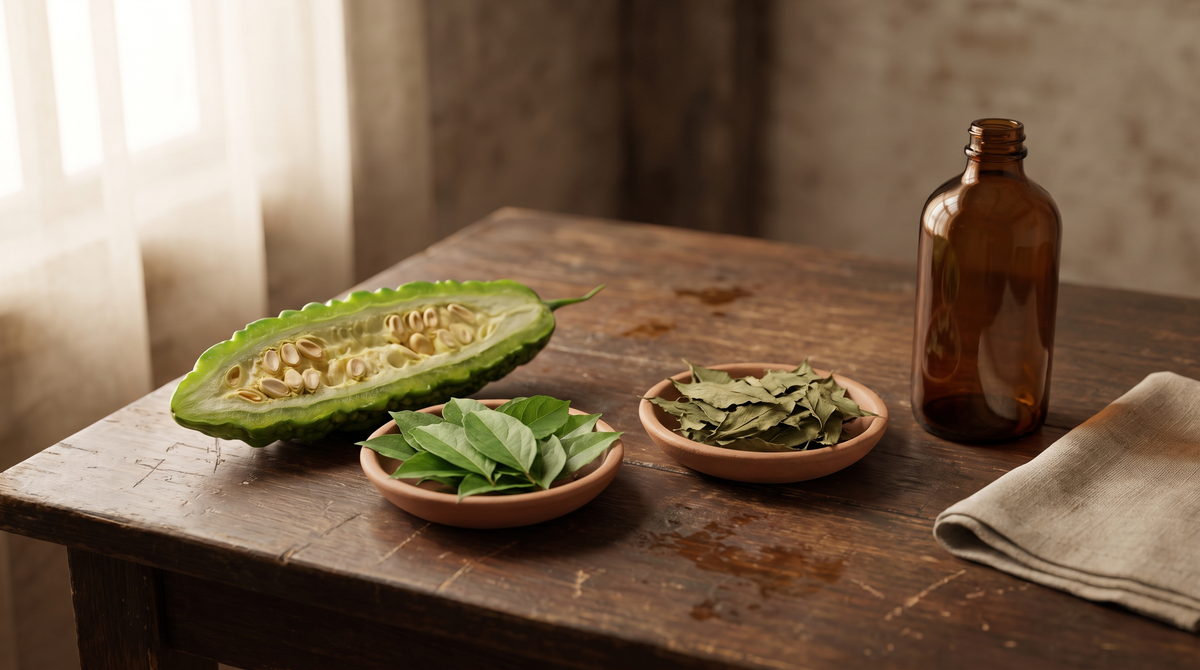
That nudge is most useful as part of a bigger picture. People often pair cinnamon with bitter melon, another traditional blood sugar herb. Ancient Nutra's Karavila (Bitter Melon) is the usual companion when the goal is steadier readings after a plate of rice and curry.
Who should reach for Ceylon cinnamon
Ceylon cinnamon is a small, food-friendly habit, not a daily must for everyone. It earns its place for a few people in particular:
- People who eat a lot of rice, bread, or sweets and want a gentle habit that softens the rise after meals.
- People with a family history of blood sugar trouble who already eat well and move, and want one more quiet support.
- People who use cinnamon anyway, in coffee, oats, or baking, and would rather use the low-coumarin kind.
- People who like warming spices for digestion and circulation as part of a daily routine.
And here is the honest part. If your blood sugar is already well managed and your diet is in order, cinnamon is a nice-to-have, not a need. It is not a treatment for diabetes, and it does not replace medication, food, sleep, or movement. If you take blood-sugar medication, talk to your doctor before adding it, because cinnamon and the medication can push glucose down together.
How to actually take Ceylon cinnamon
A common amount is around 1 to 2 grams a day, which is roughly half a teaspoon of powder or one to two capsules. Take it with a meal that has carbohydrates, since that is when it has something to work on. Capsules are the simplest way to get a steady dose without the strong flavor in every bite.
There is no need to take more. Higher doses do not reliably do more, and with cassia they would raise the coumarin question. In the first four weeks, do not expect fireworks. The change, if it comes, shows up as steadier energy after meals long before it shows up as a number.
Ceylon cinnamon (Cinnamomum zeylanicum), often labeled true cinnamon, not cassia. Around 1 to 2 grams a day, taken with food.
Ancient Nutra's Ceylon Cinnamon uses true Sri Lankan cinnamon in a simple capsule.
Where Ceylon cinnamon comes from
Sri Lanka is the home of true cinnamon. The island has grown and traded it for so long that Ceylon, the old name for Sri Lanka, became the name of the spice itself. That is a moat no other origin can copy.
It also matters for safety. Ceylon cinnamon is very low in coumarin, a natural compound that, in large amounts, can stress the liver. Cassia, the common supermarket type, carries far more. Germany's Federal Institute for Risk Assessment has gone as far as to advise that people who eat a lot of cinnamon choose the low-coumarin Ceylon kind (BfR, 2012). For a daily habit, that difference is the whole point of choosing true cinnamon.
What to stack Ceylon cinnamon with
For blood sugar, Ceylon cinnamon sits naturally alongside the Sri Lankan bitter herbs that grandmothers reached for. One of the oldest is Thebu, the leafy canereed plant traditionally chewed or brewed to help keep blood sugar in check. Ancient Nutra's Thebu (Canereed) is the local, leaf-based partner to cinnamon's bark.
Beyond herbs, the real stack is behavioral: a short walk after your biggest meal, protein and fiber before the rice, and a consistent sleep window. Cinnamon works best on top of those, not instead of them. This pairing is for people actively working on their blood sugar, not something everyone needs.
How long Ceylon cinnamon takes to work
Give it at least eight to twelve weeks before you decide. The blood sugar studies that saw a change ran for four to eighteen weeks, so this is a slow, quiet herb, not an overnight one. What tends to shift first is the heavy afternoon slump after a big lunch. The fasting number, if it moves, moves later.
As with any herb, a full season of honest use tells you more than a single week. Track how you feel after meals, not just one reading on one morning.
In many Sri Lankan kitchens, the test for real cinnamon is simple. The true bark is thin and brittle and curls into a soft scroll, while cassia is thick and hard like a chip of wood. Cooks who grew up with it can tell the two apart by snapping a piece. That same crumbly bark, the one that bends instead of breaks, is the one the research keeps circling back to.
The bottom line
Ceylon cinnamon is a small, sensible habit: a sweet, low-coumarin spice with a modest but real record on blood sugar, best used with food and a little patience. It will not replace the basics, and it is not a treatment. For true Sri Lankan cinnamon in a clean capsule, that is what Ancient Nutra's Ceylon Cinnamon was made for. Or keep a jar of the powder in the kitchen and put it on everything. The science does not care which form it comes in.

True Sri Lankan cinnamon, low in coumarin, for steadier blood sugar as part of a daily routine.
Shop Ceylon CinnamonSources
- Allen RW et al., Annals of Family Medicine (2013), cinnamon use in type 2 diabetes: a meta-analysis of 10 trials; fasting glucose fell by about 24.6 mg/dL with high study-to-study variation.
- German Federal Institute for Risk Assessment (BfR), 2012, cassia cinnamon with high coumarin contents to be consumed in moderation; advises choosing low-coumarin Ceylon cinnamon.
- Further reading: Deng X et al., meta-analysis and meta-regression (2019), efficacy and safety of cinnamon in type 2 diabetes and pre-diabetes.
- Further reading: Ranasinghe P et al., BMC Complementary and Alternative Medicine (2013), medicinal properties of true cinnamon (Cinnamomum zeylanicum): a systematic review.
Medical disclaimer: This article is for educational purposes only and is not medical advice. Statements have not been evaluated by the FDA. Ancient Nutra products are not intended to diagnose, treat, cure, or prevent any disease. Speak with a qualified healthcare provider before starting any new supplement, especially if you take prescription medication or have a medical condition.
Written by the Ancient Nutra Wellness Team. The team researches, sources, and tests every ingredient before it earns a place in an Ancient Nutra blend. Questions? Email info@ancientnutra.com or message Ancient Nutra on Instagram.