By the Ancient Nutra Wellness Team
- A certificate of analysis reports test results for one production batch. A site certification such as BRCGS, FSSC 22000 or ISO 22000 is awarded to a factory, not to the bottle in your hand.
- Identity comes before potency. A milligram figure means nothing until a test has confirmed the plant is the species printed on the label.
- No certificate proves a supplement works. It describes what is in the batch, not what the batch does.
- In a 2022 JAMA Network Open analysis of 30 immune-support supplements, 17 carried inaccurate labels.
- Turmeric carries a documented liver risk, so any turmeric product belongs in a bounded course. Take a 1-week break after every 8 to 12 weeks, and stop if you notice yellowing skin or eyes, dark urine, persistent nausea, or unusual tiredness.
Somewhere between deciding to take a supplement seriously and actually buying one, most people discover the word "certificate". It appears on product pages, in customer service replies, and in the confident corners of the internet, usually with the implication that the argument is now settled. It is not settled. A certificate is a document with a scope, and almost every disappointment people have with supplement paperwork comes from misreading that scope.
This is a plain guide to what a batch certificate of analysis actually covers, written about the category rather than any one brand. Five mistakes account for most of the confusion, and none of them need a chemistry background to fix.
Mistake 1. Treating a factory certificate as a batch certificate
The most common substitution is a site certification standing in for a test result. BRCGS, FSSC 22000 and ISO 22000 are certifications of a manufacturing site and the systems inside it. They are held by a factory. They say something real about how carefully a place operates, and nothing at all about the specific run of product in your cupboard.
A certificate of analysis works at the opposite scale. Under the US dietary supplement manufacturing rules, a batch is defined as a quantity "intended to meet specifications for identity, purity, strength, and composition" and produced "during a specified time period according to a single manufacturing record" (21 CFR 111.3). The same rules require a manufacturer to set specifications for each finished batch, and limits on contamination for that batch. Batch is the unit that gets tested. Factory is not.
The fix: when a brand cites a certification, ask which of the two it is. If the answer is a scheme name, that is site level. If you want batch level, ask for the certificate of analysis for the lot number printed on your pack, and expect a different document with different information on it.
Mistake 2. Reading the potency number before the identity test
Potency figures are the part everyone reads first, because they look like the answer. They are the second question, not the first.
The order matters because a potency assay measures a compound, and identity testing establishes what the raw material actually was. The manufacturing rules put identity first for the same reason: before a component is used, at least one test or examination must verify the identity of any component that is a dietary ingredient. Get that sequence backwards and a precise-looking number is measuring something nobody has confirmed. This is not a theoretical worry. In a 2022 analysis published in JAMA Network Open, researchers tested 30 immune-support supplements and found 17 of them carried inaccurate labels, including 13 that listed ingredients which analysis could not detect at all.
The fix: read the certificate top down. Look for an identity line naming the botanical species, then read potency. If a certificate reports strength without ever establishing identity, you are looking at half a document.
Mistake 3. Expecting a certificate to prove the product works
This is the quiet one, and the mistake that does most damage to a person's expectations. A certificate of analysis is a composition document. It answers what is in the batch and how much, and has no opinion on whether that does anything for you.
The US regulator is unambiguous that the two questions are separate. The FDA states plainly that it "does not have the authority to approve dietary supplements before they are marketed", while separately requiring manufacturers to follow practices that help ensure identity, purity, quality, strength and composition. The same distinction shows up in the US Department of Defense's supplement safety program, which notes that third-party certification "does not mean the product has been evaluated for safety... or effectiveness".
The fix: hold the two questions apart on purpose. Use the certificate to decide whether the bottle contains what it says. Use published human research on the ingredient, at the dose and duration actually studied, to decide whether it is worth taking.
Mistake 4. Skipping straight past the contaminant panel
Contaminant results are the least glamorous section and the most worth reading. Heavy metals and microbial limits are where a botanical product is most likely to have a genuine problem, because plants take up what is in the soil they grew in.
A 2008 study in JAMA analysed 193 Ayurvedic products bought online and found detectable lead, mercury or arsenic in 20.7 percent of them, with no meaningful difference between US-manufactured and Indian-manufactured products. That is a 2008 dataset and not a current market rate, but it establishes the point that contamination is real and is not a question of country of origin. For a sense of scale, Health Canada's quality guide sets adult daily intake limits for oral natural health products at under 10.0 µg per day for lead, under 10.0 µg per day for total arsenic, under 6.0 µg per day for cadmium and under 20.0 µg per day for total mercury.
The fix: check that heavy metals and microbial testing appear at all, and note that the Health Canada figures above are daily intake limits rather than concentration limits. A result on a certificate has to be multiplied by the serving on the label before it can be compared against them.
Mistake 5. Not checking who ran the test, and when
A certificate with no laboratory named, no date and no lot number is a design exercise. Those three fields are what tie a page of numbers to a physical batch.
The date matters because a certificate describes the batch at the moment it was tested. The lot number matters because it is the only thing tying the document to the pack you are holding. Whether the work was done in house or by an independent laboratory is worth knowing too, not because in-house testing is worthless, but because the two are different claims and should not be presented as one.
The fix: before reading a single result, find the lot number, the test date and the name of the laboratory. If any of the three is missing, ask for it before you evaluate anything else on the page.
Check a certificate properly in one week
- Day 1. Find the lot or batch number on the pack you already own and write it down.
- Day 2. Email the brand and ask for the certificate of analysis for that specific lot. A brand that tests will usually have one.
- Day 3. While you wait, separate the claims on the product page into composition claims and effect claims. Only the first kind is answerable by a certificate.
- Day 5. When the document arrives, read it in this order: lot number, date, laboratory, identity, potency, contaminants.
- Day 7. Multiply the contaminant results by the label serving and compare against a published daily limit rather than eyeballing the raw figure.
By the end you will know whether the bottle contains what it claims. You will still not know whether it works, and that is the correct outcome.
Look for
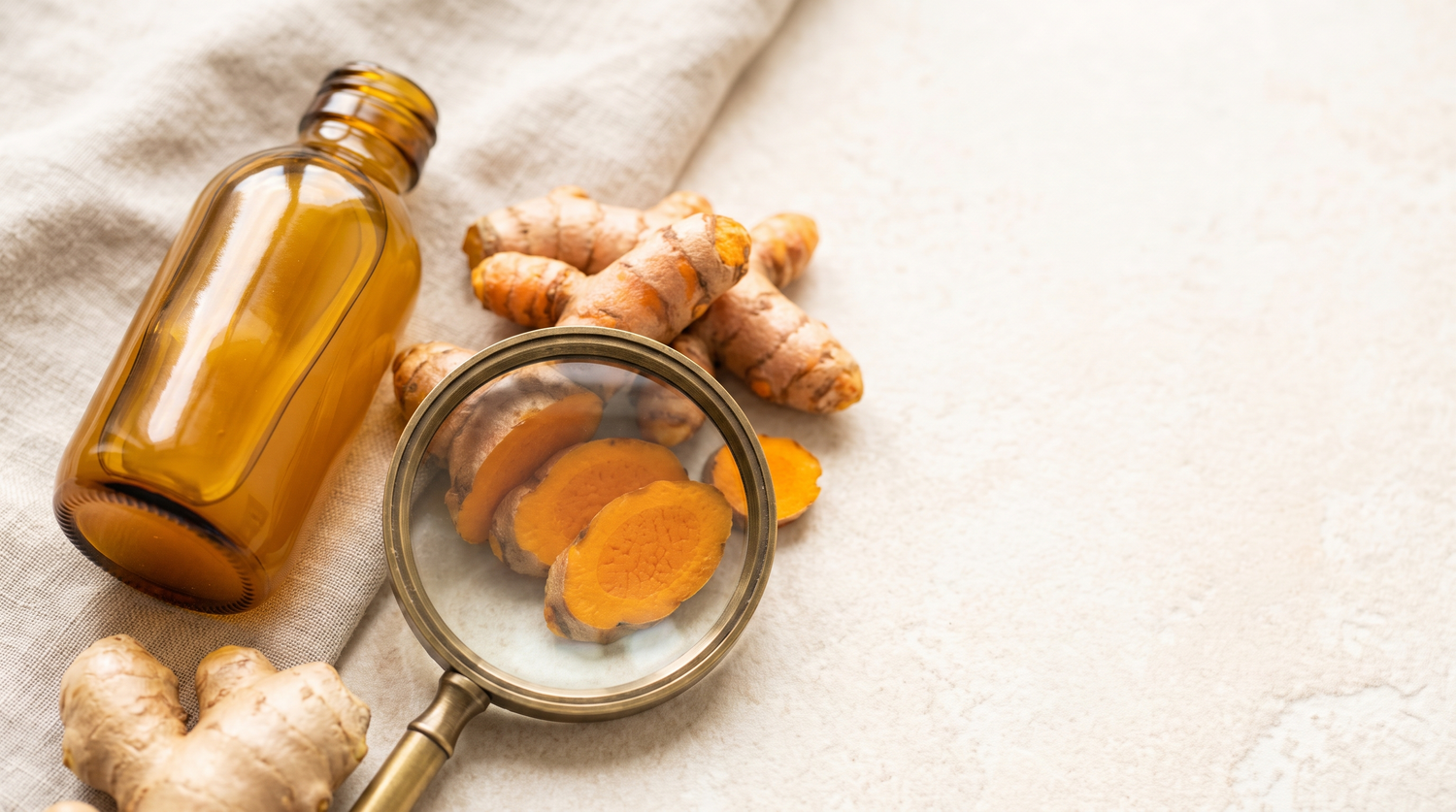
A product page that states its ingredients, its serving size and its manufacturing standards openly, and that tells you how long to take it rather than implying you should take it forever. Ancient Nutra's Shield Shot 5 pack lists turmeric and ginger as its ingredients, 30 mL per shot, one shot per day, and states its own break schedule on the product page.
The Shield Shot page lists the manufacturing standards the site holds, and that wording was chosen carefully. It is a statement about where the shot is made, not a batch test result, and running the two together would have been the easier and less honest sentence to write. The distinction in Mistake 1 is one the team had to get right on its own product page first.
The bottom line
Two mistakes matter more than the rest. A site certification is not a batch test, and no certificate of any kind tells you whether a supplement works. Fix those two and the remaining three are mostly a matter of reading the document in the right order.
A useful last point, since this article uses a turmeric product as its example. Paperwork is not the only thing worth checking on an ingredient. The NIH's LiverTox database rates turmeric a well documented cause of clinically apparent liver injury, most often from concentrated capsule extracts rather than culinary amounts. Whatever a certificate says, keep a turmeric product to a bounded course: it is recommended to take a 1-week break after every 8 to 12 weeks of continuous use. Stop and see a doctor if you notice yellowing of the eyes or skin, dark urine, persistent nausea, or unusual tiredness. If a daily immunity habit is what you are after, the daily Shield Shot ritual covers the routine side, and there is a separate guide to Sri Lankan herbs for the monsoon.
Common questions
What is the difference between a certificate of analysis and a GMP or ISO certificate?
Scope. A certificate of analysis reports test results for one production batch, identified by its lot number and test date. A GMP, BRCGS, FSSC 22000 or ISO 22000 certificate is held by a manufacturing site and speaks to how that site operates. A site can be properly certified and still produce a batch you have seen no test data for.
Can I ask a supplement brand for a certificate of analysis?
Yes, and it is a reasonable request. Ask for the certificate covering the specific lot number printed on your pack, since a certificate for a different batch does not describe what you bought. How a brand answers is informative in itself.
Does a certificate of analysis prove a supplement is safe or effective?
No. It is a composition document. The US FDA does not approve dietary supplements before they are marketed, and the US Department of Defense's supplement safety program states that third-party certification does not mean a product has been evaluated for safety or effectiveness. Those questions are answered by published research on the ingredient, not by a batch document.

Shield Shot, 5 pack
Five ready-to-drink 30 mL turmeric and ginger shots, with the ingredients, serving and break schedule stated on the page.
Shop Shield ShotSources
- Current Good Manufacturing Practice in Manufacturing, Packaging, Labeling, or Holding Operations for Dietary Supplements, 21 CFR Part 111 (2024 edition), sections 111.3, 111.73 and 111.75. US Government Publishing Office. 21 CFR Part 111
- Questions and Answers on Dietary Supplements. US Food and Drug Administration. FDA
- Crawford C, et al. Analysis of Select Dietary Supplement Products Marketed to Support or Boost the Immune System. JAMA Network Open, 2022. PMC9366544
- Saper RB, et al. Lead, Mercury, and Arsenic in US- and Indian-Manufactured Ayurvedic Medicines Sold via the Internet. JAMA, 2008. PMC2755247
- Quality of Natural Health Products Guide, version 3.1. Health Canada. Health Canada
- Why is Third-Party Certification Important for Dietary Supplements? Operation Supplement Safety, Consortium for Health and Military Performance, Uniformed Services University. OPSS
- LiverTox: Clinical and Research Information on Drug-Induced Liver Injury. Turmeric. National Institute of Diabetes and Digestive and Kidney Diseases. NBK548561
This article is for general information and is not medical advice. Ancient Nutra products are food supplements and are not intended to diagnose, treat, cure or prevent any disease. Speak to a qualified healthcare professional before starting any supplement, particularly if you are pregnant, breastfeeding, taking medication, or managing a health condition.