By the Ancient Nutra Wellness Team · Published June 22, 2026 · 6 min read
- Shatavari (botanically Asparagus racemosus), called Hathawariya in Sinhala, is the Ayurvedic "Queen of Herbs," traditionally used to support women's reproductive health and hormonal balance through life's transitions.
- Its main actives are steroidal saponins called shatavarins, plus plant compounds that behave a little like the body's own estrogen. In an 8-week randomized, placebo-controlled trial, perimenopausal women taking 300 mg of standardized Shatavari daily reported significantly fewer hot flashes and less fatigue.
- Most people take roughly 300 to 500 mg of standardized root extract, or one daily capsule, and give it 8 to 12 weeks. It is a daily support, not a replacement for medical care.
Ask a grandmother in a Sri Lankan village what a young mother or a woman in her forties should take, and Hathawariya comes up fast. The feathery vine with the long, pale roots has been the go-to women's herb here for generations, the one handed quietly across kitchens when energy dips, cycles turn unpredictable, or a new mother needs building back up. Modern researchers gave it a more formal name, Asparagus racemosus, and a regal nickname, the Queen of Herbs. The reason people reach for it has not changed much at all.
What Shatavari actually does
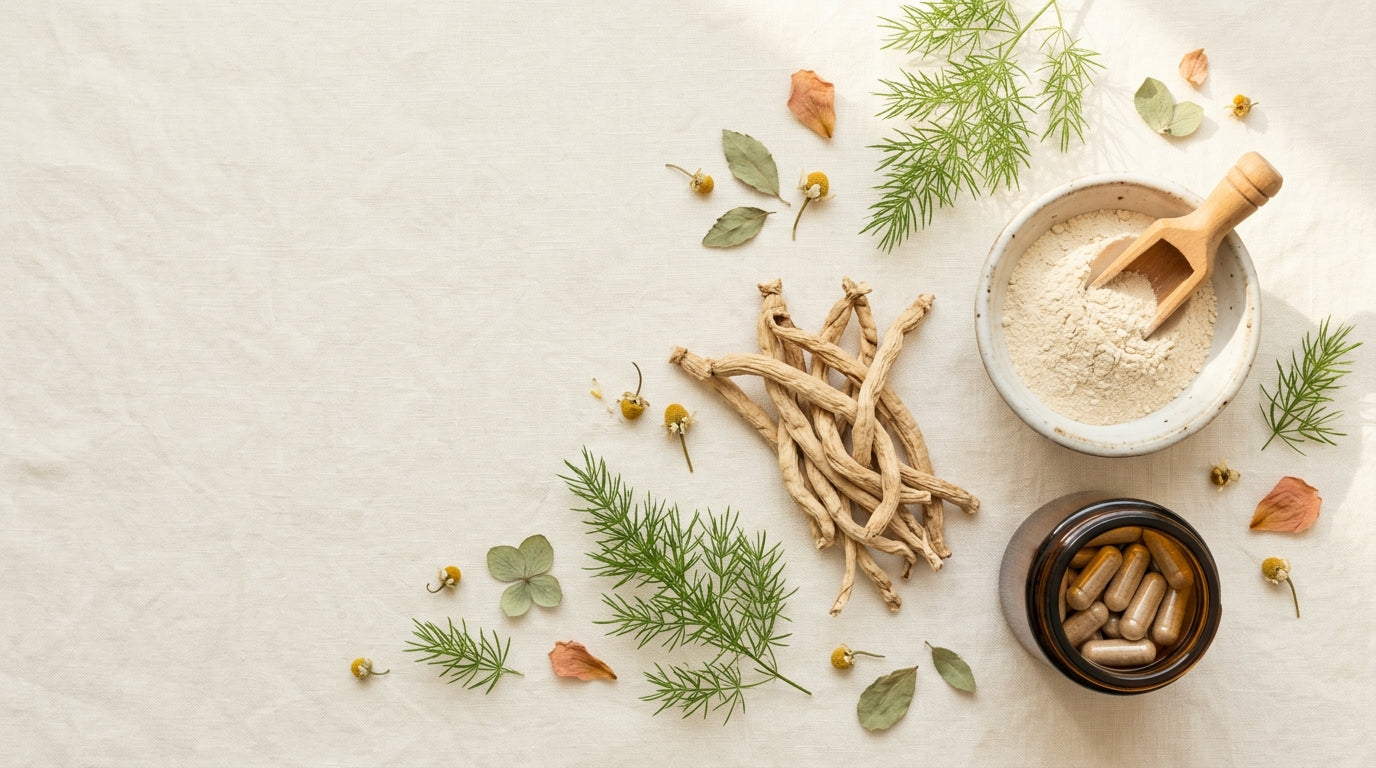
Shatavari is the root of Asparagus racemosus, a climbing, fern-like plant that grows across Sri Lanka and South Asia. The roots are rich in a group of compounds called steroidal saponins, known as shatavarins, alongside flavonoids and other plant molecules. Some of these act as phytoestrogens, plant compounds shaped enough like the body's own estrogen to interact gently with the same pathways (Alok et al., review).
That gentle, estrogen-adjacent activity is the thread running through most of Shatavari's traditional uses for women: steadier moods across the cycle, support through the perimenopausal years, and the long association with new mothers and milk supply. A 2025 randomized, double-blind, placebo-controlled trial put some numbers on the menopause side. Across 8 weeks, perimenopausal women who took 300 mg of standardized Shatavari root extract each day reported significantly greater improvement in hot flashes than the placebo group, along with less fatigue and lower perceived stress (Mahajan et al., 2025). For women who also want help winding down a busy mind, Ashwagandha is the adaptogen Ancient Nutra customers most often reach for alongside it.
None of this rewires your hormones overnight, and it is not meant to. Shatavari works best as a steadying daily support while the bigger levers, sleep, food, movement, and stress, are also being looked after.
Who Shatavari is really for
This is a herb with a clear audience rather than a cure-all. It tends to earn its place for:
- Women in the perimenopausal years. The forties and early fifties, when cycles get unpredictable and hot flashes, broken sleep, and mood swings show up. This is where the strongest clinical signal sits.
- Women riding the monthly rollercoaster. Those who feel the energy and mood dips around their cycle and want a gentle daily steadier rather than a quick fix.
- New and breastfeeding mothers, with guidance. Shatavari is one of Ayurveda's classic herbs for supporting milk supply. If you are pregnant or breastfeeding, this is exactly the moment to check with your doctor before starting anything new.
And the honest other side: if you feel steady, your cycle is comfortable, and nothing is nagging, you may simply not need it. Shatavari is not a treatment for any medical condition, and it is not a substitute for care you already rely on. Women with hormone-sensitive conditions, or anyone on hormone therapy or other prescriptions, should talk to a doctor before adding it.
How to actually take Shatavari
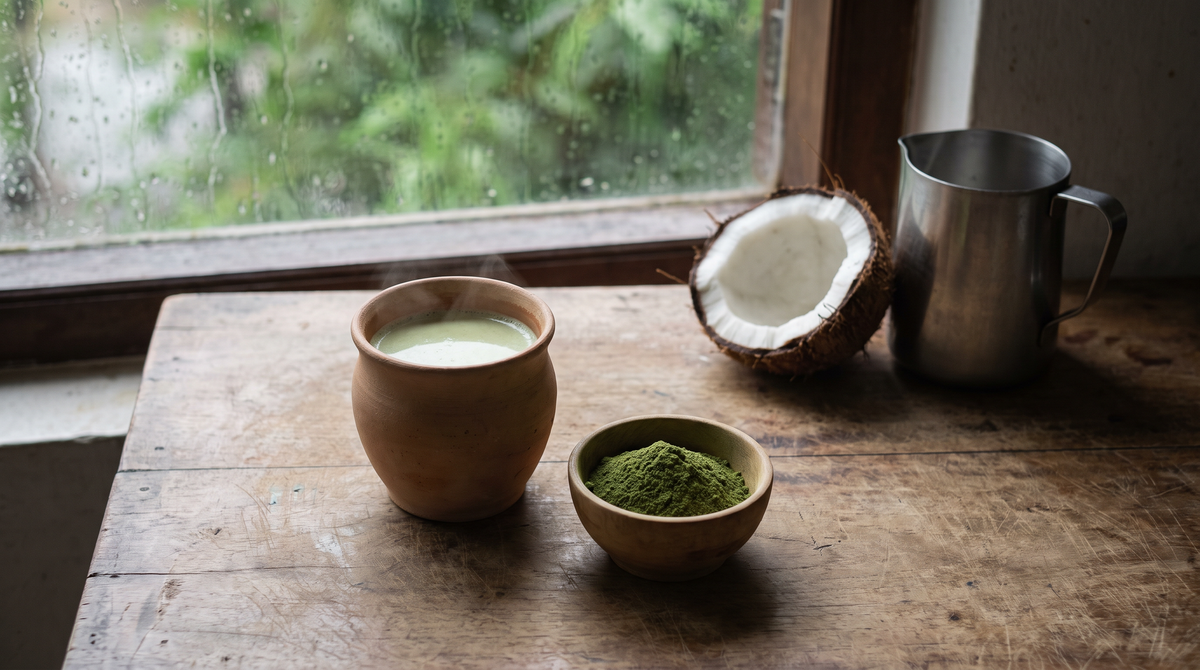
The common range is about 300 to 500 mg of standardized root extract a day, or one capsule, taken with food. The trial that measured fewer hot flashes used 300 mg once daily after breakfast, which is an easy habit to keep. Powders exist too, stirred into warm milk in the traditional way, though the taste is an acquired one and capsules make the daily dose simpler to hold steady.
Consistency matters more than timing. Shatavari is a slow, cumulative herb, so the same modest dose taken every day beats a larger amount taken only when you remember.
A standardized Asparagus racemosus root, around 300 to 500 mg a day, taken with food.
Ancient Nutra's Hathawariya / Shatavari is a single-herb capsule, so the daily dose stays simple and easy to keep up.
Where Shatavari comes from
Shatavari has grown in the dry forests and hill country of Sri Lanka for as long as anyone has kept track, where it carries the Sinhala name Hathawariya. Ayurvedic texts call it the Queen of Herbs and leaned on the root as a women's tonic and a support for nursing mothers long before anyone could measure an estrogen level. Tradition opened the door here. The clinical work is slowly walking through it.
What to pair Shatavari with
For women navigating stress and patchy sleep alongside cycle or menopausal changes, Shatavari sits comfortably next to Ashwagandha. One is the calming adaptogen for a busy nervous system, the other is the classic women's tonic. A 2025 menopause study even tested the two together against Shatavari alone, a fair reflection of how naturally the pair is used at home.
That said, this is a combination for a goal, not a starter kit everyone needs. Pick by what you are actually solving. Hot flashes and cycle support point to Shatavari. A wired, overstretched mind points to Ashwagandha. One herb taken faithfully beats three you forget on the shelf.
How long Shatavari takes to work
Give it time measured in cycles, not days. In the clinical trial, the clearest improvements landed by week 8, with some changes, like steadier energy and lower stress, showing up around week 4. As with most women's herbs, a fair test is at least two to three months of daily use, taken alongside the sleep and nutrition that do the heavy lifting.
If you track anything, track how you feel across a full cycle rather than day to day. The monthly pattern is where Shatavari tends to show its hand.
When the team first started packing Hathawariya, it was the older women in the office who had the least to ask. They already knew it from their mothers and grandmothers, the herb that quietly turned up at home whenever someone was run down or building back up after a baby. The younger staff were the ones reading the label twice. That gap, lived knowledge on one side and a fresh discovery on the other, is the whole story of this root.
The bottom line
For a simple daily dose, Ancient Nutra's Hathawariya / Shatavari is a single-herb root in a 60 capsule bottle, made for women who want steady support through the cycle and the perimenopausal years without overhauling everything else. The science is still catching up to what generations already practiced, and what it has measured so far, fewer hot flashes, less fatigue, lower stress, points the same way the tradition always did. Take it long enough, and through enough cycles, to judge it fairly.

Hathawariya / Shatavari 60 Capsules
The Ayurvedic Queen of Herbs, one simple daily capsule to support women's hormonal balance, steady energy, and the perimenopausal years.
Shop Hathawariya / ShatavariSources
- Alok S, et al. Plant profile, phytochemistry and pharmacology of Asparagus racemosus (Shatavari): A review. Asian Pacific Journal of Tropical Disease, PMC.
- Mahajan S, Avad P, Langade J. Efficacy and Safety of Shatavari (Asparagus racemosus) Root Extract for Perimenopause: a randomized, double-blind, placebo-controlled study. International Journal of Women's Health, 2025.
Further reading: Galactogogue activity of Asparagus racemosus RCT, PMC · Shatavari for menopausal symptoms RCT, PMC
Medical disclaimer: This article is for educational purposes only and is not medical advice. Statements have not been evaluated by the FDA. Ancient Nutra products are not intended to diagnose, treat, cure, or prevent any disease. Speak with a qualified healthcare provider before starting any new supplement, especially if you are pregnant or breastfeeding, take prescription medication, or have a medical condition.
Written by the Ancient Nutra Wellness Team. The team researches, sources, and tests every ingredient before it earns a place in an Ancient Nutra blend. Questions? Email info@ancientnutra.com or message Ancient Nutra on Instagram.