By the Ancient Nutra Wellness Team · Published 26 May 2026 · 6 min read
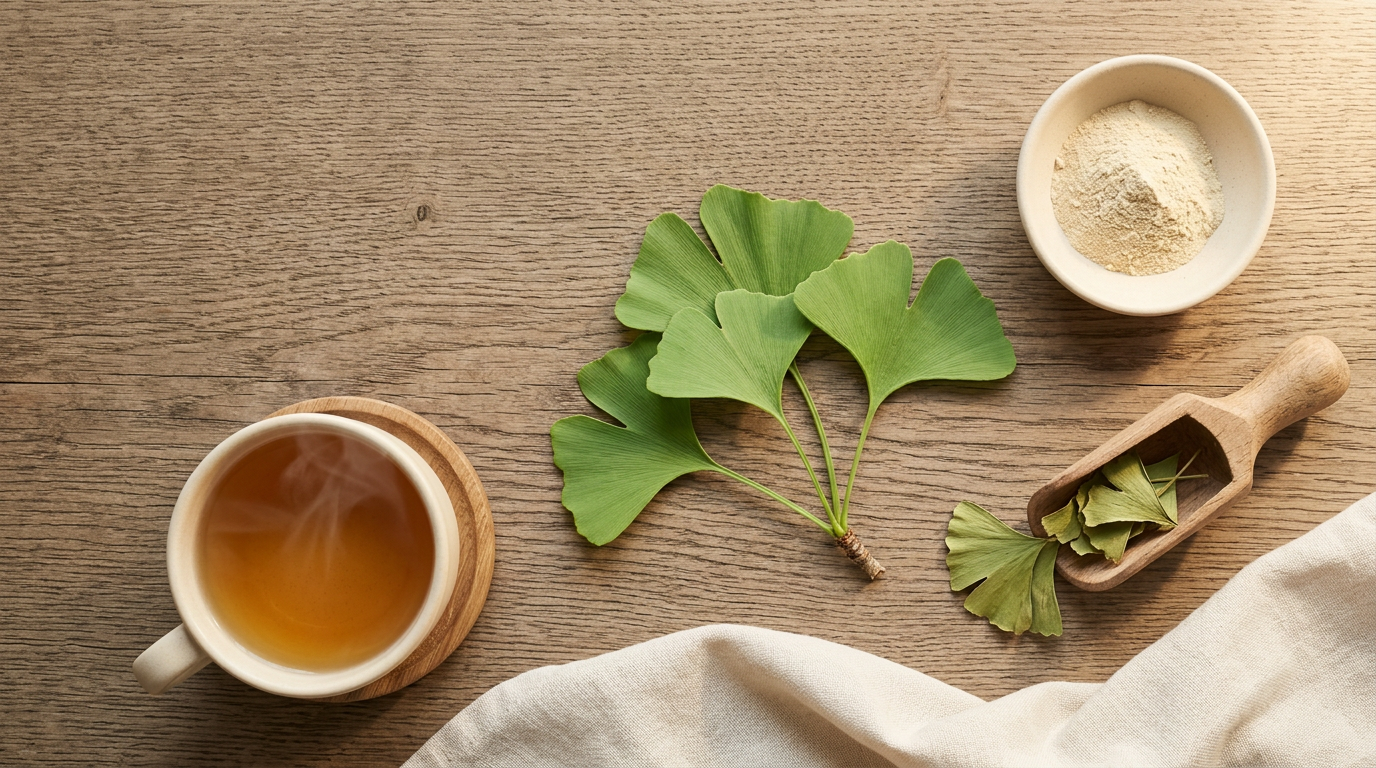
- Ginkgo Biloba is the oldest tree species on earth, and its fan-shaped leaf is the only part used for daily supplementation.
- The active compounds (flavone glycosides and terpene lactones) work on the small blood vessels, which is why the most consistent benefit shows up in cognition and circulation.
- The dose that does something is 120 to 240 mg per day of a standardized extract (24% flavone glycosides, 6% terpene lactones), taken for at least 8 to 12 weeks.
Most people remember Ginkgo from a 1990s drugstore aisle, sitting between echinacea and St. John's Wort. The tree itself is older than almost everything: a single species that has survived since the Jurassic period. The reason the modern world keeps coming back to its leaf is simpler than the marketing makes it sound. It does one thing well, and that one thing happens to matter for the brain.
What Ginkgo Biloba is, in one paragraph
Ginkgo Biloba is the leaf of the Ginkgo tree, a species with no living relatives. The supplement form is a standardized extract of the dried leaf, concentrated for two groups of compounds: flavone glycosides (the antioxidants) and terpene lactones (the ginkgolides and bilobalide that act on blood vessels and platelets). The modern German pharmaceutical industry standardized the leaf extract in the 1960s, and most of the clinical research since then has used that standard, called EGb 761.
What Ginkgo actually does in the brain
Two things, both small, both real.
First, it widens the smallest blood vessels. The terpene lactones (ginkgolides A, B, C, plus bilobalide) block platelet-activating factor, which is part of how the body constricts microvessels under stress. With that signal dialed down, blood flows a little more freely through the capillaries that feed the brain, the ears, the fingers, and the legs. That is the mechanism most reviews keep landing on.
Second, it mops up oxidative stress. The flavone glycosides are strong antioxidants, and brain tissue is unusually vulnerable to oxidative damage. Over weeks of daily dosing, this shows up as steadier energy and clearer thinking rather than a sudden lift.
A 2014 meta-analysis of seven randomized placebo-controlled trials found that 240 mg per day of standardized EGb 761 produced a statistically significant improvement in cognition, daily living activities, and global clinical rating in patients with mild dementia (Tan et al., 2014). The effect was not dramatic. It was just consistent, which is more useful than dramatic for a supplement people take daily for years.
Who benefits most from Ginkgo
Ginkgo is not a smart drug for healthy 25-year-olds. The research on cognitively healthy younger adults is mixed at best. Where the signal gets stronger:
- Adults over 50 who have started noticing the small things: misplacing keys more often, slower word recall, harder afternoons.
- People with cold hands and feet, mild tinnitus, or the kind of poor peripheral circulation that shows up after long flights or long winters.
- Anyone on a desk-bound day who wants steadier afternoon focus without leaning on a third coffee.
- Older adults managing early cognitive slippage, where the case for daily Ginkgo is strongest in the data.
Who does not need it: healthy adults under 40 with no circulation or focus complaints, anyone on blood thinners (Ginkgo mildly thins the blood, talk to a doctor first), and anyone heading into surgery in the next two weeks.
The dose that does something
Most clinical trials use 120 to 240 mg per day of standardized Ginkgo Biloba extract, split into two doses (morning and afternoon), taken with food. The standardization matters more than the milligram count. Look for the phrase "24% flavone glycosides and 6% terpene lactones" on the label. Without that ratio, the capsule is essentially powdered leaf, which is not what the trials studied.
Expect nothing for the first four weeks. The honest timeline is 8 to 12 weeks for circulation and cognition effects, and the trials that ran for 22 to 24 weeks consistently showed bigger effects than the shorter ones. Patience is part of the protocol.
A standardized leaf extract with 24% flavone glycosides and 6% terpene lactones, 60 to 120 mg per capsule, twice daily.
Ancient Nutra's Ginkgo Biloba Extract is built to that standardization, in a 60-capsule bottle for an 8-week run at the higher daily dose.
Where Ginkgo comes from
The Ginkgo tree is a living fossil that has been around for roughly 200 million years. Traditional Chinese medicine used the seed and later the leaf for breathing and circulation, and Western herbalists picked it up in the 18th century. Modern standardization came out of German research in the 1960s, which is why "EGb 761" appears in so many study titles.
The leaf is not Sri Lankan, so this is a borrowing, not a heritage piece. The team at Ancient Nutra carries it because the standardized extract has more solid placebo-controlled data behind it than almost any other plant supplement on the cognitive shelf. Where a plant earns its spot through evidence rather than tradition, that is the honest reason to keep it.
What to stack Ginkgo with
Two pairings that the team uses internally:
Ginkgo plus Gotukola for steady, calm focus. Gotukola is the Sri Lankan brain-clearing herb, and it works on a slightly different mechanism (cerebral microcirculation plus modest GABAergic calming). The two together cover the alertness side and the calm side of focus without leaning on caffeine. Ancient Nutra's Gotukola is the local pairing for this stack.
Ginkgo plus Power Coffee + Ashwagandha for the desk worker who already drinks coffee and wants the focus to last past the 11 a.m. dip. The Ashwagandha takes the sharp edge off the caffeine, and the Ginkgo handles the afternoon microcirculation drop. Ancient Nutra's Power Coffee + Ashwagandha is the daily morning vehicle for the stack.
This stack is for people working through long cognitive days. Not everyone needs it.
How long until you feel something
Four weeks: probably nothing yet, and that is normal. Eight weeks: the first small things. Slightly steadier afternoon focus. Word recall a touch quicker. Hands and feet warmer through the day. Twelve weeks and beyond: the cumulative effect on cognition shows up most clearly in older adults and in people who had a circulation complaint to start with. People who feel nothing at 12 weeks on a 240 mg dose are unlikely to feel something at 16, and the honest move there is to stop.
When the team launched the Focus & Cognition System in May 2026, the most common feedback after 21 days was not "I feel smarter." It was quieter: people stopped reaching for a 3 p.m. coffee, and the words came back a little faster in long meetings. That is what Ginkgo at the right dose actually feels like.
The bottom line
Ginkgo Biloba is not a transformation. It is a small, real, daily benefit to brain circulation that compounds over eight to twelve weeks. Healthy young adults with no complaints will probably feel nothing. People over 40 with the early signs of cognitive slippage, cold extremities, or afternoon fog tend to feel the most. Take 120 to 240 mg per day of a properly standardized extract for at least eight weeks before judging.
How long does it take Ginkgo Biloba to work?
Plan on 8 to 12 weeks at 120 to 240 mg per day before judging. The first month is usually quiet. Cognition and circulation effects build slowly.
Is Ginkgo Biloba safe to take every day?
For most healthy adults, yes. The exceptions are people on blood thinners, people with bleeding disorders, and anyone scheduled for surgery in the next two weeks. Ginkgo mildly thins the blood, so check with a doctor if any of those apply.
Can younger people take Ginkgo for focus?
They can, but the evidence is weakest in healthy adults under 40. The clinical signal is strongest in adults over 50, in people with circulation complaints, and in early cognitive slippage. If a healthy 25-year-old wants steadier focus, Gotukola or a smaller dose of Power Coffee with Ashwagandha is usually a better first move.

Standardized leaf extract for brain circulation, memory, and steady afternoon focus.
Shop Ginkgo BilobaSources
- Tan MS et al. Efficacy and tolerability of Ginkgo biloba extract EGb 761 in dementia: a systematic review and meta-analysis of randomized placebo-controlled trials. Clin Interv Aging. 2014.
- Liu H et al. An updated review of randomized clinical trials testing the improvement of cognitive function of Ginkgo biloba extract in healthy people and Alzheimer's patients. Front Pharmacol. 2020.
- Mahadevan S, Park Y. Ginkgo Biloba. StatPearls, NIH National Library of Medicine.
Written by the Ancient Nutra Wellness Team. The team researches, sources, and tests every ingredient before it earns a place in an Ancient Nutra blend. Questions? Email info@ancientnutra.com or message Ancient Nutra on Instagram.
These statements have not been evaluated by the FDA. Ancient Nutra products are not intended to diagnose, treat, cure, or prevent any disease. Consult your healthcare provider before starting any supplement, especially if you are pregnant, nursing, on blood thinners, or scheduled for surgery.