Ancient Nutra Wellness Team · 25 November 2026 · 6 min read
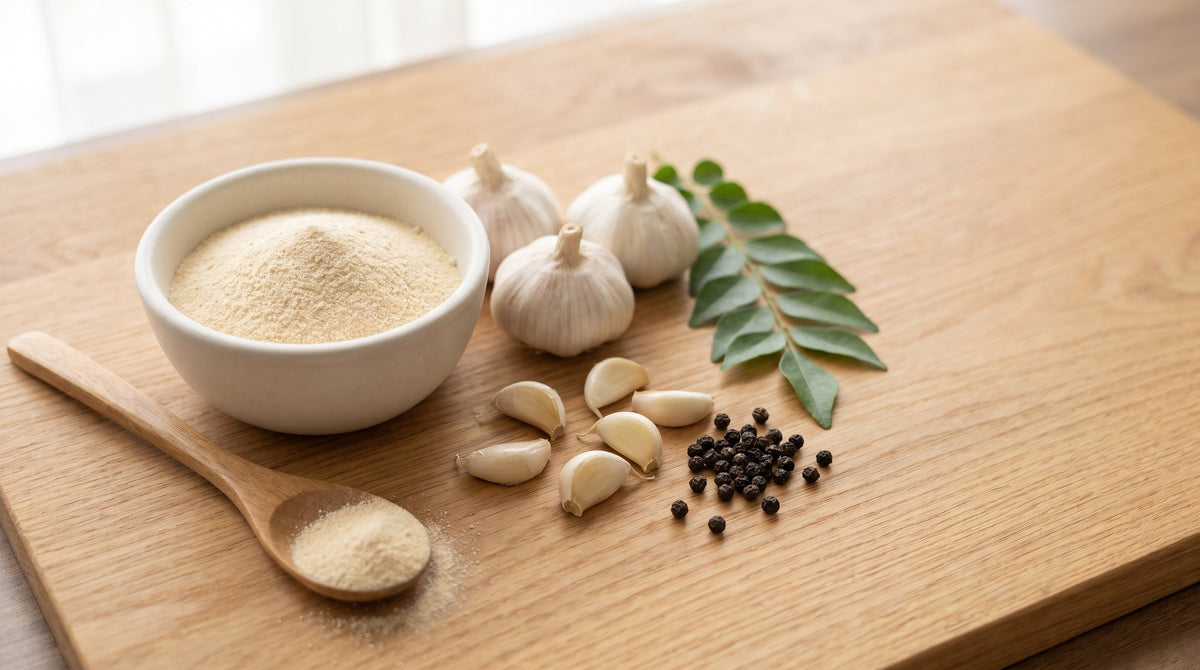
- Garlic powder is fresh garlic with the water taken out, so it is far more concentrated by weight and mixes evenly into a dish.
- The sharp bite of fresh garlic comes from a reaction that starts when a clove is cut or crushed. Drying and cooking change how much of that bite survives.
- As a rough swap, one eighth of a teaspoon of garlic powder stands in for one fresh clove. Start there and adjust to taste.
Most kitchens end up with both: a bulb of fresh garlic in the basket and a jar of powder in the cupboard. Cooks tend to treat them as the same thing in two forms, then wonder why the dhal tastes different on the nights they reach for the jar. They are close relatives, not twins, and a little knowledge of what drying changes tells you which to pick and how much to use.
Know what changes when garlic is dried
A whole clove is mostly water. Dehydrating it removes that water and leaves the dry matter behind, which is why a spoonful of powder carries so much flavour for its size. Ancient Nutra's Garlic Powder is plain ground, dehydrated garlic with nothing added, so what you taste is garlic and only garlic.
The more interesting change is chemical. An intact clove holds a mild, odourless compound called alliin, and a separate enzyme called alliinase kept in different compartments of the cell. Cut or crush the clove and the two meet. The reaction that follows produces allicin, the sharp, pungent compound people associate with raw garlic. A grant abstract from the NIH Office of Dietary Supplements describes this sequence and notes that garlic powders contain alliin and alliinase rather than allicin itself. In plain terms, powder is garlic waiting to be activated.
That activation happens when moisture returns. Stir powder into a wet dish and the enzyme and alliin can mix again, which is why powder tastes rounder and less harsh than a raw clove but still clearly of garlic.
Match the form to the dish
Heat plays a big part in how garlic tastes. Allicin is unstable and the enzyme that makes it is sensitive to cooking, so a clove dropped straight into a hot pan behaves very differently from one that was crushed and left to sit first. A laboratory study in PubMed found that heating garlic straight away blocked an effect seen in raw garlic, and that letting crushed garlic rest for about ten minutes before heating largely avoided that loss. It is a lab finding about garlic chemistry, not a cooking rule, but the kitchen lesson is useful: crush fresh garlic first and give it a few minutes before it meets the heat.
Reach for fresh garlic when
- You want a bright, sharp bite, as in a raw chutney, a sambol or a fresh dressing.
- The garlic is the star: a garlic-fried rice, a tempering where whole slivers go in the oil.
- You have time to peel, and the dish is cooked briefly.
Reach for the powder when
- You are making a long-simmered curry, soup or rasam and want garlic flavour spread evenly through the pot without burnt bits.
- You are building a dry rub, a spice blend or a seasoning for roast vegetables, where fresh garlic would add moisture and burn.
- It is a weeknight and peeling a bulb is the thing standing between you and dinner.
The same idea runs through Ancient Nutra's garlic-pepper rasam and the ginger and garlic broth: garlic that simmers gently does well from powder, and the two forms can share a pot.
Swap powder for cloves with a simple ratio
The most common mistake is using too much powder. It is concentrated, so measure it. A reliable starting point is one eighth of a teaspoon of powder for each fresh clove the recipe asks for. A recipe that calls for four cloves therefore takes half a teaspoon. Taste after ten minutes of simmering and add a pinch more if the pot needs it, because the flavour opens up as the powder hydrates.
- Add it early in wet dishes. Stir powder into the liquid or the onions so it has moisture to bloom in.
- Add it late in dry cooking. In a hot dry pan, powder scorches quickly and turns bitter. Stir it in off the heat or at the end.
- Keep the jar dry. Powder clumps and fades when damp air gets in, so close the lid right after use and store it away from the steam of the stove.
- Do not double up blindly. If a recipe uses both, count them together against the one-eighth teaspoon rule.
A garlic powder with a single ingredient on the label: garlic. No fillers, no anti-caking agents, no added salt or flavour enhancers. Ancient Nutra's Garlic Powder is pure ground, dehydrated garlic, made in Sri Lanka under BRCGS, FSSC 22000 and ISO 22000.
Keep the story in the kitchen
This is an article about cooking, so the amounts here are cooking amounts: a pinch, an eighth of a teaspoon, a spoonful in a pot of curry. Garlic as a concentrated supplement is a different subject. Research on allicin from supplements looks at preparations and doses very unlike the garlic in your dinner, and a published comparison of garlic supplements and garlic foods shows how much the release of allicin varies between them. If you are thinking about garlic supplements, or you take blood-thinning medication or have surgery planned, that is a question for your doctor rather than something to settle from a recipe.
The bottom line
Fresh garlic and garlic powder are the same plant treated differently, and each has its place. Use fresh when you want bite and you will cook it briefly. Use powder when you want even flavour through a long simmer, a dry rub or a quick weeknight meal, and measure it at one eighth of a teaspoon per clove. Keep both in the kitchen and dinner rarely gets stuck on a missing clove.

Garlic Powder 50g
Pure ground, dehydrated garlic. No peeling, full garlic flavour in a spoonful.
Shop Garlic PowderSources and further reading
- Allicin bioavailability of garlic products (grant abstract), NIH Office of Dietary Supplements.
- The influence of heating on the anticancer properties of garlic, PubMed.
- Allicin bioavailability and bioequivalence from garlic supplements and garlic foods, PubMed Central.
Written by the Ancient Nutra Wellness Team. The team researches, sources, and tests every ingredient before it earns a place in an Ancient Nutra blend. Questions? Email info@ancientnutra.com or message Ancient Nutra on Instagram.
Medical disclaimer: This article is for educational purposes only and is not medical advice. Statements have not been evaluated by the FDA. Ancient Nutra products are not intended to diagnose, treat, cure, or prevent any disease. Speak with a qualified healthcare provider before starting any new supplement, especially if you take prescription medication or have a medical condition.