
By the Ancient Nutra Wellness Team · June 7, 2026 · 7 min read
- Of the four herbs here, ashwagandha has the strongest human evidence for sleep: a meta-analysis of five trials found it meaningfully improved sleep.
- Chamomile and reishi help most with the wind-down, calming a racing mind rather than knocking you out.
- Pick one herb, give it three to four weeks, and fix the basics (a dark room, a consistent bedtime, less late caffeine) first.
Most people who sleep badly do not have a herb problem. They have a light, caffeine, and stress problem. Screens stay on too late, the last coffee lands at 4 PM, and the mind keeps running long after the body lies down. Fix those first and you solve most of it.
But for the nights when you have done the basics and still lie there wide awake, a small number of Ayurvedic and traditional herbs have real clinical research behind them. Not all of them. The shelves are full of "sleep blends" with nothing to show. So the team at Ancient Nutra read the trials and kept only the four with evidence worth your money. Here they are, strongest first.
- Ashwagandha (the most studied)
- Chamomile (the gentle classic)
- Reishi (the calm-energy mushroom)
- Triphala (the evening gut reset)
Why does sleep get harder when life gets busy?
Sleep and stress run on the same wiring. Cortisol, your main stress hormone, is supposed to peak in the morning to wake you up and fall through the evening so you can switch off. When life stays busy, that evening fall stalls. You end up tired and wired at the same time: too drained to function, too switched-on to drop off.
This is the gap most sleep herbs work in. They do not sedate you like a sleeping pill. They lower the background stress signal so your body can do what it already knows how to do. That is also why they take a few weeks, not one night, to show their best.
Which 4 Ayurvedic herbs have the strongest sleep evidence?
1. Ashwagandha, the cortisol-calmer with the most clinical backing
If you try only one herb on this list, make it ashwagandha. It is an adaptogen, which means it helps the body hold a steadier stress response instead of spiking and crashing. For sleep, that matters because calmer evening cortisol is what lets you wind down.
The evidence is unusually good for a herb. A 2021 meta-analysis pooled five randomized trials with 400 people and found ashwagandha produced a small but real improvement in overall sleep, with the biggest gains in people who actually had trouble sleeping (Cheah et al., PLoS One, 2021). A separate double-blind trial found root extract improved sleep quality in both healthy adults and people with insomnia, and helped the insomnia group most (Langade et al., Journal of Ethnopharmacology, 2021).
Best for people whose sleep falls apart during stressful stretches, the ones who lie down exhausted but cannot stop the mental noise. Take it in the evening, daily, and give it at least four weeks. Keep any run to eight to twelve weeks, then take a break; longer only under a doctor's oversight.
A standardized root extract, taken in the evening. Most trials used 300 to 600mg per day for 6 to 8 weeks, followed by a break rather than continuing indefinitely.
Ancient Nutra's Ashwagandha Extract is a standardized root extract built for evening use during that run.
2. Chamomile, the gentle classic for winding down
Chamomile is the herb your grandmother reached for, and the research has caught up with her. It works mainly by easing mild anxiety and helping the body settle, so it suits people whose sleep problem is really a wind-down problem.
In a randomized trial, older adults who took chamomile extract twice a day for 28 days slept measurably better than those on a placebo (Adib-Hajbaghery and Mousavi, Complementary Therapies in Medicine, 2017). A later review of randomized trials reached the same broad conclusion: chamomile modestly improves sleep quality and eases anxiety, with a strong safety record (Hieu et al., Phytotherapy Research, 2019).
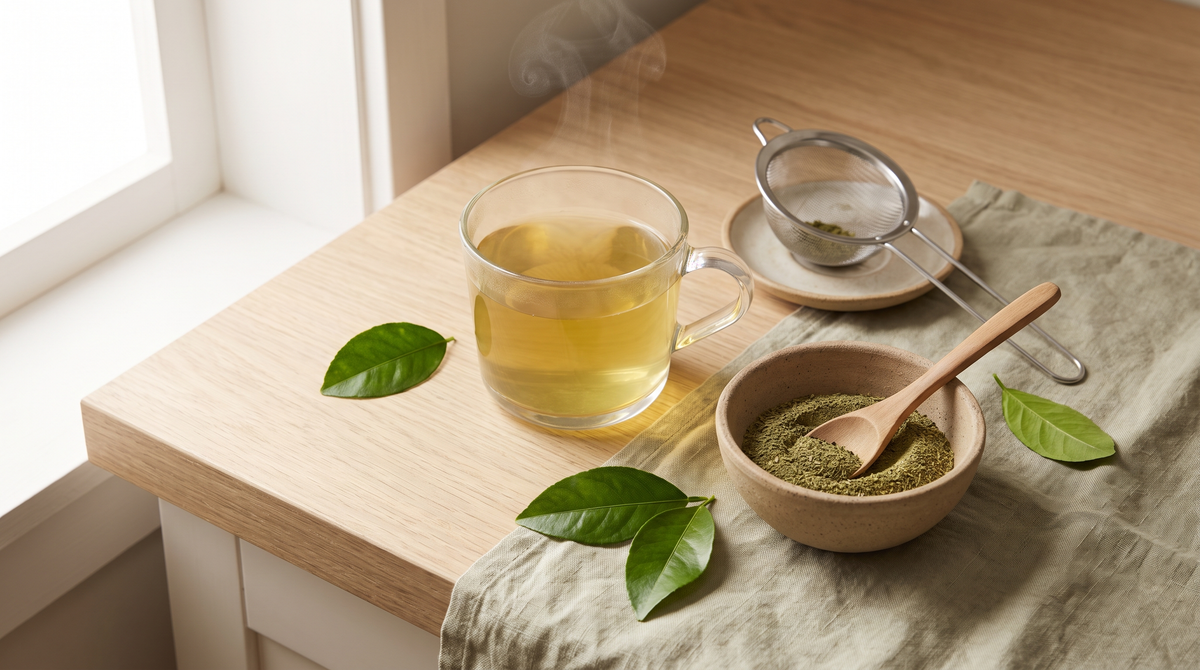
Best for light sleepers and anyone who wants a calming evening ritual rather than a heavy effect. A warm cup an hour before bed does double duty: the herb plus the act of slowing down.
3. Reishi, the calm-energy mushroom for restless minds
Reishi is an old East Asian tonic mushroom, valued for calm rather than stimulation. The human sleep research is still thin, so this one comes with an honest caveat. Most of the direct sleep evidence is from animal studies: reishi extract shortened the time it took rats to fall asleep and lengthened their sleep, acting through the same calming brain pathway that many sleep aids target (Chu et al., Pharmacology Biochemistry and Behavior, 2007).
Best for people who want steady, calm energy through the day and a softer landing at night, especially alongside ashwagandha. Treat it as a supporting player while the human trials catch up, not the headline act.
4. Triphala, the evening gut reset that clears the way for sleep
Triphala is not a sedative, and it would be dishonest to sell it as one. It earns a place here for an indirect reason: a heavy, sluggish gut is a quiet sleep-wrecker, and Triphala is one of the gentlest ways to keep evening digestion moving. This three-fruit Ayurvedic blend supported bowel regularity and gut comfort without the harsh action of a stimulant laxative (Peterson et al., Chinese Medicine, 2018).
Best for people who go to bed feeling full, bloated, or weighed down by dinner. Take it in the evening so it works overnight. See Ancient Nutra's Triphala for a daily-friendly capsule.
When the team first started reading the sleep research, the surprise was how little held up. Dozens of trendy "sleep" ingredients had almost no human data, while a few quiet, traditional herbs had been studied for years. That gap is exactly why this list is four names long, not fourteen.
How should you actually start using these herbs?
Do not start all four at once. You will not know what is working, and you will spend more than you need to. This is a buffet, not a shopping list.
Pick the one that matches your problem. If your mind races during stressful weeks, start with ashwagandha. If you just want a calmer evening, start with chamomile. If your sleep suffers when dinner sits heavy, start with Triphala and fix the gut first. Give whichever you choose three to four weeks before you judge it, because these herbs work by nudging your stress and rest rhythm back into line, not by knocking you out on night one.
And keep the foundation in place. The herbs help most when the room is dark, the last coffee is before mid-afternoon, and your bedtime stays roughly the same on weekends. No capsule out-performs a consistent schedule.
When should you see a doctor instead?
Herbs are for the ordinary kind of poor sleep, the busy-mind, too-much-on kind. They are not a fix for everything. See a doctor if your insomnia lasts more than a few weeks, if you snore loudly and wake up gasping (a sign of possible sleep apnea), or if low mood or anxiety is driving the sleeplessness.
Talk to your doctor first if you are pregnant or breastfeeding, take sedatives, thyroid medication, or immunosuppressants, or have an autoimmune condition, since ashwagandha and other adaptogens can interact. For ashwagandha specifically, the NIH LiverTox database (Withania somnifera, likelihood B) links open-ended use to rare liver injury with onset between two and twelve weeks; stop and seek medical attention for yellowing skin or eyes, itching, dark urine, or unusual tiredness (NIH LiverTox). None of these herbs are meant to replace prescribed treatment.
The bottom line
For sleep that breaks down under stress, ashwagandha has the strongest evidence and is the place to start. Chamomile is the gentle, low-risk choice for a calmer wind-down. Reishi is a promising supporting player while the human research catches up, and Triphala helps the subset of people whose sleep suffers from a heavy gut. Choose one, run it for eight to twelve weeks with a break after, and keep the basics in place. The research does not care which bottle the herb comes in, only that you take a real dose for a bounded, sensible stretch.
Which Ayurvedic herb is best for sleep?
Ashwagandha has the strongest human evidence. A 2021 meta-analysis of five randomized trials found it meaningfully improved overall sleep, with the biggest benefit in people who had trouble sleeping.
How long do sleep herbs take to work?
Most work gradually, not overnight. Give a single herb three to four weeks of daily evening use before deciding whether it helps, because they work by steadying your stress and rest rhythm rather than sedating you.
Can you take ashwagandha and chamomile together?
They are generally combined safely, since they work in different ways. A better strategy is to start with one, see what it does on its own, and add the second only if you need more help.
Is reishi proven to help sleep in humans?
Not yet conclusively. Most direct sleep evidence comes from animal studies, where reishi shortened the time to fall asleep. It is best treated as a calming supporting herb rather than a primary sleep aid.

A standardized root extract for calmer evenings and steadier sleep, built for a bounded daily run.
Shop Ashwagandha ExtractSources
- Cheah KL, et al. Effect of Ashwagandha (Withania somnifera) extract on sleep: A systematic review and meta-analysis. PLoS One, 2021.
- Langade D, et al. Clinical evaluation of the pharmacological impact of ashwagandha root extract on sleep in healthy volunteers and insomnia patients. Journal of Ethnopharmacology, 2021.
- Adib-Hajbaghery M, Mousavi SN. The effects of chamomile extract on sleep quality among elderly people: A clinical trial. Complementary Therapies in Medicine, 2017.
- Hieu TH, et al. Therapeutic efficacy and safety of chamomile for anxiety, insomnia, and sleep quality. Phytotherapy Research, 2019.
- Chu QP, et al. Extract of Ganoderma lucidum potentiates pentobarbital-induced sleep via a GABAergic mechanism. Pharmacology Biochemistry and Behavior, 2007.
- Peterson CT, et al. Triphala: current applications and new perspectives on functional gastrointestinal disorders. Chinese Medicine, 2018.
Written by the Ancient Nutra Wellness Team. The team researches, sources, and tests every ingredient before it earns a place in an Ancient Nutra blend. Questions? Email info@ancientnutra.com or message Ancient Nutra on Instagram.
These statements have not been evaluated by the Food and Drug Administration. This product is not intended to diagnose, treat, cure, or prevent any disease. Always speak with a qualified healthcare provider before starting a new supplement, especially if you are pregnant, breastfeeding, or taking medication.