Ancient Nutra Wellness Team · 25 July 2026 · 6 min read
Beli Mal: the dried Sri Lankan flower for daily gut comfort
Key takeaways
- Beli Mal is the dried flower of the Beli tree (Bael, Aegle marmelos), brewed in Sri Lankan homes as a mild, caffeine-free tea.
- The flower is traditionally taken as a gentle tonic for the stomach after meals, and for its cooling quality in Ayurveda.
- Most of the measured gut research sits with the Beli fruit, not the flower, so treat Beli Mal tea as a daily comfort ritual, not a treatment.
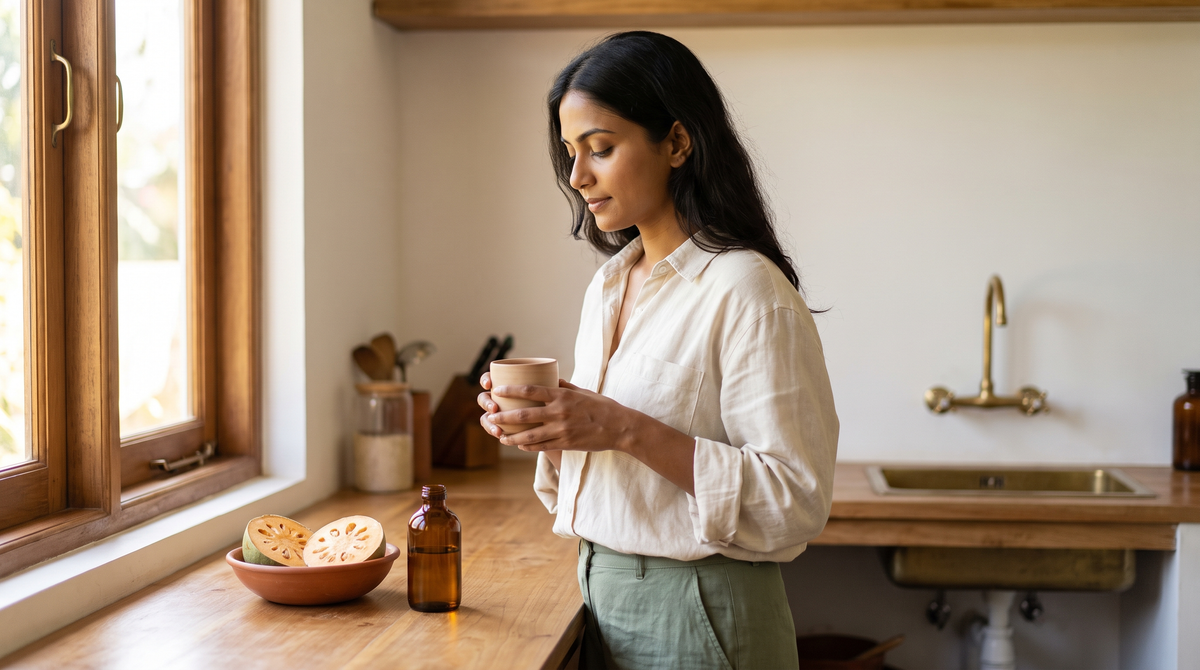
Some cups of tea are about the caffeine. This one is about the calm after a meal. In a lot of Sri Lankan kitchens, a pot of pale golden Beli Mal tea is what comes out when someone has eaten a little too much, or when the afternoon heat sits heavy. It is not a remedy anyone rushes. It is a small daily habit, quietly passed down, and it asks nothing of you except a few minutes and some hot water.
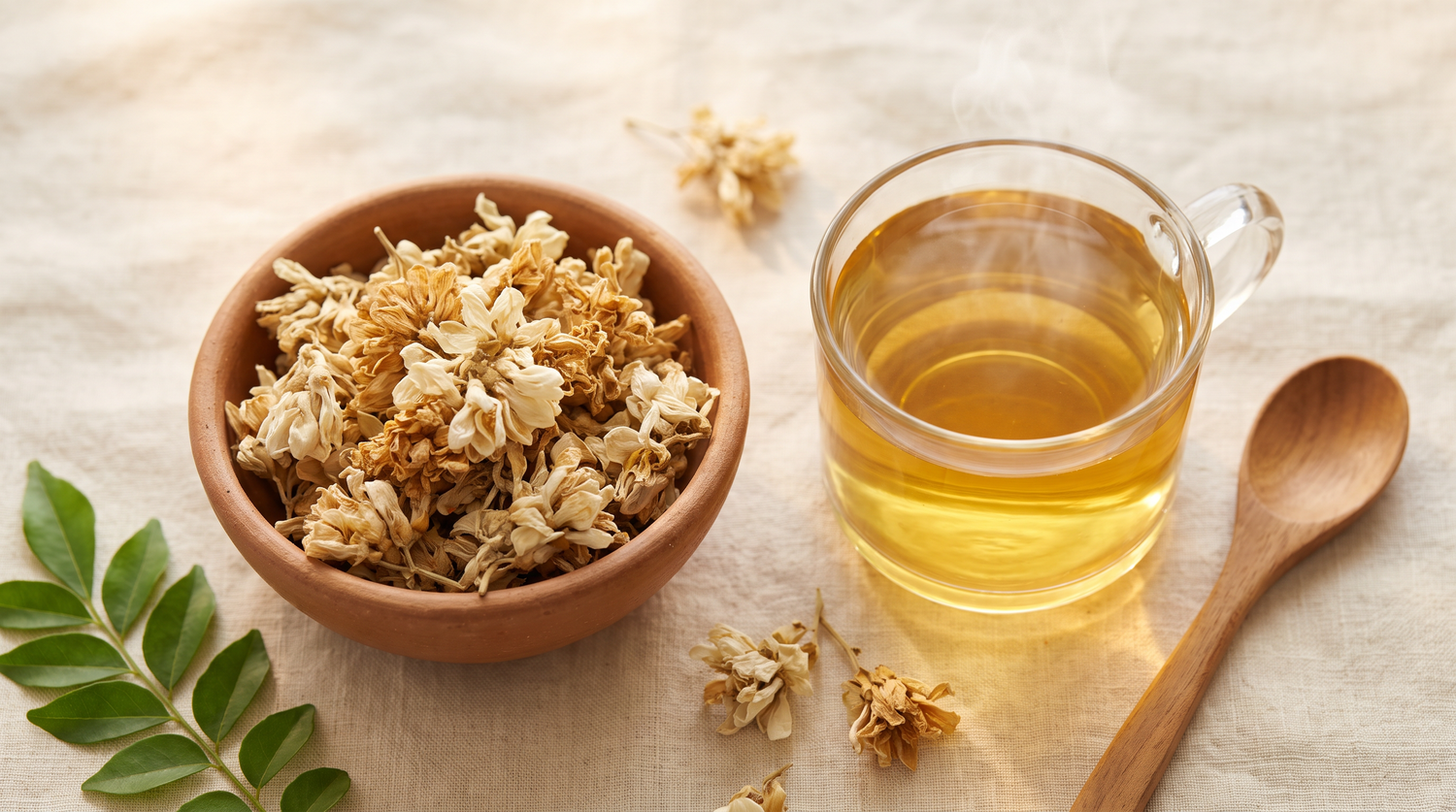
Beli Mal is the dried flower of the Beli tree, also called Bael (Aegle marmelos), a fruit tree that grows across Sri Lanka and India. The fruit is the famous part. The flower is the gentle one. Dried and steeped, it makes a light, faintly sweet, caffeine-free infusion that families have reached for after meals and in the hot months for generations.
What Beli Mal actually does
Start with an honest number. Nearly 40% of adults worldwide live with at least one common digestive complaint, from bloating to irregularity, in the largest global survey of its kind (Rome Foundation Global Study, 2021). Everyday gut discomfort is not rare. It is the norm. That is exactly the space a mild after-meal tea has always lived in.
The Beli plant carries tannins, flavonoids, and a set of plant compounds called coumarins. Tannins are astringent, which is the slightly drying, tightening quality you notice in strong tea, and in traditional practice that astringency is why Beli has long been paired with digestion. The flowers specifically were used as a tonic for the stomach and intestine, and to help the body cool and sweat in the heat.
Here is the part worth being straight about. Most of the laboratory work on Beli has looked at the fruit and leaf, not the flower, and almost all of it is early animal or test-tube research rather than human trials. So the flower earns its place through tradition and gentleness, not through a stack of clinical studies. Read Beli Mal tea as a comfort ritual that has stood the test of time, not as something that fixes a gut condition.
Who Beli Mal is for
Beli Mal tea suits people who want a calm, non-caffeinated cup that fits a daily routine. It is more about consistency than intensity.
- Anyone who likes a warm drink after dinner but does not want caffeine keeping them up.
- People who feel heavy or overfull after larger meals and want a gentle, settling ritual.
- Those who run hot in the Sri Lankan afternoon and grew up with cooling herbal brews.
- Tea drinkers looking to swap one of their daily cups for something caffeine-free and traditional.
And who does not need it? If your digestion is comfortable and your meals sit well, Beli Mal is a nice ritual, not a fix you are missing. Persistent pain, ongoing changes in your gut, or symptoms that worry you are a reason to see a doctor, not to brew more tea. Beli Mal is a small daily comfort, and it is honest to keep it in that lane.
How to brew and take Beli Mal
The traditional method is simple. Add about one teaspoon of dried Beli Mal, roughly one to two grams, to a cup of just-boiled water. Cover and let it steep for five to ten minutes, then strain. The longer you steep, the more astringent and amber it gets, so start light and adjust to taste. A little honey suits it, though many drink it plain.
Timing is the easy part. Most people take Beli Mal tea after a meal, when its settling, after-dinner character makes the most sense, or in the mid-afternoon as a caffeine-free break. One cup a day is a perfectly good habit. Because it has no caffeine, an evening cup will not cost you sleep.
Look for
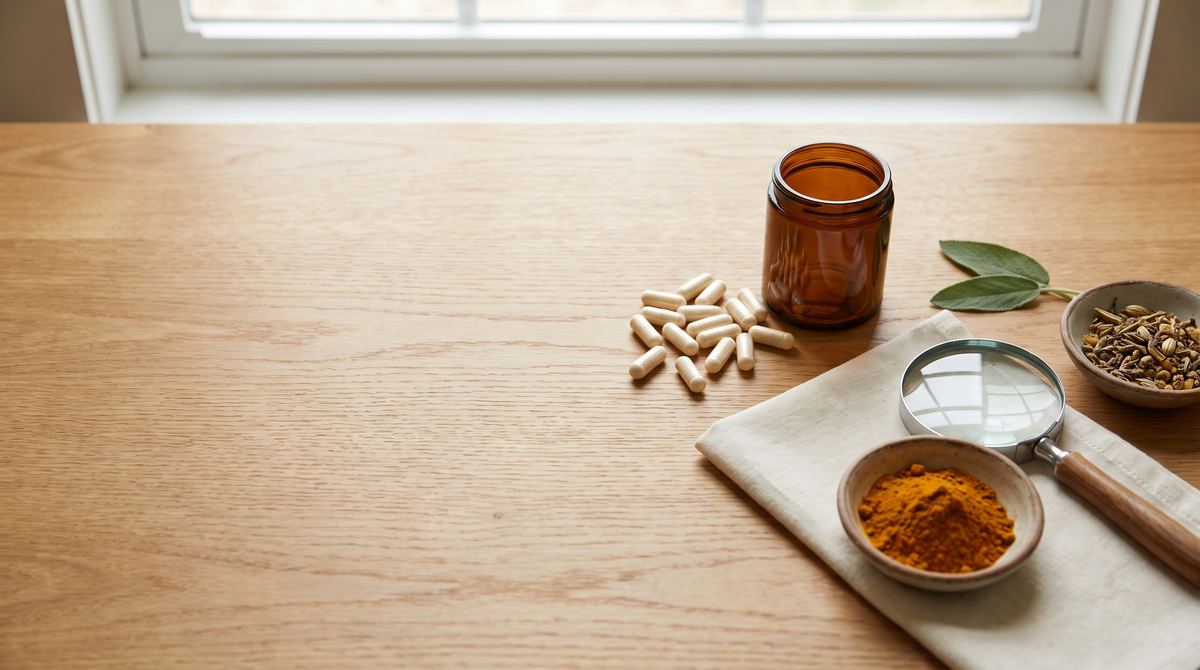
Whole, cleanly dried Beli flowers with a pale cream to tan colour and a light floral smell, not dusty or bleached. If you would rather take Beli as a measured daily capsule than brew a pot, Ancient Nutra's Beli capsules use the Beli fruit, the more traditionally used part of the plant for the gut.
Where Beli Mal comes from
Beli, or Bael, is one of Sri Lanka's most familiar home-garden trees, and it holds a quiet place in day-to-day wellness. In Ayurveda the plant is classed among the cooling, astringent herbs, valued for settling and balancing rather than stimulating. The flower has been dried and brewed for so long that in many households nobody remembers being taught it. It was simply always there, on the shelf beside the tea. That lineage is the point of Beli Mal. It is heritage you can pour into a cup, not a trend.
What to stack Beli Mal with
Beli Mal is a light daily ritual, and it pairs naturally with other gentle gut traditions. If you want a more structured daily routine alongside the tea, two classics fit well.
Ancient Nutra's Triphala is the three-fruit Ayurvedic blend used for centuries as a daily gut tonic, and it complements a cup of Beli Mal without overlapping it. For those who also want to support the gut lining, Ancient Nutra's Aloe Vera Gel Powder is a freeze-dried aloe capsule long tied to gut and skin comfort. None of this is a stack everyone needs. It is a menu, and most people do well starting with one thing and keeping it consistent.
How long Beli Mal takes to work
Set the expectation honestly. Beli Mal is not a fast-acting drink, and it was never meant to be. The value is in the ritual repeated over weeks, the same way a nightly wind-down routine matters more than any single evening. Give it a month of daily cups and judge it on how the habit feels, calm, warm, easy to keep, rather than on a dramatic before and after. Gentle things reward patience.
The bottom line
Beli Mal is a small, traditional pleasure: a caffeine-free flower tea that Sri Lankan families have leaned on for gentle, everyday gut comfort. Keep it as the ritual it is, and see a doctor for anything that worries you. If you would rather take Beli as a measured daily capsule of the fruit, that is what Ancient Nutra's Beli was built for. The flower in the pot and the fruit in the capsule come from the same tree, and the tradition does not care which one you reach for.

Beli - 60 capsules
The Sri Lankan gut classic, made from Beli (Bael) fruit, in a simple daily capsule.
Shop BeliSources and further reading
- Sperber A.D. et al., Worldwide Prevalence and Burden of Functional Gastrointestinal Disorders (Rome Foundation Global Study), Gastroenterology, 2021.
- Sharma et al., Phytochemical and biological review of Aegle marmelos (compounds and traditional use), PMC / NCBI, 2023.
- Network pharmacology of Aegle marmelos in gut inflammation (preclinical), PMC / NCBI, 2025.
Written by the Ancient Nutra Wellness Team. The team researches, sources, and tests every ingredient before it earns a place in an Ancient Nutra blend. Questions? Email info@ancientnutra.com or message Ancient Nutra on Instagram.
Medical disclaimer: This article is for educational purposes only and is not medical advice. Statements have not been evaluated by the FDA. Ancient Nutra products are not intended to diagnose, treat, cure, or prevent any disease. Beli may lower blood sugar, so speak with a qualified healthcare provider before use if you take diabetes medication, are pregnant or breastfeeding, or have a medical condition.