- Ashwagandha moon milk is a six-minute warm bedtime drink that gives the body a clear signal the day is over, ideally sipped 45 to 60 minutes before bed.
- The ashwagandha root is an adaptogen that supports the body in handling stress, with research linking at least eight weeks of use to better sleep quality. It is not a sedative.
- The minimum version is just warm milk, a teaspoon of ground ashwagandha, and a pinch of cinnamon. A consistent nightly cup does more than an occasional one.
NIH LiverTox rates ashwagandha (Withania somnifera) likelihood score B, a likely cause of clinically apparent liver injury. Onset is typically 2 to 12 weeks after starting, with a cholestatic or mixed pattern, often with jaundice and itching. About 23 documented cases have been reported since 2017. Most were self-limited, but rare fatal cases, emergency transplant, and 3 deaths from acute-on-chronic liver failure have been reported in an Indian case series. Serious outcomes are uncommon relative to how widely ashwagandha is used, but they are real, so take the herb in a bounded course, not indefinitely.
Stop and seek medical help if you notice yellowing of the eyes or skin, itching, dark urine, persistent nausea, or unusual tiredness.
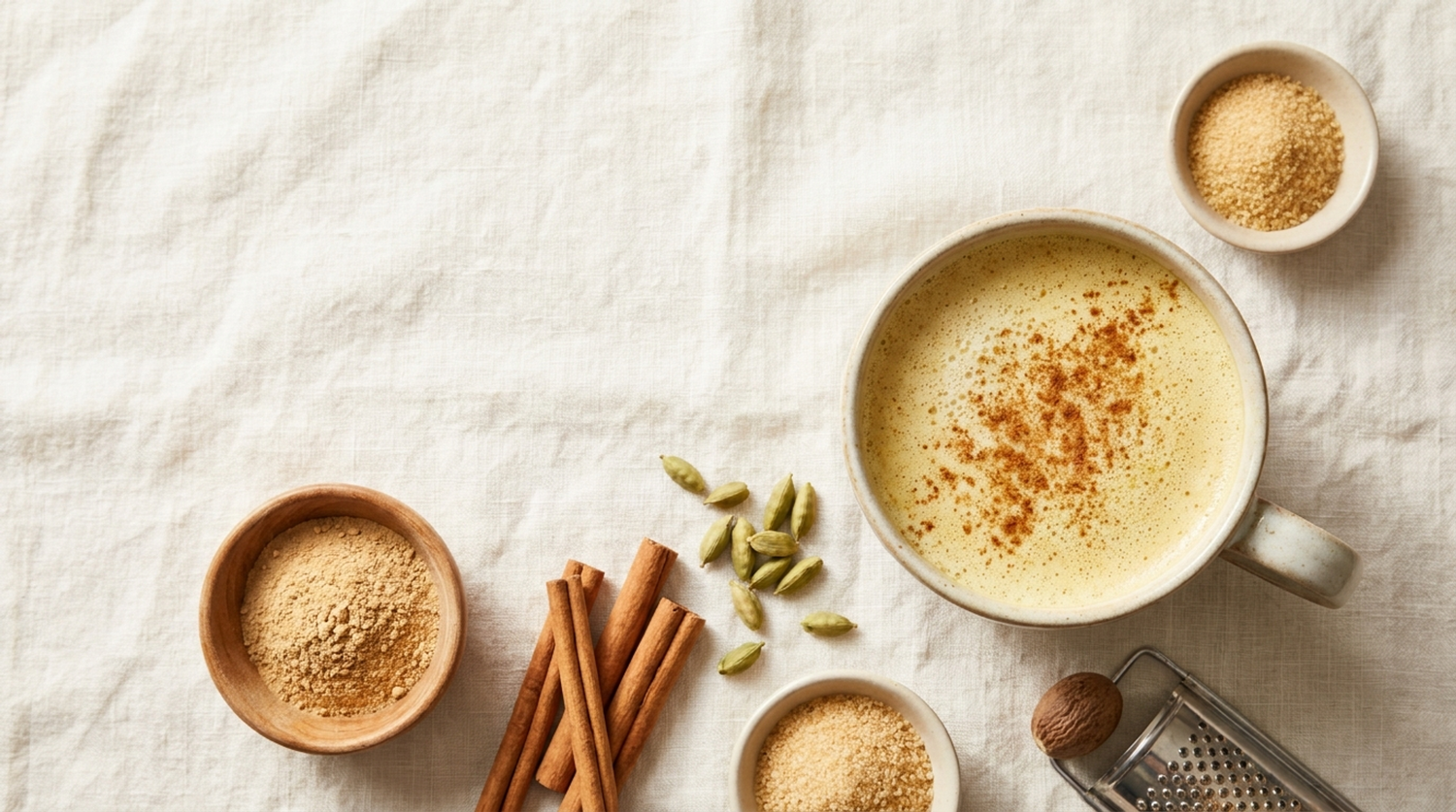
There is a warm milk drink that has closed out the day in South Asian homes for a very long time. It tastes like cinnamon and cardamom and warm cream, and a cup of it 45 minutes before bed does something a screen never will: it tells your body the day is over. The modern name for it is moon milk. The version below takes about six minutes and uses one quiet adaptogen to do the heavy lifting.
What you need
Ingredients (serves 1)
- 1 cup (240 ml) whole milk, or coconut milk made from 1½ tablespoons of Ancient Nutra's Coconut Milk Powder whisked into hot water
- 1 teaspoon Ancient Nutra's Ashwagandha Powder
- ¼ teaspoon Ancient Nutra's Ceylon Cinnamon
- 1 small pinch of ground cardamom
- 1 small pinch of ground nutmeg
- 1 teaspoon Ancient Nutra's Coconut Sugar, or honey, to taste
Six things, most of them already in the spice drawer. No blender, no milk frother, no special equipment. A small pot, a whisk, and a mug you actually like holding.
How to make it
- Warm the milk gently over low heat. Pour the milk into a small pot and bring it to a bare steam, not a boil. You want it hot enough to drink, around 65 to 70°C, which takes about 3 minutes on low.
- Whisk in the ashwagandha and spices. Add the teaspoon of Ashwagandha Powder, the cinnamon, cardamom, and nutmeg. Whisk steadily for 30 seconds until the powder is fully dissolved and the surface looks even, with no dry clumps floating.
- Let it sit on the heat for 2 to 3 minutes. Keep the heat low and let the milk hold at a gentle steam. This softens the earthy edge of the ashwagandha and lets the spices open up. The kitchen should smell faintly of cinnamon by the end.
- Sweeten off the heat. Take the pot off the stove, then stir in the coconut sugar or honey. Adding honey after the heat is off keeps it raw and keeps the flavor cleaner.
- Pour, then wait. Pour into your mug and let it cool from steaming to comfortably warm before the first sip. The waiting is part of the ritual, not a delay in it.
Yields one warm cup. Best sipped slowly, ideally 45 to 60 minutes before bed.
Why this recipe works
Ashwagandha is the root that does the real work here. It is an adaptogen, which is a plain way of saying it helps the body handle stress more steadily. Its best-studied effect is on cortisol, the hormone that should fall in the evening but often stays stubbornly high after a busy day. When cortisol stays up, sleep gets shallow and slow to arrive.
A 2021 systematic review pooled five clinical trials and found that ashwagandha had a small but consistent benefit on sleep quality, with the clearest effect in people who took it for at least eight weeks (PLOS One, 2021). It is not a sedative. It does not knock you out. It just lowers the noise so your own sleep pressure can take over.
The warm milk matters too. The act of drinking something warm and slightly sweet, in dim light, away from a screen, is a signal your nervous system reads clearly. Moon milk has roots in Ayurvedic evening practice, where warm spiced milk was the standard close to the day. The recipe is old. The reason it works is not mysterious.
Variations
Dairy-free. Use the coconut milk version from the ingredients list, or any unsweetened plant milk. Coconut milk gives the closest result to the traditional creamy texture.
Caffeine-free golden version. Add ¼ teaspoon of turmeric and a tiny crack of black pepper for a moon-milk-meets-golden-latte cup. Slightly more savory, still calming.
Make-ahead spice blend. Mix the cinnamon, cardamom, and nutmeg in a small jar at a 4:1:1 ratio. On a tired night, you scoop one teaspoon of the blend instead of measuring three spices.
Look for
Pure ground ashwagandha root, finely milled so it dissolves into warm milk without grit, with no added fillers, flavors, or sugar.
Ancient Nutra's Ashwagandha Powder is single-ingredient ground root for moon milk, lattes, and smoothies, best used in a bounded eight to twelve week course, then a break.
When to drink it
The window is the last hour before bed, after dinner has settled. One cup a night works well for a bounded eight to twelve week course, then take a break, since ashwagandha builds its effect over weeks rather than minutes.
It pairs well with the slow part of the night: a book, a dim lamp, a phone left in another room. It does not pair with a late heavy meal or a 10pm work session, because no warm drink can out-argue those.
An honest note: moon milk supports sleep, it does not cure insomnia. If sleep is genuinely broken, the cup is a small helpful habit on top of the real fixes, which are a consistent bedtime, less evening light, and a calmer wind-down. The drink helps when the foundation is already in place.
The bottom line
Ashwagandha moon milk is a six-minute habit that gives your body a clear, warm signal that the day is done. Warm milk, one teaspoon of ground root, three spices, a little sweetness. The minimum-viable version, on a night when the spice drawer is bare, is just warm milk with a teaspoon of ashwagandha and a pinch of cinnamon, and that still works.
For the easiest path to a bounded course of nightly cups, Ancient Nutra's Ashwagandha Powder is the ready format: finely ground single-ingredient root that dissolves clean into warm milk. The recipe your grandmother made and the one you make tonight are the same drink, doing the same quiet work.

Ashwagandha Powder
Single-ingredient ground root that dissolves clean into warm milk, traditionally used to support a calm evening wind-down.
Shop Ashwagandha PowderWho should check with a doctor first: ashwagandha can interact with thyroid medication (it may raise thyroid hormone levels), sedatives (it can add to drowsiness), and immunosuppressants (it may counteract them by stimulating the immune system). Avoid it in pregnancy. If someone has a thyroid or autoimmune condition, they should check with a doctor before starting.
Sources: NIH LiverTox, Ashwagandha (NBK548536).
This article is for general information and is not medical advice. Speak with a doctor before starting ashwagandha, especially if pregnant, on thyroid medication, sedatives, or immunosuppressants, or if managing a thyroid or autoimmune condition. Last reviewed 6 August 2026.
A team note
When the team at Ancient Nutra first tested ashwagandha batches in 2024, the feedback that came up most was not about energy or focus. It was that people slept more soundly within the first month. That, more than any single study, is why the root earned its place on the shelf.
Sources
Further reading
- Ashwagandha: what the science says (National Center for Complementary and Integrative Health)
- Ashwagandha for sleep (Sleep Foundation)
Written by the Ancient Nutra Wellness Team. The team researches, sources, and tests every ingredient before it earns a place in an Ancient Nutra blend. Questions? Email info@ancientnutra.com or message Ancient Nutra on Instagram.
Medical disclaimer: This article is for educational purposes only and is not medical advice. Statements have not been evaluated by the FDA. Ancient Nutra products are not intended to diagnose, treat, cure, or prevent any disease. Speak with a qualified healthcare provider before starting any new supplement, especially if you take prescription medication or have a medical condition.