By the Ancient Nutra Editorial Team
- The afternoon dip is a real biological pattern. It can show up even when a person has skipped lunch entirely.
- Meal size matters more than the exact plate. In one driving-simulator study, a 922 kcal lunch produced measurably more sleepiness than a 305 kcal one.
- Walking soon after eating blunts the post-meal glucose rise better than walking at some other point in the day.
- A herb is the smallest part of this ritual, not the engine of it. Ancient Nutra's Turmeric & Black Pepper is taken at the label serving, on a bounded course.
Somewhere between one and three in the afternoon, the day goes quiet. Not sleepy exactly, just slower. Screens get read twice. The easy reply sits unanswered for twenty minutes.
Most people treat this as a discipline problem and reach for a third coffee. It is closer to a timing problem. The afternoon has its own rhythm, and a few small choices around lunch decide how steep the dip feels. Here is a ritual that works with that rhythm instead of fighting it.
The ritual, step by step
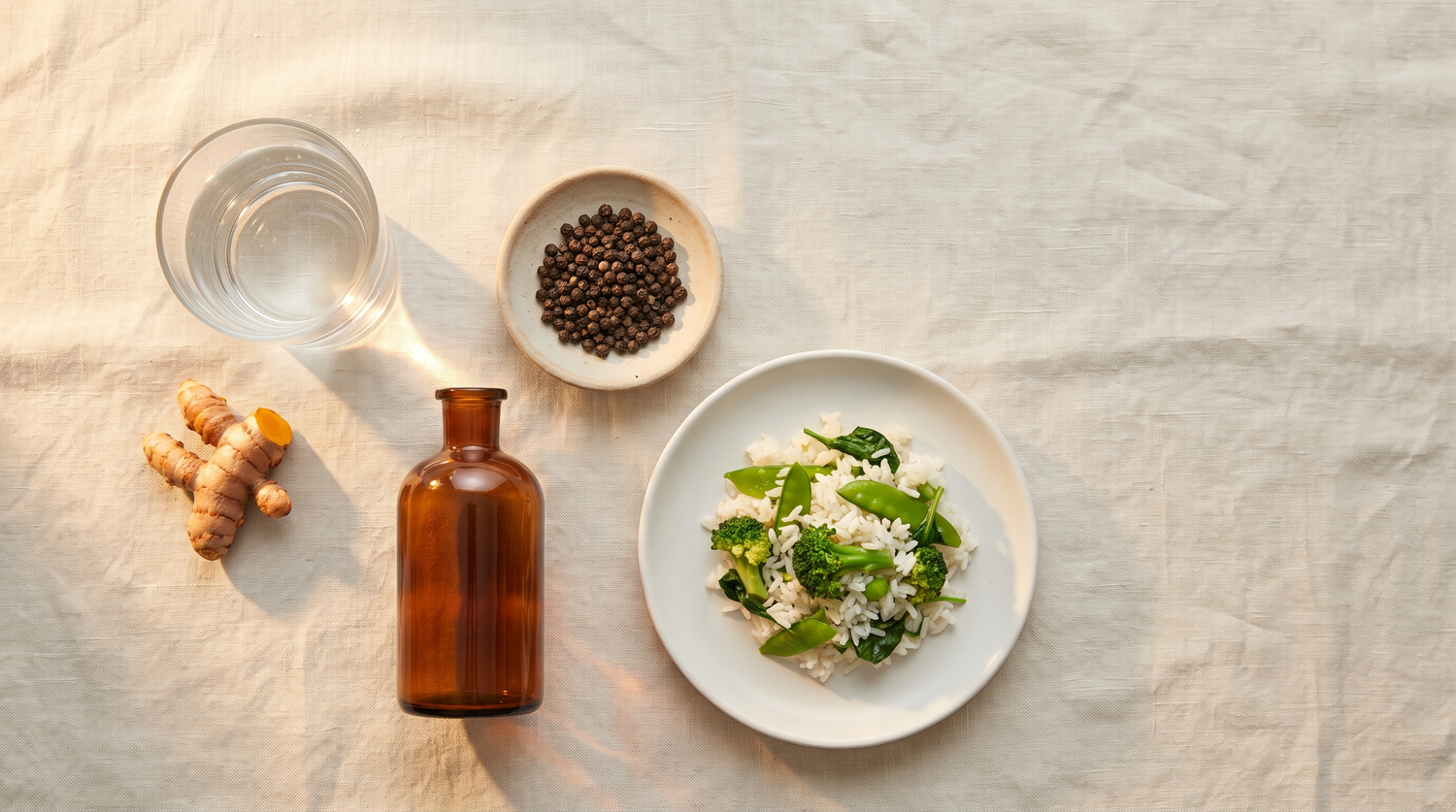
- Eat a lighter lunch than feels normal. Not a sad lunch. Just a smaller one, with some protein and vegetables alongside the rice rather than a mountain of rice on its own. The goal is to finish comfortable rather than full.
- Walk for ten minutes as soon as the plate is down. Around the block, up and down the stairs, to the far shop and back. The timing matters more than the distance, and sooner after eating is better than later.
- Step into daylight and drink a full glass of water. Two minutes outside does more for alertness than the same two minutes at a desk. Pair it with water instead of the third cup of coffee, which tends to arrive too late in the day and follow a person to bed.
- Take the herb with the meal, at the label serving. If turmeric is part of the routine, Ancient Nutra's Turmeric & Black Pepper is taken with food and water at the serving printed on the bottle. Not more because the afternoon was rough. This is the smallest step here, and it is deliberately the smallest.
- Give the flattest hours the easiest work. Move the thinking to the morning. Put filing, tidying, replies and errands into the window after lunch. The dip is far less frustrating when nothing important is scheduled inside it.
Why this works
The afternoon dip is not something a person imagines after a heavy meal. In a review of the phenomenon, sleep researcher Timothy Monk describes it as a real pattern that can occur even when the individual has had no lunch and cannot tell the time of day. It appears to sit in human biology, in the same clock that governs sleep. Lunch does not create the dip. Lunch shapes it.
Size is the part of lunch with the clearest evidence behind it. In a small counterbalanced study of twelve sleep-restricted drivers, a 922 kcal lunch produced significantly more sleepiness-related lane drifting during an afternoon drive than a 305 kcal one. That study was young men on five hours of sleep, so the effect was amplified, and it cannot separate fat from carbohydrate. Read it as a case for a smaller plate, not for cutting out rice.
The walk earns its place for a different reason. In a randomised crossover trial of 41 adults with type 2 diabetes, walking ten minutes after each main meal lowered the post-meal glucose rise about 12 percent more than the same total walking done at one other time of day. Those participants were managing diabetes rather than an office afternoon, so the number itself does not transfer. The direction does, and a later meta-analysis found the same thing: exercise after a meal beats the same exercise before it. For more on how meals and blood sugar interact through the day, Ancient Nutra's guide to running a 21-day blood sugar routine covers the longer arc.
When to do it
The whole sequence takes about fifteen minutes and belongs in the half hour after lunch. Walk first, daylight and water second. The window is roughly one to three in the afternoon for most people who wake early, later for genuine night owls.
Daily is fine for the habits. On a day with back-to-back meetings, the ten-minute walk alone carries most of the value, so protect that one and let the rest go.
If turmeric is going to be a daily habit, a few things are worth checking on the label before anything else.
- A stated serving, and a plan to stay at it rather than doubling up on a bad day.
- A start date written down somewhere, so the course has an end as well as a beginning.
- A doctor's opinion first for anyone pregnant, breastfeeding, on medication, living with a liver or gallbladder condition, or heading into surgery.
What if there is no Turmeric & Black Pepper in the house
Then the ritual still works. Three of the five steps cost nothing and need no product at all, which is the point of ordering them that way.
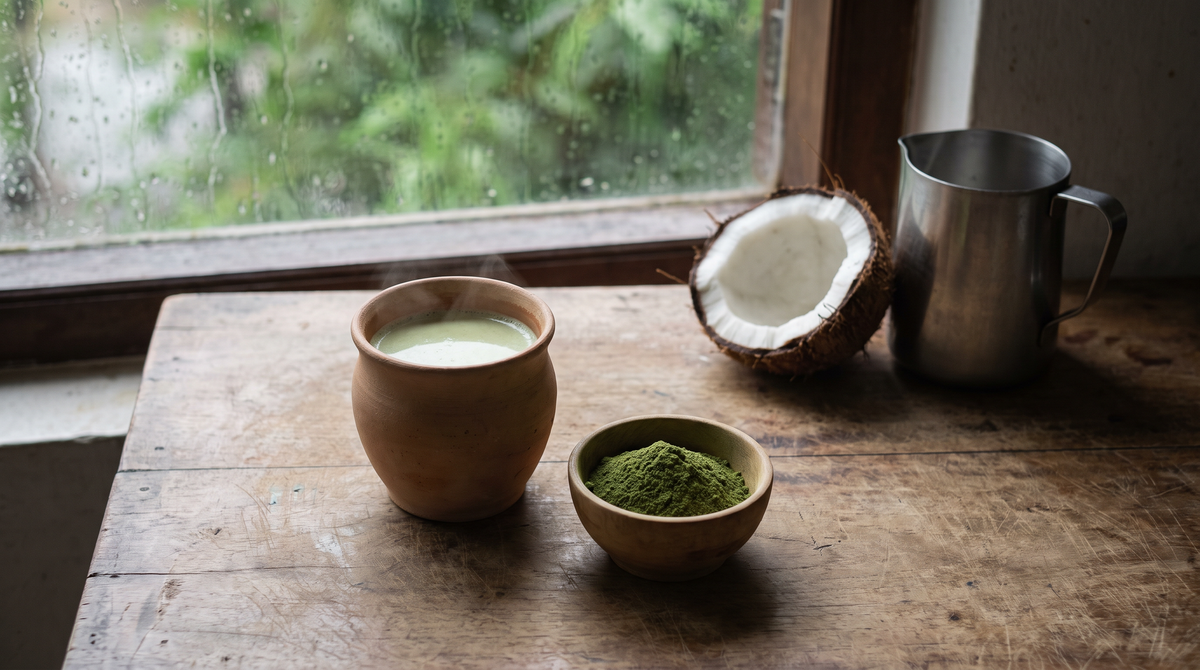
For a slower version, a warm turmeric drink does the same job of marking the end of the meal. Ancient Nutra's golden turmeric latte is the one to make, using Ancient Nutra's Turmeric Latte Mix or plain turmeric from the kitchen. If the real problem turns out to be the night before rather than the afternoon itself, the fix sits at bedtime instead, and Ancient Nutra's ashwagandha moon milk is the evening equivalent of this ritual.
Turmeric is listed by the NIH LiverTox database as a documented cause of liver injury in rare cases, and concentrated supplement doses are the form associated with those reports rather than turmeric used in cooking. This is uncommon, and it is worth knowing about anyway.
Stop and speak to a doctor if any of these appear: yellowing of the skin or eyes, dark urine, persistent nausea, or unusual tiredness.
Keep any course bounded rather than open-ended. Ancient Nutra's own guidance reads: "It is recommended to take a 1-week break after every 8 to 12 weeks of continuous use."
A production manager in Ratnapura described his old afternoons as a fight he lost daily at about half past one. He did not change his lunch much. He started walking to the gate and back before opening his laptop, and moved the week's reporting to before eleven. The dip did not disappear. It stopped costing him the good hours, which he said was the part he actually wanted back.
The bottom line
The afternoon slump is built into the day rather than into a person's character. It responds to a lighter plate, ten minutes of walking, daylight and water, and an honest schedule that stops asking for hard thinking at two in the afternoon.
A herb sits at the edge of that picture, taken at the label serving on a bounded course, doing a small job. Anyone building the habit around Ancient Nutra's Turmeric & Black Pepper is welcome to. The walk is still the part that does the heavy lifting.

Certified organic turmeric paired with black pepper, in a once-daily capsule taken at the label serving.
ShopSources
- Monk TH. The post-lunch dip in performance. Clinics in Sports Medicine. 2005;24(2):e15-23. PMID 15892914
- Reyner LA, Wells SJ, Mortlock V, Horne JA. "Post-lunch" sleepiness during prolonged, monotonous driving, effects of meal size. Physiology & Behavior. 2012;105(4):1088-1091. PMID 22155490
- Reynolds AN, Mann JI, Williams S, Venn BJ. Advice to walk after meals is more effective for lowering postprandial glycaemia in type 2 diabetes mellitus than advice that does not specify timing. Diabetologia. 2016;59(12):2572-2578. PMID 27747394
- Engeroff T, Groneberg DA, Wilke J. Acute postprandial glycemic response to exercise before and after meal ingestion. Sports Medicine. 2023;53(4):849-869. PMID 36715875
Written by the Ancient Nutra Wellness Team. The team researches, sources, and tests every ingredient before it earns a place in an Ancient Nutra blend. Questions? Email info@ancientnutra.com or message Ancient Nutra on Instagram.
This article is for general information and is not medical advice. Speak to a qualified healthcare professional before starting any supplement, particularly when pregnant, breastfeeding, taking medication, or managing a health condition.