Written by the Ancient Nutra Wellness Team · Published June 1, 2026 · 6 min read
- Thebu, also called canereed, is a Sri Lankan garden leaf traditionally eaten to support healthy blood sugar already in the normal range.
- Lab work shows the leaf slows the breakdown of carbohydrates into glucose and supports the body's own insulin response.
- It is a daily, foundation-level habit, not a replacement for food, movement, sleep, or prescribed medication.
Walk through an older Sri Lankan home garden and you will probably pass it without noticing. A leafy plant with a spiral stem, growing near the well or the back fence. That is Thebu. For generations, people picked a leaf, ate it before breakfast, and went on with the day. Modern lab work is only now catching up to the habit.
Blood sugar is not a rare worry here. A 2023 review that pooled 15 Sri Lankan studies put adult diabetes at roughly 12% and pre-diabetes at about 16%, with the most recent decade running higher still (BMJ Open, 2023). That is one reason a humble garden leaf keeps coming up in kitchen conversations about sugar.
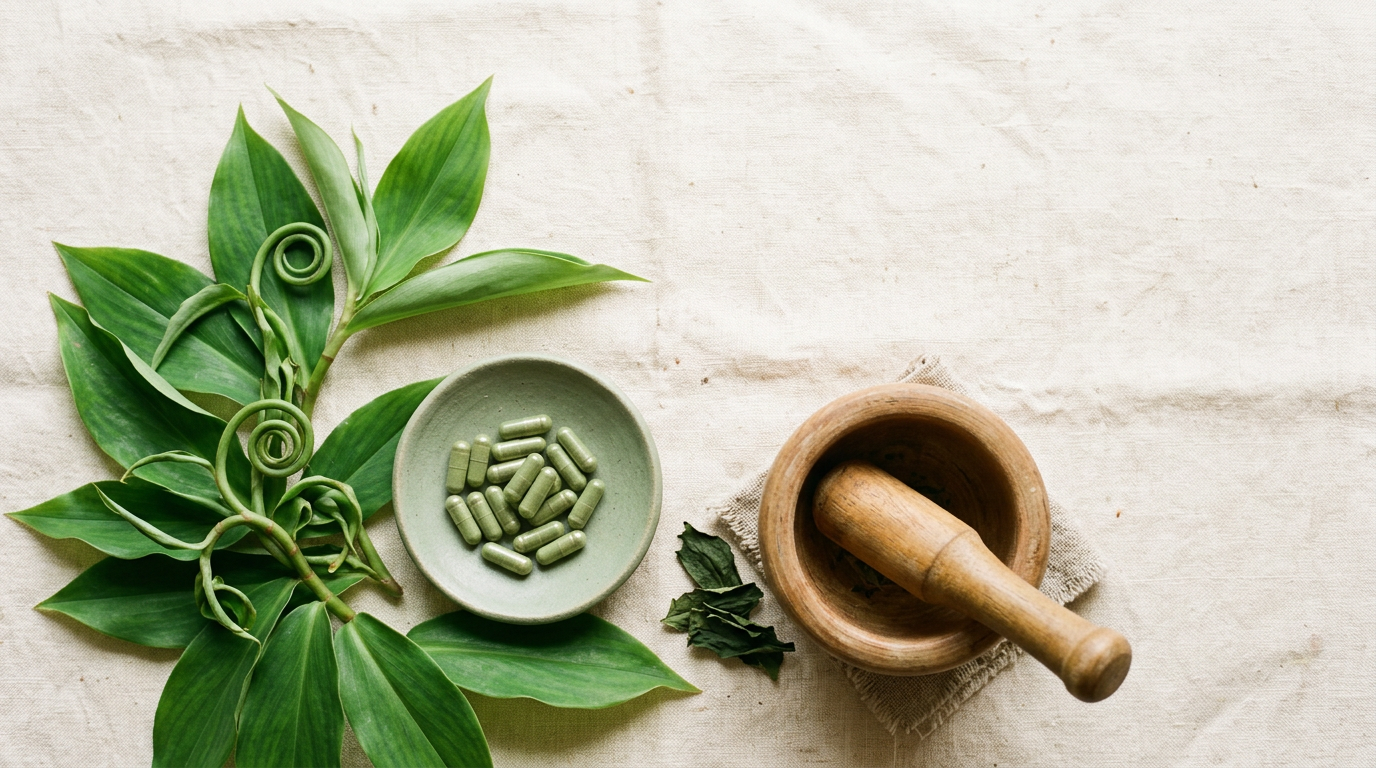
Thebu, also called canereed or Costus speciosus, is a leafy plant that grows easily across Sri Lanka and much of South and Southeast Asia. The leaves and rhizome have long been eaten fresh or taken as a tonic for steady blood sugar. In some regions the plant is nicknamed the insulin plant, a name that says more about its reputation than its chemistry. The reputation, though, is old and widespread.
What Thebu actually does
Most of the day's blood sugar spikes come from one place: carbohydrates in a meal being broken down into glucose, fast. Slow that breakdown and the spike flattens.
That is where Thebu's leaf seems to act. In lab testing, extracts of the leaf blocked alpha-glucosidase, the gut enzyme that snips complex carbs into absorbable sugar, and also slowed glycation, the process where excess sugar sticks to proteins in the body (Journal of Food and Drug Analysis, 2016). Less enzyme activity means sugar trickles into the blood instead of flooding it.
There is a second angle. In animal studies, Costus speciosus extract helped the body use the insulin it already makes, supporting glucose uptake into tissue rather than leaving it to circulate (Journal of Diabetes Research, 2015). The two effects point the same direction: smoother sugar handling around meals. It is the same logic behind why people reach for Ceylon cinnamon with a carb-heavy plate.
Who should consider Thebu
Thebu is a foundation-level habit, not a rescue. It fits some people better than others.
- People watching their blood sugar. If meals leave you sluggish an hour later, a leaf that softens the carb spike is a sensible daily addition.
- People with a family history. In a country where pre-diabetes is common, building a steadying habit early beats reacting late.
- People who already eat the leaf. Many Sri Lankan households keep the morning Thebu habit. A measured capsule keeps it going through the year, even when the garden plant is out of reach.
- People stacking the basics. Those who already walk after meals and watch refined carbs, and want one more lever.
Who does not need it: anyone whose blood sugar is already steady and whose diet, movement, and sleep are in good shape. Thebu will not undo a daily habit of sweet tea and white rice with nothing else changed. The foundation comes first, every time.
How to actually take Thebu
The traditional habit is one leaf in the morning. In capsule form, the equivalent is simple: one capsule a day, taken before a meal, so the leaf is working while the carbs arrive.
One honest caution. If you already take medication for blood sugar, talk to your doctor before starting, because Thebu may add to its effect and push your numbers lower than intended. That is a conversation worth having, not a reason to avoid it. In the first four weeks, do not expect drama. The point is a quieter post-meal slump and steadier energy, not a number that drops overnight.
Where Thebu comes from
Thebu is one of those plants that never made it into a marketing campaign because it never needed to. It grew in the garden. Grandmothers in Sri Lankan villages would pluck a leaf at dawn and hand it to whoever in the family was running sweet, long before anyone owned a glucose meter. The plant earned trust the slow way, one household at a time. That is the honest order here: the tradition came first, and the lab is confirming the pieces of it now.
What to stack with Thebu
Thebu rarely travels alone in a Sri Lankan blood-sugar routine. Two companions show up again and again.
Karavila, the bitter melon, works on a similar idea from a different door, supporting glucose uptake into cells. Ceylon cinnamon adds a gentle hand on the after-meal rise and brings daily warmth to the routine. A reasonable stack is Thebu before a meal, cinnamon with a carb-heavy plate, and karavila for broader daily support. This stack is for people actively managing blood sugar, not a default everyone needs. If you are on medication, keep your doctor in the loop on all three.
How long Thebu takes to work
Give it at least 8 to 12 weeks before you judge it. What tends to shift first is the feel of a meal: less of the heavy, foggy slump an hour after rice. Steadier energy through the afternoon usually follows. Anything you would measure with a meter or a lab test moves slower and depends far more on the food on your plate than on any capsule.
The patience point is real. Ninety days is a fair trial for any daily herb. Anyone promising a faster result is selling the excitement, not the plant.
For a measured, year-round way to keep the morning leaf habit, Ancient Nutra's Thebu (Canereed) puts one Sri Lankan garden tradition into a clean daily capsule. Or grow the plant and eat the leaf, the way it has always been done. The science does not care which way it reaches you, only that it does.

The Sri Lankan sugar leaf in a measured daily dose, for healthy blood sugar already in the normal range.
Shop ThebuSources
- Karunthanthri NN, et al. Prevalence of type 2 diabetes and pre-diabetes in Sri Lanka: a systematic review and meta-analysis. BMJ Open, 2023.
- Eliza J, et al. Alpha-glucosidase and glycation inhibitory effects of Costus speciosus leaves. Journal of Food and Drug Analysis, 2016.
- Bavarva JH, Narasimhacharya AVRL. Molecular mechanisms of anti-hyperglycemic effects of Costus speciosus extract in diabetic rats. Journal of Diabetes Research, 2015.
- Further reading: International Diabetes Federation, Sri Lanka country profile.
Medical disclaimer: This article is for educational purposes only and is not medical advice. Statements have not been evaluated by the FDA. Ancient Nutra products are not intended to diagnose, treat, cure, or prevent any disease. Speak with a qualified healthcare provider before starting any new supplement, especially if you take prescription medication or have a medical condition.
Written by the Ancient Nutra Wellness Team. The team researches, sources, and tests every ingredient before it earns a place in an Ancient Nutra blend. Questions? Email info@ancientnutra.com or message Ancient Nutra on Instagram.