Ancient Nutra Wellness Team · 17 October 2026 · 8 min read
By the Ancient Nutra Editorial Team
- Ceylon cinnamon, ginger, turmeric, fenugreek and coriander are the five spices that do most of the work in a Sri Lankan kitchen, and each one earns its place for flavour, colour or aroma first.
- Each also has a traditional-use record. That record shows how a spice was used at home, not that it treats anything.
- Food amounts and concentrated supplements are different exposures, and the cautions that matter (coumarin in cassia, pregnancy and fenugreek, turmeric capsules and the liver) belong to the second group.
Open a Sri Lankan spice drawer and you will find the same few jars again and again. They are not there as medicine. They are there because rice and curry, milk rice and a hot cup of tea taste flat without them. This guide takes five of those jars in turn and says what each is actually used for, what a careful reading of the evidence allows, and where the limits are.
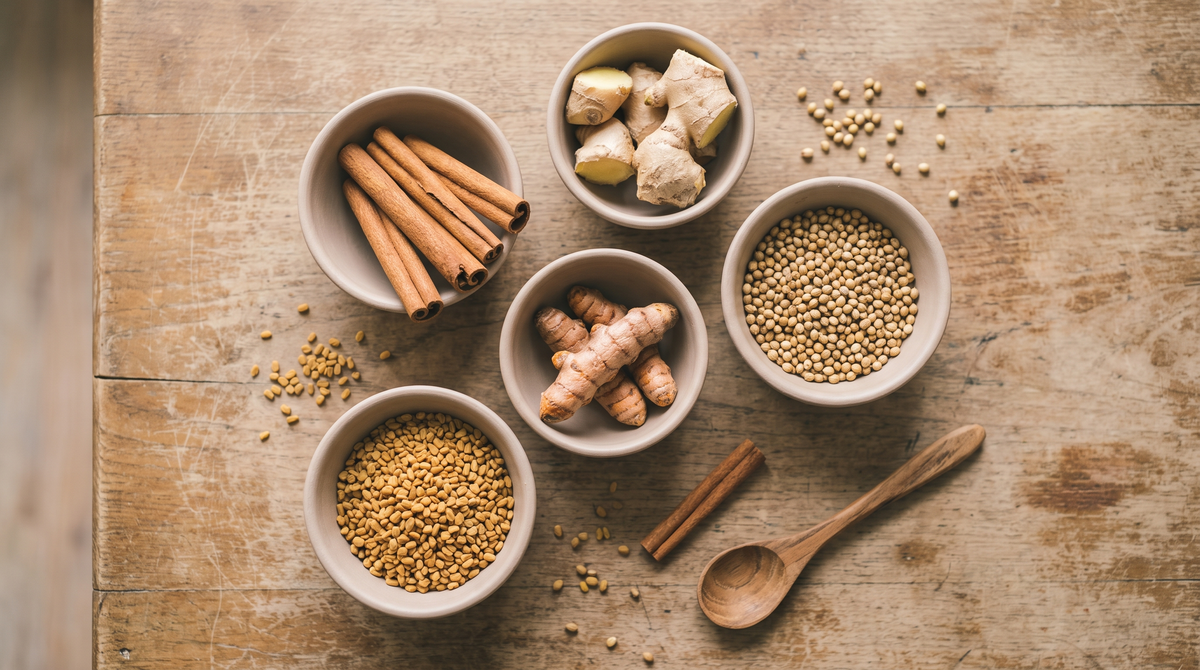
The picks are the spices that turn up in almost every kitchen: the local one (cinnamon), the everyday rhizomes (ginger and turmeric), and the two seeds that sit at the base of a curry powder (fenugreek and coriander). They are ordered by how often they reach the pot, not by any ranking of benefit.
1. Ceylon cinnamon (kurundu): the warm one
Ceylon cinnamon is the inner bark of Cinnamomum verum, rolled into thin, layered quills. In the kitchen it goes into milk rice, rich meat curries, desserts and a pot of tea. It brings a gentle, sweet warmth rather than the sharp bite of the cassia sold in many supermarkets.
That difference matters for more than taste. Cassia carries far more coumarin, a natural compound with a daily intake limit. Germany's Federal Institute for Risk Assessment (BfR) says a 60 kg adult reaches that limit at about 2 g of average cassia a day, and advises people who eat a lot of cinnamon as a spice to choose low-coumarin Ceylon cinnamon.
What about health claims? Cinnamon has been studied for blood sugar, with mixed and modest results. That story deserves its own careful read, which is why the team wrote Ceylon cinnamon and blood sugar: what the trials actually show. For a spice in food, flavour is the honest answer.
2. Ginger (inguru): the fresh, sharp one
Ginger is the rhizome of Zingiber officinale, native to Southeast Asia and now grown across the tropics, Sri Lanka included. Fresh, it is crushed into curry bases and pounded into pastes. Dried, it goes into plain tea and warm evening drinks. Its heat is clean and quick.
Ginger has one of the better-studied traditional uses on this list. The US National Center for Complementary and Integrative Health (NCCIH) says research shows ginger may help with nausea and vomiting in pregnancy, while most studies of ginger for motion sickness have not shown it to help. It also lists abdominal discomfort, heartburn and diarrhea as possible side effects when taken by mouth, and asks anyone on medicine to talk to a provider first. Ginger in a curry is food. Concentrated amounts are a different matter.
For a simple warm drink that uses it, see the evening ginger and cinnamon tonic.
3. Turmeric (kaha): the colour
Turmeric is the rhizome of Curcuma longa, dried and ground. In a Sri Lankan kitchen its first job is colour: yellow rice, dhal, and the golden base of countless curries. The flavour is earthy and slightly bitter, so a little goes a long way.
It is worth being plain about the distinction here. Turmeric as a cooking spice is a food. NCCIH describes the rhizome as long used for culinary purposes, and separately warns that highly bioavailable curcumin formulations may harm the liver, with liver damage reported in some people. The NIH LiverTox monograph on turmeric records the same concern for supplements. So the honest line is simple: season freely in the pot, and treat capsules as a different product with their own rules.
4. Fenugreek (uluhal): the bitter one
Fenugreek seeds come from Trigonella foenum-graecum. They are small, hard and golden, and they are always used with care. A pinch in hot oil at the start of a curry gives a savoury, slightly bitter, maple-like note. Too much turns a dish sour and bitter fast. It is not a Sri Lankan crop (India dominates commercial production), but it is a long-standing part of the island's cooking.
Fenugreek is where the food-versus-supplement line is clearest. NCCIH says it is not safe in pregnancy in amounts greater than those found in food, and that large doses may cause a harmful drop in blood sugar. It also notes that many of the studies suggesting it may lower blood sugar in type 2 diabetes were not of high quality. A pinch in the pot sits inside the food range. A capsule is a different thing, and anyone pregnant or on diabetes medicine should speak to a doctor before using one.
5. Coriander seed (kottamalli): the quiet base
Coriander seed, from Coriandrum sativum, is the roasted backbone of Sri Lankan curry powder. It is mild, citrusy and slightly sweet, and it ties the other spices together without shouting. It is also the base of kottamalli, the hot coriander brew many families make when they feel under the weather.
Here the evidence is thin, and it is better to say so. No human trials of coriander seed for any therapeutic purpose turned up in the team's search, and it is not a Sri Lankan crop (it comes from the Mediterranean and south-west Asia, and India is the largest producer). The kottamalli brew is a genuine tradition and a comforting drink. It is not a proven remedy.
Whole or freshly ground spices from a sealed pack, and Ceylon cinnamon (Cinnamomum verum) rather than a bag that just says "cinnamon". Ancient Nutra's Cinnamon Powder, Ginger Powder and Organic Turmeric Powder are the culinary versions, sold alongside the rest of the Spices and Seasonings range.
Which of these spices needs the most care?
For cooking, none of them. The cautions on this page all concern concentrated products, not a spoonful in a curry. Within that, three are worth remembering: cassia in place of Ceylon cinnamon if you use cinnamon heavily, fenugreek above food amounts if you are pregnant, and turmeric or curcumin capsules, which have a recorded liver concern. NIH LiverTox also lists Ceylon cinnamon as a possible rare cause of liver injury, with at least a few published cases, so concentrated cinnamon capsules are not the same exposure as the quill in your tea.
How to use this list in your own kitchen
Start with the spice you already like and use it more deliberately. Toast whole seeds briefly before grinding. Add ground spices to the pot with fat, so the flavour opens up. Keep jars sealed and away from light and steam, and replace them when the aroma fades. If you are building a spice drawer from scratch, cinnamon, turmeric and coriander cover the most ground.
Frequently asked questions
Is Ceylon cinnamon different from regular cinnamon?
Yes. Ceylon cinnamon is Cinnamomum verum, with very little coumarin. Most supermarket cinnamon is cassia, which carries much more, and BfR advises heavy cinnamon users to prefer Ceylon.
Is it fine to cook with these spices every day?
In normal food amounts, spices are part of everyday cooking in Sri Lanka. The cautions in this article apply to concentrated supplements and to specific situations such as pregnancy.
Is fenugreek safe in pregnancy?
NCCIH says fenugreek is not safe in pregnancy in amounts greater than those found in food. A pinch in a curry is food, but pregnant readers should not use capsules and should ask their doctor.
Does turmeric in food carry the same liver warning as capsules?
The liver warnings from NCCIH and LiverTox concern concentrated curcumin products. Turmeric as a cooking spice is a food, though anyone with a liver condition should still ask their provider.
The bottom line
These five spices are worth knowing for what they do in the pot: warmth, sharpness, colour, depth and balance. The traditional-use record is real heritage. It is not a prescription, and where research exists (ginger and pregnancy nausea, for example) it is modest and specific. Cook with them, enjoy them, and keep supplements as a separate decision.
Safety
If you use a turmeric-containing supplement, including the Turmeric with Black Pepper capsules in the system below, know that liver injury has been reported with concentrated turmeric products. Stop and speak to a healthcare provider if you notice yellowing of the skin or eyes, dark urine, persistent nausea or unusual tiredness. The same watch-list applies to the Moringa and Spirulina in that system. It is recommended to take a 1-week break after every 8 to 12 weeks of continuous use. Speak to a provider first if you are pregnant, breastfeeding, take prescription medicine or have a medical condition.

Daily Wellness System
A 60-day bundle of Moringa, Turmeric with Black Pepper and Spirulina capsules, plus 3 bonus Shield Shots, for a simple daily routine.
Shop Daily Wellness SystemSources and further reading
- Cassia cinnamon with high coumarin contents to be consumed in moderation, German Federal Institute for Risk Assessment (BfR).
- Ginger, National Center for Complementary and Integrative Health (NIH).
- Fenugreek, National Center for Complementary and Integrative Health (NIH).
- Turmeric, National Center for Complementary and Integrative Health (NIH).
- Turmeric, LiverTox, NIH.
- Cinnamon, LiverTox, NIH.
Written by the Ancient Nutra Wellness Team. The team researches, sources, and tests every ingredient before it earns a place in an Ancient Nutra blend. Questions? Email info@ancientnutra.com or message Ancient Nutra on Instagram.
Medical disclaimer: This article is for educational purposes only and is not medical advice. Statements have not been evaluated by the FDA. Ancient Nutra products are not intended to diagnose, treat, cure, or prevent any disease. Speak with a qualified healthcare provider before starting any new supplement, especially if you take prescription medication or have a medical condition.