Ancient Nutra Wellness Team · 4 October 2026 · 8 min read
Ceylon cinnamon and blood sugar: what the trials actually show
By the Ancient Nutra Editorial Team
- True Ceylon cinnamon (Cinnamomum verum) contains only traces of coumarin. Cassia, the supermarket default, can contain substantial amounts, and that is the real reason the two are not interchangeable at supplement doses.
- Pooled trials, mostly on cassia, show a modest drop in fasting glucose and no significant change in HbA1c. The one 12-week trial on Ceylon cinnamon extract found fasting glucose fell about 8.6 mg/dL more than placebo.
- Ceylon cinnamon is one of three herbs in Ancient Nutra's Sugar Balance System, taken with the largest carbohydrate meal, inside a bounded course rather than open-ended daily use.
Most of the cinnamon research you have read about was not done on Ceylon cinnamon. The majority of the trials behind the "cinnamon lowers blood sugar" headlines used cassia, the thick-barked cousin that fills most spice racks worldwide. That matters for two reasons: the safety story (coumarin) and the honesty of the claim. This article walks through what Ceylon cinnamon is, what the trials show when you read them properly, and how Sri Lankan households and Ancient Nutra's own routine actually use it.
Ceylon cinnamon is the dried inner bark of Cinnamomum verum, a tree in the laurel family that is native to Sri Lanka, where it is called kurundu in Sinhala. Sri Lanka still grows most of the world's supply of true cinnamon, with smaller crops in the Seychelles, Madagascar and Tanzania. It has been a daily kitchen spice on the island for centuries, long before anyone measured a fasting glucose reading.
What makes true Ceylon cinnamon different from cassia?
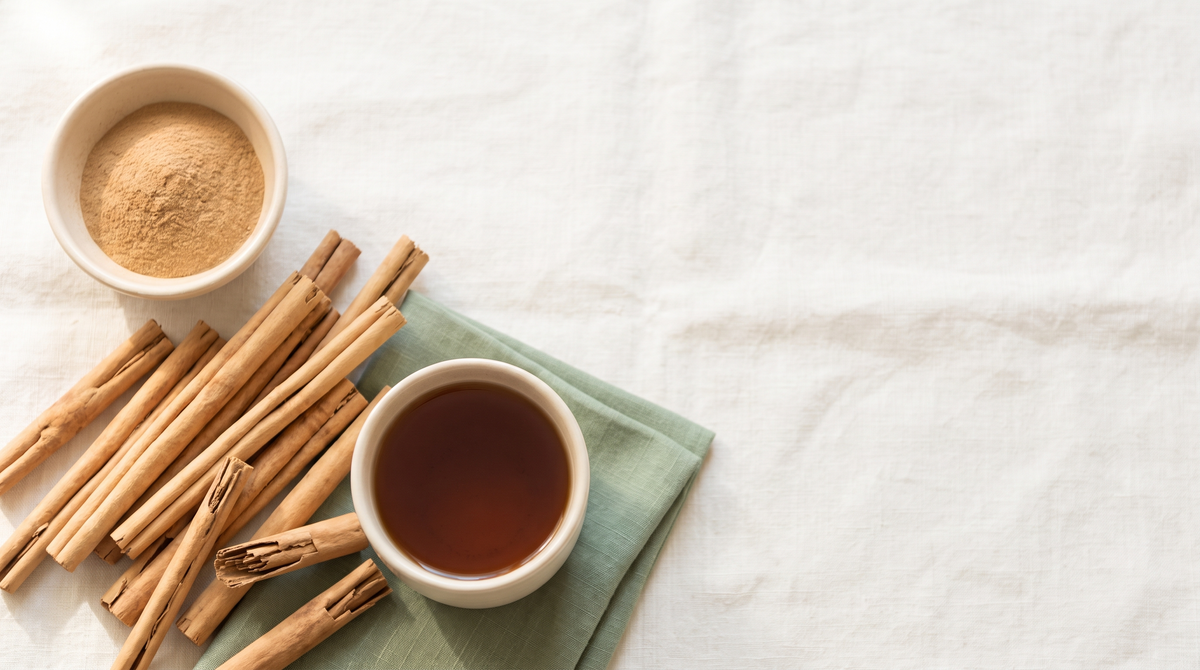
Hold a Ceylon quill next to a cassia stick and the difference is obvious. A Ceylon quill is tan, brittle, and made of many paper-thin layers rolled together, so it crumbles between your fingers. A cassia stick is a single thick curl of reddish-brown bark, hard enough that you cannot snap it cleanly.
The difference that matters for health is chemical. Cassia species contain coumarin, a naturally occurring compound that can stress the liver in sensitive people at sustained high intakes. A University of Mississippi analysis of authenticated barks found that Cinnamomum verum contained only traces of coumarin, while all three cassia species tested contained substantial amounts, and that most cinnamon sold in the United States, including the cinnamon in food supplements, was probably Indonesian cassia (Journal of Agricultural and Food Chemistry, 2013).
Germany's Federal Institute for Risk Assessment (BfR) set a tolerable daily intake for coumarin of 0.1 mg per kilogram of body weight and warned that regular high intakes of cassia cinnamon can push an adult past it. Ceylon cinnamon does not come close at normal doses. That is why the species on the label is not a marketing detail. It is the whole point.
Look for
The words Cinnamomum verum (or Cinnamomum zeylanicum) on the label, not just "cinnamon", and a stated dose per capsule. Ancient Nutra's Ceylon Cinnamon capsules are true Cinnamomum verum at 500 mg per capsule, so two capsules match the 1,000 mg a day used in the Sri Lankan trial below.
Does cinnamon lower blood sugar?
The honest answer is: a little, in the short term, in fasting glucose, and not in the marker doctors care most about. Here is the pooled evidence in the order it arrived.
A Cochrane review in 2012 pooled ten randomised trials with 577 people with type 1 or type 2 diabetes. The cinnamon was predominantly cassia, at a mean dose of 2 g a day for 4 to 16 weeks. The effect on fasting glucose was inconclusive, there was no significant difference in HbA1c, and the authors concluded there was insufficient evidence to recommend cinnamon for diabetes (Cochrane Database of Systematic Reviews, 2012).
A year later, an updated meta-analysis in Annals of Family Medicine pooled ten trials with 543 people with type 2 diabetes, at doses from 120 mg to 6 g a day for 4 to 18 weeks. This time fasting glucose did fall, by about 24.6 mg/dL on average, alongside small improvements in total cholesterol, LDL and triglycerides. HbA1c, the three-month average that tells you whether control has really changed, did not move significantly, and the results varied widely between trials (Annals of Family Medicine, 2013).
In 2025, an umbrella review in Frontiers in Nutrition looked across 21 meta-analyses of cinnamon in people with metabolic disease. It found consistent improvements in fasting glucose and lipids, larger in people with diabetes or metabolic syndrome, with the clearest effects at doses above 1.5 g a day and in interventions of two months or less (Frontiers in Nutrition, 2025). The evidence base is short, so any claim about long daily use is a guess.
Has Ceylon cinnamon itself been tested?
Barely, until recently. The best Ceylon-specific evidence is a randomised, double-blind, placebo-controlled trial run in Sri Lanka and published in PLOS One in January 2025. It gave 150 adults with raised LDL either 1,000 mg a day of a standardised Cinnamomum zeylanicum extract or a placebo for 12 weeks.
The primary outcome was LDL cholesterol, and it did not reach significance: LDL was about 6 mg/dL lower in the cinnamon group, but the confidence interval crossed zero. Fasting blood sugar did move. It fell about 8.6 mg/dL more in the cinnamon group than in the placebo group, and the effect was concentrated in participants who already had type 2 diabetes. Safety outcomes were favourable (PLOS One, 2025).
Read that carefully. One good trial, 12 weeks, a modest fasting glucose effect, no HbA1c claim, no cholesterol win. That is a real result, and it is also a small one. It is exactly why the team wrote a letter about the blood sugar claims Ancient Nutra will not make. "May nudge fasting glucose over a few weeks" is defensible. "Lowers blood sugar" is not, and "replaces your medication" is dangerous.
Where Ceylon cinnamon sits in the Sugar Balance System
Ancient Nutra's Sugar Balance System brings together three herbs with a long place in Ayurvedic and Sri Lankan practice around sweet taste and sugar: Gurmar, Ceylon Cinnamon and Venivel. Cinnamon is the one with the most human trial data behind it, for the reasons above. Gurmar's demonstrated effect is on sweet taste itself, and Venivel is included on tradition alone, because it has no human trials at all.
Within the box, the cinnamon capsules are taken with the largest carbohydrate meal of the day, which is also how the Sri Lankan trial timed its dose. The System is sold as a bounded routine with a break built in, not as something to take indefinitely, and it is a food supplement alongside your doctor's care, not a treatment. How the three herbs are sequenced across a day is already covered in the Sugar Balance System in order, so this article will not restate it.
How households use Ceylon cinnamon day to day
In Sri Lanka, cinnamon is a food first. A quill goes into the rice pot, into milk rice on a poya morning, into a pot of black tea, and into most meat curries. Those are culinary amounts, a gram or two spread across a family's meal, and they are a completely different exposure from a daily capsule. Nobody needs a trial to justify cooking with it.
If you want the kitchen route, Ancient Nutra's Cinnamon Powder is ground true Ceylon bark for porridge, tea and baking, and the team has three simple ways to use it in Ceylon cinnamon three ways for a steadier week.
If you want the supplement route, the trial-backed pattern looks like this:
- Dose. 1,000 mg a day of true Ceylon cinnamon, which is two 500 mg capsules. Higher doses were used in some cassia trials, but there is no Ceylon-specific evidence that more is better.
- Timing. With your largest carbohydrate meal, or split between breakfast and dinner if that suits your routine.
- Duration. The Ceylon trial ran 12 weeks and the pooled evidence skews to two months or less. Review at 8 to 12 weeks, ideally with a fasting glucose reading from your own doctor, and take a break rather than rolling on indefinitely.
- What to expect. If anything changes, it will be a fasting glucose number, not how you feel. Cinnamon is not a stimulant.
Safety: who should be careful
Ceylon cinnamon has a good safety record in trials, and its low coumarin content is the reason it is the preferred species for supplement use. Two cautions still apply.
Liver. The NIH LiverTox database lists cinnamon as a possible rare cause of clinically apparent liver injury, based on a handful of published cases, mostly linked to cassia and concentrated supplement doses. If you take cinnamon capsules and notice yellowing of the skin or eyes, dark urine, persistent nausea, or unusual tiredness, stop and speak with a doctor. Keep supplement-dose courses bounded as described above. Cooking amounts are a different exposure and are not what these cases describe.
Blood sugar medication. If you take metformin, insulin or any other glucose-lowering medicine, talk to your doctor before adding cinnamon capsules. The small additive effect is exactly the point of the trials, and it can also be the reason for an unexpectedly low reading. Pregnant or breastfeeding women, and anyone with an existing liver condition, should check with a healthcare provider before starting.
The bottom line
Ceylon cinnamon earns its place for two honest reasons: it is the low-coumarin species, so it is the one you can take at supplement doses without the cassia problem, and it has a small, real-looking effect on fasting glucose in short trials. It does not move HbA1c in the pooled data, it does not replace medication, and the evidence runs out after about three months. Use it as a food every day, use it as a supplement in bounded courses, and judge it by a number, not a feeling.
What makes true Ceylon cinnamon different from cassia?
Ceylon cinnamon (Cinnamomum verum) is a tan, brittle, many-layered quill with only traces of coumarin. Cassia is a thick single curl of bark with substantially more coumarin, which is why it is not the right species for daily supplement doses.
Does cinnamon lower blood sugar?
Pooled trials, mostly on cassia, show a modest fall in fasting glucose over 4 to 18 weeks and no significant change in HbA1c. A 2012 Cochrane review called the evidence insufficient. Cinnamon is not a treatment for diabetes.
Has Ceylon cinnamon itself been tested?
One 12-week randomised trial in Sri Lanka gave 150 adults 1,000 mg a day of Ceylon cinnamon extract. Fasting glucose fell about 8.6 mg/dL more than placebo, mainly in people with type 2 diabetes. LDL cholesterol did not change significantly.
How much Ceylon cinnamon should I take, and for how long?
The trial-backed pattern is 1,000 mg a day with the largest carbohydrate meal, reviewed at 8 to 12 weeks with a fasting glucose reading, then a break. Speak with your doctor first if you take blood sugar medication.

Ceylon Cinnamon - 60 capsules
True Cinnamomum verum, 500 mg per capsule, low in coumarin. Two capsules match the 1,000 mg daily dose used in the Sri Lankan trial.
Shop Ceylon CinnamonSources and further reading
- Muthukuda D et al. Effects of Cinnamomum zeylanicum (Ceylon cinnamon) extract on lipid profile, glucose levels and its safety in adults: a randomized, double-blind, controlled trial. PLOS One, 2025.
- Allen RW et al. Cinnamon use in type 2 diabetes: an updated systematic review and meta-analysis. Annals of Family Medicine, 2013.
- Leach MJ, Kumar S. Cinnamon for diabetes mellitus. Cochrane Database of Systematic Reviews, 2012.
- Gou H et al. The effects of cinnamon on patients with metabolic diseases: an umbrella review of meta-analyses of randomized controlled trials. Frontiers in Nutrition, 2025.
- Wang YH et al. Cassia cinnamon as a source of coumarin in cinnamon-flavored food and food supplements in the United States. Journal of Agricultural and Food Chemistry, 2013.
- German Federal Institute for Risk Assessment (BfR). High daily intakes of cinnamon: health risk cannot be ruled out. Health Assessment No. 044/2006. bfr.bund.de.
- LiverTox: Clinical and Research Information on Drug-Induced Liver Injury. Cinnamon. National Institute of Diabetes and Digestive and Kidney Diseases.
Written by the Ancient Nutra Wellness Team. The team researches, sources, and tests every ingredient before it earns a place in an Ancient Nutra blend. Questions? Email info@ancientnutra.com or message Ancient Nutra on Instagram.
Medical disclaimer: This article is for educational purposes only and is not medical advice. Statements have not been evaluated by the FDA. Ancient Nutra products are not intended to diagnose, treat, cure, or prevent any disease. Speak with a qualified healthcare provider before starting any new supplement, especially if you take prescription medication or have a medical condition.