By the Ancient Nutra Wellness Team · June 19, 2026 · 5 minute read
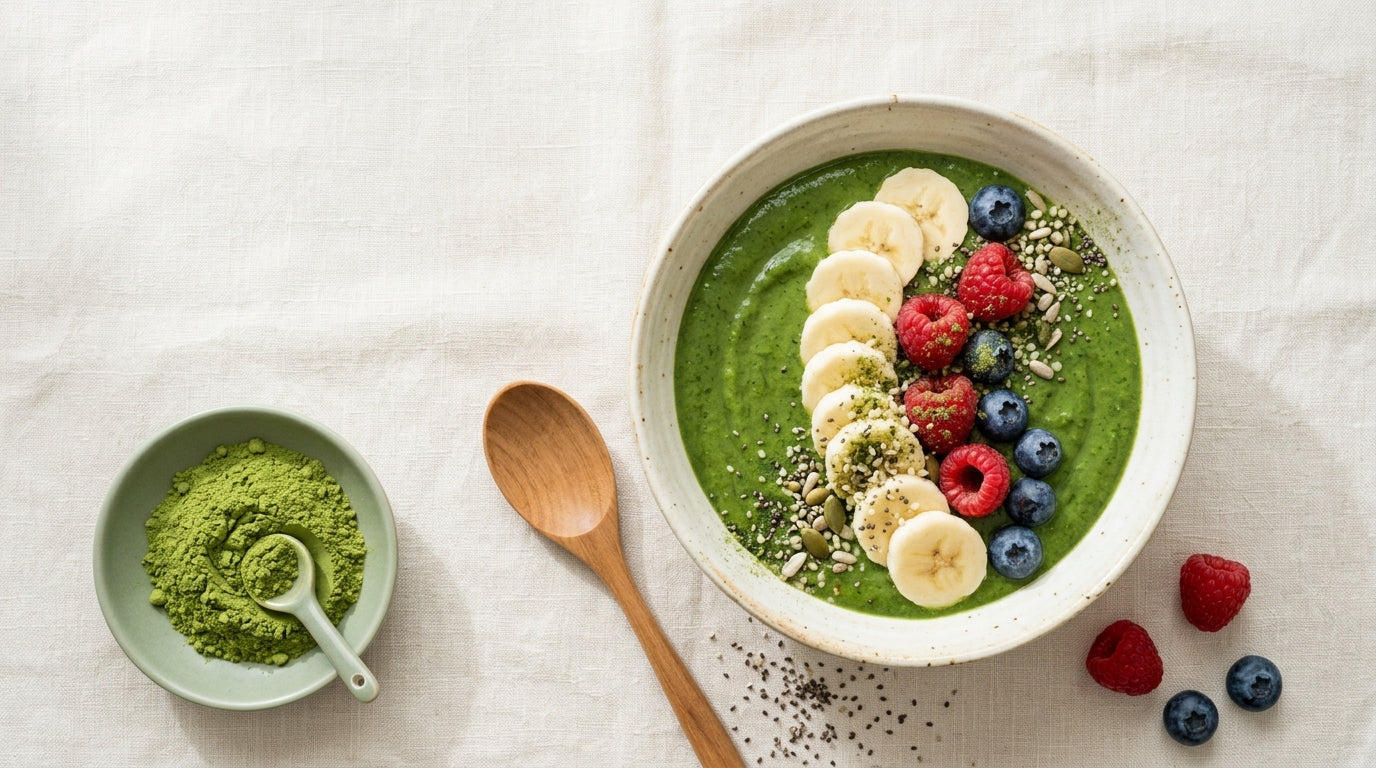
- The moringa morning bowl is a 5-minute blender breakfast: a green smoothie base, a spoon of moringa, chia for body, and fruit on top.
- Moringa leaf powder is unusually nutrient dense, roughly a quarter protein by dry weight, plus iron, calcium, and vitamin A, so a single teaspoon adds real food value to a fast breakfast.
- You need one blender, one bowl, and about five minutes. Best eaten in the morning, within a few minutes of blending, while the chia is still soft and the colour is bright.
Most mornings do not leave room for a real breakfast. You are out the door, or you are answering a message before your feet hit the floor, and the green smoothie you meant to make turns into coffee and whatever is nearest. The moringa morning bowl is built for exactly those mornings: a thick green base you blend in under a minute, poured into a bowl, topped with fruit and seeds, and eaten with a spoon instead of sipped on the run.
It is a bowl, not a glass, on purpose. Eating slowly, even for three minutes, beats drinking breakfast in the car, and the toppings make the moringa feel like something you chose rather than a chore.
What you need
Seven ingredients, most already in your kitchen. The two worth getting right are the moringa, which carries the nutrition, and the chia, which gives the bowl its spoonable body.
- 1 frozen banana, or 1 fresh banana plus a small handful of ice
- 1/2 cup frozen mango or pineapple
- 1 teaspoon Ancient Nutra's Moringa Powder
- 1 tablespoon chia seeds
- 1/2 cup plain yoghurt or coconut milk
- 1/2 cup water or milk of choice
- 1 teaspoon Ancient Nutra's Coconut Sugar, optional, to taste
- To top: sliced fruit, a few berries, a sprinkle of seeds or coconut
How to make it
- Add the banana, frozen mango, moringa powder, yoghurt, and water to a blender. Blend on high for about 30 seconds, until thick and smooth. The base should be the texture of soft-serve, thick enough to hold a spoon upright. Add a splash more liquid only if the blender stalls.
- Taste it. Frozen fruit is usually sweet enough on its own, but if the moringa reads too green for you, blend in the coconut sugar a little at a time until it is balanced.
- Pour the base into a wide bowl and scatter the chia seeds across the top. Stir half of them in and leave the rest on the surface, where they will swell into soft pearls within a couple of minutes.
- Top with sliced fruit, a few berries, and a sprinkle of seeds or coconut. Eat within five minutes, while the colour is bright and the chia is just softened.
Yields one generous bowl. Best eaten with a spoon, slowly, before the morning gets away from you.
Why this recipe works
A fast breakfast only works if you actually finish it. This bowl earns its keep in layers. The frozen fruit gives natural sweetness and a thick, cold texture. The yoghurt or coconut milk adds fat and a little protein, which slow how fast the fruit sugar reaches your blood. The chia brings fibre and a gel-like body, so the bowl holds you longer than a thin smoothie would.
The moringa is the quiet engine, one of the more nutrient-dense greens you can keep in a jar. A comprehensive review of moringa's nutritional properties describes the leaf powder as roughly a quarter protein by dry weight, with meaningful iron, calcium, potassium, and vitamin A, plus the antioxidants behind its deep green colour. One teaspoon will not replace a plate of vegetables, but it adds greens to a breakfast that usually has none, which is the whole point on a busy morning.
Moringa comes from the drumstick tree, a staple of South Asian kitchens for generations, where the leaves go into everything from dhal to porridge. The morning bowl is a faster, colder version of an old habit.
Variations
Make it dairy-free with coconut milk and a coconut or soy yoghurt. Want it greener and lighter? Drop the coconut sugar, add a handful of spinach, and lean on the banana for sweetness. For more staying power, blend in a scoop of your usual protein powder or a tablespoon of nut butter. And for the busiest mornings, stir the moringa and chia into the yoghurt and milk the night before, refrigerate, and either blend with frozen fruit at sunrise or eat it as a thick moringa chia pudding with fruit on top.
This one started as a way to use up the moringa that someone on the Ancient Nutra team kept buying and forgetting in the cupboard. Tipped into a smoothie bowl instead of a glass, it finally got eaten every morning. The bowl, it turned out, was the difference.
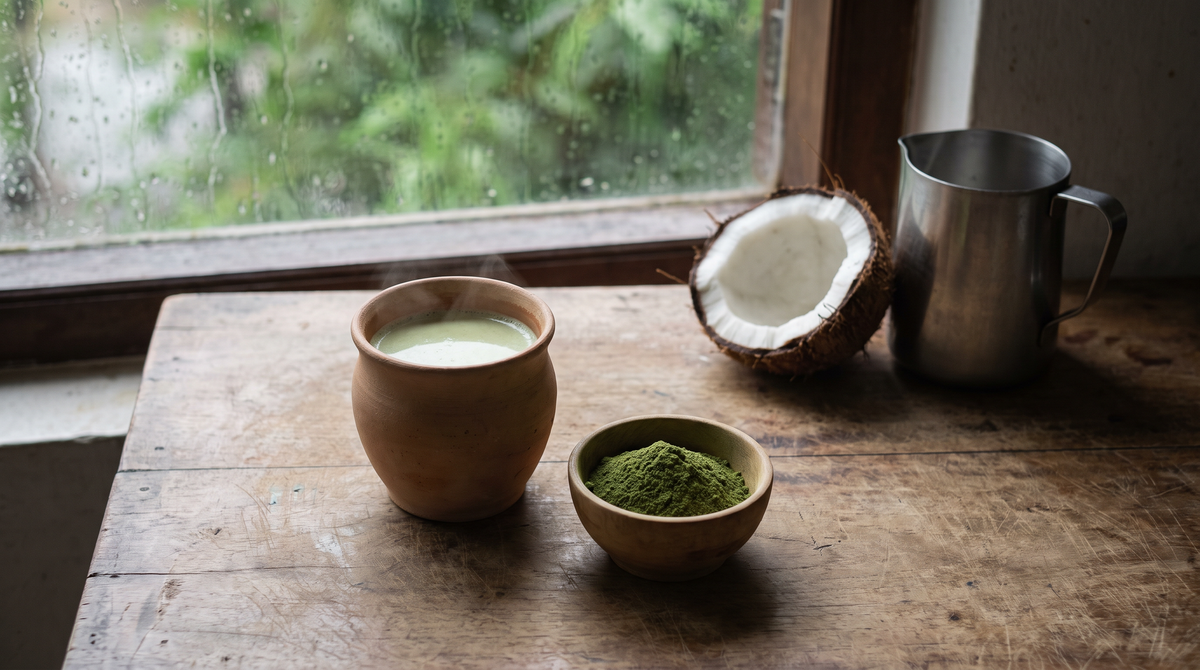
Bright green, finely milled moringa leaf powder with a fresh, grassy smell. Dull, brownish, or hay-smelling powder has usually been dried with heat or sat too long, and it loses both colour and nutrients along the way.
Ancient Nutra's Moringa Powder is single-origin Sri Lankan leaf, shade-dried and milled fine so it blends smoothly into a bowl without turning grainy.
When to eat it
This is a morning bowl, and it earns the name. The fruit, fibre, and protein together hold you to lunch without the mid-morning dip a fruit-only smoothie can leave behind. A few mornings a week is plenty; moringa is best treated as a steady habit rather than a single big dose. On the mornings you skip the bowl, Ancient Nutra's Moringa capsules keep the same daily leaf in the rotation.
One honest note: a green bowl does not undo a rough night or a skipped dinner. Sleep, water, and a balanced plate still do the heavy lifting. The bowl just makes one of the easiest meals to skip worth sitting down for.
The bottom line
The moringa morning bowl is the five-minute answer to the breakfast you keep meaning to make. Blend, pour, top, eat. With just a frozen banana, a teaspoon of moringa, and any milk you still get a respectable green base; the chia and toppings turn it into a bowl worth photographing.
It rides on the moringa, so start with a good one. Ancient Nutra's Moringa Powder is bright Sri Lankan leaf, milled fine for smooth blending and an easy daily layer of greens.

Bright, single-origin Sri Lankan moringa leaf for a daily layer of greens.
ShopSources
Written by the Ancient Nutra Wellness Team. The team researches, sources, and tests every ingredient before it earns a place in an Ancient Nutra blend. Questions? Email info@ancientnutra.com or message Ancient Nutra on Instagram.
Medical disclaimer: This article is for educational purposes only and is not medical advice. Statements have not been evaluated by the FDA. Ancient Nutra products are not intended to diagnose, treat, cure, or prevent any disease. Speak with a qualified healthcare provider before starting any new supplement, especially if you are pregnant or breastfeeding, take medication, or have a medical condition.