Ancient Nutra Wellness Team · 22 October 2026 · 6 min read
Pre & Post Meal Fat Burning System, Explained: Who It Suits
By the Ancient Nutra Editorial Team
- The system is a two-step routine around your largest meal: one pre-meal capsule that contains caffeine, and one post-meal capsule. It is a food supplement, not a treatment.
- Ayurveda frames the idea as eating with your agni, or digestive fire, which is traditionally strongest at midday. One 2013 study of 420 adults found that people who ate their main meal after 3 pm lost less weight than those who ate it earlier.
- The pre-meal capsule counts toward your daily caffeine. It is not suitable for people who are sensitive to caffeine, pregnant or nursing, under 18, or who have high blood pressure, a heart condition or anxiety.
A routine built around one meal sounds simple, and it is. What it is not is a shortcut. Ancient Nutra's Pre & Post Meal Fat Burning System pairs one capsule before your largest meal with one after it, and it rests on an old idea: that digestion has a rhythm, and that the hours around your biggest meal matter.
This guide explains that idea, how the two steps work, what the research does and does not say about weight-loss supplements, and who should leave this one on the shelf.
Start with agni, the Ayurvedic idea of digestive fire
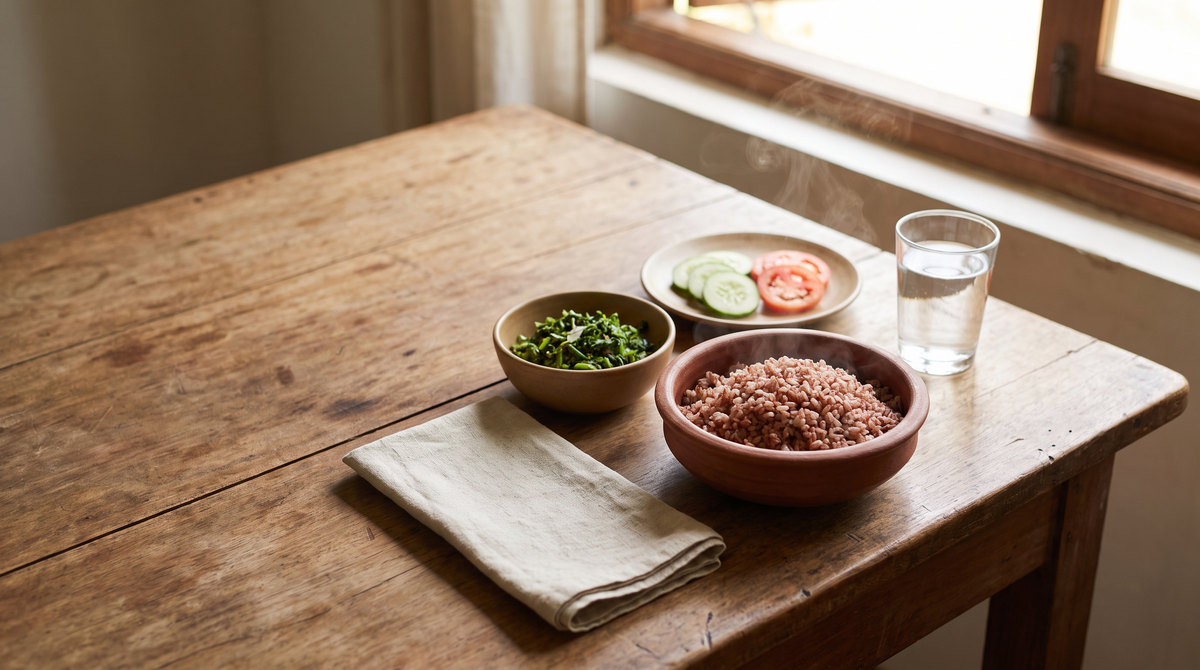
In Ayurveda, agni is the body's capacity to turn food into usable nourishment, often described as a digestive fire. Traditional teaching says it runs strongest around midday, which is why lunch has long been the main meal, with a lighter meal in the evening. It is a traditional framework, not something a lab test measures, and it should be read that way.
Modern research touches the same territory from a different direction. In a study of 420 adults on a 20-week weight-loss programme in Spain, people who ate their main meal (lunch) after 3 pm lost less weight, and lost it more slowly, than people who ate it earlier. Their calorie intake, appetite hormones and sleep were similar. The groups were sorted by habit rather than assigned, so the finding is an association, not proof that a late lunch causes weaker results (Garaulet et al., International Journal of Obesity, 2013).
See how the two steps fit around one meal
The system has two capsules, and each has one job in the routine:
- Step 1, MetaMelt+: one capsule 20 to 30 minutes before your largest meal of the day. It is a pre-meal thermogenic blend with naturally occurring caffeine from coffee bean extract, alongside warming herbs, formulated to support energy and fat metabolism.
- Step 2, MetaRise+: one capsule within an hour after the same meal. It is a post-meal blend of traditional herbs, formulated to support a steady glucose response.
Take the pre-meal capsule earlier in the day, not close to bedtime. Because the caffeine is in that first capsule, the biggest meal should be a daytime one, which fits the midday tradition above.
Keep your expectations honest
The US National Center for Complementary and Integrative Health says that most weight-loss supplements have not been proven safe or effective. For acai berry, bitter orange and green tea products, it says none has been shown to produce meaningful weight loss in scientific studies (NCCIH, 6 Things To Know About Dietary Supplements Marketed for Weight Loss). Its practical advice is the unglamorous kind: eat well, and be active.
This article does not cite a trial of this exact product, so it makes no promise about results. The honest way to see the system is as a routine that sits on top of habits, not a replacement for them.
Count the caffeine before you start
The European Food Safety Authority considers intakes of up to 400 mg of caffeine a day, from all sources, safe for healthy adults who are not pregnant. A single dose of up to 200 mg is also considered safe, and for pregnant or breastfeeding women the daily figure is 200 mg (EFSA, 2015 opinion). Those limits cover everything: coffee, tea, cola and energy drinks all count alongside the pre-meal capsule.
NCCIH adds a related warning: supplements with large amounts of caffeine can raise heart rate and cause abnormal heart rhythms. That is why the people listed in the safety note below are asked to skip this one.
The caffeine amount per capsule, the serving directions and the safety note on the pack. Add that caffeine figure to your usual coffee and tea before deciding. If you cannot find the amount, email info@ancientnutra.com and ask before you start. Ancient Nutra's guide to what a supplement label has to tell you covers how to read the rest.
Decide whether the system suits you
It may suit an adult who already eats one clear main meal a day, is comfortable with caffeine, and wants a simple, structured routine to go with good food habits. It is a poor fit for anyone who relies on caffeine already, sleeps lightly, or likes the idea of a supplement doing the work of a meal plan.
If you take medication for blood sugar, blood pressure or thyroid, speak with your doctor first. The two blends are made from herbs, and herbs can interact with medicines.
Build the habits that do the heavy lifting
Whether or not you use a supplement, the tradition and the research point to the same few habits:
- Make lunch your largest meal and eat it before 3 pm when you can.
- Sit down, slow down and give the meal your attention.
- Keep the evening meal lighter, and finish it a few hours before bed.
- Do not skip breakfast to save calories. In the 2013 study, the late eaters skipped it more often.
Bael is a traditional Sri Lankan herb associated with digestion. Ancient Nutra's Beli (Bael) capsules are offered as heritage use, not as a proven effect.
The bottom line
The Pre & Post Meal Fat Burning System is a two-capsule routine around your largest meal, framed by the Ayurvedic idea of eating with your digestion. The tradition is old, the research on supplements is thin, and the caffeine is real. If you use it, pair it with these:
- An unhurried, daytime main meal.
- A caffeine total you have actually counted.
- A conversation with your doctor if any of the safety points apply to you.
This is a thermogenic product that contains caffeine. It is not suitable if you are sensitive to caffeine, pregnant or nursing, under 18, or if you have high blood pressure, a heart condition or anxiety. Speak with your doctor before starting if you take medication for blood sugar, blood pressure or thyroid. This is a food supplement, not a treatment.

Pre & Post Meal Fat Burning System
A two-step routine: one capsule before your largest meal, one after.
Shop Pre & Post Meal Fat Burning SystemSources and further reading
- Timing of food intake predicts weight loss effectiveness, Garaulet M et al., International Journal of Obesity, 2013 (retrieved 22 October 2026).
- Scientific Opinion on the safety of caffeine, European Food Safety Authority, 27 May 2015 (retrieved 22 October 2026).
- 6 Things To Know About Dietary Supplements Marketed for Weight Loss, National Center for Complementary and Integrative Health (retrieved 22 October 2026).
Written by the Ancient Nutra Wellness Team. The team researches, sources, and tests every ingredient before it earns a place in an Ancient Nutra blend. Questions? Email info@ancientnutra.com or message Ancient Nutra on Instagram.
Medical disclaimer: This article is for educational purposes only and is not medical advice. Statements have not been evaluated by the FDA. Ancient Nutra products are not intended to diagnose, treat, cure, or prevent any disease. Speak with a qualified healthcare provider before starting any new supplement, especially if you take prescription medication or have a medical condition.