Ancient Nutra Wellness Team · 3 October 2026 · 5 min read
A 5-minute morning ritual built around Beli for steady digestion
Key takeaways
- Beli (also called Bael) is one of the most respected digestive herbs in the Ayurvedic tradition, used for gut comfort for thousands of years.
- This 5-minute morning ritual pairs a Beli capsule with warm water, gentle movement, and a short pre-breakfast window to support digestion through the day.
- Modern lab studies have validated some of the traditional claims, though human clinical trials are still needed to confirm what practitioners have long observed.
Most digestive discomfort does not announce itself at breakfast. It builds quietly through the day, one skipped glass of water, one rushed meal, one too-late coffee at a time. By evening, you feel it. The bloating, the heaviness, the sense that your gut never quite settled.
There is a simpler approach. A short morning sequence, five minutes before you sit down to eat, that gives your digestive system a head start. The centrepiece is Beli, a Sri Lankan fruit herb that has been used for gut health for so long that Ayurvedic texts categorise it as a “grahi dravya,” a substance that is both astringent and digestive.
The ritual, step by step
This takes about five minutes of actual hands-on time. You do it once, in the morning, before your first meal.
- Warm a glass of water. Not hot, not cold. Comfortably warm, like a cup of tea you have let cool for a minute. About 200 to 250 ml.
- Take one Beli capsule with the warm water. Ancient Nutra's Beli capsules contain Bael fruit (Aegle marmelos) in a measured dose. One capsule is the standard daily serving.
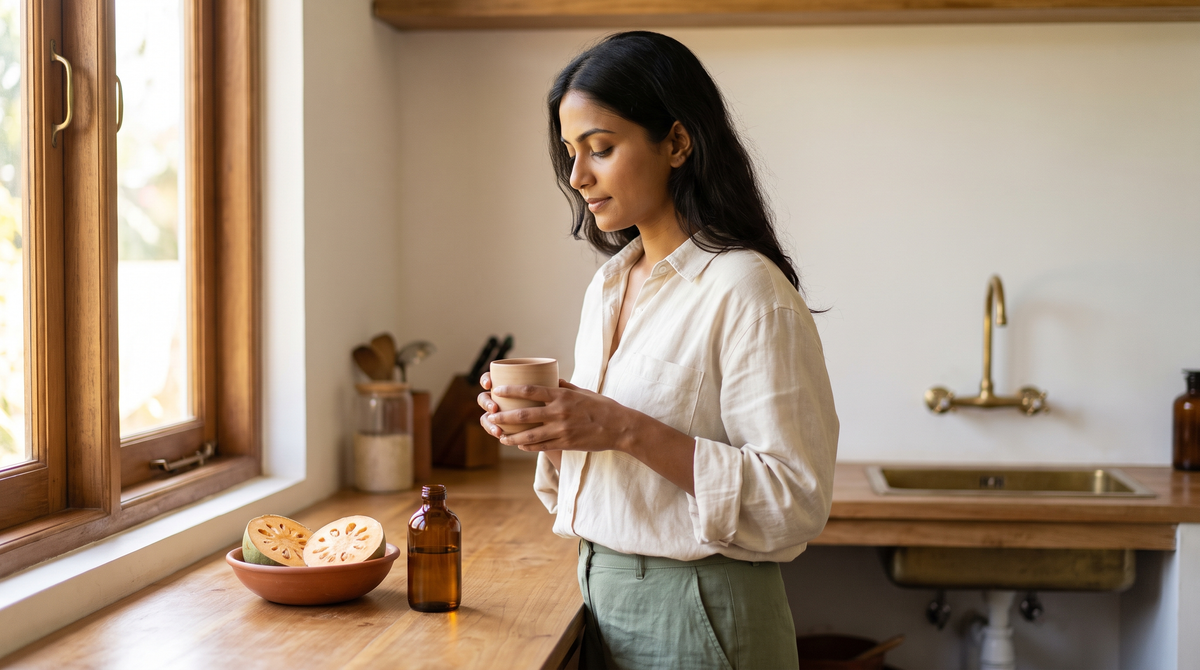
- Stand or walk gently for two minutes. You do not need a workout. A slow loop around the kitchen, or standing at the window. The point is to stay upright and let gravity help the capsule settle.
- Wait 15 to 20 minutes before eating. This is the window that matters. It gives the Beli time to reach your stomach lining before food arrives. Use the time for anything quiet: reading, getting dressed, packing a bag.
- Eat a warm, simple breakfast. Rice and dhal, oats with a pinch of cinnamon, or a soft-boiled egg. The warmth complements the digestive preparation. Avoid jumping straight to fried or heavy food.
The actual hands-on time is about two minutes. The rest is just waiting, and you would be doing something else in that time anyway.
Why this works
Beli, also called Bael, is Aegle marmelos, a tree fruit native to the Indian subcontinent and Sri Lanka. Its use in digestive medicine goes back thousands of years. In the Charaka Samhita and Sushruta Samhita, two foundational Ayurvedic texts, it is listed among the herbs specifically indicated for diarrhoea, dysentery, and general digestive irregularity.
Modern laboratory research has started to explain what practitioners observed. A validation study published in BMC Complementary and Alternative Medicine found that unripe Bael fruit extract affected bacterial colonisation of gut cells and the action of certain enterotoxins, supporting the traditional use for diarrhoeal conditions (Brijesh et al., 2009). A 2022 review in the International Journal of Molecular Sciences catalogued the fruit's broad pharmacological profile, including antidiarrheal, gastroprotective, and anti-ulcerative properties (Sharma et al., 2022).
The honest caveat: most of this evidence is preclinical, meaning it comes from cell and animal studies. Human clinical trials on Beli specifically are scarce. What you are doing with this ritual is applying a traditional practice that has strong observational backing and early laboratory validation, not a protocol proven in a randomised controlled trial. That distinction matters, and the team at Ancient Nutra believes in stating it plainly.
The warm water and the pre-meal timing are not filler steps. Warm water on an empty stomach stimulates gastric motility. The 15 to 20 minute gap lets the herb reach the stomach lining before food triggers the full digestive process.
When to do it
Morning, before your first meal. Every day is ideal, but if you miss a day, pick it up the next morning. There is no loading phase and no penalty for a gap.
Skip it if you are feeling nauseous or have an active stomach infection. This is a gentle daily support, not a treatment for acute illness. If digestive issues persist for more than a week, see a doctor.
Beli has not been assessed in the NIH LiverTox database, which means its liver safety profile is unevaluated, not the same as confirmed safe. If you take prescription medication, or if you are pregnant or breastfeeding, speak with your healthcare provider before starting any new supplement.
Look for
Bael fruit (Aegle marmelos) in capsule form, standardised from the fruit pulp. Ancient Nutra's Beli capsules contain 60 capsules per bottle, one capsule per day with water before a meal.
Starting without Beli on hand
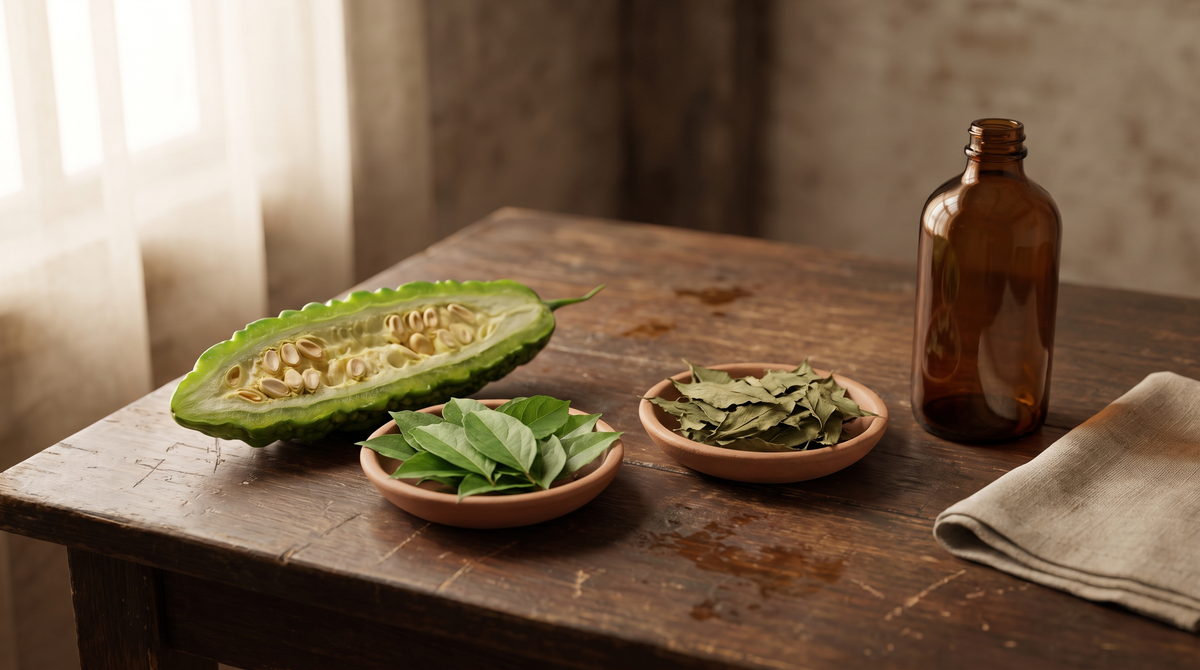
If you can find fresh Bael fruit at a local market (common across Sri Lanka and South India), you can use a small wedge of the unripe fruit simmered in water as a light morning decoction. That is the traditional preparation the Ayurvedic texts describe.
If Bael is not available in your area, Ancient Nutra's Triphala is another traditional digestive support with a longer evidence base. Triphala is a three-fruit formula (Terminalia chebula, Terminalia bellirica, and Emblica officinalis) used in Ayurveda for general gut regularity.
The underlying principle stays the same regardless of the herb: warm water, a measured dose on an empty stomach, and a 15 to 20 minute window before food. The ritual does not depend on any single product.
The bottom line
This ritual is five minutes of deliberate preparation before your body starts the day's digestive work. One capsule, warm water, a short pause, a simple breakfast. It is not complicated, and that is the point.
Try it consistently before judging. Digestive patterns shift slowly, and one morning will not tell you much.
Ancient Nutra's Beli capsules are one capsule per day, 60 per bottle. That is two months from a single purchase.

Beli - 60 capsules
The Sri Lankan gut classic. Bael fruit (Aegle marmelos) for daily digestive support.
Shop BeliSources and further reading
- Brijesh S, Daswani P, Tetali P, Antia N, Birdi T. Studies on the antidiarrhoeal activity of Aegle marmelos unripe fruit: Validating its traditional usage. BMC Complement Altern Med. 2009;9:47. PMC2788518.
- Sharma GN, Dubey SK, Sati N, Sanadya J. Aegle marmelos (L.) Correa: An Underutilized Fruit with High Nutraceutical Values: A Review. Int J Mol Sci. 2022. PMC9504793.
Written by the Ancient Nutra Wellness Team. The team researches, sources, and tests every ingredient before it earns a place in an Ancient Nutra blend. Questions? Email info@ancientnutra.com or message Ancient Nutra on Instagram.
Medical disclaimer: This article is for educational purposes only and is not medical advice. Statements have not been evaluated by the FDA. Ancient Nutra products are not intended to diagnose, treat, cure, or prevent any disease. Speak with a qualified healthcare provider before starting any new supplement, especially if you take prescription medication or have a medical condition.