By the Ancient Nutra Editorial Team
- The earthy taste in beetroot comes from geosmin, a compound the beet makes itself, so it cannot be rinsed away. It can be balanced with warm spice, a little fat and a slow pour.
- Warm the milk with crushed cardamom and cinnamon, never boil it, and loosen the powder into a paste before the milk goes in.
- A mug of Pink Latte is caffeine free, which makes it one of the few warm cafe-style drinks that suits the evening.
- The blood pressure research on beetroot used concentrated juice and measured nitrate doses. A latte is a drink, not a dose, so enjoy it as one.
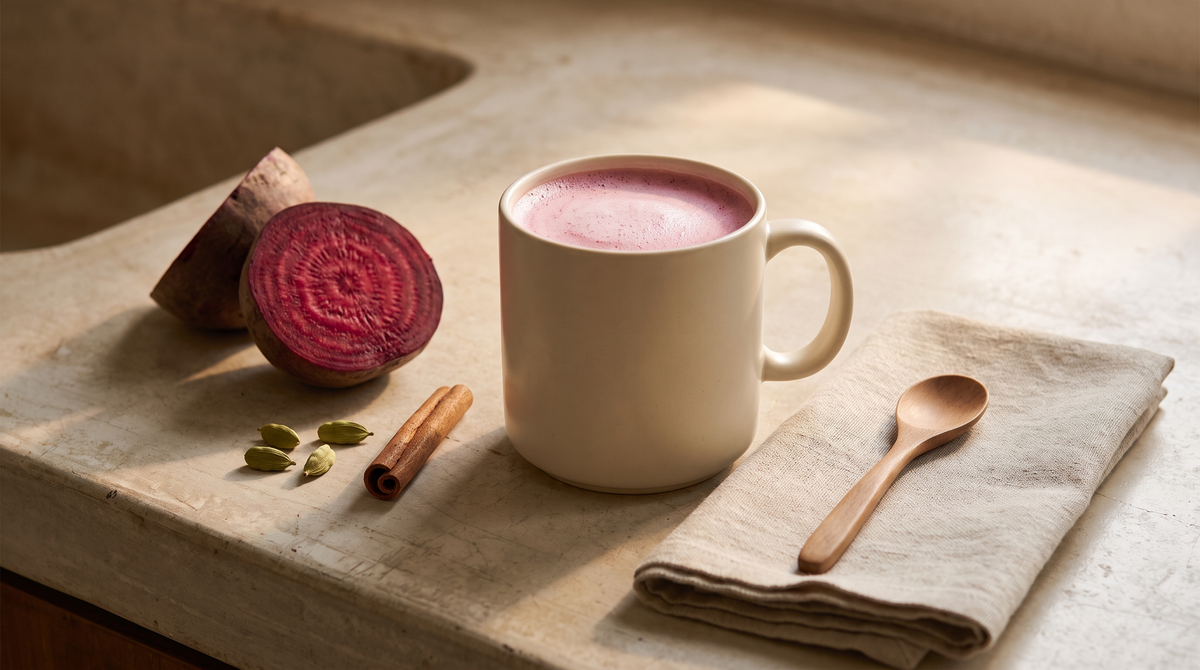
Beetroot has a flavour problem, and it is not the colour. Most people who try a beetroot drink for the first time say the same thing: it tastes a little like a freshly dug garden bed. That earthy note is real, it is chemical, and it does not have to be the loudest thing in the mug. This warm latte uses Ancient Nutra's Pink Latte, a beetroot-based drink mix, and two everyday kitchen spices to turn that soil note into something closer to spiced rose milk. It takes about five minutes, one small pan and one mug.
What you need
Ingredients (serves 1)
- 1 serving Ancient Nutra's Pink Latte, measured as directed on the pack
- 2 tablespoons warm water
- 200 ml milk, dairy, oat or coconut
- 2 green cardamom pods, lightly crushed
- A 3 cm piece of cinnamon quill, or a small pinch of ground cinnamon
- A few drops of vanilla extract, optional
- 1 teaspoon Ancient Nutra's Coconut Sugar, only if it needs it
If you skip everything optional, keep the cardamom. Its bright, almost citrus edge does most of the balancing work.
How to make it
- Pour the milk into a small pan with the crushed cardamom and the cinnamon. Warm it over low to medium heat for three to four minutes, until it steams and small bubbles form at the edge. Do not let it boil; boiled milk turns flat and slightly scorched, and that taste doubles up with the beetroot.
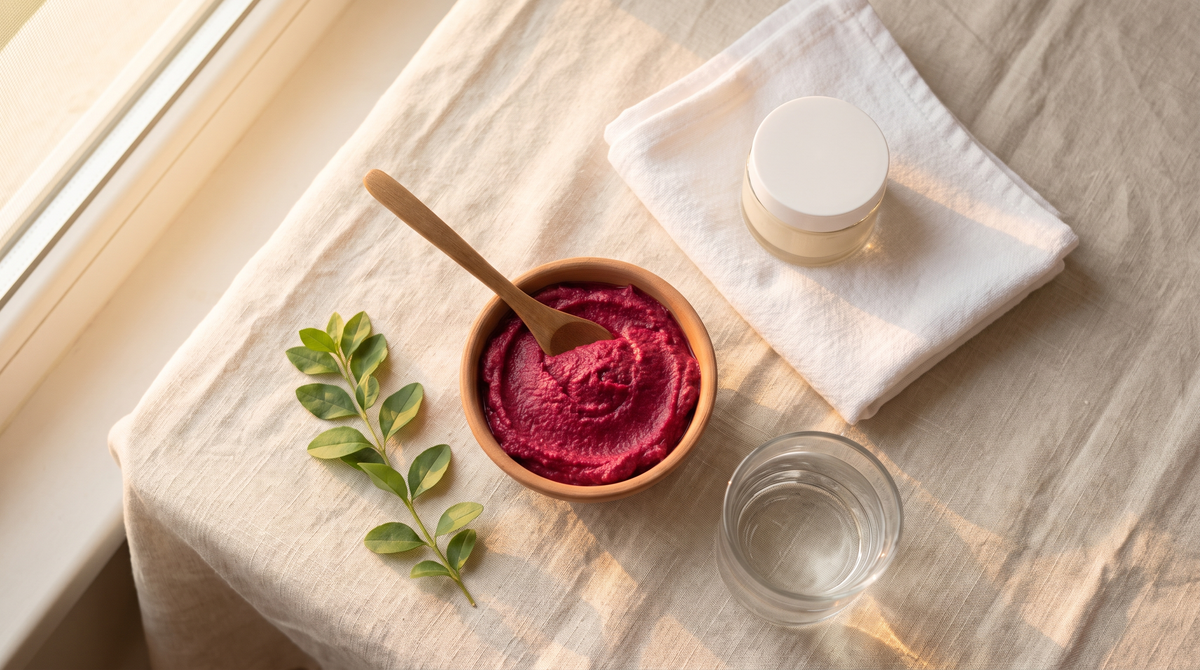
- While the milk warms, tip the Pink Latte into your mug, add the warm water and stir into a smooth, glossy paste with no dry pockets at the bottom.
- Take the pan off the heat and let the spices sit in the milk for one more minute, then strain them out.
- Pour a splash of the spiced milk into the paste and stir until loose. Add the rest slowly while whisking with a small whisk or a handheld frother, so the top turns soft and foamy.
- Taste before you sweeten. If it still reads earthy, add the vanilla first and the coconut sugar second, half a teaspoon at a time.
Makes one mug, roughly 220 ml. Best sipped while hot, within ten minutes, before the foam settles.
Why the spice does the heavy lifting
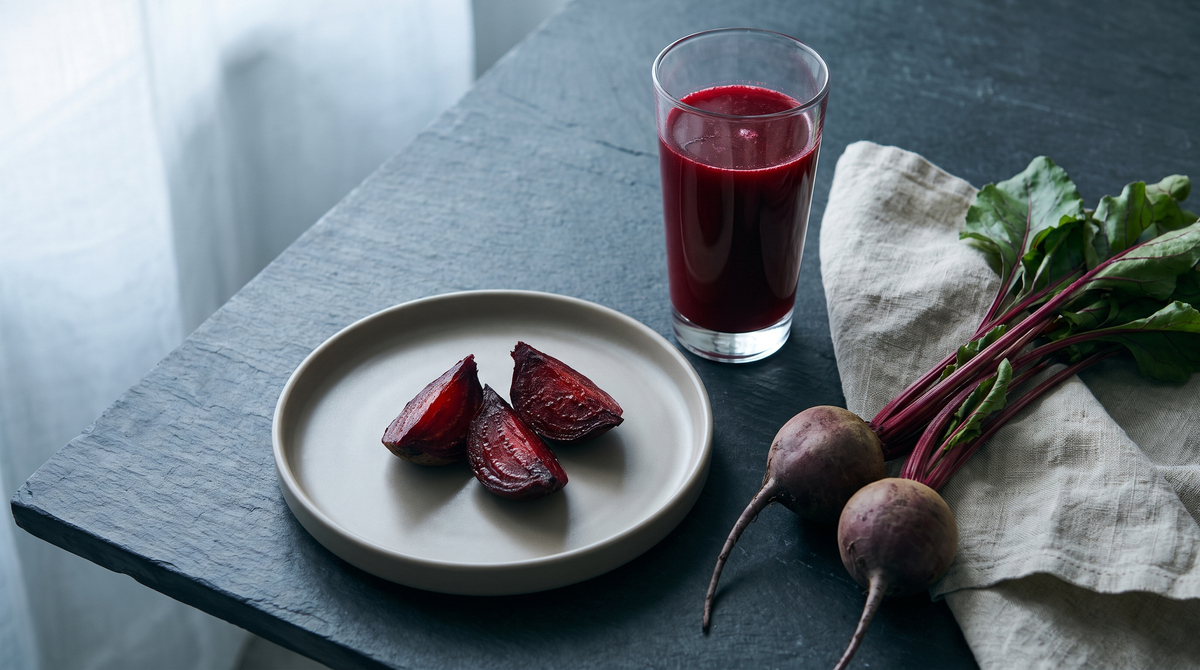
The earthy smell of beetroot has a name: geosmin. A 2021 genetics study in G3 describes it as the compound that gives table beet its characteristic aroma, and reports that it is heritable and produced by the beet itself. So it is not soil left on the skin, and washing or peeling will not remove it. The same study notes that some people seek that aroma out while others are put off by it, which explains why beetroot drinks divide a room so quickly.
If you cannot remove a flavour, you give it company. Cardamom brings a fresh, lifted note, cinnamon brings warmth and a sense of sweetness without sugar, and the fat in milk helps carry both aromas through the sip. Vanilla does the same job in a quieter way. Together they move the earthiness from the front of the sip to the background, where it reads as depth instead of dirt.
Cardamom and cinnamon are the everyday warm spices of a Sri Lankan kitchen, the same pair that goes into milk tea on a cool evening, so this cup borrows a habit most homes here already have.
What the beetroot research does and does not say
Beetroot is naturally rich in inorganic nitrate, and that is where most of its health reputation comes from. A 2013 systematic review and meta-analysis in the Journal of Nutrition pooled 16 randomised crossover trials (254 adults in total) and found that inorganic nitrate and beetroot juice lowered systolic blood pressure by an average of 4.4 mm Hg. The trials were short, running from two hours to 15 days, and the authors noted that longer studies were still needed.
Two honest limits apply to a latte. Those trials used concentrated juice or measured nitrate doses, and a warm drink made from a mix is not the same thing. The pack also does not state a nitrate figure per serving. So this is a pleasant, caffeine-free cup with beetroot in it, not a blood pressure treatment, and it should never stand in for medicine a doctor has prescribed.
Ways to change it
Iced, for a humid afternoon. Skip the pan. Stir the paste with cold water, add a pinch of ground cardamom, pour over ice and top with cold milk.
Richer, with coconut milk. Coconut milk softens the earthiness and pairs especially well with cardamom. Use half coconut milk and half water if full coconut feels heavy.
No added sugar. Leave out the coconut sugar and lean on the vanilla and cinnamon, which both suggest sweetness on their own.
Look for
In a beetroot drink mix, check that beetroot is named as the base, that the powder is a deep magenta rather than a dull brown (browning usually means age or heat), and whether it contains caffeine. Ancient Nutra's Pink Latte is beetroot-based, naturally caffeine free and made in Sri Lanka under BRCGS, FSSC 22000 and ISO 22000. For more on the mix itself, there is an earlier introduction to the Pink Latte.
When to drink it
Because there is no caffeine, this is one of the few cafe-style drinks that works after dark. Late afternoon or after dinner are both good fits, and it makes a gentle swap for a third cup of tea. If you like a warm milk drink at night, the evening cinnamon milk is another option in the same spirit. One mug is plenty; it is a drink to enjoy, not a quantity to push.
A note on beetroot
Beetroot can turn urine or stools pink or red for a short while. This is a known and harmless effect called beeturia, but it is worth knowing about so it does not cause a fright. Beetroot is also a high-oxalate vegetable, so anyone who has been told to limit oxalates because of kidney stones should check with a doctor first. Because dietary nitrate can lower blood pressure, anyone taking blood pressure medication, nitrate medicines for chest pain, or medicines for erectile dysfunction should also speak to a doctor before making beetroot drinks a regular habit.
The bottom line
The earthy taste of beetroot is built into the plant, so the answer is balance, not disguise. Warm the milk gently with cardamom and cinnamon, loosen the powder into a paste, pour slowly and taste before sweetening. What you get is a soft pink, caffeine-free mug that tastes of spice first and garden second, which is exactly the order most people prefer.

Pink Latte 100g
A caffeine-free, beetroot-based latte mix that works warm with spice or poured over ice.
Shop Pink LatteSources and further reading
- Hanson SJ, Dawson JC, Goldman IL. Beta vulgaris ssp. vulgaris chromosome 8 shows significant association with geosmin concentration in table beet. G3 (Bethesda), 2021.
- Siervo M, Lara J, Ogbonmwan I, Mathers JC. Inorganic nitrate and beetroot juice supplementation reduces blood pressure in adults: a systematic review and meta-analysis. Journal of Nutrition, 2013.
Written by the Ancient Nutra Editorial Team. Published 16 September 2026.
Medical disclaimer: This article is for educational purposes only and is not medical advice. Statements have not been evaluated by the FDA. Ancient Nutra products are not intended to diagnose, treat, cure, or prevent any disease. Speak with a qualified healthcare provider before starting any new supplement, especially if you are pregnant or breastfeeding, take prescription medication, or have a medical condition.