By the Ancient Nutra Wellness Team · 6 min read · June 8, 2026
- Most people get a fraction of turmeric's value because curcumin, its active compound, is barely absorbed on its own.
- The three biggest fixes are simple: pair it with black pepper, take it with a meal that has some fat, and stay consistent for a few weeks.
- A pinch in your curry is food, not a dose. Therapeutic studies use a standardized extract, usually around 1,000mg of curcumin a day, taken as a bounded course.
Turmeric is one of the most studied herbs on the planet, and also one of the most wasted. Most people who take it get maybe 30 percent of the value, not because the spice is weak, but because of a handful of small mistakes that quietly cancel it out. The good news: every one of them takes about a minute to fix. Here are the six that come up most often, and exactly what to do instead.
- Treating a pinch in your curry like a supplement dose.
- Skipping the black pepper.
- Taking it on an empty stomach with water.
- Expecting it to work overnight.
- Buying plain powder instead of a standardized extract.
- Treating it like a drug and ignoring the basics.
Mistake 1. Treating a pinch in your curry like a dose
A teaspoon of cooking turmeric is wonderful food. It is not a therapeutic amount of curcumin.
Turmeric root is only about 3 percent curcumin by weight, and curcumin is the part most of the research is built on. The spoonful you stir into a pot of rice and curry might give you 100 to 200mg of curcumin spread across the whole dish, then split between everyone at the table. The studies that show real effects on joints and recovery use far more, concentrated and standardized.
The fix: keep cooking with turmeric for the flavor and the small daily benefit. If you want the amount used in research, that comes from a concentrated extract, not the spice jar.
Mistake 2. Skipping the black pepper
This is the single most common reason turmeric feels like nothing.
Curcumin is poorly absorbed and gets broken down fast in the gut and liver, so most of what you swallow leaves before it can do anything. Black pepper contains a compound called piperine that slows that breakdown. In one well-known human study, adding a small amount of piperine raised curcumin absorption by around 2,000 percent (Shoba et al., 1998). That is not a rounding error. That is the difference between a working dose and a wasted one.
The fix: always pair turmeric with black pepper. The simplest route is a formula that already includes it, like Ancient Nutra's Turmeric & Black Pepper, so the ratio is handled for you.
Mistake 3. Taking it on an empty stomach with water
Curcumin is fat-soluble, which means it needs fat to cross into your bloodstream.
Swallow it first thing with plain water and you lose another chunk of it. Reviews of curcumin consistently point to two things that improve uptake: piperine and dietary fat (Hewlings & Kalman, 2017). Take it dry on an empty stomach and you are working against its own chemistry.
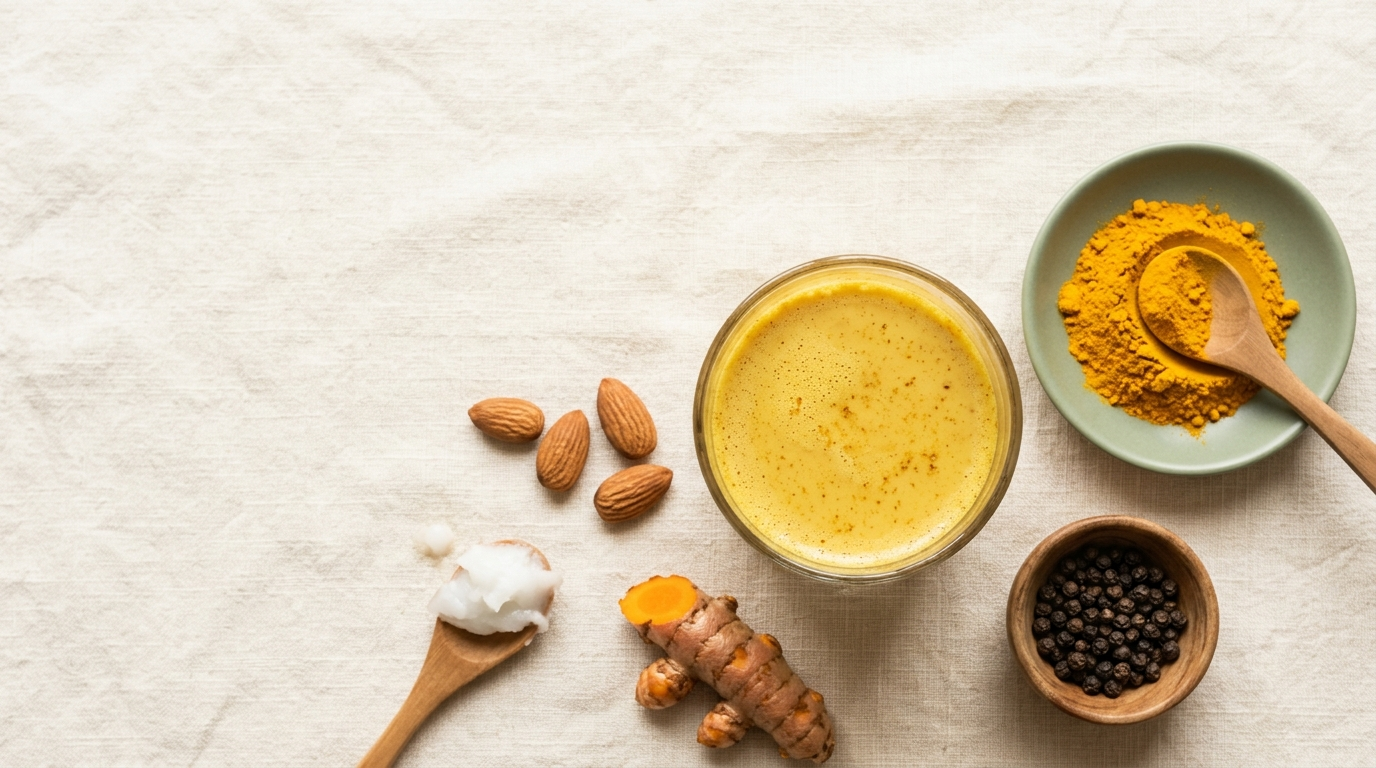
The fix: take turmeric with a meal that has some fat in it. A few nuts, a spoon of coconut, eggs, or a normal lunch or dinner all work. A turmeric latte made with full-fat milk or coconut milk does the same job.
Mistake 4. Expecting it to work overnight
Turmeric is not a painkiller you feel in twenty minutes. It is a quiet, cumulative thing.
The trials that show benefits for joint comfort and stiffness ran for weeks, not days. A review of randomized trials found turmeric extract delivering meaningful results at roughly 1,000mg of curcumin a day, taken consistently across studies lasting four weeks and longer (Daily et al., 2016). People often quit on day three, decide it does nothing, and miss the window where it actually starts to help.
The fix: give it a fair run within a bounded eight to twelve week course. Take it daily for at least three to four weeks before you judge it, the same way you would with any foundation habit.
Mistake 5. Buying plain powder instead of a standardized extract
Not all turmeric on a shelf is the same, and the label tells you which kind you are holding.
A jar of ground turmeric and a curcumin extract can look identical and behave completely differently in the body. Plain powder is mostly starch and fiber with that small 3 percent curcumin. A standardized extract concentrates the curcuminoids so you actually reach the amounts used in research, without eating spoonfuls of spice.
A standardized turmeric extract (95 percent curcuminoids), paired with black pepper, taken once daily with food, best as an eight to twelve week course, then a short break.
Ancient Nutra's Turmeric Extract uses a standardized root extract so the active part is concentrated, not diluted.
Mistake 6. Treating it like a drug and ignoring the basics
Turmeric supports your body. It does not replace sleep, movement, or a doctor.
It is genuinely useful, but it is not a substitute for the foundation, and it is not free of interactions. Curcumin can have a mild blood-thinning effect, so if you take blood thinners, have gallbladder issues, or have surgery coming up, that is a conversation to have with your doctor first. Stacking it on top of a body that never rests will not do much either.
The fix: treat turmeric as one steady piece of a bigger picture. Fix the sleep and the food, then let the right extract quietly add to it. If you are on medication, check with your doctor before starting.
How to course-correct in a week
You do not need a new routine. You need to correct the four things that matter most.
- Day 1: switch from a pinch in your food to a standardized extract with black pepper.
- Day 2 to 3: start taking it with your largest meal, the one most likely to have some fat.
- Day 4 to 5: set a fixed time so you stop forgetting. Most people anchor it to dinner.
- Day 6 to 7: note how your joints feel after a workout or a long day, and keep going.
By the end of week one the habit is built. The real payoff shows up over the following weeks, not the first few days.
A note on liver safety
NIH's LiverTox database rates turmeric a category A likelihood for causing clinically apparent liver injury, almost always from concentrated capsule extracts formulated with black pepper (piperine) to raise absorption, rather than turmeric used as a culinary spice. That is another reason to treat a standardized extract as a bounded eight to twelve week course, not a forever habit. Stop and see a doctor if you notice yellowing of the eyes or skin, dark urine, persistent nausea, or unusual tiredness. NIH LiverTox, turmeric.
The bottom line
Two fixes carry most of the weight. Pair turmeric with black pepper so it actually absorbs, and take it with food instead of dry on an empty stomach. Add a standardized extract and a few weeks of consistency, and you move from the 30 percent club to the part that research is built on.
For the absorption ratio handled in one capsule, Ancient Nutra's Turmeric Extract uses a standardized root, and a warm meal does the rest. A little ginger alongside it, like Ancient Nutra's Ginger, is an easy daily pairing if you want gentle digestive warmth too.

A standardized turmeric extract, so the active curcuminoids are concentrated, not diluted.
Shop Turmeric ExtractSources
- Shoba G, et al. Influence of piperine on the pharmacokinetics of curcumin in animals and human volunteers. Planta Medica, 1998.
- Hewlings SJ, Kalman DS. Curcumin: a review of its effects on human health. Foods, 2017.
- Daily JW, et al. Efficacy of turmeric extracts and curcumin for alleviating the symptoms of joint arthritis. Journal of Medicinal Food, 2016.
Written by the Ancient Nutra Wellness Team. The team researches, sources, and tests every ingredient before it earns a place in an Ancient Nutra blend. Questions? Email info@ancientnutra.com or message Ancient Nutra on Instagram.
These statements have not been evaluated by the Food and Drug Administration. This product is not intended to diagnose, treat, cure, or prevent any disease. Always speak with your doctor before starting a new supplement, especially if you take medication or have a medical condition.