Ancient Nutra Wellness Team · 15 July 2026 · 6 min read
Passion fruit flowers: the calming garden herb your heart likes too
Key takeaways
- Passion fruit flowers come from the same Passiflora vine that climbs Sri Lankan garden fences, and their headline benefit is calming a busy mind before sleep.
- In one 2024 trial, 600 mg of passionflower nightly raised sleep efficiency from 75.5% to 86.6% and lowered stress scores, with no side effects reported.
- The fruit and its peel are rich in polyphenols tied to antioxidant and early heart-health benefits, though the blood-pressure evidence is still preliminary.
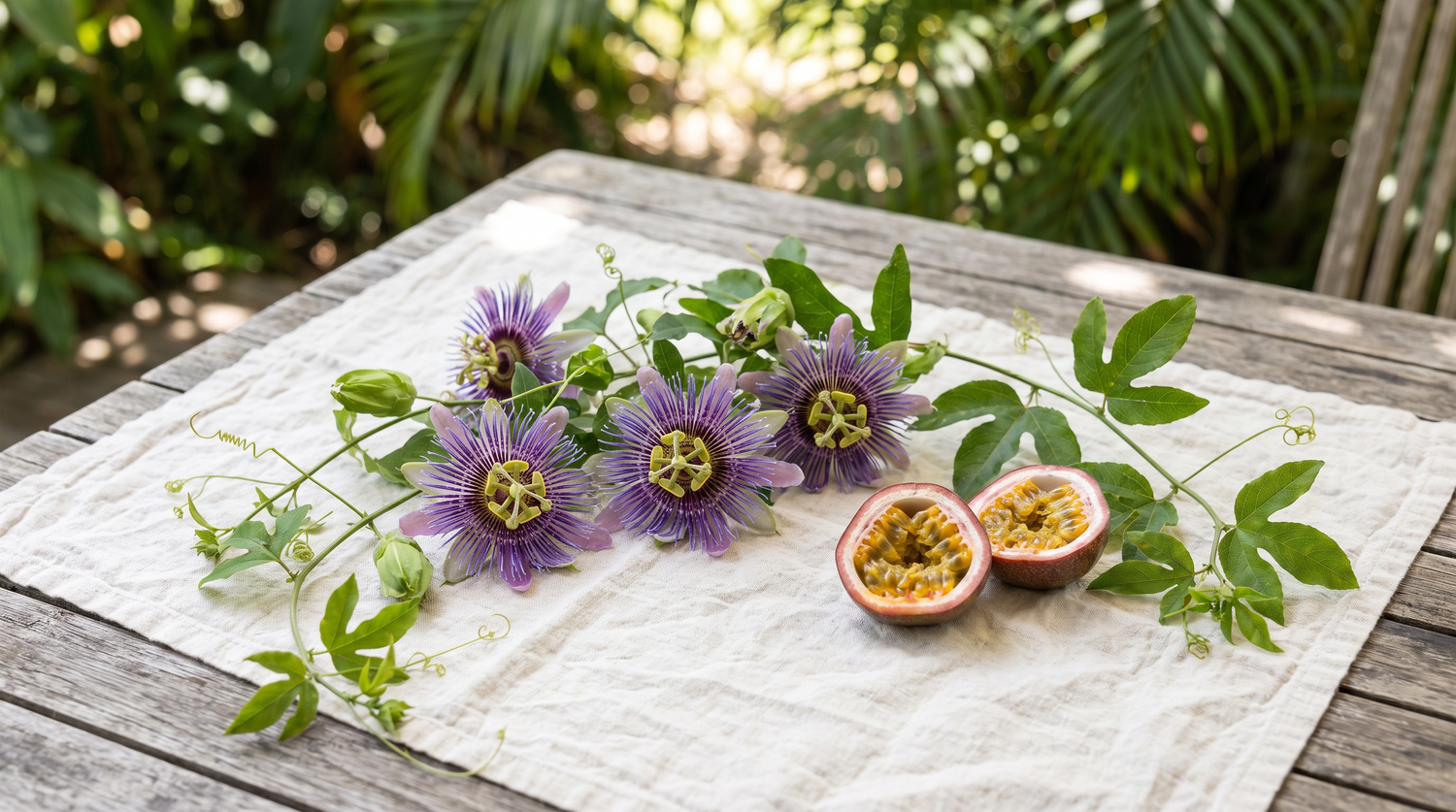
In most Sri Lankan gardens, the passion fruit vine is grown for one thing: the fruit. It scrambles over the back fence, and by the time the purple globes drop, no one is looking at the flowers anymore. That is a small oversight. The passion flower, with its fringed purple crown, is one of the most studied calming herbs in the world. And the fruit it becomes carries antioxidants that quietly support the heart. Two benefits, one plant, hiding in plain sight.
Passion flower is the bloom of the Passiflora vine, a climbing plant native to South America and now common across tropical gardens, Sri Lanka included. Traditional herbalists steeped the leaves and flowers as a mild evening tea to settle a restless mind. Two cousins matter here: Passiflora incarnata, the medicinal passionflower behind most calming research, and Passiflora edulis, the edible garden passion fruit most people actually grow.
What passion fruit flowers actually do
Passion flower's headline benefit is calm. It is thought to work by nudging up GABA, the brain's main quieting signal, which slows the mental chatter that keeps people awake. A 2020 systematic review in the journal Nutrients pooled nine randomized trials and found the anti-anxiety effect of Passiflora incarnata was comparable to sedative drugs such as oxazepam, with no harm to memory or focus. The effect was clearest in people carrying real, not mild, stress.
For anyone chasing that same calm through the daytime rather than just at night, Ancient Nutra's Ashwagandha works on the cortisol side of the same problem, which is why the two herbs are often discussed together in wind-down routines.
The heart angle comes mostly from the fruit, not the flower. Passion fruit peel is dense with polyphenols like luteolin and quercetin. A 2024 review in Frontiers in Nutrition measured gallic acid in the peel at 31.2 mg per gram and linked those compounds to antioxidant and anti-inflammatory activity that helps protect against chronic conditions, heart disease among them. Early human data even hints at a blood-pressure benefit, though that research is still small and far from settled.
Who should reach for passion flower
Passion flower is not a cure, and it is not for everyone. It tends to help most for:
- People whose sleep is broken by a racing mind rather than by pain or caffeine. The calm is mental, so it suits overthinkers best.
- Anyone winding down from a high-stress stretch who wants a gentle, non-habit-forming option before reaching for stronger sleep aids.
- Tea drinkers who prefer a ritual over a capsule, since the flower and leaf brew into a pleasant caffeine-free evening cup.
- Adults curious about the antioxidant side of the fruit as one small part of a heart-minded diet.
Who can skip it: if the sleep problem is physical pain, a noisy room, or late-night screens, passion flower will not fix the root cause. And anyone already on sedatives or blood-pressure medication should talk to a doctor first, since the effects can overlap.
How to actually take passion flower
For calm and sleep, the clinical range sits around 500 to 600 mg of extract in the evening, roughly 30 to 60 minutes before bed. A 2024 randomized trial in Cureus gave 65 adults 600 mg nightly for a month and saw sleep efficiency climb from 75.5% to 86.6% alongside lower stress scores, with no adverse events. As a tea, one to two grams of dried flower and leaf steeped for ten minutes is the traditional evening dose. Start low, take it consistently, and give it at least two weeks before deciding whether it works for you.
Look for
A caffeine-free preparation with the plant part named on the label, since the flower and leaf carry the calming compounds. Ancient Nutra's Hibiscus Flower Tea is a simple single-flower brew in the same evening-ritual spirit, made from whole petals with nothing added.
Where passion fruit flowers come from
The passion fruit vine travelled from South America to Sri Lankan home gardens generations ago, where it is grown mostly for juice. The flower, with its striking fringed corona, was named by Spanish missionaries who read the Passion of Christ into its structure. In village practice, the leaves and flowers were brewed as a calming tea long before the clinical trials arrived. It is a quiet example of a plant whose traditional use and modern research happen to point the same direction.
What to pair passion flower with
Passion flower pairs well with other gentle heart-and-calm herbs rather than stimulants. For the cardiovascular side, Ancient Nutra's Ceylon Cinnamon supports healthy blood sugar and circulation, which sit alongside the antioxidant story of the passion fruit. For daytime stress, ashwagandha covers the cortisol angle while passion flower handles the evening wind-down. This kind of stack suits someone managing everyday stress and sleep, not a medical condition, and none of it replaces a doctor's plan for high blood pressure.
How long passion flower takes to work
Some people feel a mild calm the very first evening, which is the fast GABA effect. The steadier benefits, easier sleep onset and lower background stress, tend to settle in over two to four weeks of nightly use. The antioxidant benefits of the fruit are a long game measured in months of a consistent, plant-rich diet, not days. Give any herb at least a month before judging it, and track your sleep quality rather than chasing an overnight fix.
The bottom line
Passion fruit flowers are two quiet benefits in one familiar garden plant: a well-studied calm for the mind and an antioxidant-rich fruit for the body. Neither is a miracle, and the strongest heart claims are still early science. For an easy, caffeine-free way to build the same evening ritual, Ancient Nutra's Hibiscus Flower Tea is a gentle place to start. The science does not care which cup it comes in.

Hibiscus Flower Tea
A caffeine-free single-flower brew for a calm, heart-minded evening ritual.
Shop Hibiscus Flower TeaSources and further reading
- Janda K. et al., Passiflora incarnata in Neuropsychiatric Disorders, A Systematic Review, Nutrients (2020), NIH / PMC.
- Randomized, Double-Blind, Placebo-Controlled Study of Passiflora incarnata in Stress and Sleep, Cureus (2024), NIH / PMC.
- Passion fruit by-products as a source of bioactive compounds for non-communicable disease prevention, Frontiers in Nutrition (2024), NIH / PMC.
- Passiflora edulis: An Insight Into Current Researches on Phytochemistry and Pharmacology, Frontiers in Pharmacology (2020), NIH / PMC.
Written by the Ancient Nutra Wellness Team. The team researches, sources, and tests every ingredient before it earns a place in an Ancient Nutra blend. Questions? Email info@ancientnutra.com or message Ancient Nutra on Instagram.
Medical disclaimer: This article is for educational purposes only and is not medical advice. Statements have not been evaluated by the FDA. Ancient Nutra products are not intended to diagnose, treat, cure, or prevent any disease. Speak with a qualified healthcare provider before starting any new supplement, especially if you take prescription medication or have a medical condition.